
This is such a wonderful series — content-wise and soul-feeding.
Phenomenal series so far. Even more important during our current situation, as people are engaged and able to see each other. I’ve been here every Friday and look forward to these talks.
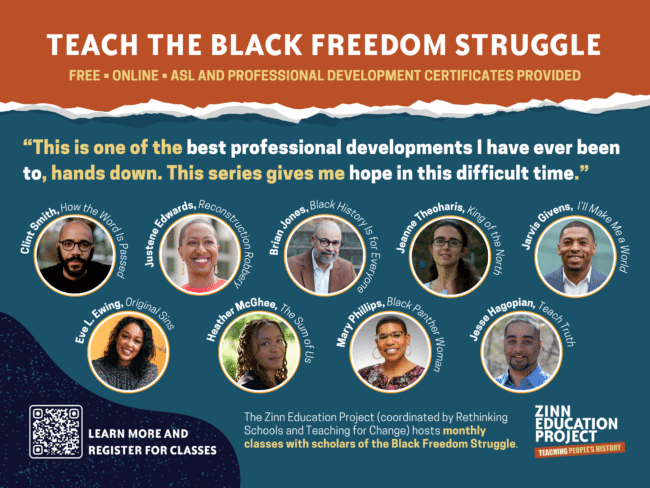
These comments are from two of the thousands of teachers and students who have attended our online classes with people’s historians. These classes offer the chance to learn directly from leading historians and to meet peers from across the country.
We hold the classes at least once a month (generally on Mondays) at 4:00 pm PT / 7:00 pm ET for 75 minutes. In each session, a teacher interviews the historian and breakout rooms allow participants in small groups to meet each other, discuss the content, and share teaching ideas. We designed the sessions for teachers and other school staff, however, we welcome parents, students, and others.
Below are upcoming sessions and more are in the works. Miss a session? Recordings from previous sessions are available through each session’s dedicated resource post, which you can access by clicking on its title. There are also audio recordings of selected sessions that can be heard on most podcast platforms.
ASL interpretation provided.
Professional development credit certificate provided upon request for attendees.
Upcoming Sessions
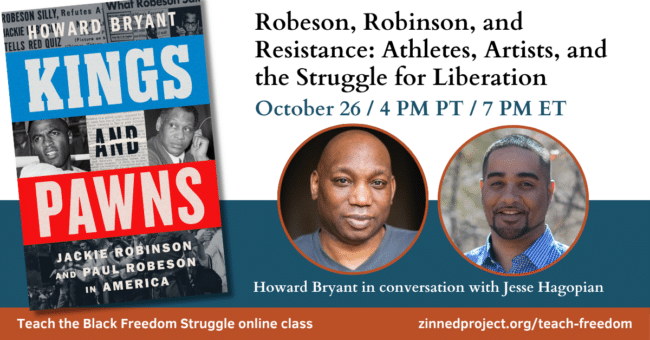
Monday, October 26: Robeson, Robinson, and Resistance: Athletes, Artists, and the Struggle for Liberation
Rethinking Schools editor Jesse Hagopian will be in conversation with author Howard Bryant about his book Kings and Pawns: Jackie Robinson and Paul Robeson in America, which tells the untold story of sports and fame, Black life in the United States, and the promise of integration during the Cold War.
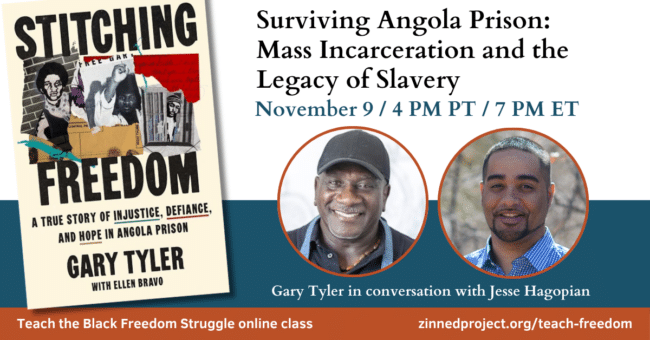
Monday, November 9: Surviving Angola Prison: Mass Incarceration and the Legacy of Slavery
Rethinking Schools editor Jesse Hagopian will be in conversation with author Gary Tyler about his book Stitching Freedom: A True Story of Injustice, Defiance, and Hope in Angola Prison. In the tradition of books by Albert Woodfox and Angela Davis, this memoir of a wrongful conviction and time spent on death row in Angola prison shows how incarcerated people care for each other and fight for justice.
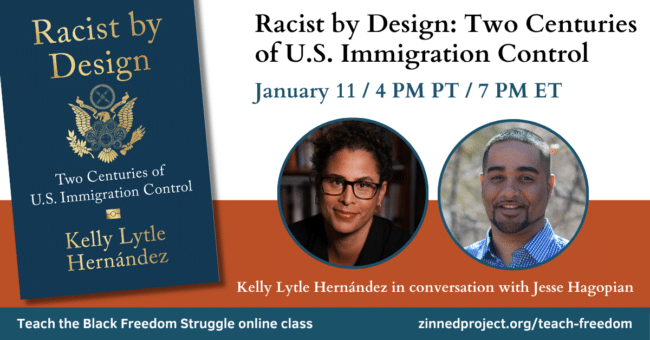
Monday, January 11, 2027: Racist By Design: Two Centuries of U.S. Immigration Control
Rethinking Schools editor Jesse Hagopian will be in conversation with historian Kelly Lytle Hernández about her book, Racist by Design: Two Centuries of U.S. Immigration Control. Lytle Hernández calls Racist by Design “an act of sabotage,” a book that will expose the blueprints of the system, so it can be dismantled.
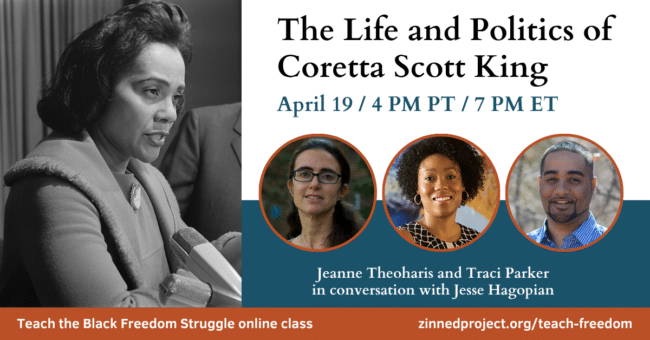
Monday, April 19, 2027: The Life and Politics of Coretta Scott King
Rethinking Schools editor Jesse Hagopian will be in conversation with historians Jeanne Theoharis and Traci Parker about the life and politics of Coretta Scott King and Theoharis’ forthcoming book about this often overlooked civil rights icon.
Past Sessions
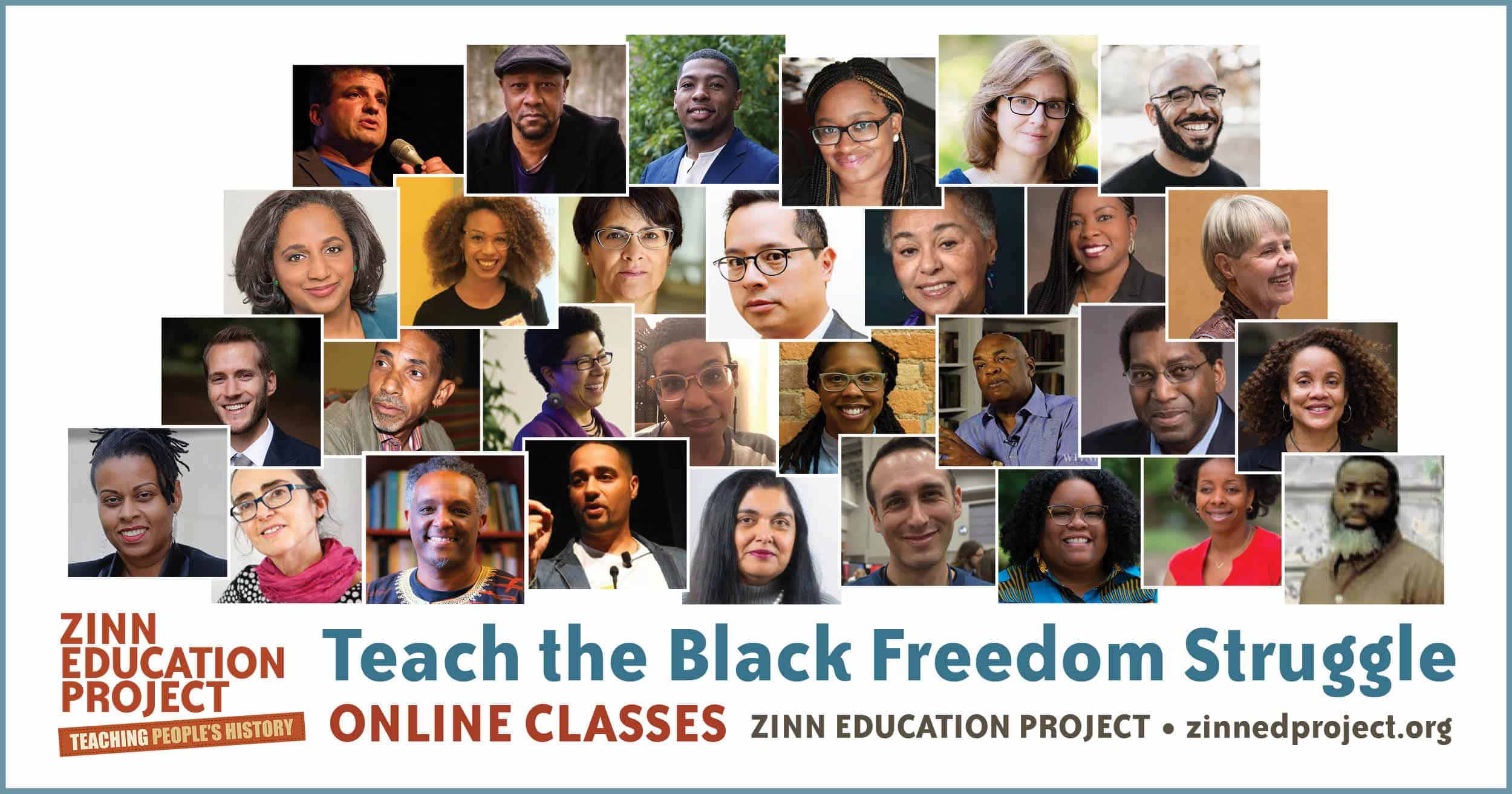
We launched the series when school buildings closed in March of 2020, in collaboration with author Jeanne Theoharis. Every Friday afternoon, we hosted an historian in conversation with a teacher or teacher educator. High school teacher and Rethinking Schools editor Jesse Hagopian has served as the primary host, with guest hosting by Tiffany Mitchell Patterson, Jessica Rucker, Cierra Kaler-Jones, and Adam Sanchez.
Fridays became a time to look forward to learning through stories about people’s history, to meeting other educators, and to finding a road map forward in the midst of this pandemic. As one participant said, “Thank you for getting us together and giving me hope that we are not alone, and that we can think and act ourselves out of this pandemic.”
Beginning in the fall of 2020, we switched to offering the sessions at least once a month, on Monday evenings.
Each link below includes highlights from the session, a list of the resources recommended by the presenters and participants, participant reflections, and a full video recording.
Sept. 28, 2026: One Hundred Years of High School Student Organizing
 On Monday, Sept. 28, historians Aaron G. Fountain Jr. and Jon N. Hale, in conversation with Rethinking Schools editor Jesse Hagopian, discussed student organizing and state repression, and talked about their new books, High School Students Unite!: Teen Activism, Education Reform, and FBI Surveillance in Postwar America and A New Kind of Youth: Historically Black High Schools and Southern Student Activism, 1920–1975.
May 4, 2026: Freedom Ship: The Uncharted History of Escaping Slavery by Sea
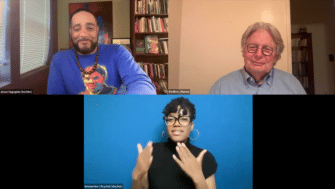 On Monday, May 4, historian Marcus Rediker, in conversation with Rethinking Schools editor Jesse Hagopian, discussed his books Freedom Ship: The Uncharted History of Escaping Slavery by Sea and The Many-Headed Hydra: Sailors, Slaves, Commoners, and the Hidden History of the Revolutionary Atlantic, and talked about the many enslaved people who fled successfully from the horrors of bondage in the antebellum South not by land but by sea.
April 13, 2026: Until the Last Gun Is Silent
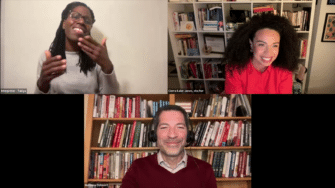 On Monday, April 13, historian Matthew Delmont joined Rethinking Schools executive director Cierra Kaler-Jones to discuss his latest book Until the Last Gun Is Silent: A Story of Patriotism, the Vietnam War, and the Fight to Save America’s Soul, which tells the story of the Vietnam War through lives of Coretta Scott King and Dwight “Skip” Johnson and includes the history of schooling in Detroit, SNCC, Winter Soldier events, the 1968 Democratic National Convention in Chicago, the Fort Hood Three, the massacres at Jackson State and Kent State, racism in the military, the Tet Offensive, Rep. Conyers, PTSD, and much more.
March 16, 2026: On a MOVE: Repairing Histories of State Violence
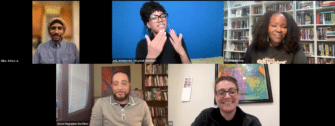 On March 16, 2026, activist Mike Africa Jr. and scholar Dr. Krystal Strong joined Rethinking Schools editor Jesse Hagopian to discuss the story of the MOVE organization, repairing histories of state violence, and the “On a MOVE” curriculum project.
February 2, 2026: I’ll Make Me a World: The 100-Year Journey of Black History Month
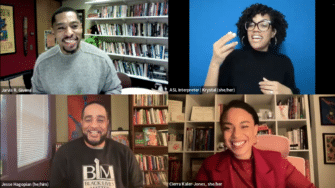 On February 2, 2026, historian Jarvis Givens discussed his latest book, I’ll Make Me a World: The 100-Year Journey of Black History Month. Drawing on archival research, personal stories involving family and students, and especially the wisdom of Black educators, Givens recovers the legacy of Carter G. Woodson and many others who envisioned Black history as a liberatory force — knowledge that shapes who we are, how we resist, and what we dream.
January 26, 2026: Black History Is for Everyone
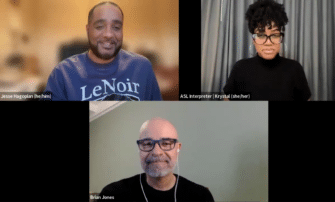 On January 26, 2026, educator Brian Jones, in conversation with Rethinking Schools editor Jesse Hagopian, discussed his latest book Black History Is for Everyone, a look at how the study of Black history challenges our understanding of race, nation, and the stories we tell about who we are.
November 10, 2025: Police Against the Movement: The Sabotage of the Civil Rights Struggle and the Activists Who Fought Back
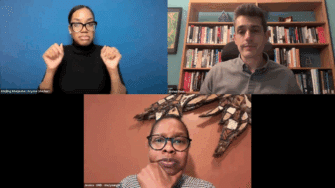 On November 10, 2025, scholar Joshua Clark Davis discussed his new book Police Against the Movement: The Sabotage of the Civil Rights Struggle and the Activists Who Fought Back, an examination of the civil rights struggle through its work against police violence — challenging myths about the level of repression and resistance. This book offers a vital lens for any curriculum on the Civil Rights Movement.
October 27, 2025: King of the North: Part Two
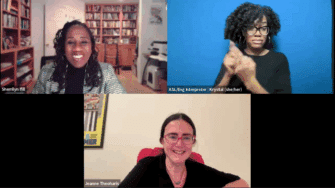 On October 27, 2025, historian Jeanne Theoharis discussed her book, King of the North: Martin Luther King Jr.’s Life of Struggle Outside the South, with renowned civil rights lawyer Sherrilyn Ifill. The class was moderated by Rethinking Schools editor Jesse Hagopian. This class was a follow-up conversation to a previous discussion between Theoharis and Hagopian about King of the North.
September 25, 2025: Original Sins: The (Mis)education of Black and Native Children and the Construction of American Racism
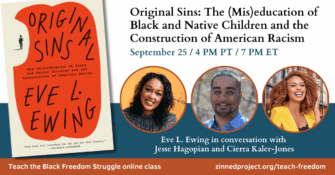 On September 25, 2025, scholar Eve L. Ewing spoke about her book, Original Sins: The (Mis)Education of Black and Native Children and the Construction of American Racism, an examination of how the U.S. school system helps maintain racial inequality and social hierarchies.
August 25, 2025: How the Word Is Passed: Remembering Slavery and How It Shaped America
 On August 25, 2025, author and educator Clint Smith discussed the new young readers edition of How the Word Is Passed: Remembering Slavery and How It Shaped America, which was adapted by Sonja Cherry-Paul.
June 2, 2025: Traveling Black: A Long Journey of Resistance
 On June 2, 2025, historian Mia Bay and Rethinking Schools editor Jesse Hagopian discussed Bay’s book, Traveling Black: A Story of Race and Resistance, which explores racial restrictions on transportation and resistance to the injustice.
May 5, 2025: Black Teachers: A Pedagogy of Organized Resistance
 On May 5, 2025, historians Jarvis Givens and Imani Perry talked with Rethinking Schools editor Jesse Hagopian and Rethinking Schools executive director Cierra Kaler-Jones about the Black Teacher Archive, a digital portal centralizing materials created by professional organizations of African American educators, historically referred to as Colored Teachers Associations (CTAs).
April 14, 2025: Black Panther Woman: The Political and Spiritual Life of Ericka Huggins
 On April 14, 2025, historian Mary Phillips, in conversation with Rethinking Schools editor Jesse Hagopian and Rethinking Schools executive director Cierra Kaler-Jones, discussed her book, Black Panther Woman: The Political and Spiritual Life of Ericka Huggins, the first biography of Ericka Huggins, a queer Black woman who brought spiritual self-care practices to the Black Panther Party.
March 24, 2025: King of the North: Martin Luther King’s Freedom Struggle Outside of the South
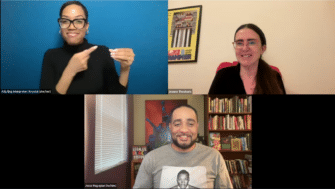 On March 24, 2025, historian Jeanne Theoharis and Rethinking Schools editor Jesse Hagopian discussed Theoharis’s book, King of the North: Martin Luther King Jr.’s Life of Struggle Outside the South, which radically expands our understanding of King’s life and work.
February 10, 2025: Reconstruction Robbery: The Rise and Betrayal of the Freedman’s Bank
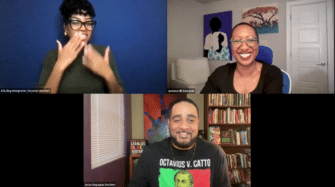 On February 10, 2025, historian Justene Hill Edwards and Rethinking Schools editor Jesse Hagopian discussed Edwards’ book, Savings and Trust: The Rise and Betrayal of the Freedman’s Bank, a comprehensive account of the Freedman’s Bank and its depositors.
January 13, 2025: The Healing of Organized Remembering: The Struggle to Teach Truth
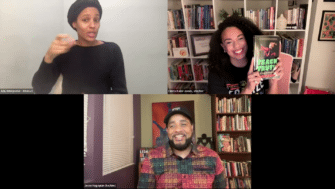 On January 13, 2025, Rethinking Schools editor Jesse Hagopian discussed his latest book, Teach Truth: The Struggle for Antiracist Education, and the campaign to fight back against bans on books and education.
December 2, 2024: Black Radicalism, Prison Repression, and the Long Attica Revolt
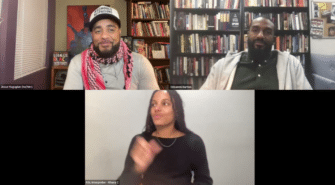 On December 2, 2024, scholar Orisanmi Burton discussed his book, Tip of the Spear: Black Radicalism, Prison Repression, and the Long Attica Revolt, which argues that prisons are a domain of hidden warfare within U.S. borders.
November 18, 2024: American Coup: Wilmington 1898
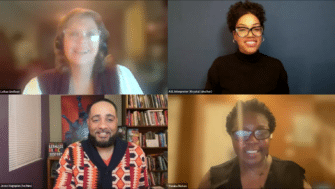 On November 18, 2024, documentary filmmaker Yoruba Richen and historian LeRae Umfleet discussed American Coup: Wilmington 1898, a new American Experience PBS documentary directed by Richen and Brad Lichtenstein that examines a white supremacist massacre of Black residents of Wilmington, North Carolina.
October 7, 2024: Racism and Resistance in the North During the Civil Rights Movement
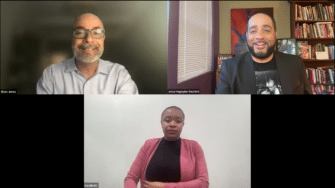 On October 7, 2024, educator Brian Jones spoke with Jesse Hagopian about the history of the Civil Rights Movement in the North and ways that those stories can be included in the curriculum.
September 17, 2024: We Refuse: A Forceful History of Black Resistance
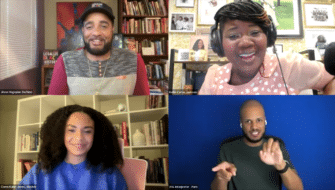 On September 17, 2024, historian Kellie Carter Jackson spoke with Jesse Hagopian and Cierra Kaler-Jones about her book We Refuse: A Forceful History of Black Resistance, which reframes the past and present of Black resistance — both nonviolent and violent — to white supremacy.
May 6, 2024: Reparations and Climate Justice
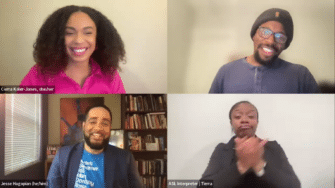 On May 6, 2024, philosophy professor Olúfẹ́mi O. Táíwò spoke with Jesse Hagopian and Cierra Kaler-Jones about his book Reconsidering Reparations, justice, racism, the legacy of colonialism, and climate change policy.
April 8, 2024: Black Patience: Performance, Civil Rights, and the Unfinished Project of Emancipation
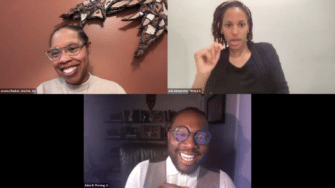 On April 8, 2024, historian Julius B. Fleming Jr. spoke with educator Jessica Rucker about Black theater, his book Black Patience: Performance, Civil Rights, and the Unfinished Project of Emancipation, and the notion of “waiting” for liberation.
March 4, 2024: The History of Black Music — A Love Supreme
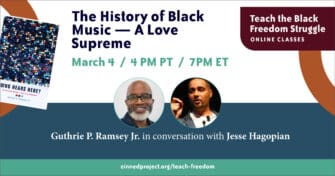
On March 4, 2024, award-winning musicologist and music historian Guthrie P. Ramsey Jr. joined Jesse Hagopian, Rethinking Schools editor and high school teacher, to discuss his book, Who Hears Here?: On Black Music, Pasts and Present.
February 5, 2024: Everyday Solidarity: Interracial Organizing Stories from The Sum of Us
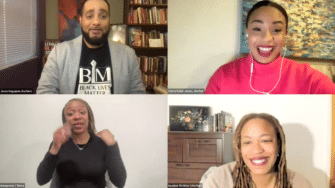 On February 5, 2024, historian Heather McGhee joined Cierra Kaler-Jones, Rethinking Schools executive director, and Jesse Hagopian, Rethinking Schools editor and high school teacher, to discuss her book, The Sum of Us: How Racism Hurts Everyone, the young readers’ edition of her bestselling book and the podcast companion series.
January 8, 2024: The Condemnation of Blackness: Lies We’re Told About Crime
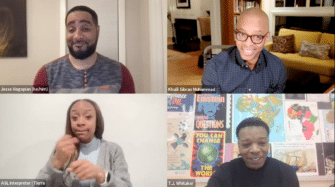 On January 8, 2024, historian Khalil Gibran Muhammad talked to T. J. Whitaker and Jesse Hagopian about his book The Condemnation of Blackness: Race, Crime, and the Making of Modern Urban America, which examines the idea of Black criminality in the making of modern urban America.
November 13, 2023: The Fight for Black History in Schools
 On November 13, 2023, historian Michael Hines talked to Cierra Kaler-Jones and Jesse Hagopian about his latest book, A Worthy Piece of Work: The Untold Story of Madeline Morgan and the Fight for Black History in Schools, which details how African Americans educator activists in the early twentieth century created new curriculum around race and historical representation.
October 16, 2023: A People’s History of the Black Working Class
 On October 16, 2023, historian Blair L. M. Kelley talked to Jesse Hagopian about her latest book, Black Folk: The Roots of the Black Working Class, which uses personal narratives to highlight the community and networks of resistance that Black laborers built in the face of racism and segregation.
September 11, 2023: Teaching in Dangerous Times: Lessons from SNCC
 On September 11, 2023, SNCC veterans Courtland Cox, Jennifer Lawson, and Judy Richardson talked to educator Jessica Rucker about how the lessons they learned during the Civil Rights Movement are applicable today.
June 12, 2023: Dr. Kimberlé Crenshaw on Teaching Truthfully About U.S. History
 On June 12, 2023, Dr. Kimberlé Williams Crenshaw, co-founder and executive director of the African American Policy Forum (AAPF) joined Cierra Kaler-Jones and Jesse Hagopian, both with Rethinking Schools, to talk about Critical Race Theory (CRT) and the importance of teaching truthfully about U.S. history.
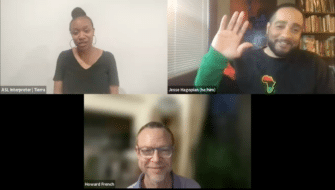 On May 8, 2023, journalist Howard French joined Rethinking Schools editor Jesse Hagopian to discuss his latest book, Born in Blackness: Africa, Africans and the Making of the Modern World, 1471 to the Second World War.
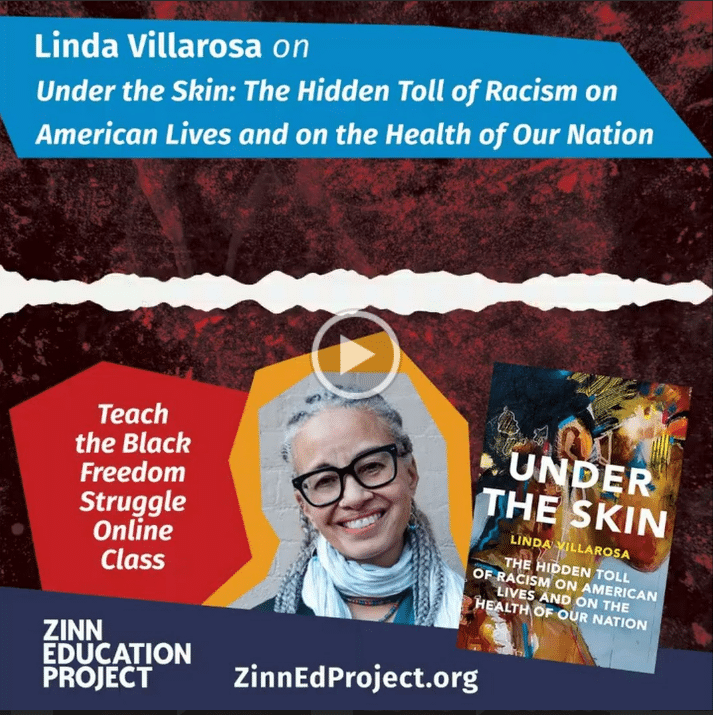
April 24, 2023: Linda Villarosa on Under the Skin: The Hidden Toll of Racism on American Lives and on the Health of Our Nation
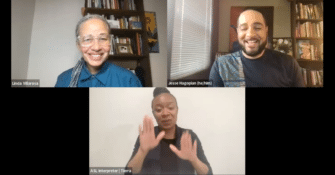 On April 24, 2023, historian Linda Villarosa joined Rethinking Schools editor Jesse Hagopian to discuss her latest book, Under the Skin: The Hidden Toll of Racism on American Lives and on the Health of Our Nation, which exposes the persistent racism in the U.S health-care system.
March 20, 2023: Kidada Williams on I Saw Death Coming: A History of Terror and Survival in the War Against Reconstruction
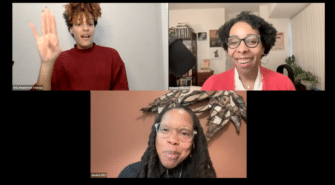 On March 20, 2023, historian Kidada Williams joined Prentiss Charney Fellow Jessica Rucker to discuss her latest book, I Saw Death Coming: A History of Terror and Survival in the War Against Reconstruction, a breakthrough account of the much-debated Reconstruction period that transports readers into the daily existence of formerly enslaved people building hope-filled new lives.
February 6, 2023: Jeanne Theoharis on Starring Mrs. Rosa Parks: Film Excerpts and Behind the Scenes Commentary
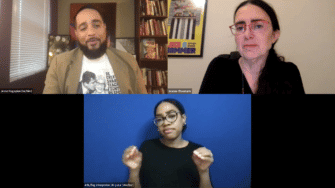 On Monday, February 6, 2023, historian Jeanne Theoharis joined Jesse Hagopian to discuss Rosa Parks’ activism prior to the Montgomery Bus Boycott, her trip to the Highlander Folk School, and the decades she dedicated to challenging racism in the North. Clips from the new documentary The Rebellious Life of Mrs. Rosa Parks, based on the book of the same name by Theoharis, were included during this session.
January 23, 2023: Dayo Gore on Want to Start a Revolution? Black Women Radicals Confront the Red Scare
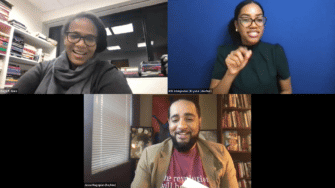 On Monday, January 23, 2023, historian Dayo Gore shared stories about Black women radicals who were active in revolutionary struggle during the Red Scare. As author of Radicalism at the Crossroads: African American Women Activists in the Cold War and co-editor of Want to Start a Revolution: Radical Women in the Black Freedom Struggle, Gore’s knowledge of historical resistance and organizing by Black women is comprehensive and detailed.
December 12, 2022: Bryan Stevenson on the History of Racial Terror in the United States
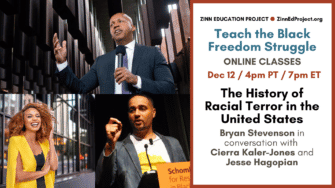 On December 12, lawyer and Equal Justice Initiative (EJI) founder Bryan Stevenson discussed his book Just Mercy, the danger of false narratives and anti-CRT laws, monuments, mass incarceration, Reconstruction, the Great Migration, and organizing.
November 14, 2022: Matthew Delmont on “We Return Fighting”: The Black Freedom Struggle During World War II
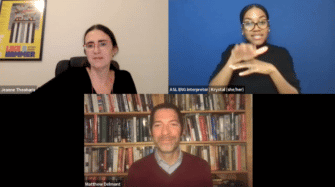
On November 14, historian Matthew Delmont shared stories from his book, Half American: The Epic Story of African Americans Fighting World War II at Home and Abroad. He highlighted connections between the struggle for Black liberation at home and the fight against fascism abroad during the 1930s and 1940s.
October 17, 2022: Ashley Farmer on Queen Mother Moore, Black Nationalism, and the Centuries-long Fight for Reparations
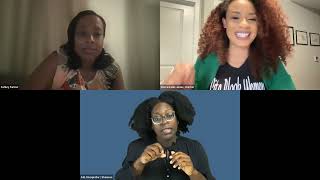
On October 17, historian Ashley Farmer discussed Queen Mother Audley Moore (1898–1997), one of the most influential activists and intellections of the 20th century in the fields of Black Nationalism and reparations.
September 12, 2022: Alaina Roberts on Black Freedom on Native Land
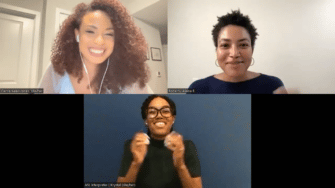
On September 12, historian Alaina Roberts discussed the Reconstruction era connections between Black freedom and Native American citizenship in the context of westward expansion onto Native land.
August 24, 2022: People’s History Commemoration of Howard Zinn’s 100th Anniversary
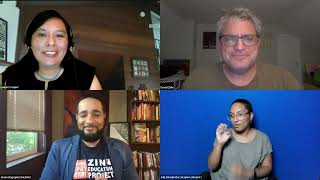
On August 24, Dave Zirin and Jesse Hagopian hosted “You Can’t Be Neutral on a Moving Train,” an event with special guests to commemorate Howard Zinn (1922–2010) and other people’s historians on this 100th anniversary year.
Monday, June 6, 2022: Kelly Lytle Hernández on the 1910 Mexican Revolution
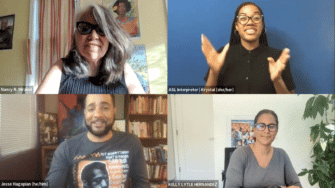
On June 6, the Zinn Education Project hosted historian Kelly Lytle Hernández in conversation with historian Nancy Raquel Mirabal to talk about the magonistas, a group of insurgents who challenged Mexican dictator Porfirio Díaz and U.S. imperialism in the early 20th century.
Monday, May 9, 2022: Kidada E. Williams “Seizing Freedom”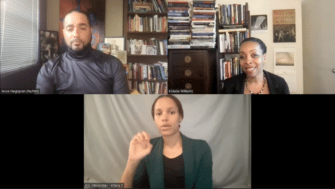
On May 9, the Zinn Education Project hosted historian Kidada E. Williams in conversation with Jesse Hagopian about the imaginative, defiant ways that Black people sought and enacted freedom throughout U.S. history. This history is highlighted in her podcast Seizing Freedom, which focuses on and brings to life voices that have been muted time and time again.
Monday, April 25, 2022: Johanna Fernández on the Young Lords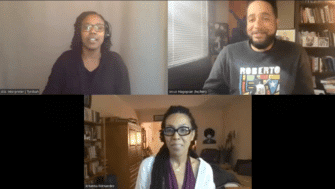
On April 25, the Zinn Education Project hosted historian Johanna Fernández in conversation with Jesse Hagopian about the history of the Young Lords, the Puerto Rican counterpart of the Black Panther Party. Using Fernández’s book The Young Lords: A Radical History, the well-attended conversation highlighted the multiracial dimensions, innovative urban strategies, and global solidarities of the Black Freedom Struggle.
Monday, March 14, 2022: Vikki Law on Myths About Mass Incarceration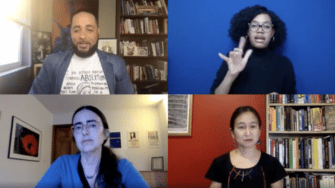
On March 14, the Zinn Education Project hosted journalist Vikki Law in conversation with Jesse Hagopian about how to respond and #TeachTruth about incarceration. As Hagopian said of Law’s recent book, “Prisons Make Us Safer”: And 20 Other Myths about Mass Incarceration is an essential resource for clearing away master narratives about imprisonment in our society. She not only takes on the distortions of the right, but challenges progressives to think more deeply about the root causes and outcomes of mass incarceration.”
Monday, February 21, 2022: Martha Jones on Black Women in the Fight for Voting Rights
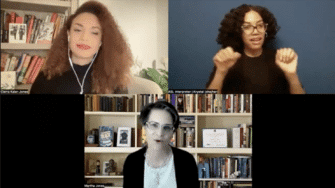
On February 21, the Zinn Education Project hosted historian Martha S. Jones in conversation with Cierra Kelar-Jones about the role of Black women in the long and ongoing fight for voting rights. Also in attendance was Judy Richardson of SNCC, who has dedicated her life from the 1960s through today (and tomorrow) to fighting for voting rights and human rights.
Thanks to a donation from the publisher, the Zinn Education Project was able to raffle 20 copies of the new paperback edition of Jones’ book Vanguard: How Black Women Broke Barriers, Won the Vote, and Insisted on Equality for All to teachers who attended the event.
Monday, January 10, 2022: The Dr. Martin Luther King Jr. You Won’t Read About in Textbooks
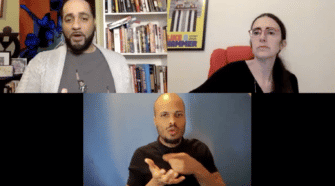
On January 10, the Zinn Education Project hosted historian Jeanne Theoharis in conversation with Jesse Hagopian about the Dr. Martin Luther King Jr. not found in textbooks and school curricula. As Theoharis notes in The Atlantic, “Critics of Black Lives Matter have held up King as a foil to the movement’s criticisms of law enforcement, but those are views that King himself shared. Martin Luther King Jr. proclaimed, ‘We can never be satisfied as long as the Negro is the victim of the unspeakable horrors of police brutality.’ King understood that police brutality — like segregation — wasn’t just a southern problem.”
Monday, December 6, 2021: Fugitive Pedagogy Carter G. Woodson and the Art of Black Teaching
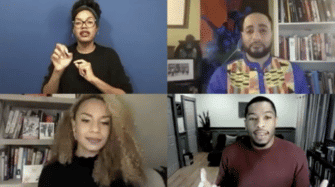
We hosted Jarvis Givens for a talk on his book Fugitive Pedagogy Carter G. Woodson and the Art of Black Teaching in conversation with Jesse Hagopian and Cierra Kaler-Jones. The current assault on critical race theory and antiracist pedagogy by right-wing is unintelligible without the insights offered in Fugitive Pedagogy and Givens’ inspirational stories of Black educators who faced down intellectual abuse and physical violence to create counter-narrative curriculums that were “a literary genre inaugurated by runaway slaves . . . Black curricular imaginations of the post-Emancipation era . . . informed by a fugitive literary culture with antebellum roots.”
November 8, 2021: The Kaepernick Effect: Taking a Knee, Changing the World
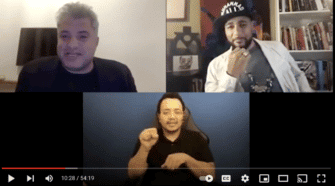
Jesse Hagopian hosted sports journalist Dave Zirin for a talk about his new book, The Kaepernick Effect: Taking a Knee, Changing the World. The book chronicles the rise in racial justice activism in the sports world — especially among young athletes, and especially among young Black athletes — in the wake of Colin Kaepernick’s anti-police brutality protests through the 2016 NFL season, which were of course themselves rooted in a long history of radical action by sports figures.
October 5, 2021: Until Justice Be Done: The Civil Rights Movement Before the Civil War
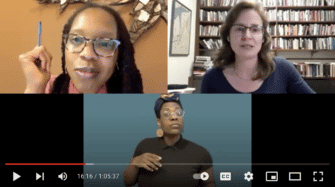
The half-century before the Civil War was beset with conflict over equality as well as freedom.
Teach Reconstruction campaign adviser Dr. Kate Masur joined high school teacher Jessica Rucker to speak about the history of the movement for equal rights that courageously battled racist laws and institutions, Northern and Southern, in the decades before the Civil War. Her book, Until Justice Be Done: America’s First Civil Rights Movement, From the Revolution to Reconstruction, lays out the indispensable role of African Americans in shaping the U.S. ideal of equality before the law.
September 13, 2021: Can’t Stop Won’t Stop: A Hip-Hop History
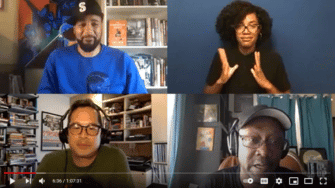
Jesse Hagopian hosted hip-hop chroniclers Jeff Chang and Dave “Davey D” Cook for a conversation about the book, Can’t Stop Won’t Stop: A Hip-Hop History, published in 2005 and now available in a Young Adult edition. Exploring hip-hop’s beginnings up to the present day, Chang and Cook offer readers a look into the world that the hip-hop generation created. In the class discussion with Hagopian, Chang and Cook discussed the epic events, ideas and the music that marked the hip-hop generation’s rise.
Chang is a graduate of ‘Iolani School, the University of California at Berkeley, and the University of California at Los Angeles, and has written extensively on culture, politics, the arts, and music. Cook is a nationally recognized journalist, adjunct professor at San Francisco State, hip-hop historian, political commentator, syndicated talk show host, radio programmer, media justice and community activist.
June 7, 2021: When South African Apartheid Was Overthrown: Lessons for the Movement for Black Lives Today
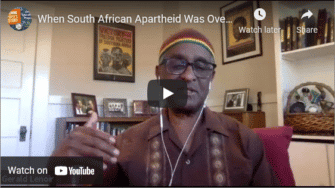
The struggle against the racist apartheid regime in South Africa was a global rebellion that included many Black people in the United States. African Americans saw the parallels between the system of white supremacy in South Africa and the one in the United States. The activism and solidarity of African Americans played an important role in overthrowing apartheid. This struggle holds many lessons for the movement for Black lives today.
Gerald Lenoir, a veteran organizer of the anti-apartheid movement in the United States and an organizer for racial justice today, will share lessons from the movement that helped bring down apartheid to help us better understand how to teach — and participate in — the ongoing Black Freedom Struggle.
May 10, 2021: How the Word Is Passed: A Reckoning with the History of Slavery Across America
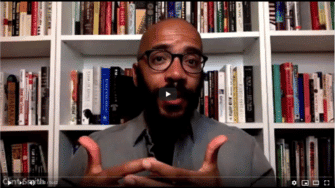
Clint Smith is a poet, staff writer at The Atlantic, and teaches writing and literature in the D.C. Central Detention Facility. Smith, in conversation with Cierra Kaler-Jones, spoke about his new book, How the Word Is Passed, an examination of how monuments and landmarks represent — and misrepresent — the central role of slavery in U.S. history and its legacy today.
The Zinn Education Project is developing lessons to bring this essential book to the classroom.
April 26, 2021: The Struggle Against the Prison Industrial Complex
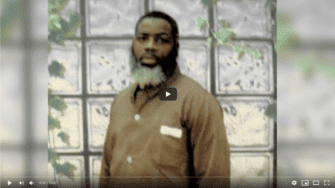
Historian Garrett Felber and abolitionist organizers Stevie Wilson and Safear Ness talked about the growth of the carceral state and resistance movements with Jesse Hagopian.
Felber, author of Those Who Know Don’t Say: The Nation of Islam, the Black Freedom Movement and the Carceral State, is project director of the Parchman Oral History Project and was the lead organizer of the Making and Unmaking Mass Incarceration conference. He co-founded Study and Struggle, a project that organizes against criminalization and incarceration in Mississippi through mutual aid, political education, and community building. They provide a bilingual Spanish and English curriculum with discussion questions and reading materials, as well as financial support, to over 100 participants in radical study groups inside and outside prisons in Mississippi. Learn more.
March 22, 2021: The Atlanta Washerwomen’s Strike
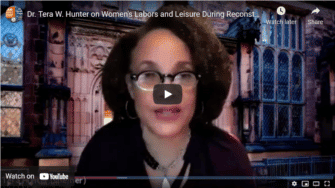
This interactive online class featured a conversation between Jeanne Theoharis, scholar and co-founder of the series, and Tera W. Hunter, history professor at Princeton University and author of To ‘Joy My Freedom: Southern Black Women’s Lives and Labors After the Civil War.
Hunter began with the story of the 1881 Atlanta Washerwomen’s Strike and went on to share many more stories of organizing by Black women for labor rights, public health, voting rights, and the right to joyful endeavors (such as dancing) from the Reconstruction era through today.
March 8, 2021: A Black Women’s History of the United States
Daina Ramey Berry and Kali Nicole Gross shared stories from their book, A Black Women’s History of the United States. Daina Ramey Berry is a history professor at the University of Texas at Austin and Kali Nicole Gross is a history professor at Rutgers University, New Brunswick.
By starting the history about Black women on this land with us as free people and as people agitating for our freedom, by prioritizing all Black women’s voices and coming up to the present day, Dr. Gross and Dr. Berry illuminate greater possibilities for our collective freedom dreams and struggles for collective liberation. — Charlene A. Carruthers
Feb. 15, 2021: Julian Bond and the Southern Civil Rights Movement: Focus on Georgia
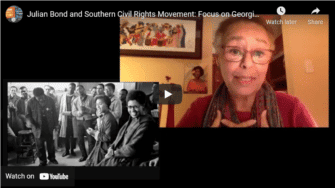
To learn about the long history of the voting rights struggle leading to the electoral victory in Georgia, we were joined by SNCC veteran Judy Richardson and the co-editors of Julian Bond’s Time to Teach: A History of the Southern Civil Rights Movement, Jeanne Theoharis and Pamela Horowitz.
Time to Teach is a compilation of lectures by SNCC veteran and university professor Julian Bond (1940 – 2015). Bond had his own voting rights struggle in Georgia when the State House of Representatives refused to seat him as a state representative, due to his public statements against the Vietnam War.
Jan. 11, 2021: The Rebellious Life of Mrs. Rosa Parks
Jeanne Theoharis, in conversation with Jesse Hagopian, spoke about Rosa Parks’ activism prior to the Montgomery Bus Boycott, her trip to the Highlander Folk School, and the decades she dedicated to challenging racism in the North. This session is based on the young readers edition The Rebellious Life of Mrs. Rosa Parks by Jeanne Theoharis and Brandy Colbert. There is a companion classroom lesson for this session by Bill Bigelow.
Dec. 14, 2020: Reconstruction: Repression and Resistance
Kidada E. Williams, in conversation with Tiffany Mitchell Patterson, discussed the history of repression and resistance during Reconstruction with contemporary connections. Williams is a Detroit-based writer and historian who studies African American survivors of racist violence. Williams is an associate professor at Wayne State University. She is the author of They Left Great Marks on Me and co-editor of Charleston Syllabus: Readings on Race, Racism, and Racial Violence. Her podcast, Seizing Freedom, was released in early 2021.
Nov. 16, 2020: Paul Robeson, Political Outlaw: Lessons for Today from the Black Radical Tradition
Greg Carr, in conversation with Jesse Hagopian, talked about Paul Robeson and the Black radical tradition. Carr is an associate professor of Africana Studies, chair of the Department of Afro-American Studies at Howard University, and Adjunct Faculty at the Howard School of Law. Carr is co-founder of the Philadelphia Freedom Schools Movement and an advisor for the Zinn Education Project’s Teach Reconstruction campaign. See Carr’s two-minute history lessons on key figures and events in U.S. history.
Oct. 19, 2020: Organizing for Voting Rights: Lessons from the Student Nonviolent Coordinating Committee (SNCC)
Charles M. Payne, the Henry Rutgers Distinguished Professor of African American Studies at Rutgers University Newark and the Director of the Joseph Cornwall Center for Metropolitan Research joined us to discuss voter suppression and white terrorism in the mid-20th century, in a conversation led by Cierra Kaler-Jones. Read highlights and stream the recording.
July 10, 2020: Abolitionists and Reconstruction
Manisha Sinha joined high school teacher Adam Sanchez to talk about the abolition movement and Reconstruction. Sinha explained that the abolition movement should not be taught as a collection of individuals, but instead as a radical social movement, with connections to the Movement for Black Lives today.
June 26, 2020: A History of Rebellions
Jeanne Theoharis and Jesse Hagopian discussed various rebellions in U.S. history — including what they have in common and how they differ from current events. Theoharis encouraged educators to consider “the many tendrils” that led to this current movement and others before it.
June 19, 2020: Reconstruction and Juneteenth

Greg Carr and high school teacher Jessica Rucker talked about how Juneteenth is one of many days where African Americans celebrate being “freed” but still not “free” and how the times we are in today could be considered a third Reconstruction or a second Founding.
June 12, 2020: Reconstruction and Issues of Citizenship, Suffrage, and Movement Building in the 19th Century
Martha S. Jones, in conversation with Tiffany Mitchell Patterson, addressed the themes of our campaigns to Teach Reconstruction and to teach about voting rights. She highlighted the vital and too often ignored role of Black women in the fight for voting rights.
June 5, 2020: Examining the Historical Roots of the 2020 Rebellion
Keisha N. Blain and Jesse Hagopian addressed the role of police throughout U.S. history, the connection between lynching and police brutality, and the importance of highlighting stories of resistance, particularly by women of color in the fight for human rights.
May 29, 2020: Black Feminist Organizing: 1950s to the 21st Century
Barbara Ransby joined in conversation with Jesse Hagopian about the history of Black feminist organizing. That day, the nationwide rebellion in protest of police brutality was in everyone’s hearts and minds, and Ransby made connections between past and present struggles.
May 22, 2020: Black Left: 1930s to the Early 1950s
Robin D. G. Kelley described and challenged stereotypes about communism in U.S. history, in a conversation with Cierra Kaler-Jones, describing the histories of the Scottsboro Nine, the Southern Tenant Farmers Union, and other individuals.
May 15, 2020: Black Athletes and the Black Freedom Struggle
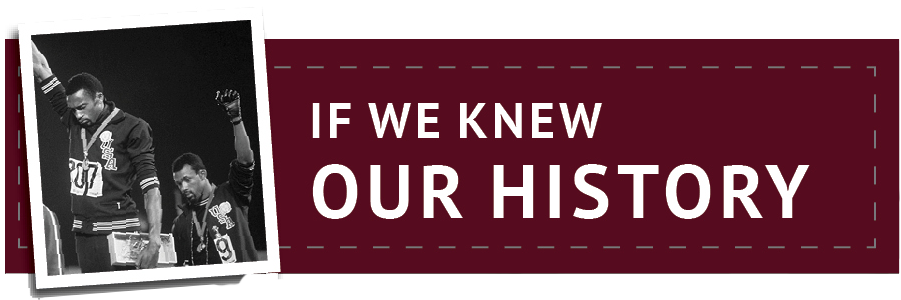
Sports writer Dave Zirin joined Jesse Hagopian to discuss the activism of noted athletes, including Jackie Robinson, Curt Flood, Wilma Rudolph, Wyomia Tyus, Muhammad Ali, John Carlos, Tommie Smith and organized campaigns such as the Olympic Project for Human Rights.
May 8, 2020: Women in the Black Panther Party
Robyn Spencer and Mary Phillips introduced the role of women in the Black Panther Party through discussion, a video clip, and art. They were introduced by Jesse Hagopian who co-wrote a lesson on the Black Panther Party at the Zinn Education Project website. In the words of a participant, they “deconstructed the Martin-Malcolm dichotomy, centering women and gender in the history of the Panthers.”
May 1, 2020: Rethinking Dr. Martin Luther King Jr.
On International Workers’ Day, Jeanne Theoharis and Jesse Hagopian discussed the radical history of Dr. Martin Luther King Jr. Theoharis shared stories about the influence of Coretta Scott King and on Dr. King’s role in the North, the Memphis sanitation workers’ strike, and the Poor People’s Campaign.
April 24, 2020: Student Nonviolent Coordinating Committee
On this 60th anniversary of the Student Nonviolent Coordinating Committee (SNCC), we hosted SNCC veterans Courtland Cox and Judy Richardson, in conversation with high school teacher Jessica Rucker. They described the role of popular education materials and a network of organizers across generations.
April 17, 2020: The Civil Rights Movement in the North
Jeanne Theoharis’ discussion with Jesse Hagopian challenged the traditional narrative of the Civil Rights Movement with descriptions of oppression and resistance in the North. (Did you know the biggest civil rights action of the 1960s was in New York City?) She talked about Los Angeles, Milwaukee, and Boston.
April 10, 2020: Teenagers in the Civil Rights Movement
This session, led by Jeanne Theoharis and Jesse Hagopian, highlighted the leading role teenagers played in the Civil Rights Movement — from desegregating Montgomery’s buses to the student sit-ins to the high school walkouts of the 1960s. Two contemporary youth organizers spoke as well.
March 27 and April 3, 2020: The Rebellious Life of Mrs. Rosa Parks
Based on Jeanne Theoharis’s book of the same name, this session introduced participants to Rosa Parks’ activism prior to the Montgomery Bus Boycott, her trip to the Highlander Folk School, and the decades she dedicated to challenging racism in the North. Bill Bigelow wrote a lesson to bring this more complete story of Rosa Parks to classrooms.
Each session or mini-class is for 90 minutes. There are breakout rooms for about 12 minutes about half-way through the session to allow participants (in small groups of five or six) to meet each other, discuss the content, and share teaching ideas. We designed the sessions for teachers and other school staff, however, parents, students, and others are welcome to participate. The session format is as follows:
- Presentation by a historian in conversation with a high school teacher or another scholar.
- Small group conversations by participants (using Zoom breakout rooms) to discuss insights from the talk and approaches to teaching.
- Presenters respond to questions with the full group and share teaching resources.
- Evaluation by participants.
Questions? Write to [email protected]
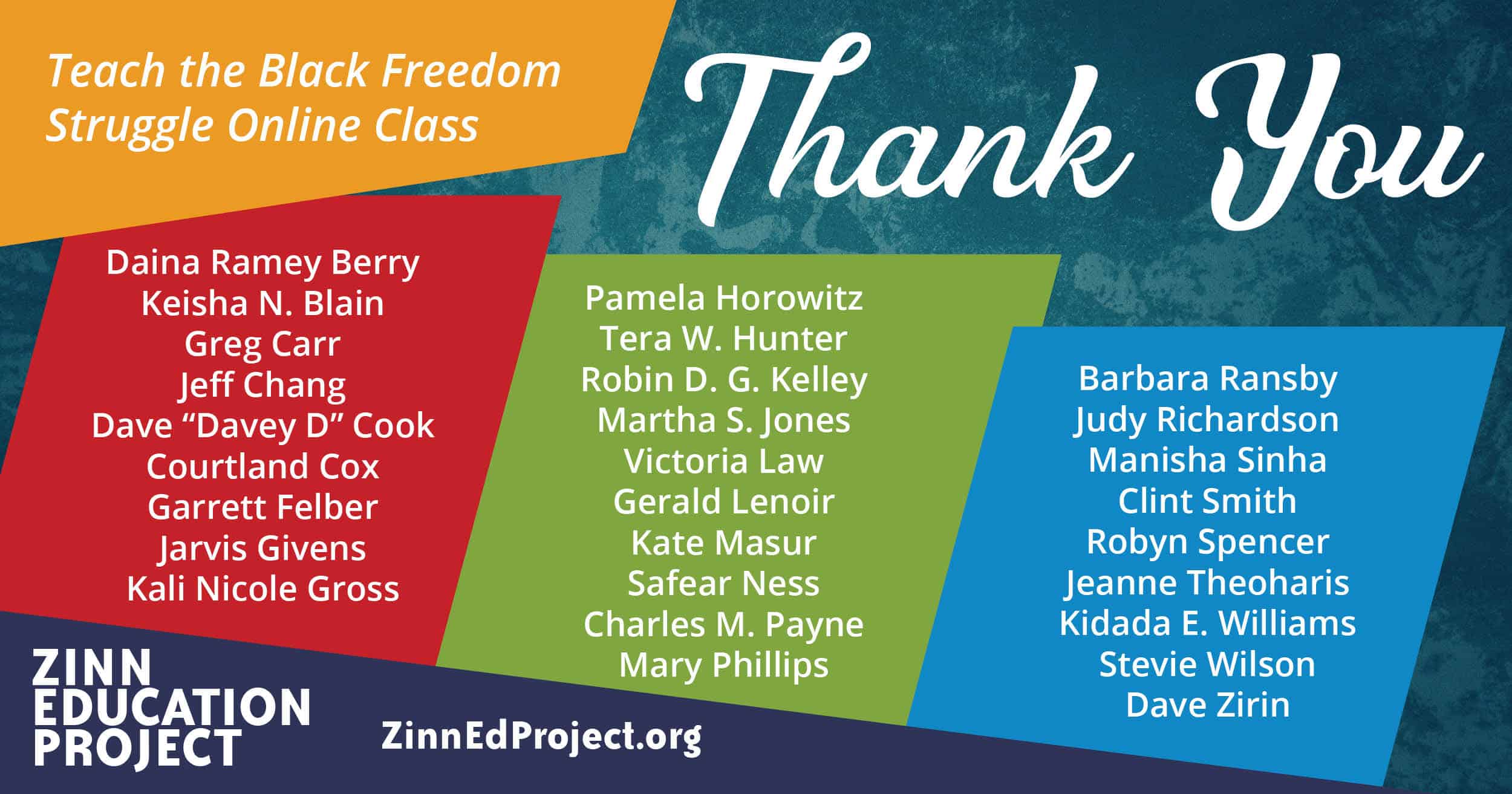
These sessions are made possible thanks to support from donors to the Teach the Black Freedom Struggle campaign.
Please add your support and make a donation so that we can continue to offer people’s history lessons, resources, workshops — and now online mini-classes — for free to K-12 teachers and students. We depend on individuals like you.
Participant Testimony
THANK YOU for all the education and modeling of great learning and teaching in the Teach the Black Freedom Struggle classes! I particularly appreciate the small group discussions with other participants and the recognition that we absorb information best in community and conversation. The introduction of the pedagogy of these breakout groups is something I now use in my own work as a trainer and organizer.

I have loved participating in these sessions. This focus on the Black Freedom Struggle was much needed and long over-due.
Yes! You can access the recordings by clicking on the links below “Sessions to Date” toward the top of this page. The individual recordings are on each page about that particular class.
Are these sessions recorded? If so, how can I get access. I would love to attend the Juneteenth session but have another Required Professional development that day.
I just registered for future sessions, and I’d love to watch the previous sessions. Is there somewhere I can access a recording of them?