

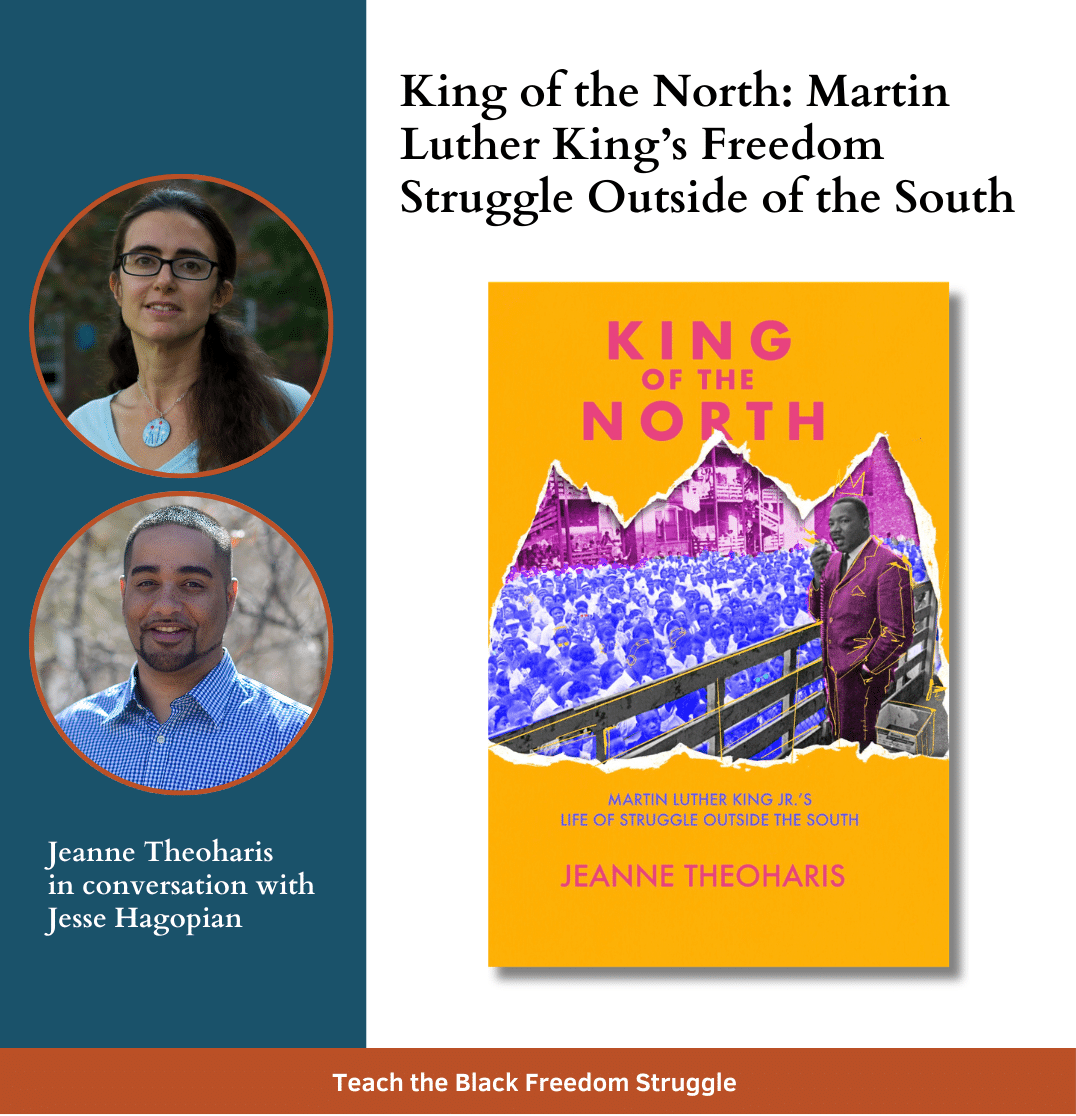
On October 27, historian Jeanne Theoharis discussed her book, King of the North: Martin Luther King Jr.’s Life of Struggle Outside the South, with renowned civil rights lawyer Sherrilyn Ifill. The class was moderated by Rethinking Schools editor Jesse Hagopian. This class was a follow-up conversation to a previous discussion between Theoharis and Hagopian about King of the North.
Watch our previous Teach the Black Freedom Struggle online classes and register for upcoming classes here.
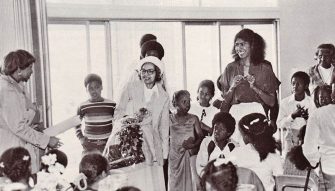
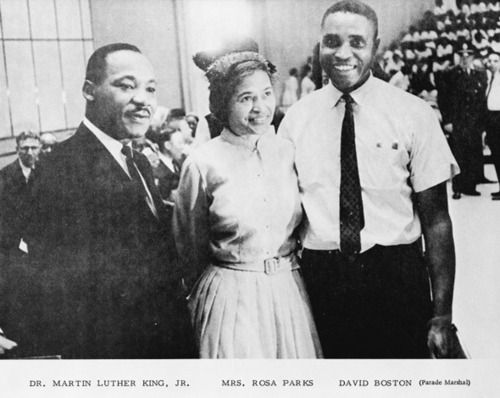
In the excerpt below, Theoharis describes the February 1964 New York City school boycott — the biggest civil rights protest of the era — and why, in Martin Luther King Jr.’s words, it exposed “the thin veneer of Northern racial self-satisfaction.”
Participants shared what they learned and additional reflections on the session:
The most important thing I learned was how easily key parts of the Civil Rights Movement are erased in the ways they’re often taught. Jeanne Theoharis and Sherrilyn Ifill both emphasized that activism didn’t end with figures like Rosa Parks or Martin Luther King Jr.: It was and is the work of countless people challenging injustice over time. I was especially struck by how they connected historical struggles for justice to current issues like voting rights and systemic inequality.
I loved how Coretta Scott King was highlighted as a Civil Rights activist in her own right, and she educated her husband in much of what he came to speak on and represent.
I was struck by the power of personal stories and narrative. I’ve read the book, but even hearing Jeanne share one or two Coretta Scott King and Martin Luther King Jr. stories that weren’t highlighted in the book was so powerful, and a great reminder not to lose individual people both in struggles and in teaching.
I become a better and more informed educator every time I attend one of these sessions.
I am leaving this class with a version of Dr. King who is much more engaged in the North (in school segregation, housing segregation, and police brutality) much earlier than previously considered. He’s also more engaged with other organizers of differing ages than generally considered. He is not a figure of respectability politics. Each of these understandings has important implications for our students today.
The overall experience of the Zinn Education Project classes encourages me to do more, learn more, teach more, analyze more, inquire more, and inspire my students to do the same.
This session highlights and compounds how much having these conversations is even more important right now in this political climate, where people are afraid to speak about civil rights and we whitewash our history. As educators, we need to be brave.
Event Recording
Transcript
Click below for the full transcript with resources mentioned in the discussion.
Transcript
Jesse Hagopian (he/him): On behalf of the Zinn Education Project, we would like to welcome everybody to our Teach the Black Freedom Struggle class with Jeanne Theoharis in conversation with Sherrilyn Ifill. My name is Jesse Hagopian, and I’m a Zinn Education Project campaign director and an editor for Rethinking Schools.
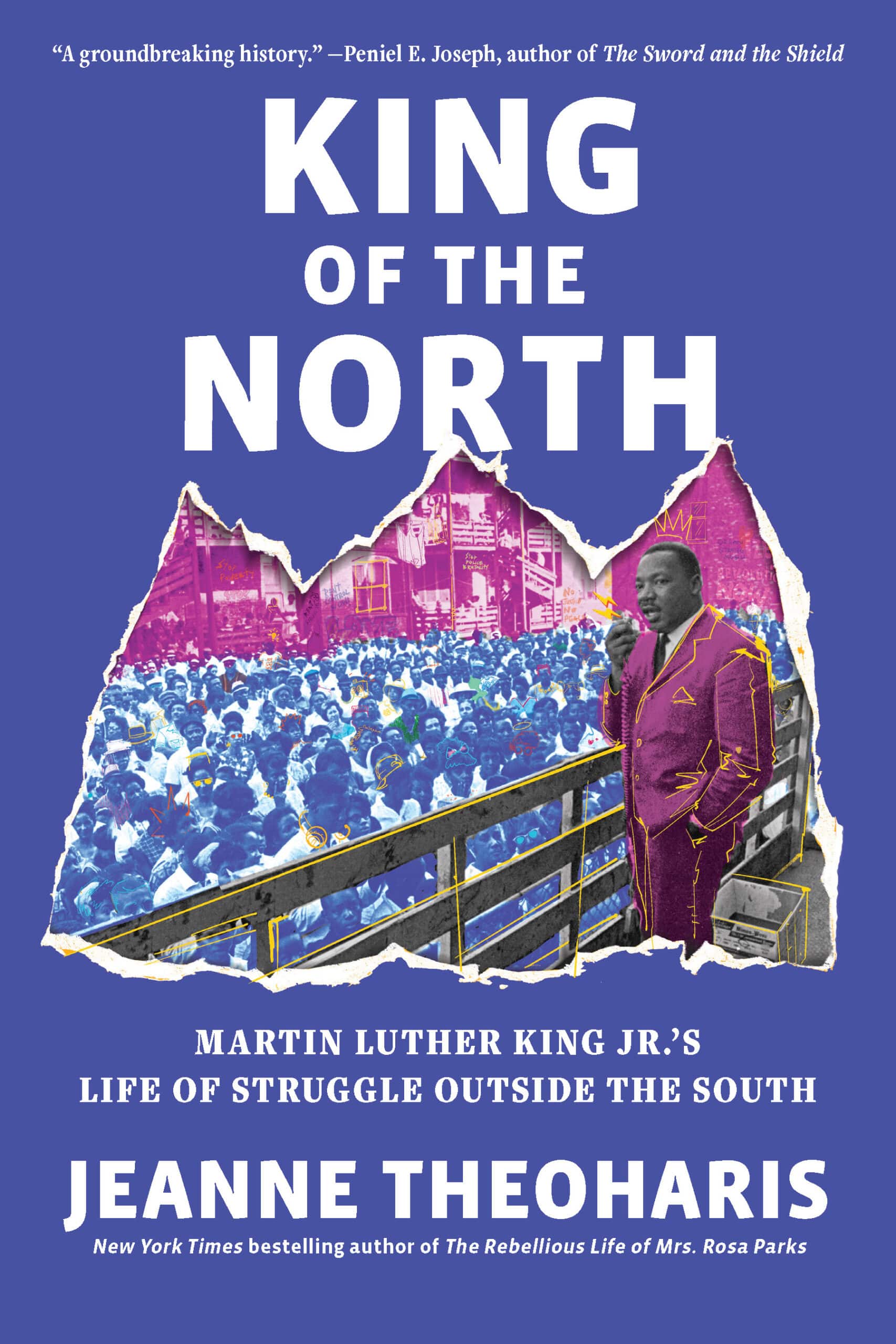
I am happy now to welcome historian Jeanne Theoharis, who co-founded this series with us more than five years ago. Jeanne is the author of some of our favorite books, including this new one, King of the North: Martin Luther King Jr.’s Life of Struggle Outside the South, and The Rebellious Life of Mrs. Rosa Parks, which was also adapted for a young readers edition, and A More Beautiful and Terrible History: The Uses and Misuses of Civil Rights History. I should note that The Rebellious Life of Mrs. Rosa Parks was turned into a documentary film that everyone needs to see and use in your classroom as well.
Jeanne will be interviewed by renowned civil rights lawyer Sherrilyn Ifill. Ifill is the founding director of the 14th Amendment Center for Law & Democracy at the Howard University School of Law. This will be of interest particularly to teachers who are devoting a lot of time these days to teaching the Constitution and the upcoming 250th anniversary of the Declaration of Independence. And Ifill is the author of On the Courthouse Lawn: Confronting the Legacy of Lynching in the 21st Century. If you don’t already, sign up to follow her on Substack, please. Thank you both so much for joining us.
Sherrilyn, I’m going to turn it over to you.
Sherrilyn Ifill: Thank you so much, Jesse. I appreciate it. I’m really thrilled to be with you tonight. I consider the Zinn Education Project really mission critical, not just at this time, but as a sustained source of learning about our history. When my daughters were in high school, we were always looking for materials, and this resource is just so, so important.
I’m especially thrilled to be here tonight to be able to talk with Jeanne Theoharis. about her latest work. As the young people would say, I’m a Jeanne Theoharis “Stan,” meaning I love her work and her books. You heard Jesse mention some of the other books she’s written. I was looking around for my books, and I had to go on my shelf to get The Rebellious Life of Mrs. Rosa Parks, which I absolutely recommend. I could not find A More Beautiful and Terrible History, and I was just casting about, and the reason I couldn’t find it, of course, is because it was right next to me, under my calendar. This is my favorite. I love this book. If you haven’t read it, especially for those of you who are educators, it’s so important.
If we take those two books and we now combine it with the latest book, King of the North: Martin Luther King Jr.’s Life of Struggle Outside the South, I think, Jeanne, I see a throughline. And the throughline I see is not civil rights. What I see is you devoting yourself to telling these very important, untold stories. We have had so much of our civil rights history repackaged and served back to us, in some ways, with the parts that are most palatable. And what I see as the throughline in these three books is that you are allowing us to see and sharing with us narratives that complicate the story. So, am I wrong, or am I right?
Jeanne Theoharis: No, you’re totally right! I think what I would add to that is, the other throughline, maybe, is also . . . I began my career actually studying the Civil Rights Movement in Boston, but I think what the Rosa Parks book did for me, and then the King book does perhaps even more, is return to people and things we think we know. Because I thought I knew Martin Luther King, right? Like, I’d read, I knew he wasn’t just dreaming, I knew the Poor People’s Campaign and these things. And you realize how much . . . and really with King, it’s hidden in plain sight, right? I didn’t go to an attic; it was out there. But it was about connecting dots that we haven’t connected precisely because — like your point about palatability, right?
Why, with the mountain of books we have on King, have we still southernized him? I would argue it’s partly [because] it’s an easier story, and we like [an easy] story. I think King’s story, like [Rosa] Parks’ but even more so, is just a fight. It might be hard, but in a country like this . . . it’s a kind of misuse of “the moral arc of the universe is long, but it bends towards justice,” right? I mean, I think what Dr. King meant by that was not some sort of American progress narrative. He’s relentless about how this myth of time does not make things better. And things are not necessarily getting better, right? But looking at taking King outside of the South, and then all the things you see about him — that he’s a listener, that he has this whole personal understanding of segregation and police brutality, that he shows up for other people’s struggles, that he doesn’t just lead from the front — shows us all these different parts of him. But fundamentally, it shows us an America that isn’t just constantly improving, and that many of those northern liberals, who were like, “Yes, I would like change in Montgomery”, the second it was here in Chicago, here in New York, are like, “No.”
Ifill: Okay, but we’re getting ahead of ourselves. I really do want to take it slowly, because this book is incredibly rich. There’s a lot of history here that I think, especially for the educators or for anyone, honestly, you’re going to have to dig deeper, although you get a lot here. I want to make sure that we take the stages of it, because I want to talk about not only Dr. King in the North, and the particular qualities about him as a leader that you describe that are actually so important, and in some ways contrary to what we’ve been told, but I want to make sure that we also really deal with the complicated person, and what it takes to lead in this way.
Obviously, one of the things that is very important to you in writing this book, like The Rebellious Life of Mrs. Rosa Parks and like A More Beautiful and Terrible History, which is, again, that’s certainly about the North, but also the stories that we leave out. That we have decided there was this narrow brand of activists, when activism took many forms. was quite atomized in many ways, involving people from multiple generations. And this demonstrates a level of clarity among ordinary people, about the systemic forces that they were facing. So I want to have a chance to delve into that.
And then I would say, I want to have a chance to delve into why you spend so much time on Coretta Scott King. I think you may be the first woman to write a memoir or narrative or biography of any of King’s life.
Theoharis: Yep.
Ifill: It might be interesting to just think about why all of them are written by men.
Theoharis: Yep.
Ifill: And it might be interesting to think about what is missing as a result.
Theoharis: For sure.
Ifill: One of the things missing is Coretta Scott King as an activist, and as a political partner. Why don’t we just start there? Because what’s interesting about Coretta Scott King’s story is that she has — this I did know — a much more activist mind and experience.
Theoharis: Oh, for sure.
Ifill: And that’s before she ever meets Dr. King. She’s from that troublesome county, from Perry County, Alabama. Marion, which is the place where a lot of activists were developed.
Theoharis: Right.
Ifill: Coretta Scott is way ahead of King, so could you say something about that — how they met and where she was in her activist development?
Theoharis: Thank you for starting us there, because I think when we start there, we really change also where we see them and how we see them. She goes to Antioch, and she and her sister are one of the first . . . Antioch is probably the most liberal college in the nation when Coretta Scott goes there, but her and her sister are the first Black students to go to Antioch in decades. So Antioch is both this incredible, expanding experience for her. She gets very politically active. But it’s also a space of segregation and of the limits of Northern liberalism.
She majors in music and education. Like every education major, she has to student teach. Except that Yellow Springs, which is the city in Ohio that Antioch is located in, won’t let her student teach in their schools. And Antioch sides with Yellow Springs, which she’s just astounded by, and says she should go student teach in Xenia, which is sort of nearby and is a Black school. And she’s like, “No.” But then her classmates are protesting the Korean War. They’re protesting all sorts of things. But when she goes to them to ask, “Will you join me to go to the president of Antioch to protest this?” no one will go. This experience of both going alone — she still goes. She’s like, “I’m not going to go student teach there.” It actually means she has to spend an extra year at Antioch, because she teaches at the lab school at Antioch to get her teaching credential.
In part because of this, she gets involved in the Progressive Party. People may know the Progressive Party, in 1948, was running a third-party challenge for the presidency, Henry Wallace. Both on domestic issues of segregation and economic inequality, but also on global issues, challenging Cold War militarism. If we think about what we typically associate with Martin Luther King’s last year — which is the terrible evils of racism, poverty, and militarism — Coretta Scott has that in 1948. She goes to the Progressive Party Convention, one of about 150 Black people, and she meets, through her Progressive Party work, both Paul Robeson and Bayard Rustin. She knows Rustin and Robeson long before she knows Martin Luther King.
She then decides she wants to pursue a vocal career, so she goes to the New England Conservatory of Music. Martin is there getting his PhD at Boston University, and they meet through a mutual friend. At first she’s not that interested in meeting him, because, even though she is a deep Christian, for her, being a deep Christian is what you do in your life, and most of the ministers she knew were all about suits and sanctimony. And these are her words. So she’s very worried about how narrow he might be. But they have a lunch date, they talk about racism and capitalism on that very first date, and he’s smitten. I think partly why he’s smitten is because she is way out ahead of him. She’s had experiences. I think what impresses her is obviously a vision, a commitment, a resolve to do things. He’s a listener, this is one of things.
Going to your question of what it mean to be a woman biographer when almost all the other ones have been men, to me, it’s like, why don’t we know that Dr. King was a listener? Because she describes him as a listener, [Harry] Belafonte describes him, so many friends, but also gang members. I’m going to get ahead of the story for one second, but I think one of the things about what she will fall in love with is that he’s not judgy. And yet I feel like the ways that we now get Dr. King is often kind of this little bit of a finger wagger, some sort of respectability politics kind of guy, when that’s really not who he is.
Ifill: This is something that I think, even when they began to have differences, Stokely Carmichael affirmed, and members of SNCC affirmed, that King would hear them out. He would sit on the bed and let them talk. He didn’t feel the need to dominate them with his alternative view. And that’s a hugely important quality, and what you’re getting at when you talk about this lunch, I mean, he’s Black middle-class royalty, right? His father is the pastor of a big church in Atlanta. Obviously, he’s going to inherit that church. He’s there at Boston University. He’s on his way.
Theoharis: Yes.
Ifill: And very often, men like that in that time didn’t listen, didn’t feel like they had to listen, to a woman, and that had to be hugely impressive for her.
Theoharis: For sure. And then his family wants him to marry somebody else.
Ifill: That’s right.
Theoharis: And so both the fact that this is who he wants, but also, they get married in 1953, and she refuses to wear white. She wears a light blue dress, it’s not a floor-length dress. And then, people . . . King’s dad was a very imposing man. According to accounts, King and his siblings don’t really challenge . . . I mean, his dad is very . . . the only one who would really challenge him is Coretta, and she gets him to take “obey” out of their vows, because that makes her feel like an indentured servant. Again, 1953. That speaks to both her, but also that this is Dr. King’s beloved in 1953. So I think that speaks to who they are and what they’re about.
Ifill: We would call this a power couple now. We’ve called this a power couple, except that she doesn’t get to actually exercise all her gifts.
Theoharis: But who Martin Luther King becomes is only possible because of Coretta Scott. I will say that a million different ways, but I’ll give one example. Martin gets his first calling to the pulpit at Dexter Avenue. They moved to Montgomery in 1954, and as we know, December 1, 1955, Rosa Parks made her historic bus stand, we had the Montgomery Bus Boycott, and six weeks into it, King’s house gets bombed. The thing to remember is the Kings have had their first baby two weeks before Rosa Parks made her bus stand. They had a two-week-old baby when their house was bombed, Yolanda is two months old. And Coretta manages to get her and Yolanda out safely. But of course, guess what happens that night? Both dads come to Montgomery and are like, “Oh no. No, no, no, no, no, no, no.”
Ifill: “Pack it up.”
Theoharis: Packing up, exactly. “And if you’re not packing it up, at least her and the baby are packing it.” “We’re not, absolutely not.” And she’s like, “No, I’m not. We’re not going anywhere.” Dr. King said the next morning, like, “You’re the only person who stood with me.” But also, I mean, that would have been more than understandable. You have a 2-month-old baby. You get out safely once. You have to assume that the second time, they’re going to use a stronger bomb. If they’d used a strong enough bomb, they wouldn’t have lived. So you have to understand that. And yet she’s like, “We’re not going anywhere.”
Again, I think this also says something about Dr. King. We often talk about how she . . . because we know where the story’s going to end. How she worries about him. But from that night on, he lives with the very real and palpable fear that she could be killed. So I think thinking about who they are as a couple, their personal politics or gender politics, however I want to talk about it, what that means, that she’s like, “I’m not going anywhere,” and they don’t go anywhere.
Ifill: Yeah, I think that it’s so important, because I think we tend to keep these dates in our head, and we imagine what relationships must have been like. And this is one that’s complicated. She is distressed by Dr. King’s chauvinism about who should be taking care of the kids. Very often she wants to go with him on these trips and she is told she can’t. So there’s that tension, too. But it’s complicated, as they say, and especially in these beginnings, this is what they’re taking on.
This is a situation they walked into with their eyes open, in part because of that early bombing. Like, this is not, we got into something and then it turned out it was really dangerous. They knew exactly what they were walking into very early on. And, again, because of who they were, the story about the Marion girls, the Perry County girls, is that they were known as being the pretty girls. So, promising young men like King would want to get a wife from Perry County. What they actually meant was colorism. What they meant was light skin. But in any case, she was considered very attractive and smart, and we talked about him being a kind of middle-class prince. They didn’t have to do this, you know? They are literally doing this out of their conviction.
The last thing I wanted to say about just tracing that line from Coretta is that Coretta, very early on, as you have already alluded to, has that international perspective. She is working on peace issues, she finally gets to do some speeches, and when I become an adult, she’s working in the anti-apartheid space, and so she continues that, but she very early on had an international lens that King didn’t develop until later.
Theoharis: When he gets the Nobel Prize, she really sees this as a new responsibility for them. She had been already active in the global peace movement, she’d been to Geneva around the Nuclear Test Ban Treaty, she’d been at the UN, again calling on the United States and the USSR. . . . But she really talks about the Nobel Prize as both a joy and a burden, because she really feels this. And she is like, “We have to be out on Vietnam,” and from 1965 on, she is publicly out on Vietnam. And she is one of the leaders of the nation.
For instance, in June 1965, she was the only woman who spoke at the first big rally at Madison Square Garden. Dr. King is interviewed afterwards by a journalist who’s patronizing and says, “Well, did you educate her?” And he says, “No, she educated me.” Like, she is out ahead of, I mean, she is leading the nation. We often talk about King’s April 4, 1967, beautiful speech he gave at Riverside, but we can see all of those themes in things she’s saying in 1965 and 1966. We tend to credit, importantly, Vincent Harding with that speech, or other people, like Howard Thurman for King’s liberation theology, and I think we miss how much Coretta Scott King is also perhaps his most important advisor, and that these ideas are coming from her, as well.
Ifill: And they’re also reviewing his speeches, like, after he gives them, right? She’s offering her ideas and critiques?
Theoharis: Totally.
Ifill: So, let’s make the shift, because the book is called King of the North, and at some point, I was thinking, which King are you talking about? But let’s go with Martin Luther King, because this is a book, I think, in which Coretta gets . . . I’ve actually not read a book besides Coretta’s own memoir in which she gets the kind of treatment that you’re providing here. So if there is a question about what we miss with the other memoirs, we miss a really full picture of what she brings to the table.
But it’s called King of the North, so I want to talk about the North, and I’m going to start with New York and Los Angeles, and then we’re going to spend the most time on Chicago, as you do in the book, for lots of reasons. But I want to first just talk about the perception, what is the perception that has allowed the story of King’s activism in the North to be buried? This, to me, very much connects with A More Beautiful and Terrible History. Because we also are trained to think of the story of school desegregation and activism around school segregation and disparities as a movement of the South, because of Brown, because of Briggs, because of Little Rock, and because of all of the school cases that became part of major cases or major actions. So, one of the reasons why A More Beautiful and Terrible History is probably still my favorite among all of Jeanne Theoharis’ books is because I’m from New York and I was bused to school the first year in 1968. I have 9 older siblings, but I’m the only one who was bused from kindergarten to a majority white school in Flushing, Queens. I would say majority white, maybe 60 percent, and later maybe 50 percent. By the time I was at high school, it was so diverse, I’m not sure I could really get you the numbers. But the point is, I lived in that period when Northern schools — in some measure because of the Civil Rights Act of 1964 and the fear of the potential of federal funding being cut off — began to try to make some nascent efforts. And they had largely been left out of the story. We all talked about segregation in the South, and that was the headline, but not segregation in the North. So I would love it if you’d just give an overview of that conception. Secondly, we should talk about the role of the press in maintaining that, if you will, segregated story about racism, segregation, and white supremacy in the United States.
Theoharis: Yeah. I think I’m going to start with the press, because there’s no way to understand how we get this story without understanding that this is the story we have of King, and particularly the ways that we see him as a southern minister who then discovers the North after Watts and goes north to Chicago. It is a story that is the media story of the time. And I think one of the things we want to remember is, again, there’s great work by Mary Dudziak and other people around the kind of Cold War context of the Civil Rights Movement, but one other aspect of that Cold War context is a kind of national investment, both in the race problem being Southern, and then in lifting up, as Dudziak talks about, whether it’s the desegregation of Little Rock, internationally, as like, “Look, we’re such a self-perfecting democracy, we’re just fixing our trouble spots.” Also, this is happening from New York to Chicago to LA; this is no regional trouble spot. This is endemic to the United States. So I think there’s a Cold War investment in seeing the race problem as Southern. But there’s also a media investment and a kind of northern liberal investment in being willing to kind of fix the South at the same time.
If we think about New York, what is New York’s response to Brown? It’s, “Hey, this is a great decision, but we don’t think it applies to us.” The superintendent of schools at the time, [William] Jansen, basically tells his administrators, “Don’t use that word segregation, use separation.” And what we’ll see, I saw somebody posting about Ella Baker in the chat; what is Ella Baker doing in the 1950s? She’s running the Harlem NAACP, she’s talking about the way even the NAACP is focusing too much post-Brown on the problem of the South, and she’s really organizing here in New York to sort of lift up . . . not surprisingly, Black parents in Harlem, Black parents in Chicago, Black parents in LA after Brown are like, “Hey, this means my kid is going to get a better education. This is going to apply to my kid.” And when that doesn’t happen, we begin to see this incredible flowering of movements, again, from New York to LA. To me, one of the clearest places where we see the kind of fulsomeness of the Northern Black freedom struggle is around school desegregation. That Black parents are relentless, not just in Alabama but in New York, in Chicago, that they are going to push as hard as they can, in as many ways as they can, to try to alleviate the unequal education that their children are getting.
Ifill: You know, Jeanne, I’m thinking also that, to the press, the copy is better when you focus on the South, right? Also, I want to be fair that tactically and strategically there was an effort among civil rights activists to activate, to arouse, outrage in the North about the South. That was part of it; we all know that. We know that Freedom Summer was to get the Northern kids to come down, and then Northern parents will worry about their kids. So let’s just be clear that the North-South piece was also strategically used by civil rights activists. But because of the nature of Southern bigotry and racism, which wasn’t like, if you talk to Mayor Daley in Chicago, he was a northern political figure that people would recognize. He didn’t present as Bull Connor, he didn’t present as uneducated, or ignorant, or, well, but in any case . . .
Theoharis: Well, not as “segregation now and forever.”
Ifill: Exactly. So the copy from the South was much more compelling. You needed an extra step to understand the nature of racism and white supremacy in the North. You needed another step to dig in and understand the systemic, you need to understand zoning. It got a little bit more complicated as opposed to white-colored fountains, and this is the bathroom you have to use. So the copy in the South was also more compelling, which newspapers liked, and maybe even became addicted to because their readers liked it.
Theoharis: Right. And I think this is the thing: there are readers that increasingly . . . And let me just step back for one minute, because both Kings had gone to school and come of age in the North. They already knew northern liberalism was not so liberal at home. Then, when we look at Dr. King’s first book, Stride Toward Freedom: The Montgomery Story, there is a section that’s about northern liberalism needing to be liberal at home, and not to just rise up in outrage about something happening in Mississippi, but somebody being denied a job or a home. So this sense of pointing over there and wanting to fix over there, and being offended, like, “I’m a good person. What do you mean that I’m segregating? What do you mean?” What young people today would call the gaslighting nature of northern liberalism makes it easier to focus on segregationists who proudly claim segregation. There’s a kind of slipperiness.
But I think, for me, one of the things about listening to Dr. King is the way that he’s both, as you say, he is absolutely trying to get Northerners to raise up their voices against the South. But he is also in those very rooms also saying, “That’s not enough.” We might see this as a religious imperative, too. This notion that you don’t just get to call out the splinter in your neighbor’s eye without the plank in yours. One of my favorites, he’s speaking to the Urban League, at the anniversary of the Urban League in 1960, and he really goes in and basically is like, “We need a liberalism that’s actually liberal at home, that rises up when somebody can’t buy a house or rent a house, that rises up.” He sees a responsibility.
I think we can also see an evolution. In those early years, we might see the way he would talk to congregations wherever he was. Which is, your professions are different from your actions. We get to the mid-1960s, and he’s starting to call liberalism more like a garment, or a vanity, or a comfortable pose. He begins to see that no, they don’t care that their professions are different from their actions. He gets more disillusioned. I’m not saying that he doesn’t evolve, and that there’s . . .
Ifill: But what’s interesting about what you said, Jeanne, you said he wants Northerners to be calling out racism in the South. But in those conversations, he is always referencing what is happening in the North.
Theoharis: Always.
Ifill: How is it then reported in the New York Times, for example?
Theoharis: Well, there’s multiple ways. A, they don’t report it.
Ifill: They’ll report what he says about the South?
Theoharis: Yes, but they don’t, or they . . .One of my favorites, so in 1964, California had a segregationist ballot initiative called Proposition . . .
Ifill: Proposition 14. Exactly.
Theoharis: The New York Times . . . Dr. King flies back and forth and back and forth across 1964 to try to defeat Prop. 14. It’s going to basically give Californians the right to discriminate in the sale and rental of their property. That’s what Prop. 14 is going to do. Dr. King and many, many people across the country, and particularly in California, a multiracial coalition, are trying to defeat this. So King is going back and forth and back and forth. If you look in the New York Times, they call it a speaking tour. They’re not talking about Prop. 14. So that’s one way they cover it.
The second way is they talk about his activities when they’re focused on the North very differently. One of the things people know, a few weeks after the March on Washington comes the bombing of the 16th Street Baptist Church and the death of the four young women. One thing we’re a little bit less familiar with is that New York radicals and radicals across the country then decided to call for a boycott of Christmas shopping, in part to say this is not just the fault of a few people in Birmingham, this is a national climate. The New York Times writes the craziest editorial called Strike Against Santa Claus, where they’re super angry because King has come out in support of this Christmas boycott. I mean, they basically equate boycotting Christmas shopping with the killing of the four little girls [in Birmingham, Alabama]. They say its unreasonable, horrible, and it’s stooping to the level of the people who bombed it. I mean, it’s completely illogical, but they’re unhinged because basically what that boycott is saying is you can’t just blame it on this group of people down there. It’s a climate that is allowing for this kind of violence across the country. So sometimes they ignore it, and sometimes they have a very different tone and tact when that kind of nonviolent direct action is trained against them. And that will be true of the New York City school boycott, the biggest protest, as everyone on this call knows.
[breakout rooms]
Ifill: Jeanne, I want to come back to New York, and I want to come back to the incredible activism around school. Many of us know about the Ocean Hill-Brownsville school strike in 1968, but I want you to talk a little bit about what Dr. King is doing, about the activist Milton Galamison, who’s doing a lot of this work, talk about how this is also kind of lost to us. Everyone can picture people standing outside Central High School in Little Rock, but somehow this has been lost to us, so please share. And I would just say for the teachers on here, this is just so, so important, so I’m just going to let you talk about it.
Theoharis: I mean, as we were talking about before the break with Ella Baker, there is a movement in New York before Brown, but then, I mean, particularly Black parents, like everywhere across the country, see this is an opportunity for us to get our kids the education they deserve. So we have Black parents doing all sorts of things. We had a protest in front of City Hall in 1957, we had the Harlem Nine, and Black mothers taking their kids out of school to protest how unequal they are, and these kinds of school-based efforts. By the early 1960s, we began to see people just being frustrated, again and again. You can’t even get a tiny bit of change.
So Milton Galamison, who is a minister here in Brooklyn, Bayard Rustin, who we know from the March on Washington, and many organizers here in the city decide it needs to be a system-wide protest, so on February 3, 1964, again, the biggest civil rights protest of the era, when 470,000 kids stay out of school to protest the fact that there is not even a plan for desegregation in New York City, let alone desegregation. But again, going back to what we were saying before the break, the New York Times is apoplectic about the New York City boycott. They call it unreasonable, they call it reckless, and they call it violent.
I think one of the other things we want to remember is that one of the criticisms that we often associate with Black power is actually a criticism of Northern protest, even before Black Power. Dr. King is a huge supporter of the school boycott, and when we send out the notes, I will also maybe send a PDF. Dr. King actually wrote a really beautiful piece in the Amsterdam News two months after because there’s all this controversy about it. And one of the arguments that white liberals are using is that Black parents are depriving their kids of school, and that’s truancy, and that’s illegal, and the New York Times calls it adult-encouraged truancy. And Dr. King is not having it. He says the school boycott is so important because it exposes, and this is his phrase, “the thin veneer of northern racial self-satisfaction.” He just says it out right. Partly it makes people uncomfortable, because here it is showing that school segregation is as much a problem here in New York City as the places we’ve been more comfortable looking at, like Montgomery. But this is part of a growing . . . I mean, there’s a school boycott in New York, and actually a couple months earlier there had been a huge school boycott in Chicago in October 1963, when 25,000 kids in Chicago, half of the Black students in Chicago, stayed out of school. These numbers equaled the March on Washington, just to give us a sense of how big these are.
Ifill: It’s also notable that the activism in New York, these are Black and Puerto Rican families and parents. And I think that’s important, too, to recognize that Dr. King is well aware of the diversity of this. Say something about that. This was such a crazy revelation I stumbled upon. I had no idea.
Theoharis: So, in the beginning of 1963, Dr. King invites two New York Puerto Rican organizers down to Atlanta to basically have them organize Puerto Ricans for the March on Washington.
And I’m like, wait, did I miss this in other people’s books? No! Thousands, if not tens of thousands, of Puerto Ricans go to the March on Washington, and they march with Puerto Rican flags. Gilberto Gerena Valentín, who’s one of the organizers, gives a speech in Spanish, not in the official program, but that day. So then I’m like, “Well, how does Dr. King know these guys?” And this, again, is a New York story. In 1959 . . .
Ifill: Wait, just stop for one second. That’s something we cannot skip over. You just said, 1959. Because the other narrative is that King’s doing all this stuff in the South, and then he turns in 1966, after the Voting Rights Act, to the North. And there he meets his Waterloo, right? That is kind of the narrative. What your book emphasizes is that this is the late 1950s, earliest 1960s, that King is having these trips back and forth to California. He’s spending time in New York, he’s spending time in Chicago, [and] Detroit. It’s astonishing. So I’m sorry to interrupt, but I just didn’t want people to blow past the 1959 date. This is before Birmingham, right?
Theoharis: Oh my god, it’s before the sit-ins. Yes. I mean, just one other fact: 6 million miles. He flies 6 million miles. I think there’s a notion that King always leads from the front, and I think part of what the Northern story shows us is that King, as the young people say, he shows up for us.
One of the big battles in the North is around unions. Unions are both a portal to advancement for Black people, but they are also a place of exclusion and discrimination. One of the unions that so inspires Dr. King is 1199. Right here in New York he is introduced to 1199. So, 1199 are the health and hospital and pharmacy workers. They get started in the 1930s by Jewish pharmacists here in the city, and from pretty early on they’re interracial, and by the 1950s, they’ve decided that they’re going to try to organize the lowest paid hospital workers. Those are Black and Puerto Rican women who are basically doing orderly jobs. And these jobs are horrible. These women are forced to come in at the beginning of the day and clean, and then they have to come in for a second shift. As Dr. King would say, and I love it when Dr. King is just a little bit sassy, he says,”Their wages are so low you can’t even call them wages!”
One of the other crazy things is that most of the hospitals in New York are defined as private or charities, so you don’t have the right to unionize. So they’re going to have to strike the hospital to try to get these women recognition, like the right to sort of be in a union. Because basically a private or a charity is left out of the Wagner Act. This is getting us in the weeds. So, King meets with 1199 in 1959, because they’re going to strike these hospitals, and he’s like, “Call on me. Count me in.” And this is a sentiment that we see him again, this showing up. Like, “What can I do?” “This is exactly what we want.” And I think 1199 for Dr. King is so inspiring, because they’re walking the talk. They’re saying, “Yes, we are going to build an interracial union, we’re going to stand up for the lowest paid workers, and that helps everyone.”
Then, in 1962, they strike six more hospitals, and there’s an organizing committee, and on that organizing committee is Rustin, there is Randolph, but there are also these Puerto Rican organizers. In many ways, one of the other stories that I think we miss about Dr. King is how he’s constantly learning and expanding. He sort of sees this as not just a Black problem, it’s a Puerto Rican problem. So then it makes a lot more sense if he’s met these people in 1962, that in the beginning of 1963, when they started to organize for the March on Washington, that it’s like, “Yeah, we need to because they’re facing this, too.” And when they’re organizing in Chicago, we often think about the Rainbow Coalition that Fred Hampton built, and that’s really important, but what King and the Chicago Freedom Movement are doing a couple years earlier is laying the seeds for that. Because they’re working with Puerto Ricans in the city, they’re building multiracial alliances, [and] alliances with gangs. Much of the work that we sort of, again, associate with the Panthers.
Ifill: I think that’s the theme that’s going to take us through the rest of this session, which is that Dr. King is constantly learning.
Theoharis: Yep.
Ifill: And adding in that knowledge to his philosophy, to his portfolio, for his work in the movement. I want to touch briefly on California, and maybe use that as the conduit to talk about police brutality and swing us then to Chicago. One of the things that is absolutely left out of the narrative, and I’ve had many of these conversations on Capitol Hill when we were trying to get the George Floyd Justice in Policing Act passed, to explain that we are not coming with some new idea about police brutality. It was always part of the civil rights struggle. It’s just the one that never got its own statute. And having to really just chapter-and-verse them on how serious this was, and first starting with them, the most polarizing figure you can think of is Bull Connor. Like, what was his job? It’s not as though you don’t know it. Who beat the marchers on the Edmund Pettis Bridge? Alabama State troopers. If you actually slow it down for even the things people know, the most famous stories about the Civil Rights Movement, law enforcement is a huge issue. And I just think it’s one of the things where if there ever is a lesson that is missing and that has been, in my view, deliberately erased is the centrality of the issue of police brutality, which is part of the “I Have a Dream” speech, and part of all of these actions. So, could you talk about that a little bit, and about Watts, and how that unfolded?
Theoharis: Right. And I think this is sadly going to be our last question.
Ifill: Okay, well you’ve got to encompass Chicago.
Theoharis: I know.
Ifill: But, we’re going to get one more question, because we have to ask about housing in Chicago. We just have to. So you do police brutality, and then I’m going to take it on the chin and ask the question about . . .
Theoharis: Okay, there we go. I began this journey in LA, and one of the things that was such a revelation to me was working on the Black Freedom Struggle in LA, and I keep finding Dr. King over and over and over in this decade before Watts. So this story of he discovers the problem with Watts, or he discovers police brutality with Watts. In 1962, as people may know from the Malcolm X story, the unarmed Nation of Islam sort of secretary, Ron Stokes, is killed by police, and there’s a huge movement in LA. But one of the people speaking out about that is Dr. King. That’s 1962. Many of us know that line in the March on Washington speech where he talks about the unspeakable horrors of police brutality, and he’s absolutely talking about Bull Connor, but he’s also talking about the LAPD. He’s also talking about his own experiences.
I think there’s also a way, partly because of the ways that people get arrested now, that we think he’s some sort of celebrity getting arrested, and the ways that Dr. King has so much experience with both the police impunity — doing what they want — and outright violence — being kicked, being choked, being half-Nelsoned. So that when he is making common cause, when we get to share, and when he’s sitting with gang members and he’s worrying about them, and he’s getting the ACLU to get testimony from gang members to bring cases against police brutality, partly he’s doing that because he’s also had this experience. So when he’s sitting with them, it’s not like “I’m going to tell you what you should do, and you should pull your pants up and not use violence,” it’s a conversation both about how we are going to challenge this racist machine, this domestic colonialism is what he’s talking about, but he’s also talking about the ways that police work as enforcers in a system. It is not about bad apple cops. It is about the system of law enforcement working in tandem with a segregationist machine.
Ifill: Absolutely, and I think these are some of the most compelling parts of the book, when you describe Dr. King and Coretta Scott King go to Chicago, and they decide to deal with the issue of housing segregation and the terrible conditions in which Black people are compelled to live, in substandard housing in Chicago. They decide to live in a housing project for a period of time to learn and also to dramatize the conditions in that housing project. And when they are there, they are meeting with people all the time, and to the dismay maybe even of some of his colleagues, Dr. King and Coretta are meeting with the Vice Lords, a major gang who are at first reluctant but then really excited about the conversations they’re having with Dr. King. And this is another place where Coretta Scott King is particularly vocal and troubled about the housing conditions. There is an incident when a baby is killed by rats that sets off more of this, and so could you just put all of Chicago kind of into those two subjects, the housing and the meeting with the young gang members?
Theoharis: So they move into the West Side. By the mid-1960s, there are now two huge slums that Black people are pushed into in Chicago. Just to give us a sense, there’s one million Black people living in Chicago by the time the Kings moved there. That’s more Black people than live in the whole state of Alabama who are living in Chicago. And the level of segregation is like nothing they’ve ever seen, and the conditions. The thing we want to remember is also that Chicago has incredibly developed building codes, but they’re not being enforced. So this is not just about slumlords, this is about the city allowing it, profiting from it, getting kickbacks from it.
One of the things about living there is people coming by and sharing all these things that are happening to them, these conditions that they’re living in. A couple weeks after they move into their apartment, a one-year-old baby named Andre Adams is basically eaten to death by rats. And he’s also malnourished. Dr. King will say this is as much of a civil rights tragedy as the killing of Viola Liuzzo, the white Detroit woman who was killed in Selma, Montgomery. I think we often miss that about him in Dr. King’s vision — a baby being eaten by rats and malnourished in a city that could have prevented that is on the same level as the Klan attacking a white woman on a Selma road.
But, my last point is that how that’s portrayed is very different. The death of Andre Adams gets nowhere near . . . I mean, the reason I can tell this story is because of the Black press. I would not have known that baby’s name without the Chicago Defender. That story, and then a couple weeks later, more families come to the King’s house. Their building has no heat, there’s rampant rats, and King and the SCLC decide to make a trusteeship for that building — basically it’s like a rent strike and then the money is pooled, and then they fix the furnace, and they plug the holes, and they get an electrician — and how the New York Times and the Chicago Tribune cover that. They do not talk about people in Chicago in February having no heat and a baby wrapped in newspaper. They talk about this as mean and picking on an old landlord, and you don’t have a sense that people are living with rats. So, where I think I want to end tonight is back at that same place we started, which is the difficulty of seeing these kinds of northern injustices . . .
Ifill: We’ve come to picture what civil rights injustices looked like. So, what does it mean to put the death of Andre Adams in the midst of that, right, as equal to. . .
Theoharis: The Klan bombing somebody’s house, or somebody’s car.
Ifill: And this is where we get the, “You’re not doing it like Dr. King. You’re not doing it right.” Listen, I know we have no time, but I’m going to ask Jeanne, for those who can stay on, if you would just read one passage from the book to close.
Theoharis: Oh, my goodness, wow. I think I’m going to read where I end.
Ifill: Yeah, it’s on page 304, it’s right at the ending, that paragraph that begins “Reckoning with this side of King is urgent,” which is a plug for the book.
Theoharis: Yes. “Be more like King, they tell the activists, when King was treated as ‘unreasonable, accused of inciting violence, relentlessly released, and harangued by the media and more moderate Black leaders.” Be more like King, they tell young activists, when perhaps the greatest gift of his leadership was his embodied belief in the power of each person’s action.
Convinced that the systems of injustice before us did not have to stand, he insisted that we are enough to step forward, and that what some cast as unimaginable could indeed become possible.” Thank you.
Hagopian: Thank you.
Ifill: Jeanne, what a wonderful book.
Hagopian: Thank you so much. What a beautiful way to end. What a warm conversation, and just intellectually brilliant, so invaluable for our educators here. I can’t thank you both enough for that incredible evening.
While this transcript was edited, there may be minor errors or typos — if you notice something you believe to be incorrect, please contact us at [email protected].
Short Video Clips
Sherrilyn Ifill on:
The legacy of police brutality in the Civil Rights Movement.
What’s missing from most narratives on the Civil Rights Movement — including Coretta Scott King’s roles as an activist and a political partner to Martin Luther King Jr.
The Zinn Education Project as “mission critical as a sustained source” of history education.
Audio
Listen to the recording of the session on these additional platforms.


Resources
Here are many of the lessons, books, and other resources recommended by the presenters and participants:
Lessons and Curriculum
|
|
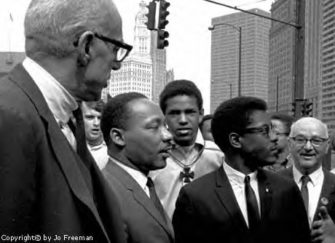
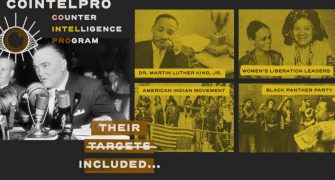
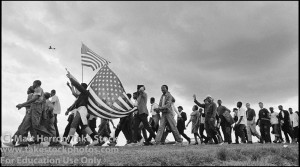
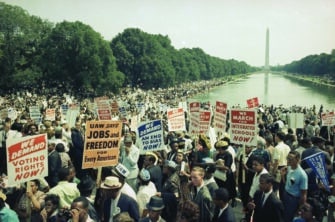
A Revolution of Values by Rev. Dr. Martin Luther King Jr. Hidden in Plain Sight: Martin Luther King Jr.’s Radical Vision by Craig Gordon, Urban Dreams, and the Martin Luther King Jr. Papers Project COINTELPRO: Teaching the FBI’s War on the Black Freedom Movement by Ursula Wolfe-Rocca Stepping into Selma: Voting Rights History and Legacy Today by Teaching for Change ‘We Had Set Ourselves Free’: Lessons on the Civil Rights Movement by Doug Sherman Teaching A People’s History of the March on Washington by Jessica Lovaas and Adam Sanchez The Rebellious Life of Mrs. Rosa Parks Teaching Guide by the Zinn Education Project “Intolerable Conditions”: Teaching About Northern Racism Through Rosa Parks’s Detroit by Say Burgin, Jeanne Theoharis, and Ursula Wolfe-Rocca The Rebellious Lives of Mrs. Rosa Parks by Bill Bigelow Teaching SNCC: The Organization at the Heart of the Civil Rights Revolution by Adam Sanchez Teaching the 1964 New York City School Boycott by Adam Sanchez |
Books
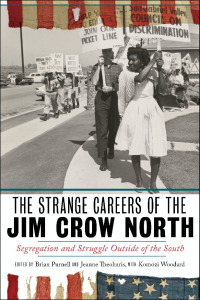
Articles
|
|
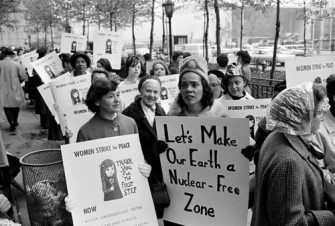
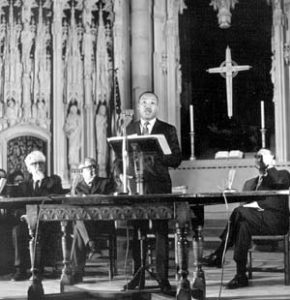
Learning From the Courage of the Civil Rights Movement by Jeanne Theoharis (Jacobin) MLK in the North: The Civil Rights Leader Understood That Racism and Segregation Were National Problems by Jeanne Theoharis (Teen Vogue) W. E. B. Du Bois to Coretta Scott King: The Untold History of the Movement to Ban the Bomb by Vincent Intondi (an If We Knew Our History article) Challenging Ourselves: Martin Luther King, the Movement, and Its Lessons for Today by Charles E. Cobb |
Additional Resources
|
|
King of the North: Martin Luther King’s Freedom Struggle Outside of the South, a 2025 Teach the Black Freedom Struggle online class, part I of the conversation about King of the North People’s Historians Online: Rethinking Dr. Martin Luther King Jr. a 2020 Teach the Black Freedom Struggle online class with Jeanne Theoharis and Jesse Hagopian Dr. Martin Luther King Jr.: “Beyond Vietnam” film clip from Voices of a People’s History |
This Day In History
The dates below come from our This Day in People’s History collection, which contains hundreds of entries all searchable by date, state, theme, and keywords.
|
|
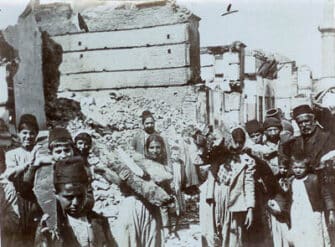
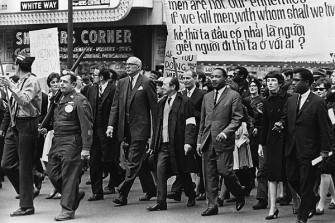
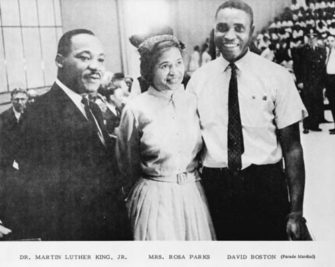
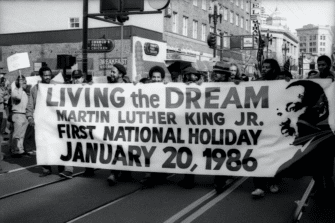
April 14, 1909: Adana Massacre Feb. 3, 1964: New York City School Children Boycott School March 26, 1964: Martin Luther King Jr. and Malcolm X March 25, 1965: Last Selma March June 11, 1965: Chicago School Boycott Oct. 8, 1965: Enforcement of Civil Rights Act Curtailed in Chicago Schools April 4, 1967: Martin Luther King Jr. Delivers “Beyond Vietnam” Speech April 30, 1967: “Why I Am Opposed to the War in Vietnam” Speech Feb. 12, 1968: Sanitation Workers Strike in Memphis March 14, 1968: King Speaks About the “Other America” in the North March 22, 1968: March for Justice and Jobs April 4, 1968: Martin Luther King Jr. Assassinated May 12, 1968: The Poor People’s Campaign Began Jan. 20, 1986: First National Martin Luther King Jr. Holiday |
Participant Reflections
With more than 175 attendees, a poll of participants’ primary roles in education showed 39 percent K–12 teachers, 21 percent teacher educators, 8 percent K–12 students, and more.
Here are more comments that participants shared in their end-of-session evaluation:
What was the most important thing (story, idea) you learned today?
I learned that Coretta Scott King was not just Dr. King’s partner, but a leader and activist in her own right. Her bravery, dedication to peace, and continued activism after her husband’s death showed how powerful her influence was in shaping the Civil Rights Movement beyond the South.
Coretta Scott King deserves her own recognition.
The whitewashed narrative that we are fed really must be changed.
The connection between Puerto Rican activists, unions, and Martin Luther King Jr.!
I loved how Coretta Scott was included. I loved how police were called in their role as oppressors for the state, in terms of white supremacy and black oppression. I also loved how the history Puerto Rican activists and activism was incorporated. And the role of the press — namely what wasn’t printed or the way in which stories were slanted.
People often remember King as a harmless dreamer who preached love and unity, but his actual politics were radical and confrontational.
The most important thing I learned was Coretta Scott King’s impact and influence on her husband, and how she taught him the values he is known for.
The idea that Dr. King was a listener — and that this quality was HUGELY important to his work.
The role of the media on what we think we know as history and the importance of a gender perspective on the history that we know of civil rights leaders.
The most important thing I learned today is how important Coretta Scott King was to the Civil Rights Movement, and to Martin Luther King Jr.’s work specifically. So many books focus only on Martin and ignore Coretta’s activism, her courage, and the experience she brought to their partnership. I also learned that civil rights struggles in the North, like school segregation and police brutality, were just as important and complicated as those in the South — it was just that the media often ignored them.
To borrow from Chimamanda Ngozi Adichie, the most important thing I take away is to beware of the single story. The historiography is so much more rich than I knew and I am eager to learn more.
What will you do with what you learned?
This session reminded me to include more Northern civil rights stories in the classroom, and to highlight women like Coretta Scott King and Ella Baker. I’ll create lessons that show students how activism happened nationwide and encourage them to explore lesser-known voices in history.
This motivates me to keep finding ways to empower and uplift my students who often face barriers or feel unseen.
I will be able to teach my 4th grade students about the impact of Coretta.
This will actually impact what I teach my grandchildren about our history.
I mostly teach women’s history, and though I came to learn more about Martin Luther King Jr., I am leaving wanting to learn more about Coretta Scott King’s life as an activist.
I hope to convince my school district that instead of focusing on Martin Luther King in January, that our district either focus on Coretta Scott or we focus on the work King did in the North.
I am currently a high school senior. I will look to share this information with my peers in the classroom and connect it to themes of misogyny and the importance of complete historical perspective.
I’ll definitely spend time during Women’s History Month and Black History Month celebrating and educating students about Coretta Scott King and what she brought to the table in the struggle.
As a teacher, I will be encouraging students to examine media framing critically — while offering alternative or Black media so students can compare framings. I’m using one of Dr. Theoharis’s books in my class this week and it was such a joy to be in conversation with people across the country doing radical work.
I would like to educate my students on this because when I was in school we always learned how Dr. King gave a speech and made a difference in the world, but we never learned about how his wife also played a role in changing the world. I would like my students to see how women are just as important and valuable as men.
I will share with others in my class who find this topic just has interesting as it was to me. I will look deeper into history and current events to understand the full story, not just the simplified version of things. It inspires me to stay informed and speak up when I see injustice.
I plan to incorporate the information learned today in my lessons on the Civil Rights Movement in AP African American Studies, my Literature of the African Diaspora class, and our Saturday Freedom School.
I will make sure to highlight the contributions of people who are often left out of the narrative, especially women like Coretta Scott King. I’ll also remember that activism and injustice happen everywhere, not just in the places we usually read about, and that it’s important to consider all perspectives in a situation as much as possible, including Northern and multiracial struggles.
How was the format for the class?
I thought that this discussion was so engaging and easy to follow. I was shocked at how quickly time was passing and how much there was still to cover! I could have listened for another hour, easily.
Terrific format.
It was perfect.
Everything worked as usual!
I love the breakout rooms and the ability to unpack what we learned.
I continue to volunteer to facilitate the breakout groups because it allows me to connect with like-minded educators and lifelong learners from around the country.
I enjoyed the format. The large discussion was informative but the breakout rooms allowed for personal conversations and experiences to be shared. I found both parts of the meeting to be positive.
I’ve been attending these classes since 2020. This group is amazing!
Presenters
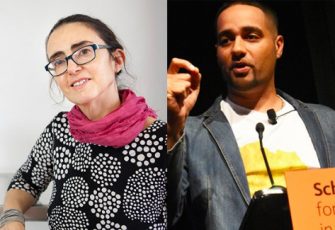
Jeanne Theoharis is a distinguished professor at Brooklyn College. She is the author or co-author of numerous books and articles on the Civil Rights and Black Power movements and the politics of race and education. Her books include the award-winning titles The Rebellious Life of Mrs. Rosa Parks and A More Beautiful and Terrible History: The Uses and Misuses of Civil Rights History. Theoharis co-founded the Teach the Black Freedom Struggle class series with the Zinn Education Project and invited our staff to collaborate on a teaching guide for The Rebellious Life of Mrs. Rosa Parks book and film. She wrote a piece with Robert Artinian on her family history, “God cried”: Charles’ “destan” on the 110th anniversary of the Armenian Genocide, in Armenian Weekly.
Sherrilyn Ifill is a civil rights lawyer and founding director of the 14th Amendment Center for Law & Democracy at the Howard University School of Law. From 2013–2022, she served as the president and director-counsel of the NAACP Legal Defense and Educational Fund, Inc. (LDF). Ifill is a scholar whose work has appeared in leading law journals, periodicals, and the nation’s leading newspapers. She is the author of On the Courthouse Lawn: Confronting the Legacy of Lynching in the 21st Century, and is currently completing a new book about race and the current crisis in U.S. democracy entitled, “Is This America?” which will be published by Penguin Press.
Jesse Hagopian is an editor for Rethinking Schools, co-editor of Teaching for Black Lives, editor of More Than a Score: The New Uprising Against High-Stakes Testing, author of Teach Truth: The Struggle for Antiracist Education, and the Teaching for Black Lives campaign director for the Zinn Education Project. He previously taught Ethnic Studies and was the co-adviser to the Black Student Union at Garfield High School in Seattle.



Twitter
Google plus
LinkedIn