Period: 20th Century

20th Century

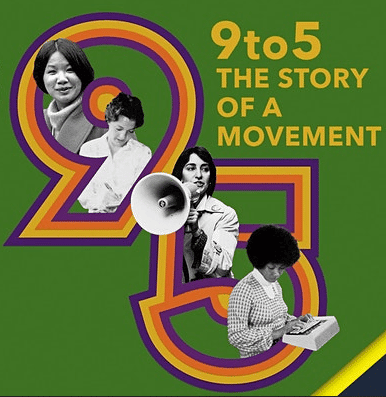
9to5: The Story of a Movement

Film. Directed and produced by Julia Reichert and Steven Bognar. Working Women Documentary Project LLC. 2021.
While Dolly Parton's "9 to 5" song is well known, this documentary captures the real-life 9-to-5 organizing to address issues of working women in the early 1970s that led to a union.
Continue reading
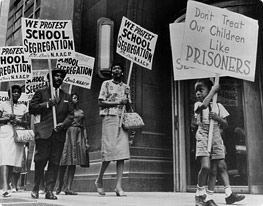
The Forgotten History of How Our Government Segregated the United States (Article) | Zinn Education Project

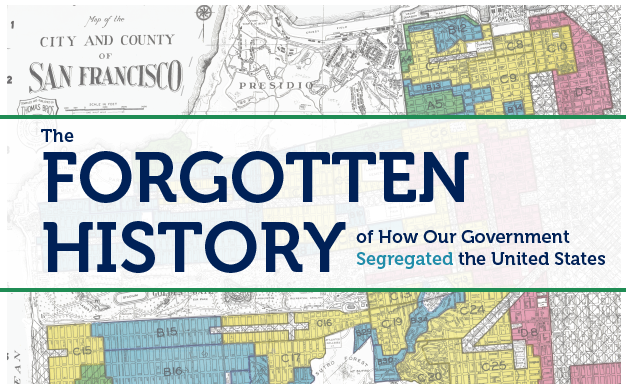
The Forgotten History of How Our Government Segregated the United States

By Richard Rothstein
Racial segregation characterizes every metropolitan area in the United States and bears responsibility for our most serious social and economic problems — it corrupts our criminal justice system, exacerbates economic inequality, and produces large academic gaps between white and African American schoolchildren. We’ve taken no serious steps to desegregate neighborhoods, however, because we are hobbled by a national myth that residential segregation is de facto — the result of private discrimination or personal choices that do not violate constitutional rights.
Continue reading

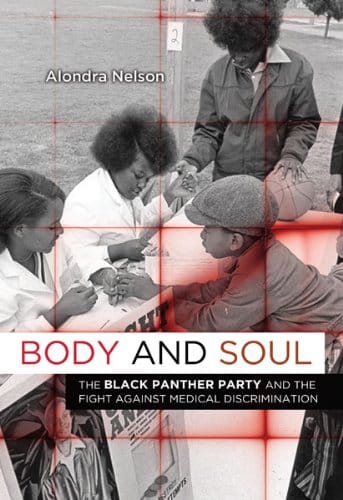
What We Don’t Learn About the Black Panther Party — but Should

By Adam Sanchez and Jesse Hagopian
Black Panther Party history holds vital lessons for today’s movement to confront racism and police violence, yet textbooks either misrepresent or minimize the significance of the Black Panthers.

This local organizing that Panthers engaged in has been erased in the textbooks, yet it is precisely what won them such widespread support. Armed with a revolutionary socialist ideology, as the Panthers grew, so did what they organized around. They fought in Black communities across the nation for giving the poor access to decent housing, health care, education, and much more.
Continue reading
Why We Should Learn About the FBI’s War on the Civil Rights Movement (If We Knew Our History) | Zinn Education Project: Teaching People's History

Why We Should Teach About the FBI’s War on the Civil Rights Movement

By Ursula Wolfe-Rocca
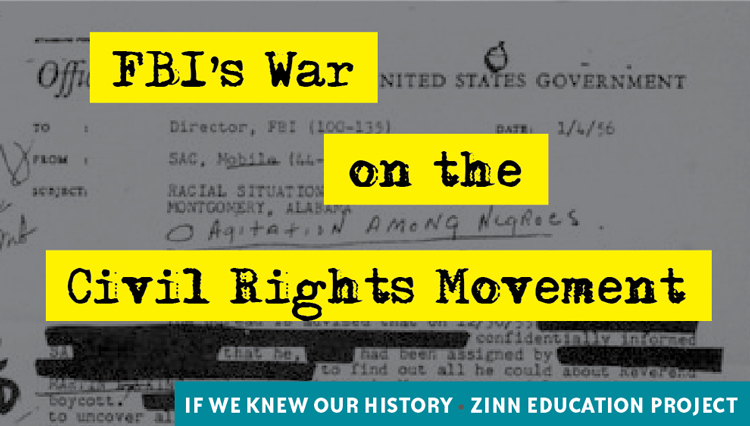
On March 8, 1971 — while Muhammad Ali was fighting Joe Frazier at Madison Square Garden, and as millions sat glued to their TVs watching the bout unfold — a group of peace activists broke into an FBI office in Media, Pennsylvania, and stole every document they could find.

Delivered to the press, these documents revealed an FBI conspiracy — known as COINTELPRO — to disrupt and destroy a wide range of protest groups, including the Black freedom movement. The break-in, and the government treachery it revealed, is a chapter of our not-so-distant past that all high school students — and all the rest of us — should learn, yet one that history textbooks continue to ignore.
Continue reading
Preaching and Farming at Mission Delores by Anton Refregier | Zinn Education Project

Lying to Children About the California Missions and the Indians

By Deborah A. Miranda
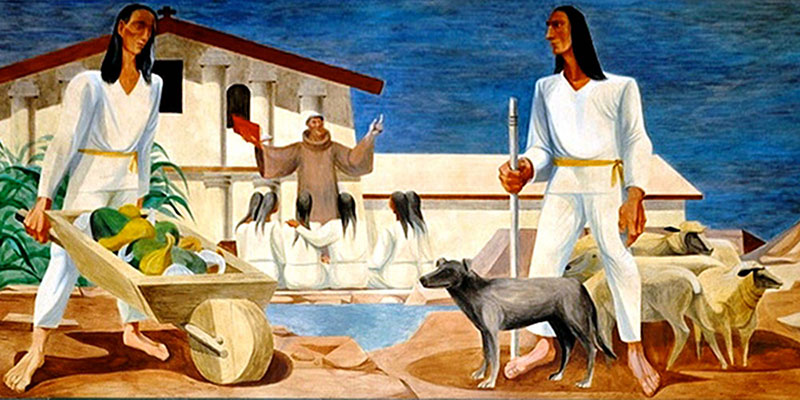
In California schools, students come up against the “Mission Unit” in 4th grade, reinforcing the same lies those children have been breathing in most of their lives. Part of California’s history curriculum, the unit is entrenched in the educational system and impossible to avoid, a powerfully authoritative indoctrination in Mission Mythology to which 4th graders have little if any resistance.
Continue reading
The Forgotten Fight Against Fascism

By William Loren Katz
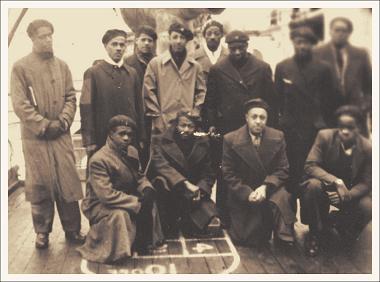
Anyone who has gone through school in the United States knows that history textbooks devote a lot of attention to the so-called “Good War”: World War II. A typical textbook, Holt McDougal’s The Americans, includes 61 pages covering the buildup to World War II and the war itself. Today’s texts acknowledge “blemishes” like the internment of Japanese Americans, but the texts either ignore or gloss over the fact that for almost a decade, during the earliest fascist invasions of Asia, Africa, and Europe, the Western democracies encouraged rather than fought Hitler and Mussolini, and sometimes gave them material aid.
Continue reading
Stripmining Black History Month

In “Stripmining Black History Month,” Jeff Biggers writes that “the neglect and degradation of a region and its history have always mirrored the neglect and abuse of the land.” And there is no more abused land in the United States than Appalachia, where coal companies continue to scrape away mountains to get at the thin coal seams buried within. The coal companies call everything that is not coal, “overburden” — streams, trees, animals, plants. Surely history itself is also a burden for the coal companies, because if we knew our history, we would know the rich legacy of activism that has characterized Appalachia — activism that does not conform to the whitewashed ignorant “hillbilly” stereotypes that the rich and powerful have found so convenient to promote.
Continue reading
American History Lessons

The original idea for the Zinn Education Project’s “If We Knew Our History” column grew out of our reading “American History Lessons,” by Melissa Harris-Perry in The Nation magazine. Harris-Perry’s article, reproduced here, is a meditation about the role of Black History Month.

She argues that we suffer from a “national deficit of historical knowledge” and that this deficit has contemporary political consequences. If we knew our history, she suggests, people would be less likely to follow the bigots who patch together historical symbols and soundbites to justify their right wing nostrums. And if we knew our history, we’d be more likely to appreciate and defend the accomplishments of social movements.
Continue reading
Fists of Freedom: An Olympic Story Not Taught in School

By Dave Zirin
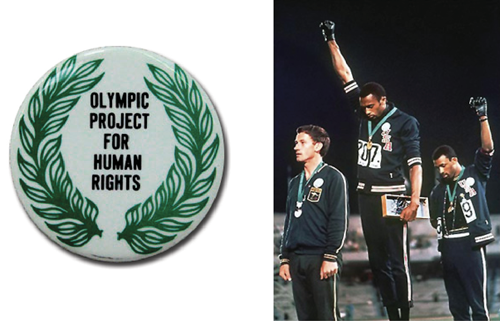
It has been almost 44 years since Tommie Smith and John Carlos took the medal stand following the 200-meter dash at the 1968 Olympics in Mexico City and created what must be considered the most enduring, riveting image in the history of either sports or protest. But while the image has stood the test of time, the struggle that led to that moment has been cast aside.

When mentioned at all in U.S. history textbooks, the famous photo appears with almost no context. For example, Pearson/Prentice Hall’s United States History places the photo opposite a short three-paragraph section, “Young Leaders Call for Black Power.” The photo’s caption says simply that “. . . U.S. athletes Tommie Smith and John Carlos raised gloved fists in protest against discrimination.”
Continue reading
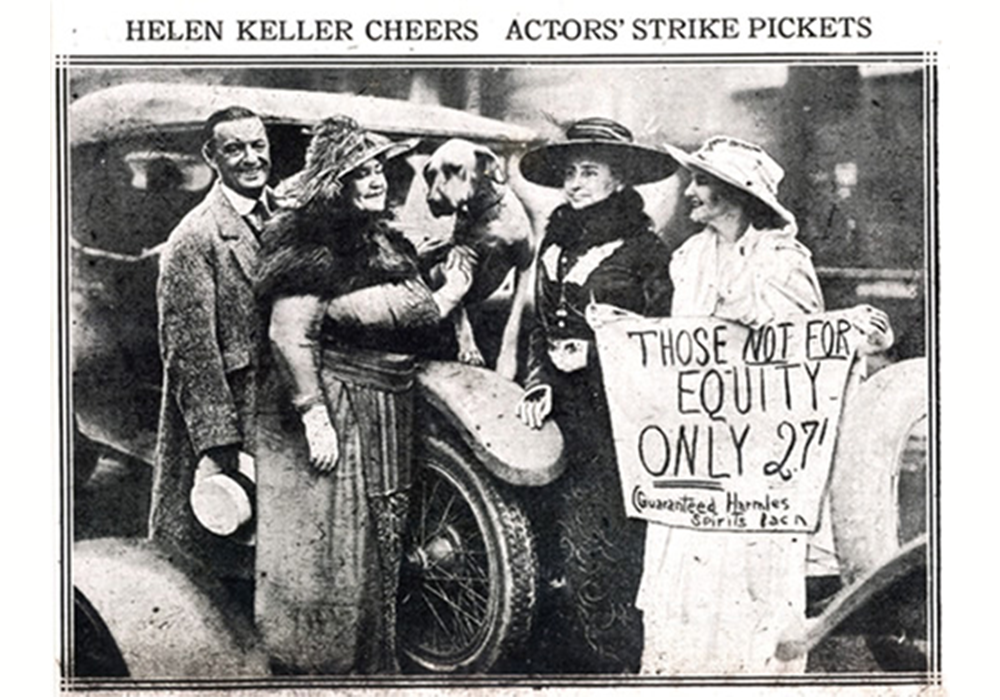
The Truth About Helen Keller (Lesson) | Zinn Education Project

Who Stole Helen Keller?

By Ruth Shagoury
In these times of vast economic disparities and ecological crisis, children need examples of people throughout history who committed their lives to justice — to bringing more equality and fairness to the world. Helen Keller, whose birthday we celebrate this month — June 27th — could be one of those role models. Instead, textbooks and children’s literature distort her life’s work, and miss key opportunities to inspire young people to make a difference in the world.
Continue reading
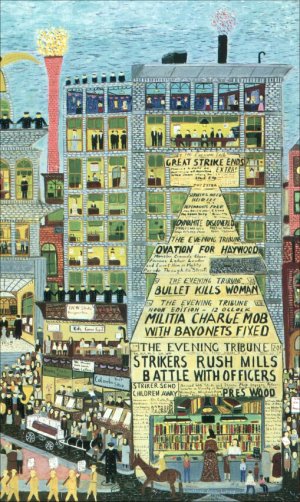
Fasanella - The Great Strike | Zinn Education Project

One Hundred Years After the Singing Strike

By Norm Diamond
Today’s Occupy movement is a reminder that throughout U.S. history a major engine of change has been grassroots organizing and solidarity. As an old Industrial Workers of the World song goes:

An injury to one, we say’s an injury to all, United we’re unbeatable, divided we must fall. —“Dublin Dan” Liston, The Portland Revolution

Major history textbooks, however, downplay the role of ordinary people in shaping events, especially those who formed labor unions and used the strike to assert their rights. One of the most significant strikes in U.S. history occurred exactly 100 years ago, in the Lawrence, Mass. textile mills, and yet it merits barely a mention in the most widely used U.S. history textbooks.
Continue reading
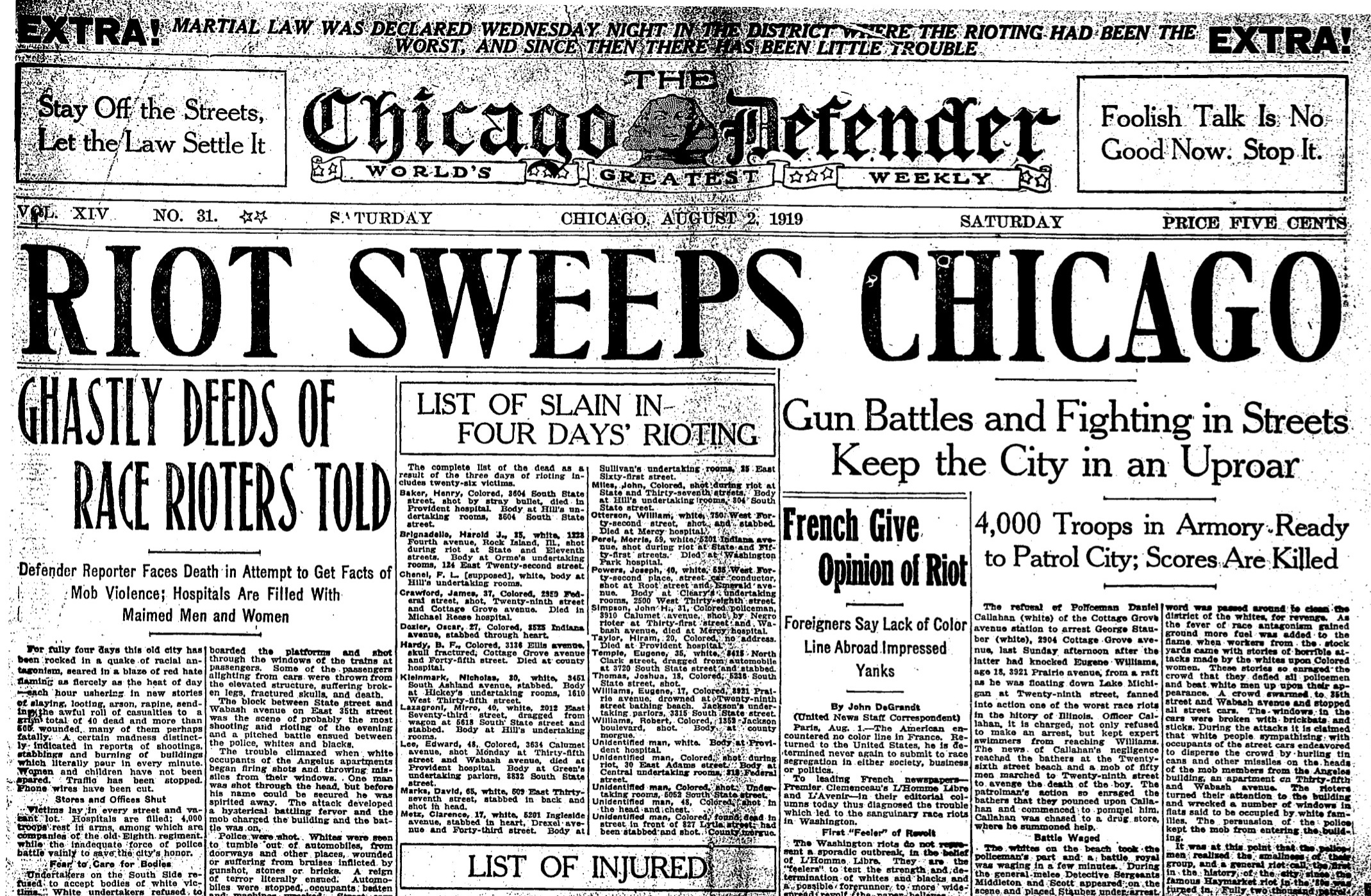
Riot Sweeps Chicago | Zinn Education Project

July 27, 1919: Red Summer in Chicago

Sparked by a white police officer’s refusal to make an arrest in the murder of a Black teenager, violence in Chicago lasted almost a week. At least 38 people were killed and thousands of Black homes were looted and damaged during Red Summer.
Continue reading

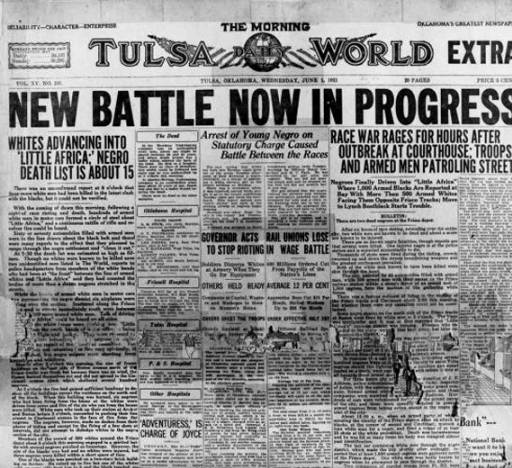
Burning Tulsa: The Legacy of Black Dispossession

By Linda Christensen
The author describes teaching about racist patterns of murder, land theft, displacement, and wealth inequality through the 1921 Tulsa Massacre.

The term “race riot” does not adequately describe the events of May 31 - June 1, 1921 in Greenwood, a Black neighborhood in Tulsa, Oklahoma. In fact, the term itself implies that both Blacks and whites might be equally to blame for the lawlessness and violence. The historical record documents a sustained and murderous assault on Black lives and property. This assault was met by a brave but unsuccessful armed defense of their community by some Black World War I veterans and others.
Continue reading

Freedom Song

Film. By Phil Alden Robinson. 2006. 117 minutes.
Based on the actual history of the Student Nonviolent Coordinating Committee (SNCC), student activism, and voter registration in McComb, Mississippi, during the Civil Rights Movement.
Continue reading