
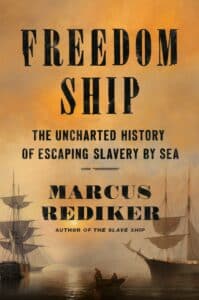
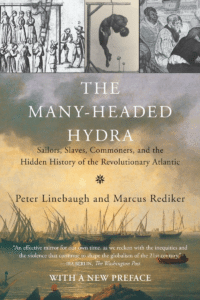
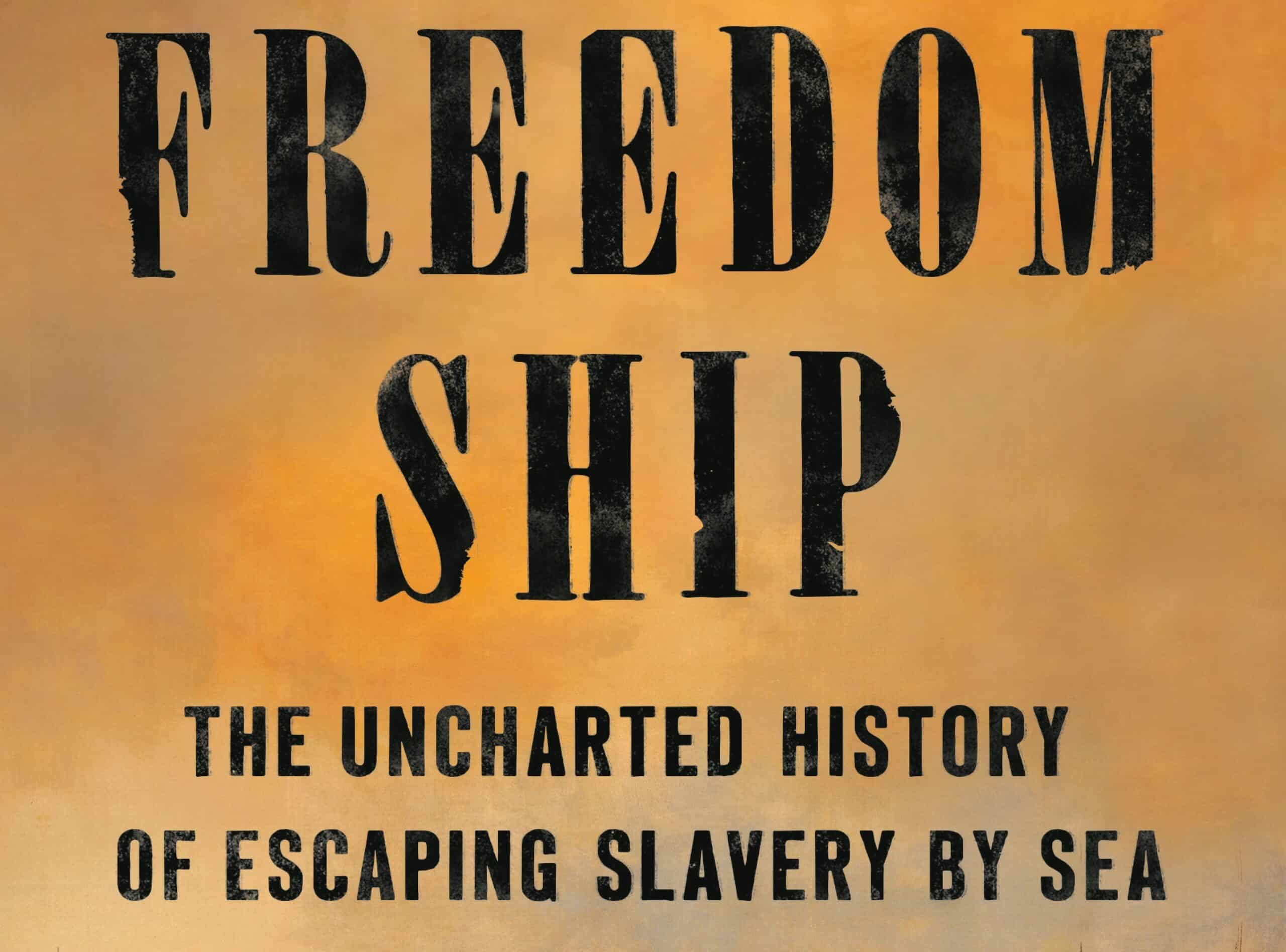
On Monday, May 4, historian Marcus Rediker joined Rethinking Schools editor Jesse Hagopian to discuss his books Freedom Ship: The Uncharted History of Escaping Slavery by Sea and The Many-Headed Hydra: Sailors, Slaves, Commoners, and the Hidden History of the Revolutionary Atlantic, and talk about the many enslaved people who fled successfully from the horrors of bondage in the antebellum South not by land, but by sea.
(Watch our previous Teach the Black Freedom Struggle online classes and register for upcoming classes here.)
In the audiogram below, Rediker discusses the often neglected yet central role of maritime history in the struggle against slavery.
Participants shared what they learned and additional reflections on the session:
I really appreciated one of the first things Dr. Rediker said: “The oceans of the world are historical spaces.” I think that this was a wonderful opening to a great discussion on how the ocean helped to write history, and to move people and their stories/histories. And the discussion on water resistance was something I hadn’t learned much about!
The enslaved were the first abolitionists.
The same trade routes responsible for reinforcing enslavement offered opportunities for escape.
I am thinking a lot about correcting historical “terra-centrism” with maritime narratives of freedom struggles. I am also thinking about this in the context of the Black Freedom Struggle, in particular, and other struggles for liberation.
The sailors sewing David Walker’s Appeal into their garments to literally smuggle illegal ideas is so inspiring for our situation today. Dr. Rediker’s generous words encouraging teachers was also so uplifting.
Event Recording
Transcript
Click below for the full transcript with resources mentioned in the discussion.
Transcript
Jesse Hagopian (he/him): Welcome, everybody. On behalf of the Zinn Education Project, we want to welcome you all to our Teach the Black Freedom Struggle class this evening with the great Marcus Rediker. My name is Jesse Hagopian, I’m a Zinn Education Project campaign director, and I’m an editor for Rethinking Schools, and I have a couple of books that you should check out sometime.
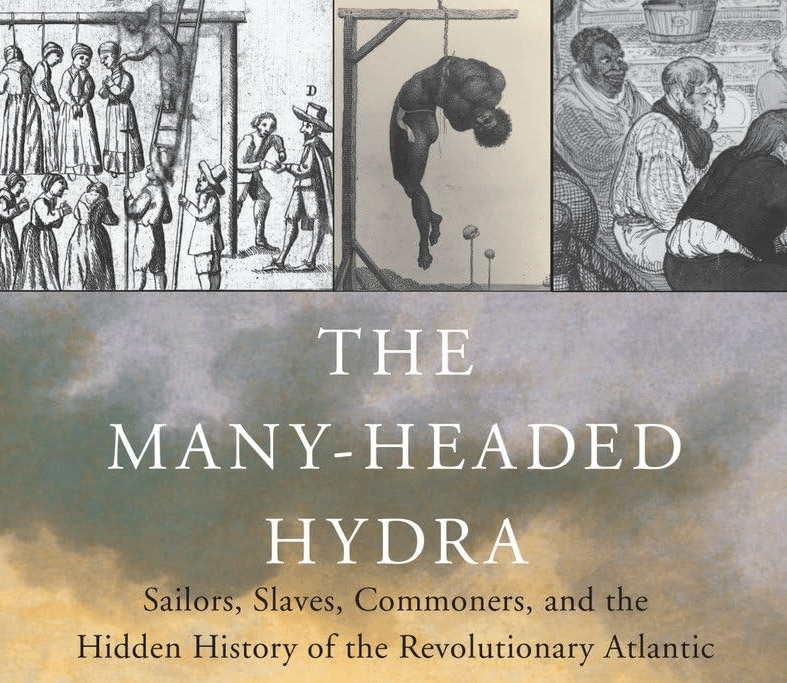
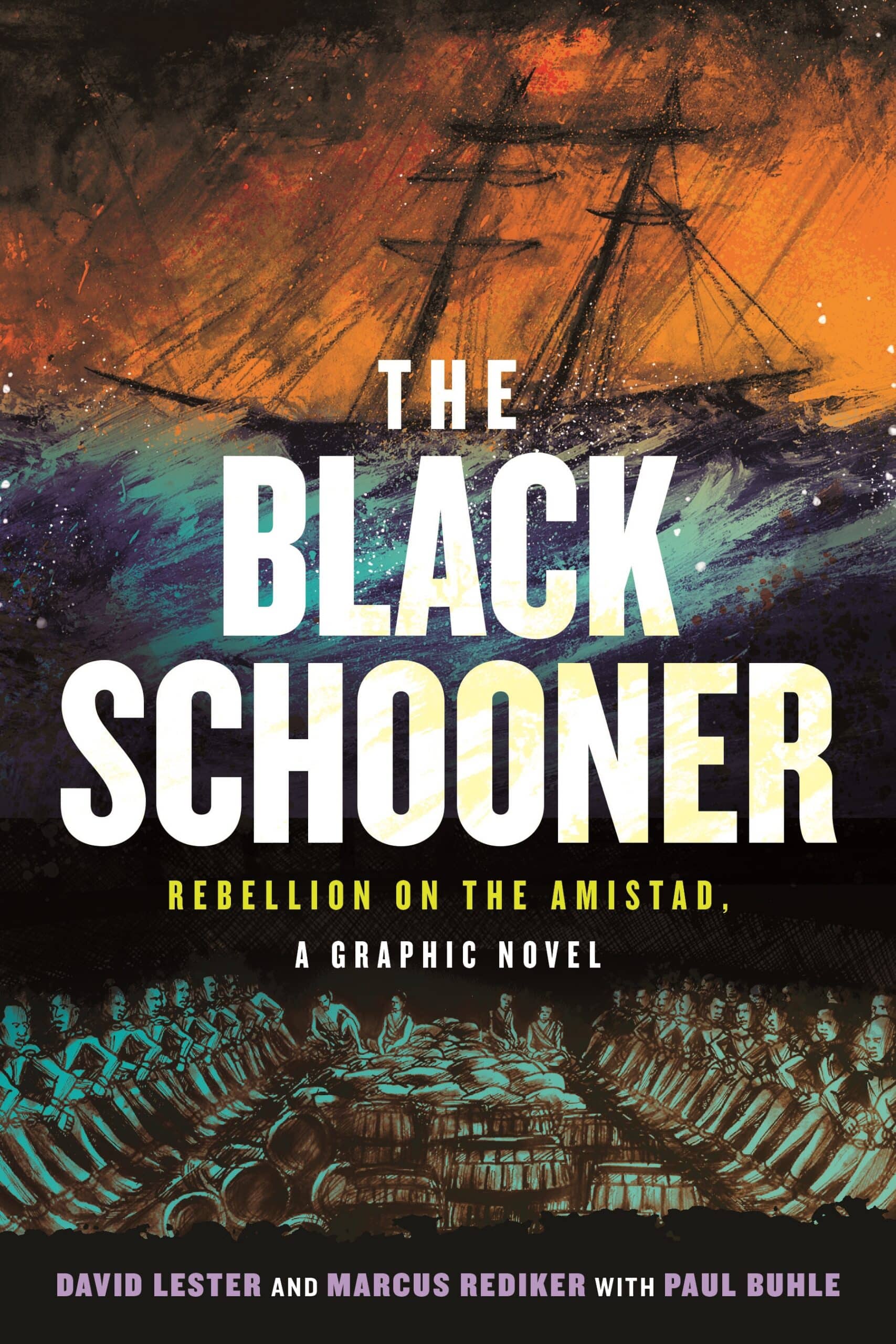
Now I would like to welcome historian Marcus Rediker. He is a distinguished professor of Atlantic History at the University of Pittsburgh. He’s a playwright and the author or co-author of numerous and important books, including Freedom Ship: The Uncharted History of Escaping Slavery by Sea, The Many-Headed Hydra: Sailors, Slaves, Commoners, and The Hidden History of the Revolutionary Atlantic, Slave Ship: A Human History, and The Black Schooner. Dr. Rediker, welcome, and thanks so much for joining us this evening.
Marcus Rediker: It’s my very great pleasure to be with you, Jesse. I would like to begin by expressing my admiration for the Zinn Education Project. I knew Howard, thought the world of him, and I am so delighted that you are carrying on his work. And let me just say a word to the teachers who are in the room. I have a special love for teachers. My daughter is a public high school teacher in New York City. And I just want to say to all of you teachers that the work that you do right now is very important. You are the protectors of our truthful history, and I just want to express my admiration for the way you insist on telling that truth.
Hagopian: Thank you for those inspiring words. I know it means a lot to a lot of educators here who are in difficult situations trying to fight laws that are restricting us from teaching the truth that you wrote in this incredible book. To use a pun that I was recently introduced to, it was a sea change in my understanding of the abolitionist struggle. So thank you for writing it. Your book is just such a fantastic study of maritime resistance, and I’d love to hear more about how you became interested in this vantage point on the geography of the Black Freedom Struggle against slavery. Because in your book, you write that, “Thousands of people escape slavery by sea. Yet the history books have had little to say about them.” And you go on to argue that the metaphor of the Underground Railroad has pointed us in the wrong direction, limiting most historical investigations to the landed routes by which people traveled northward to freedom. So why has the dominant narrative about the Underground Railroad been so terra-centric, as you put it in the book, neglecting this full story of escape by sea? And what do you think we gain when we expand our understanding of escape, not only as running away, but also as rowing away, and sailing away, and stowing away below decks?
Rediker: Well, Jesse, as you know, I’ve spent almost my entire career as a historian writing about what happened at sea. And what I’ve been struggling with for many years is that it’s sometimes hard to get people to see that the oceans of the world are historical spaces. That history happens at sea. Big issues like class formation, race formation, and cultural formation, and the struggle against slavery happened at sea. So, I’ve studied sailors, I’ve studied pirates, I’ve studied the people trapped on slave ships, I’ve studied now these maritime fugitives, and in order to understand why that history has been neglected, I’ve invented this word terrocentrism, which basically means land-based history. We have this bias, you might say, in our thought that history happens only on land and in nation states. But of course, the landed masses make up about 30 percent of the planet.
A tremendous amount of history happens by sea. So my work has been to overcome this bias, which basically says that the seas are somehow ahistorical voids. It turns out that you really cannot understand the magnitude and the creativity of the struggle against slavery unless you take into account what happened on the docks, and on the decks of these vessels that plied up and down the Atlantic coast.
Hagopian: Yes, absolutely. It’s such an important framework. In the introduction to the book, you write that the maritime system of escape “was organized by people who are largely unknown to us. Poor people with calloused hands, often nameless in the historical record, and therefore unremembered.” You also write that historians have treated running away as an individualistic response to enslavement, and that running away was commonly undertaken as a collective act, and that it was fundamentally social, as you put it. Your work approaches history from below, which I love, and I wanted us to think about how this kind of commitment to history from below shapes your research and your storytelling? And what does a history from what we might call below decks allow us to see about slavery, escape, and resistance that more traditional, top-down kind of narratives have left out?
Rediker: Sure. Well, Jesse, I think the first point is that I’d like to introduce this phrase “history from below.” And of course, this is central to the idea of the Zinn Education Project and Howard Zinn’s famous book, A People’s History of the United States. And I’d like to exemplify my point of view by quoting a few lines from the great German poet and playwright Bertolt Brecht, who wrote a poem called “A Worker Reads History.” And it begins like this:
Who built the seven gates of Thebes?
The books are filled with names of kings.
Was it the kings who hauled the craggy blocks of stone?
Of course it wasn’t the king who hauled the craggy blocks of stone. It was the workers, and it is working class people of many nations and many cultures who have literally built the world we live in. And yet they are almost always left out of these top-down narratives about great men. So, this kind of history is, I want to suggest, the most democratic kind of history. It’s the most inclusive kind of history, because everyone’s experience counts. You want to see how history was experienced by people. Now, this gives us a very human history, a broadly collective human history, and what it shows us is that working class people are not just subjects of history. They are makers of history.
In other words, in this book, Freedom Ship, the actions taken by fugitives and hundreds of their supporters — sailors, dock workers, market women — the things that they did in seeking freedom had a tremendous impact even on such a grand event as the American Civil War, because the issue of fugitives was really central to the conflict between North and South. So, I think what we’re doing is restoring an agency to working people, who have actually always had more power than the written histories are willing to admit.
Hagopian: Yes. That’s so crucial. And when working people understand that it is their labor that produces the wealth of the world, and that great political events occur because working people have collective power, when the history is revealed, it’s so empowering and helps us create change. Like this past May Day, when those lessons were being restored and working people were on strike across the country. I know your work has contributed to those kinds of efforts, so that’s much appreciated. And I love you quoting that Bertolt Brecht poem. I think it’s a different poem where he says, “Generals, your tank has one flaw, it requires a driver,” and points out that working people also can shut down imperialist wars. Really another crucial lesson for our time.
But I want to get into another question about reinterpreting abolitionist icons, because beyond rediscovering the stories of the people largely left out of the historical record, you also reinterpret the lives of more well-known freedom fighters, like the great Harriet Tubman, Frederick Douglass, or Harriet Jacobs. And you note, for example, that Tubman, while often associated with land-based routes, “used the state’s spidery set of waterways that opened to the Chesapeake Bay, and even would take a boat with her travelers as part of her escape networks.” You also show how sailors helped circulate David Walker’s Appeal up and down the eastern seaboard, and how ships and port cities became vehicles of deliverance for maritime journeys to freedom. So, how does looking at these iconic figures through a maritime lens help us better understand their lives?
Rediker: Well, I would submit to you, Jesse, that we really can’t understand them without that maritime lens, because this is who they were. This is a very important part of their life. We forget how important water transport was in the early 19th century. I mean, almost all the goods come down to the coast, the commodities that are produced inland come down by rivers and boatmen who bring them to the port cities, and then the dock workers load them onto the ships, then they enter from there the world market. We forget how important this is to this time period. So, what the maritime dimension does, once restored to people like Frederick Douglass, Harriet Jacobs, Harriet Tubman, David Walker, is that it helps us to understand who they were and what their relationships were.
David Walker, for example, circulated his revolutionary pamphlet, David Walker’s Appeal, by sewing it into the clothing of Black and white sailors from his slop seller shop — that’s someone who makes clothing for sailors — in Boston, and down they go to Charleston, South Carolina, to Savannah, Georgia. These sailors then become vectors of knowledge, and vectors of struggle, passing these revolutionary ideas from hand to hand. So, I think we understand these very famous individuals more deeply, and we understand how it was that they were able to make so much history. In other words, this is part of their communication network. This is part of their struggle for solidarity. This is who they were.
Hagopian: I wrote a lesson recently called Legalize Black Education, and in it I traced that history of attacks on Black education, and I look at David Walker’s Appeal being banned because of how dangerous those ideas were to the slaveocracy. And it just gave me a whole new appreciation for how they were able to smuggle the truth about slavery, using those seaways, and just the tradition that we’re in is just more revealed by your work. I know there’s many teachers here today that are also smuggling in pamphlets about U.S. history to schools or freedom schools.
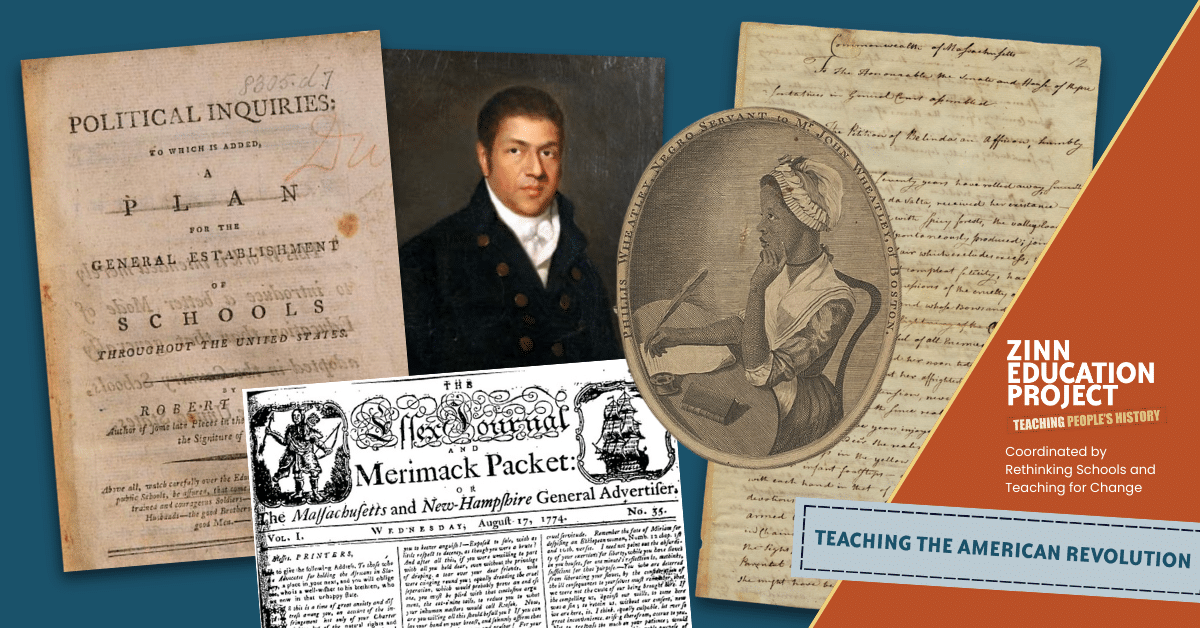
I wanted to turn to the book, The Many-Headed Hydra. that you, and Peter Linebaugh wrote about the Hydra myth that was taken up by the ruling classes in the Atlantic world. They saw themselves as a sort of heroic Hercules in a righteous battle against different groups who posed threats to empire and capitalism. In this myth, these groups formed various heads of the monstrous Hydra that had to be defeated. And ruling classes use this symbolism to justify violence and conquest across oceans and continents. But you also explained that The Many-Headed Hydra has really taken on a new purpose for historians. It has become the means, as you say, of exploring multiplicity, movement, and connection, the long waves and planetary currents of humanity. And as the U.S. approaches its 250th anniversary of the Declaration of Independence, with lots of fanfare for the founding fathers and all kinds of hoopla for patriotism, how can The Many-Headed Hydra help us understand and uplift a people’s history of the American Revolution?
Rediker: Well, I think it’s absolutely crucial, Jesse, that we understand that the revolutionary leaders George Washington and Thomas Jefferson, who produced the wealth that allowed them to devote their lives to being political leaders? This is one very basic point. The subtitle of The Many-Headed Hydra is Sailors, Slaves, Commoners, and the Hidden History of the Revolutionary Atlantic. Now, those groups of workers, those are the people who made up the heads of the Hydra. Others of them were religious radicals of various kinds, women workers, especially in port cities. We can actually specify who the rebellious heads of the Hydra actually were.
Now, in the port cities, this multi-ethnic group of workers were called the Motley Crew. And what that meant was a group of workers who had a particular assignment to unload a ship, to sail a ship, to move these commodities of the world. They’re really kind of a linchpin in the global capitalist economy. And they, in the 1760s, were involved in an intensive wave of strikes, protests, slave revolts, and mutinies, all these different kinds of resistance. Sailors were fighting the Royal Navy, which is literally coming ashore and grabbing bodies to take them out to sea. There are a bunch of what are called anti-impressment riots in Philadelphia, in New York, in Boston, and in Maine, for example. And then there is also this massive wave of unrest created by enslaved people.
Peter Linebaugh and I have argued in The Many-Headed Hydra that it was this body of resistance that propelled the American colonies toward independence. This was created by people who were not elites, although Sam Adams, I have to give him credit, was more involved with the urban mob in Boston. These people are destabilizing colonial rule, are creating this wave of resistance, and they’re literally pushing the American colonies toward declaring independence from Great Britain. But at a certain point, the elites get control of that movement, and when they write the histories of the American Revolution, they leave out those people who made it possible.
So what I want to know is always really the same question. Who is doing the work that’s creating the wealth of what was then, in the 1770s, one of the wealthiest societies in the world? These American colonies. And that, then, is the economic basis for independence, as Tom Paine pointed out. You’ve got the economic basis of independence because of your productive economy and the working people who make that possible. I think the key thing here is we need to understand not just Washington and Jefferson, they are important players, but who are the enslaved people who worked on their plantations? Who were the soldiers who served in George Washington’s army? You need labor power to fight this battle. Who is putting their life on the lines against the British military, which is the strongest military in the world? Who is actually defeating them on the battlefield? And if you want to answer those questions, you’ve got to deal with a much broader mass of working people.
Hagopian: I love the way you reframe how that unrest was what made the American Revolution even possible, made it seem like an achievable political goal by some elites, who wouldn’t even have had that notion had it not been for the masses of working and enslaved people. It’s such a crucial point. I also am just struck by how they often leave out Tom Paine from the whole equation, because he is a white radical who wanted to go much further in the revolution than many of the white elites did. He wrote a scathing letter against slavery, calling out George Washington, and so they don’t like including him as much in the founding pantheon.
Rediker: That’s right. See, here’s the point, Jesse. Tom Paine and lots of other people understood that all these different freedom struggles were related to each other. And you can’t just have freedom for some people, you’ve got to make this a universal proposition. So, at the time of the American Revolution, there were people saying this. This is not an imposition from a later time. That is the debate. They are fighting for an end to oppression, an end to exploitation, an end to slavery. That is part of the story.
Hagopian: I’m so glad you said that, because one of the major barriers to us teaching the truth about the American Revolution today is the argument from the right that these are just “men of their times” and “nobody knew any better than to enslave others.” That was just the norm, and that we shouldn’t judge the founders by our own values today. No, okay, is it alright with you if we judge the founders by the values of Tom Paine, who was there at the time? Could we do that, then? I mean, it’s absurd, the arguments they try to make so we won’t teach about the things that you’re writing about.
I wanted to ask you one more question about the American Revolution, and then one other question before we head to the break. But in terms of the American Revolution, there’s this renewed push for patriotic education that wants to uncritically celebrate the founding era, and they want to defend Thomas Jefferson and George Washington while they argue that enslaved people were simply the products of their time. So, as we’ve been discussing, there was an abolitionist movement even before the American Revolution. Quakers established the world’s first anti-slavery organization in 1775. So how does this history complicate those patriotic narratives, and what does it mean to center stories of maritime escape, of interracial abolitionist organizing at the time, and violent repression, and to teach students the nation’s founding alongside slavery was not inevitable? It could have gone a different direction, and it was about contested political choices.
Rediker: You know, this argument that Washington and Jefferson were products of their time is so fundamentally false. One of the figures that I’ve written about in a previous book is a man named Benjamin Lay. He was a Quaker, he had dwarfism, he was 4 feet tall, and he decided, really 40 years before an organized abolitionist movement developed, that slavery was evil and that it needs to stop now. Like, immediate emancipation. He is a contemporary of Washington and Jefferson, and he used to do things like . . . He once went to a big meeting, a Quaker meeting, and Quakers in his day owned quite a few enslaved people, or pretended to. And he filled up an animal bladder with bright red pokeberry juice, put it inside a carved-out book, it was one of those secret compartments, raised the book above his head, ran a sword through it, and then sprinkled blood on the heads of the slave owners who were in the audience. Now, this is in 1738.
Hagopian: He’s not playing around.
Rediker: No, this guy was about direct action. He was totally against it. Now, I’m quite sure that Jefferson and Washington knew about him. We know for sure that they knew about one of his students, a man named Anthony Benezet, who was another Quaker abolitionist. Jefferson and Washington had copies of Benezet’s books in their library. So they knew! They knew the truth! They knew that people in their own generation were radically opposed to slavery. But this is where the historians come in, who want to sanitize the story and leave certain people out of it. And, in my view, what they’re actually doing is falsifying history. They’re making it impossible to see the dynamics by which things actually happened.
Hagopian: Yes, absolutely. It requires all of us to be in that collective struggle, as you said at the very top, to preserve this history. It’s just so exciting to be in conversation about this history with you, who has researched it so thoroughly, and then to be with all these educators who, as you said, are preserving it. Because if you write it and nobody teaches it, then where do we get?
Rediker: Well, Jesse, as we were discussing before we came online, I strongly believe that the scholarship on race and slavery produced in the past 60 years, basically, the impulse for that was the Civil Rights Movement and the Black Power Movement demanding a new kind of history. Historians have answered that call and produced this extraordinary body of work. And yet, without teachers, we can’t really disseminate this information through the society at large as fully as we need to do. So again, we come back to this point that teachers are in this really strategic position of conveying knowledge to the next generation.
Hagopian: Yeah, no doubt. That’s why the Right has identified that very well, and they understand that it’s difficult for them to maintain their project of social control if people are learning truth. So, I hope that progressives and radical forces understand the argument that you’re making and come to support the many educators in our group that are doing this work.
I wanted to just ask you one more question before we move to the break and give teachers a chance to process what they’ve learned here. In the chapter you wrote called “The Structure of Escape,” you argue that port cities “shared common characteristics based on their relationship to the rapidly expanding system of global capitalism, which moved money and goods around the world, largely by sea,” that “every profit-seeking ship that departed a southern port represented a potential line of escape.” I love how you show that the very networks designed to extract profit — from ships to docks to global markets — also provided channels for escape. So, I was hoping you could talk more about how understanding the connection between slavery and capitalism is so vital, the way that there were maritime systems that bolstered those two institutions, and how those changed the way we think about resistance to slavery.
Rediker: Let me begin this way in answering this question, Jesse. The people who work on the docks — the dock workers, the market women, the sailors, the carters, the dray men, the people who literally move the commodities of the world — they are brought into productive combination by merchants and businessmen. By the owners of capital. But once they are brought into that productive combination, they can then cooperate for other projects of their own.
Consequently, these people who are crucial to the lifeblood of the capitalist system, moving these commodities and creating profits — there are these commodity chains and these labor chains — they suddenly realize that they can cooperate with this same group of workers to smuggle what ends up being thousands of people, 15 to 20 thousand people, out of the South aboard these ships to northern states where slavery has already been abolished. This is a kind of working class power that is inherent in the work relationships along the docks. What this allows us to see is some of the deeper causes of human history, and I think this is really crucial, it also emphasizes that the enslaved were themselves the first abolitionists.
A movement grows to support their struggles in the North, and that is a really important movement, but the truth is that these maritime escapes are created by working-class people, and that the white abolitionists in the North, again, do play an important role but they don’t even get involved in this until the very end of the process, if they get involved in it at all. And I want to emphasize that the fugitives, the people who are putting their lives on the line to try to escape southern slavery, are the ones who are taking the risks. They are the ones who are risking flogging, sometimes death. So we have to honor the way in which their drive to be free is the primary force in this struggle.
The southern elites do everything they can to try to stop these maritime escapes, but the truth is, the Southern elites depend on the shipping system, too. They’re trapped, and all the things they try to do, they don’t work, because their efforts to control the waterfront are not equal to the political will of the enslaved to be free. That’s the final lesson right here: The will to be free outweighed all of these efforts to repress their efforts.
Hagopian: Yeah. The only weakness their system has is that it does require our labor, and we can withhold it, and people can escape. It’s just told so beautifully in your book. Thank you for sharing all those insights.
[breakout rooms]
Hagopian: I thought before we go any further it would be just wonderful to hear some of the stories of what it was like for enslaved people to escape on ships, and how they did that. There are so many that we could look at in this book, but any of them would give people a little bit better sense, and I think these would be compelling stories for teachers to bring up in the classroom.
Rediker: Let me tell the story of Harriet Jacobs, who is probably known to a great many people. Harriet Jacobs was a very important figure in the struggle against slavery because the book that she wrote after she escaped slavery by sea, Incidents in the Life of a Slave Girl, published in 1861, was really an extraordinary breakthrough in that she described the sexual terror that Black women lived with in the South. She was stalked and harassed and sexually assaulted by an enslaver named Dr. James Norcombe. But she basically, in a battle of wits, bested him again and again and again. What she ended up doing was hiding in the tiny attic room of her grandmother, who was a free person of color. Then, thanks to the fact that she had three uncles who were all sailors, very important to know that, she dressed as a male sailor and walked down to the docks with one of her uncles, got into a small boat, and was taken out to sea to meet a ship captain out of Philadelphia who had already agreed with her uncle that he would carry her to freedom.
She made her way to Philadelphia, and then eventually to New York. She did these unbelievably brilliant things. Even while she was in Edenton, North Carolina, which is where she lived, she would have her uncle take a letter that she wrote to New York and mail it from New York to make Dr. Norcombe think that that’s where she was. She would use the sailors as couriers. She would have her uncle bring her back a newspaper from New York so she could write about things that were in the newspaper. This was really a classic case of brains against raw power. And she prevailed. Not only did she prevail, she wrote this extraordinary book that literally was one of the most famous contributions to abolitionist literature at any time, anywhere in the world. So hers is an especially powerful freedom story.
Hagopian: It really is an incredible book, and it goes back to the point you made earlier about how the escaped enslaved people were really the first abolitionists, and there is no movement without folks like her escaping. And Frederick Douglass escaped on a ship as well, but I think that he was pretty cagey in describing how he actually escaped. He didn’t want to give away the details. Isn’t that right?
Rediker: That is correct. What happened was, he said, you don’t want to give these enslavers inside knowledge of how we resist, so he waited until after slavery had been abolished, in the third edition of his autobiography, to describe how this thing had actually worked. But he did also say that what happens on the waterfront is really important. When he was about 12 years old, he met these two Irish sailors and they took an interest in him, a sympathetic interest, and asked him, “Are you meant to be a slave for life?” And he said, “Yes, I am.” And they said, “Well, you could find a different life in the North.” Even though he was too young to escape at that time, he said “That was the moment when I decided that I was going to escape slavery no matter what, even if it cost me my life.” So again, the waterfront is a place where ideas of freedom circulate. Frederick Douglass went on to become a skilled maritime artisan. He was a caulker. He walked the walk of sailors; he talked the talk of sailors. All these things were crucial to gaining his freedom.
Hagopian: Yes, thank you for those stories. Just a couple more questions before we move to the evaluations. In the afterword of the book, you quote W. E. B. Du Bois, who described the actions of the enslaved people during the Civil War as a general strike. He’s describing the thousands of enslaved people fleeing the plantations, and many of those by sea, as you point out, to seek refuge with Union forces. There’s the incredible story of Robert Smalls, one of the most famous cases of these. And I heard that they might make a movie about his life! I hope that happens, that will be amazing.
I think the history of emancipation is often taught to us as a top-down story. Simply, Lincoln freed the slaves, is how most people learn it, right? So how does the centering of maritime escape and mobility change our understanding of that general strike, and what does your research suggest about the role Black people themselves play, not just in escaping slavery, but in bringing down the whole institution of slavery?
Rediker: Let me say first of all, Jesse, that the idea of reducing a complex movement of resistance to a single individual like Abraham Lincoln is ridiculous. History is complicated. It takes thousands of actions by thousands of people for things to happen in a particular way. It’s actually kind of insulting, but this is all part of myth-making. At the same time, it’s a grotesque simplification of what actually happened, in which the real causes of the Civil War are elided. They’re just pushed aside. It becomes an act of benevolence, of a white person giving freedom to these thousands of enslaved people who had been busy spending their lives to fight against this deadly system called slavery. So this is really important.
I have said that Freedom Ship is really a collective story of self-emancipation. That this is the order of the day. This is what enslaved people did for themselves, with their own resources, as they worked with lateral connections in the port city working-class. So this kind of story is really dangerous to ruling elites. It was dangerous at the time, and it’s still dangerous today. They are always scared by these stories of working people seizing power and doing things on their own behalf. The self-activity of these people. So I think that makes it even more important for us to understand. And of course, this maritime system of resistance is like an engine of resistance. It’s just going constantly, constantly. I say for the southern ruling class, it’s like slow death by a thousand cuts. Or 20,000 escapes, all of which is a tremendous loss of economic value.
So this is really crucial, and we need to understand that this fugitive issue was one of the main sources of tension between the northern and the southern states. This is one of the reasons why people went to war. The Fugitive Slave Act was passed in 1850. It failed. This required northern people to return escapees to the South, to the enslavers. People in the North, by and large, refused to do it. And in Boston, where the resistance was especially intense, they essentially nullified the law after about 4 years, by 1854, and they stopped even trying to bring people back at that point.
It’s just really important to know this. If you want to know why the Civil War came about, why it happened, you need to know about this very conscious effort to tear down the slave system. Did individuals know that they were tearing down the whole system? They knew they were striking a blow against it because it was such a controversial subject. So I think the best way we can honor that resistance is to make the dynamic of escape part of the national story of the coming of the Civil War. In other words, that we give agency to the people who are fighting the battle on the ground against slavery every day of their lives.
Hagopian: Yes, no doubt. Well, I have one last question for you. I want us to think about how learning this history connects to our struggles today. If this history were taught widely, if students understood freedom not as something granted from above but something fought from below, from the docks, from below deck, how might that change the way we understand the struggles for justice today? And how does that history of criminalizing Black political thought, like we saw with David Walker’s Appeal and a lot of other ideas that traveled through these maritime networks, help us make sense of contemporary efforts to restrict and punish the teaching of Black history and systemic racism in schools? And what lessons do you hope the readers, and especially the educators and students with us, take from this history as they think about their own role in shaping the future?
Rediker: I think these kinds of freedom stories are valuable in many different ways. One way is that they’re simply inspirational. They teach us that people, ordinary working people, can take action, and that this has a dramatic impact. If you had asked anybody in the South in the United States in 1835, 1840, 1845, even 1850, if they ever thought slavery would come to an end in their own lifetimes, they probably would have said no. But look what happened! Look what happened. You know, 13 years after the Fugitive Slave Act comes the Emancipation Proclamation. One of the greatest economic powers in the world was brought to its knees. And this happened as a result of common collective action. A lot of it was because of ordinary people having the courage to fight back, refusing to accept that this was going to be a lifelong fate.
So, this, Jesse, has been one of the great joys of working on this book. I got to spend a lot of time in the presence of really courageous people who were and are willing to risk everything. Teaching those stories of courage is really crucial, because you’ve got to remember, everything about slavery was legal in this time period. Everything was legal. You had to break the law to assert your freedom. People in the North had to break the law to assist runaways, or sailaways, as I like to call them. I think the fact that this small but growing steady engine of resistance, able to produce such large-scale consequences, can help us to think about how the world can be changed.
Hagopian: I think that’s such a perfect lesson to conclude this powerful conversation. Thank you for reminding us that people thought slavery would last forever, or at least they would never see the end of it. I know many people here today feel hopeless as wars are expanding in the Middle East, and inequality is deepening in our country, and it feels like this is inevitable, and that it’ll last forever. And yet, the lessons of collective struggle show us that we are very powerful. And your book reveals how we can bring down unjust systems when people get ready to do it collectively. So thank you for sharing those lessons with us.
While this transcript was edited, there may be minor errors or typos — if you notice something you believe to be incorrect, please contact us at [email protected].
Audio
Listen to the recording of the session on these additional platforms.


Resources
Here are many of the lessons, books, and other resources recommended by the presenters and participants:
Lessons
|
|
Poetry of Defiance: How the Enslaved Resisted by Adam Sanchez “Founding” Documents We Don’t Learn About by Mimi Eisen When the Impossible Suddenly Became Possible: A Reconstruction Mixer by Adam Sanchez and Nqobile Mthethwa Legalize Black Education: The Long Fight for the Right to Learn by Jesse Hagopian If There Is No Struggle…’: Teaching a People’s History of the Abolition Movement by Bill Bigelow (Rethinking Schools) Reconstructing the South: A Role Play by Bill Bigelow and companion lesson, What Really Happened, by Mimi Eisen and Ursula Wolfe-Rocca Teaching a People’s History of Abolition and the Civil War, a teaching Guide edited by Adam Sanchez (Rethinking Schools) |


Books
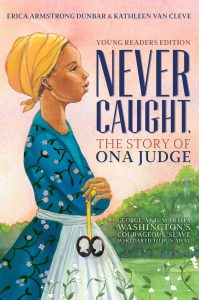
Articles
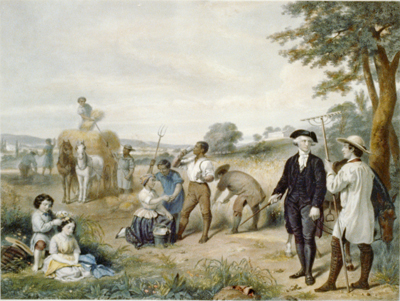 |
Missing from Presidents’ Day: The People They Enslaved by Clarence Lusane (from our If We Knew Our History series) Time to Tell the Truth About Slavery at Mount Vernon by Sudie Hofman |
This Day In History
The dates below come from our This Day in People’s History collection, which contains hundreds of entries all searchable by date, state, theme, and keywords.
|
|
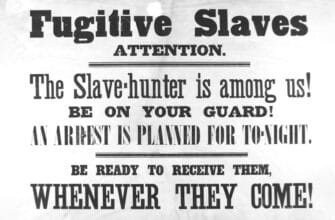
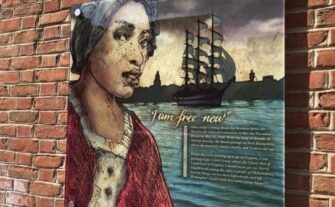
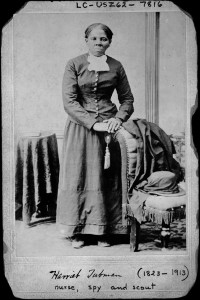
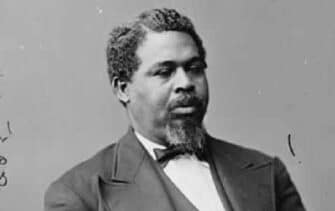
Aug. 29, 1786: Shays’ Rebellion Feb. 12, 1793: First Fugitive Slave Act May 21, 1796: Ona Judge Escapes Enslavement by President George Washington Feb. 18, 1797: Hercules Escapes from Enslavement by George Washington July 27, 1816: The “Negro Fort” Massacre June 29, 1820: The Antelope Ship Arrived in Savannah Sept. 28, 1829: An Appeal to the Coloured Citizens of the World July 30, 1836: Formerly Enslaved Eliza Small and Polly Ann Bates Escape to Boston July 2, 1839: The Amistad Mutiny April 15, 1848: The Escape on the Pearl Schooner March 17, 1856: Laws Enacted to Thwart Freedom-seekers on Ships April 27, 1860: Harriet Tubman Helped Rescue Charles Nalle June 2, 1863: Harriet Tubman Frees Nearly 800 People Nov. 3, 1874: Robert Smalls Elected |
Participant Reflections
With more than 140 attendees, a poll of participants’ primary roles in education showed 36 percent K–12 teachers, 19 percent teacher educators, 11 percent historians, and more.
Here are more comments that participants shared in their end-of-session evaluation:
What was the most important thing (story, idea) you learned today?
The idea that “When there is a will, there is a way.” This discussion pointed us to the will to be free.
Freedom is fought for from below, not granted from above.
That running away was “fundamentally collective.”
I think we cannot emphasize enough that enslavers knew that slavery was wrong. They justified it by various means, but at heart they knew slavery was wrong.
The power of the workers using the mechanism of the shipping industry to save the lives of the enslaved as another form of the Underground Railroad and the bravery of so many who helped.
The concept that the oceans are historical places, and about “terra-centrism” in history is really key! My eyes were really opened by this idea and how “the oceans are not historical voids” but are in fact crucial to freedom. Also, the idea that the working class built the world we live in and that history should be focused on as much as the famous makers and shakers. It’s important to open up the myths and honor resistance movements led by ordinary people.
What will you do with what you learned?
I can’t wait to share this new knowledge with my students!
This class will impact how I am teaching about the American Revolution. I am looking forward to using the related Zinn Education Project lessons.
I think sharing stories of enslaved people exercising their agency matters. We often share the “hero” stories, but it is the “workers” who are the world creators.
I already teach about Harriet Tubman and others who escaped by land. Now, I will add stories about those who fled by ship.
I will include these stories directly in my AP African American Studies course as well as our Saturday Freedom School. These lessons can be shared both inside and outside of the classroom!
The information about Thomas Paine as seeing the contradictions of the revolution will be useful in everyday conversations with people defending the “founding fathers” as “not knowing any better.”
How was the format for the class?
Everything was impactful.
10/10 on format. I would not change a thing with this session.
I always shout out the opportunity for active processing with peers from across the country. As a teacher, I know how essential active processing (what Zaretta Hammond calls “chewing”) is for learning.
Perfect. A little informal, very transparent, and exceptionally well orchestrated.
As always, I appreciate having time together to process this rich conversation with my colleagues.
Presenters
Marcus Rediker is distinguished professor of Atlantic History at the University of Pittsburgh. His “histories from below,” including The Slave Ship: A Human History, have won numerous awards, including the George Washington Book Prize, and have been translated into nineteen languages worldwide. He has produced a film, Ghosts of Amistad, with director Tony Buba, and written a play, The Return of Benjamin Lay, with playwright Naomi Wallace.
Jesse Hagopian is an editor for Rethinking Schools, co-editor of Teaching for Black Lives, editor of More Than a Score: The New Uprising Against High-Stakes Testing, author of Teach Truth: The Struggle for Antiracist Education, and the Teaching for Black Lives campaign director for the Zinn Education Project. He previously taught Ethnic Studies and was the co-adviser to the Black Student Union at Garfield High School in Seattle.



The book Black Jacks is also excellent resource on Black people’s lives and work on the seas historically which is of particular interest to students in maritime states like Maryland.