

The first Fugitive Slave Act in the United States was signed into law on February 12, 1793, by President George Washington. This law gave owners of the enslaved the right to reclaim those who escaped.
As the National Archives Foundation states,
It was a response to a conflict between Virginia and Pennsylvania over the kidnapping of John Davis. Governor Mifflin of Pennsylvania claimed Davis was free. This law got rid of the conflict and made it legal for fugitive slaves to be captured in the north and returned to their masters. It also made it illegal for northerners to help a runaway slave.
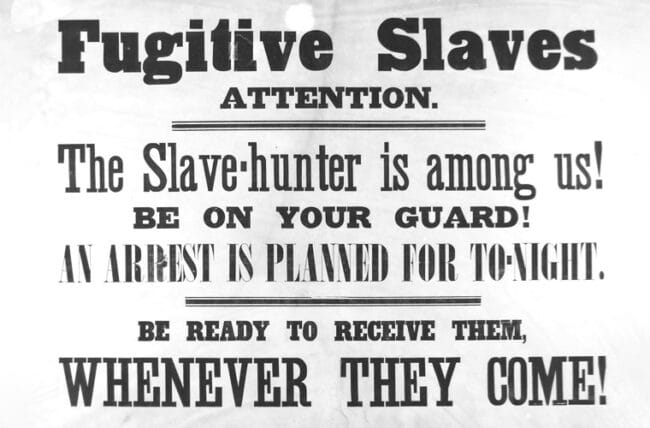
Source: Same Passage
Encyclopedia Virginia notes,
Neither side was completely satisfied with the legislation. Some southerners worried that the rights of enslavers were insufficiently protected, while some northerners believed that the law still left free Blacks vulnerable to kidnapping. As a result, many free states adopted so-called personal liberty laws, which required enslavers to follow a variety of procedures before removing any alleged fugitive from the state.
This 1793 law was strengthened by the Fugitive Slave Act of 1850, which increased federal authority over cases involving people escaping enslavement.
Additional Resources
The U.S. Enacts First Fugitive Slave Law (History.com)
Fugitive Slave Laws (Encylcopedia Virginia)
Watch the Crash Course Black American History video The Fugitive Slave Act of 1793 below.






Twitter
Google plus
LinkedIn