
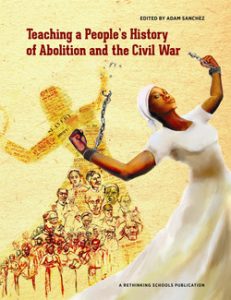
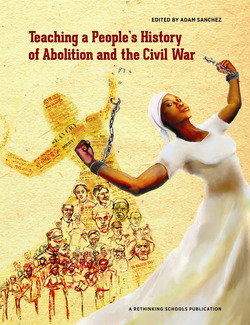
This lesson is published in Teaching a Peoples History of Abolition and the Civil War (Rethinking Schools, 2019).
From the beginning, Black men and women resisted their enslavement . . . under the most difficult conditions, under pain of mutilation and death, throughout their 200 years of enslavement in North America, these Afro-Americans continued to rebel. Only occasionally was there an organized insurrection. More often they showed their refusal to submit by running away. Even more often, they engaged in sabotage, slowdowns, and subtle forms of resistance which asserted, if only to themselves and their brothers and sisters, their dignity as human beings. — Howard Zinn, A People’s History of the United States
For too long, historians painted a picture of the idyllic old U.S. South with paternalistic slave owners and docile and content slaves. Though challenged in the 1930s and ’40s by historians like W. E. B. Du Bois and Herbert Aptheker, this remained the dominant narrative of slavery until the late 1960s and ’70s. Today, any discussion of slavery should be coupled with the myriad and heroic ways enslaved people resisted their enslavement.
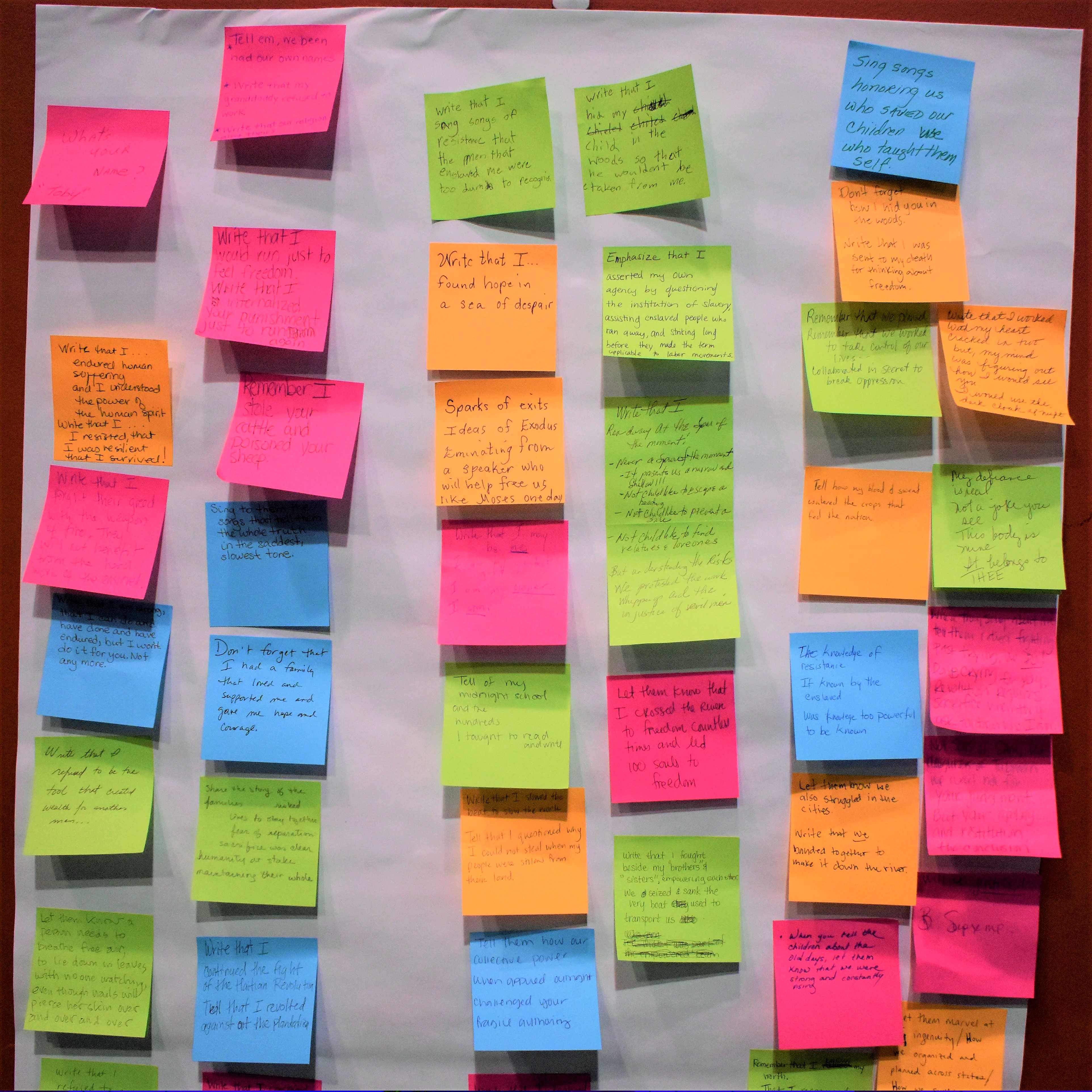
In this lesson, students create a collective poem, drawing on stories of resistance to slavery.
It’s also important to put this resistance in the broader context of how the U.S. economy was built on the backs of enslaved people. Students should grapple with how central the labor, knowledge, and skills of enslaved people were to the entire Southern economy. The stakes for maintaining slavery were high and any resistance was often met with brutal retaliation.
Nevertheless, enslaved people, with great courage, engaged in all sorts of resistance. While this pre-Civil War resistance did not ultimately topple the deeply entrenched institution of slavery, it challenged pro-slavery arguments that enslaved people were happy and content and provided fuel for abolitionist denunciations of slavery. Maybe more importantly, it established a tradition of defiance that was built upon during the Civil War and Reconstruction when wider acts of resistance became possible.

This lesson introduces students to several of these concepts, establishes the various ways that enslaved people resisted, and celebrates that resistance, culminating in a collective poem. To write the poem, students will break into groups and each group will express in poetry what they’ve learned about resistance. This lesson provides seven types of resistance as a guide:
Group 1: Theft and Property Destruction
Group 2: Maintaining the Family
Group 3: Culture, Music, Religion, and Education
Group 4: Resistance at Work
Group 5: Running Away
Group 6: Verbal and Physical Confrontation
Group 7: Revolt
This lesson is published by Rethinking Schools in Teaching a People’s History of Abolition and the Civil War.
Teacher Stories
Honoring enslaved people by learning how they resisted slavery based upon the @ZinnEdProject Collective Poem lesson and readings @Prairie220 @AnneSchmittBMS #prairiepride pic.twitter.com/TYGvpsKtuB
— MrsSchmittHistory (@BMSHistSchmitt) April 12, 2022
Caneisha Mills
Middle School Social Studies Teacher, Washington, D.C.
Thank you, thank you, thank you for this powerful resource.
I started using Zinn Education Project teaching materials three years ago, particularly for the beginning of the year in my 8th grade U.S. history course.
Last year, I wanted my students to have a deeper understanding of the legacy of resistance before, during, and after the Civil War. So, I decided to teach the Poetry of Defiance lesson. I wanted to dismantle the idea that African Americans were bystanders in the fight against oppression.
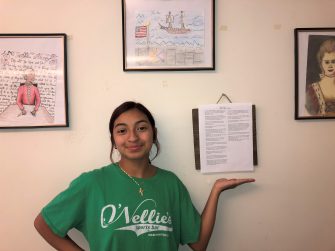
Lesly Torres, one of the students who participated in the Poetry of Defiance lesson.
The lesson was so well-received and sparked such great dialogue amongst my students that now I am attempting to use at least one Zinn Education Project lesson during every unit.
I used the lesson at the end of the school year. I remember how tired and emotionally exhausted my students were after almost a month of standardized testing, and yet when I taught this lesson they became so energized that they wanted to compile their poems to read to the class.
 |
 |
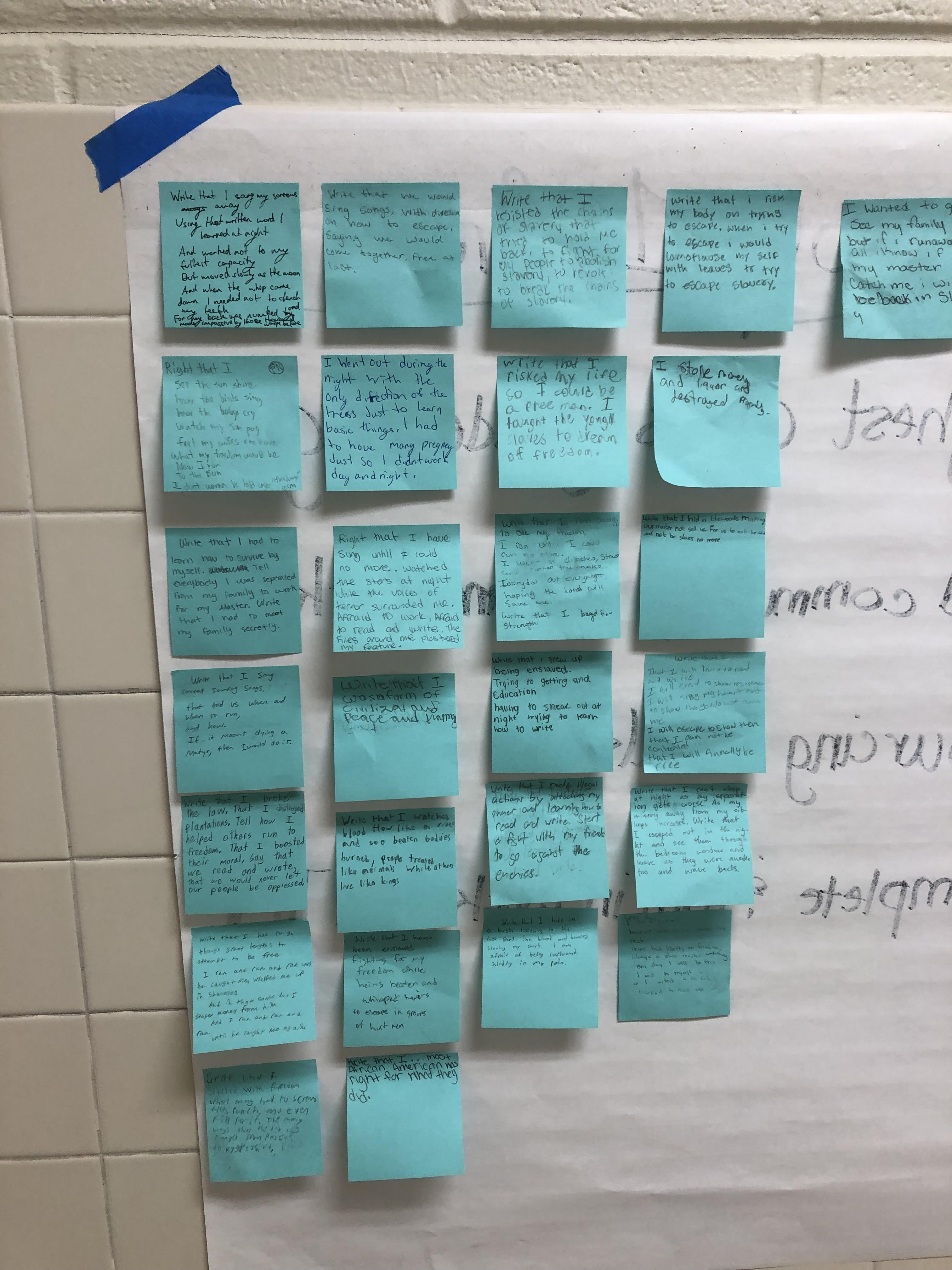 |
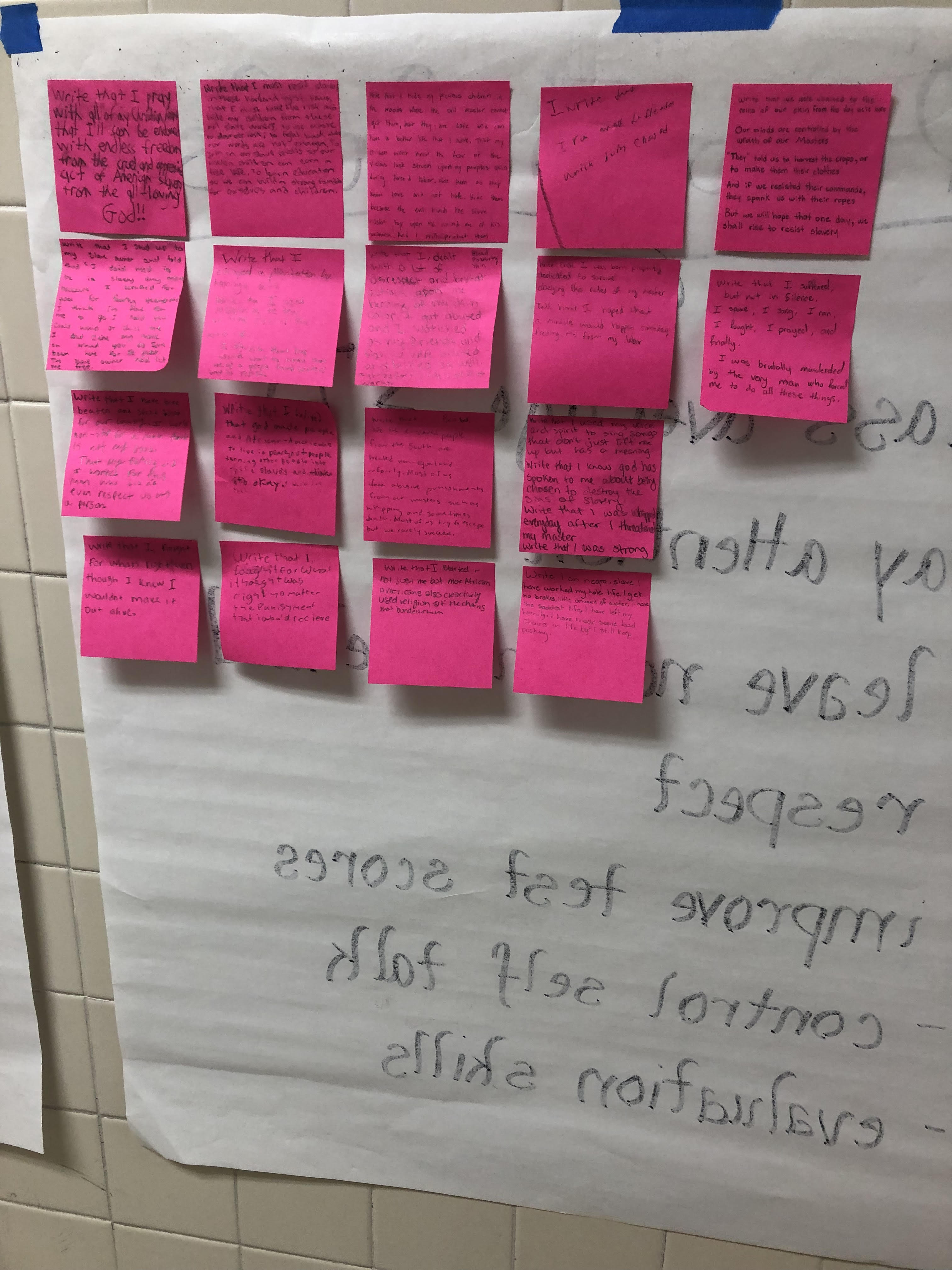
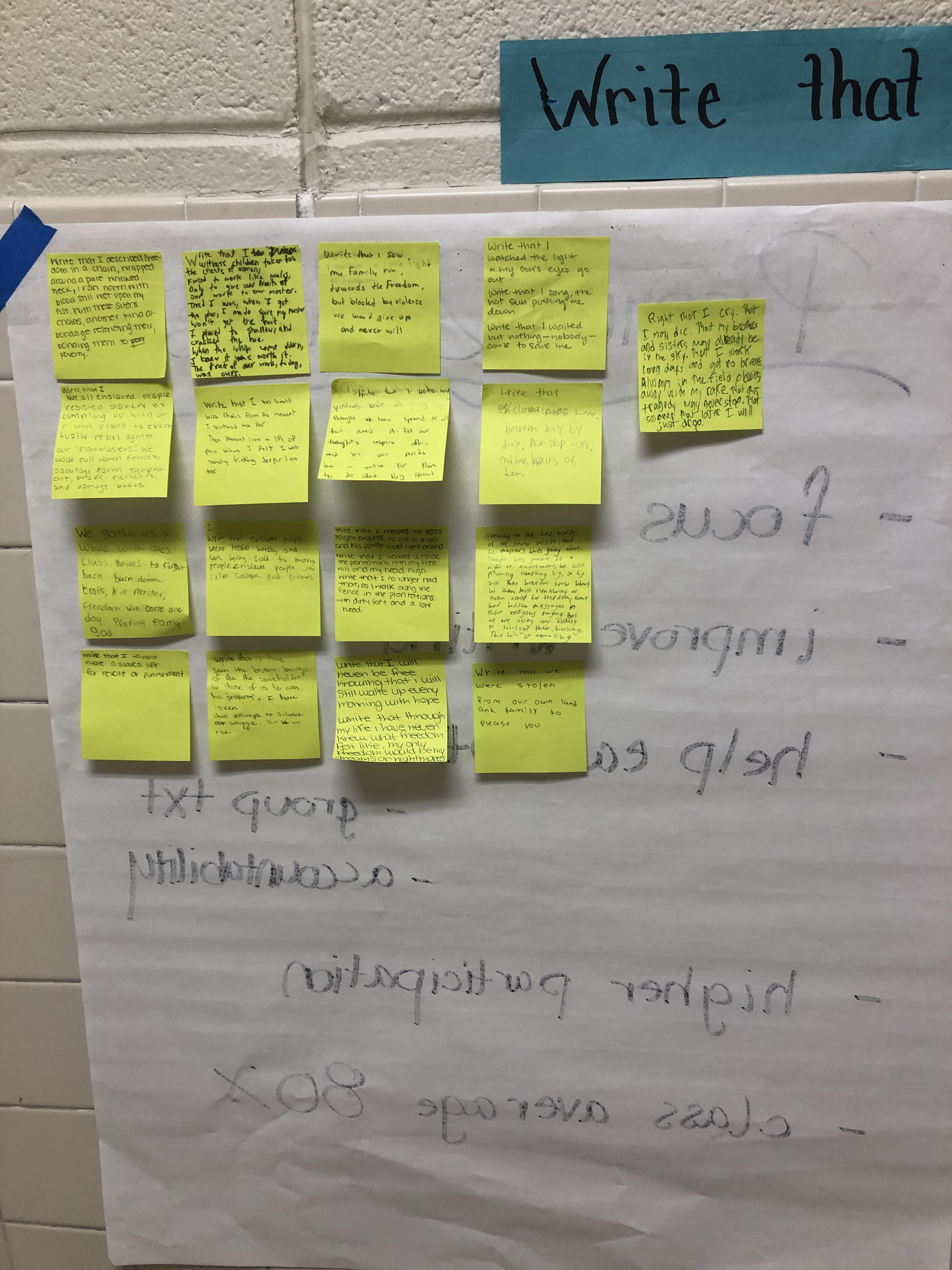
One student, who had not done extra projects before, offered to type up the poems during her lunch period. We displayed their work in the hallway on small boards and the students all came by to read the poetry of their peers. The words below of my students speak for themselves.
Write that I sang my sorrows away using that written word learned at night and worked not to my fullest capacity but moved slowly as the moon.
Write that we all enslaved people resisted slavery by coming up with our own plans to eventually rebel against our “slave masters.” We would pull down fences, sabotage farm equipment, break elements, and damage boats.
We gather as a whole with axes, clubs, knives to fight back, burn down crops, kill masters, freedom will come one day praying to god.
Write that I wouldn’t ignite the life of an enslaved person for revolt or punishment
Write that I witness children taken from the chest of women. Forced to work like males, only to give our fruits of our labor to our monster. Tired I was, when I got the plan, I made sure my master won’t get the fruit. I plowed and swallowed, and cracked the tool. When the whip came down, I knew it was worth it. The fruit of our work today was ours.
Write that I was bound with chains from the moment I ventured too far. Then thrust into a life of pain where I felt I was slowly sinking deeper into tar.
Write that we enslaved people were treated harshly and were being sold to many people. To the whites we were known as savages and animals.
Write that I have seen the brutal beatings performed by the slave owner to those of us they call their property. I have seen their attempts to silence our struggle. But we will rise.
Write that I saw my family run towards the freedom but blocked by violence but we did not give up and we never will.
Write that I write my spirituals, our thoughts we have spread to all that need it. Let our thoughts inspire others and let our words be a motive for them to do what they want.
Write that I needed no pass to get around, to ask a man and his power could I get around. Write that I walked outside the plantations with my free will and head high. Write that I no longer had that, as I walk along the fence in the plantations with dirty feet and low head.
Write that I will never be free knowing that I will still wake up every morning with hope. Write that through my life I have never known what freedom felt like, my only freedom would be my dreams or nightmares.
Write that I watched the light in my son’s eyes go out, write that I felt, the hot sun pushing me down, write that I waited but nothing… nobody came to save me.
Write that enslaved people were beaten day by day, nonstop work endless hours of doom.
Listening to the bold words of the enslaved outside, and the master’s whips going about. Tonight was gonna be a night of excitement, we were planning something big, so big that they wouldn’t know what hit them. Most run away or even asked for freedom, some had hidden messages in their religious singing. But we are using our ability to sabotage their workings. This will be amazing.
Classroom Stories
As a middle school educator and curriculum leader, I had the opportunity to adapt Poetry of Defiance: How the Enslaved Resisted for a group of 7th grade humanities students during a unit on resistance movements throughout American history. Rather than solely focusing on legislative or military resistance, I wanted students to explore the emotional and cultural expressions of defiance by enslaved people — especially through poetry, song, and storytelling.
We began by analyzing several of the primary source poems included in the lesson. Students then worked in small groups to rewrite and perform these poems using modern language or spoken word style. This not only deepened their understanding of the historical context but also allowed them to connect emotionally with the voices of the enslaved and recognize resistance in many forms — not just physical, but spiritual and creative.
One student reflected, “I never thought poetry could be a form of fighting back. It made me feel like I understood their strength better.”
This lesson helped shift how students understood slavery — not as a story of passive suffering, but one of enduring strength and resistance. I look forward to incorporating more lessons from the Zinn Education Project in our curriculum.
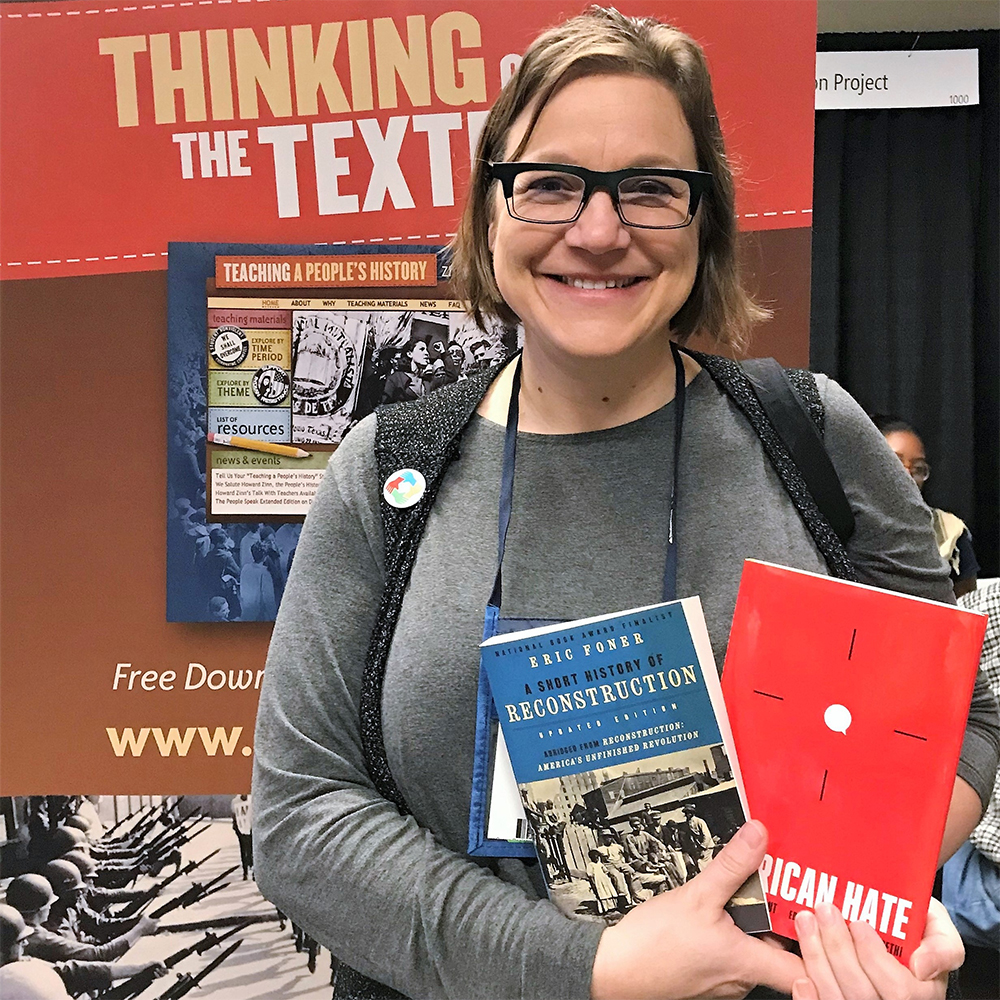
Adapting Adam Sanchez’s lesson, Poetry of Defiance: How the Enslaved Resisted, for online learning was a labor of love. The Rethinking Schools/Zinn Education Project’s mixer activities have been a catalyst for understanding in my classroom; I couldn’t imagine any space — even at a distance — that didn’t include that power.
The first hurdle to overcome was the difference in participation between a captive audience in class and students logging in when they can at home. There are the logistics of asynchronous participation which come from any online learning scenario. And there is particular care to be taken specifically during the COVID-19 outbreak, when families are experiencing stress and upheaval at home. . . . Continue reading
Before I taught Zinn Education Project lessons about resistance to enslavement, my students were under the impression the only types of agency enslaved people could exercise were running away or violent revolt. Some thought that if you didn’t run away or fight violently, then enslaved people must have accepted their condition of enslavement. The most popular or well known African Americans from this time period are Harriet Tubman and Frederick Douglass, both of whom ran away. By the time students reach my class, these are often the only stories young students hear about resistance. It was time to set the record straight and expand their understanding of enslavement and resistance.
I chose the lesson Poetry of Defiance: How the Enslaved Resisted from the phenomenal teaching tool, Teaching a People’s History of Abolition and the Civil War. After learning about the variety of ways enslaved people resisted their enslavement, they came away with new understandings about how resistance exists on a continuum and that resistance can take many different forms as well as the fact that how a person chose to resist varied widely due to many different circumstances they faced. This has been one of my favorite lesson to teach from ZEP and I look forward to keeping it in permanent rotation when I teach about the lives of the enslaved. Thank you!
I have included a link to one of my student’s poems here.
I used the mixer Poetry of Defiance: How the Enslaved Resisted by Adam Sanchez as an observation for my teacher evaluation process. This is an outstanding educational tool because it provides an interactive and engaging way for students to explore the many forms of resistance enslaved people used to fight against oppression.
Instead of passively reading about history, students actively participate by taking on different roles and perspectives, making historical events feel more real and personal. This approach not only enhances engagement and retention but also highlights the diverse ways enslaved people resisted — such as revolts, sabotage, escape, cultural resilience, and challenging the stereotype that they were passive victims.
Through discussions and role-playing, students develop critical thinking skills as they analyze historical conditions and motivations. This assignment humanized the victims of slavery by showing ways they resisted, and it complicated the singular definition we usually give to resistance as a violent act. I have used this lesson for the last three years and I keep going back because of how great and useful it is.
I was so inspired by the teacher stories for the Poetry of Defiance: How the Enslaved Resisted lesson that I brought this free teaching activity into my own college classroom. It is a great way to highlight the many different ways that enslaved people resisted their enslavement and it provides amazing primary source documentation to dismantle pro-slavery arguments.
Every time I use this lesson, I can tell that students are thinking differently about the practice of enslavement: they grasp the horrific realities of this awful practice as well as the reasons for the myriad of ways enslaved people resisted their oppression. The final step of the activity, creating a poem, helps the students get into the mindset of the people they are studying and it allows for creativity. College-level history courses can be very academic so this is a great way to end the semester on a more creative and artistic note.
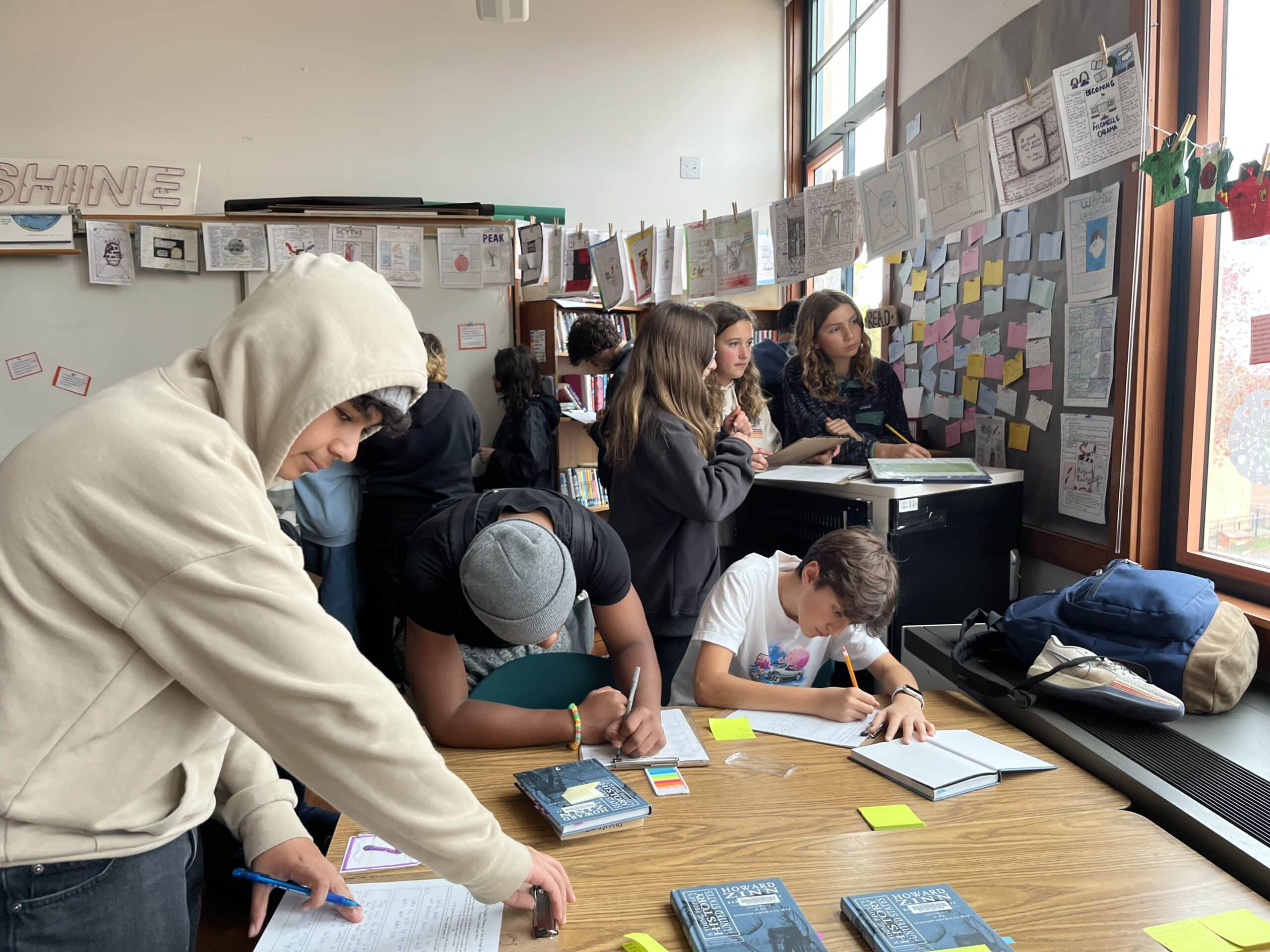
As an 8th grade history teacher, I use A Young People’s History of the United States as my primary “textbook” every year. I use this book in a variety of ways and each chapter leads to rich and interesting class discussions. I have created activities where excerpts of the chapter are on the walls and students walk around the room reading excerpts and talking with others in order to answer questions on a note-catcher. Students have participated in Socratic seminars where they discuss what they learned in particular chapters, and groups will sometimes support each other by reading sections of a chapter and sharing what they learn with each others (jigsaw). I have also created an “escape room” where small groups need to answer questions correctly in order to unlock a room and enter another.
To supplement what we learn from the book, students have really enjoyed participating in mixers. Poetry of Defiance: How the Enslaved Resisted and Who Fought to End Slavery? Meet the Abolitionists are two favorites. These lessons are so engaging for my students and they walk away with such a deep understanding and appreciation for 1) the ability of the enslaved to maintain their human dignity through acts of resistance and 2) the tenacity of the abolitionists to demand freedom by any means necessary. Every year, I am so moved by the poems that they create using the Poetry of Defiance lesson.
In a time when some folks in the federal government are doing whatever they can to silence educators, I am grateful for the Zinn Education Project and all of the resources that are available for teachers who want to continue teaching the real history of our country. Even my 8th graders understand that there is no way to grow and improve as a nation without truly understanding and learning from the mistakes that have been made.
I absolutely loved using the lesson plan, “Poetry of Defiance: How the Enslave Resisted.” My African American History students used the mixer activity to build background knowledge about leaders in the African American community during the period of U.S. slavery and how their expressions of agency differed in their resistance to being held in bondage. We talked as a class about the differences between passive and overt resistance and classified the tactics used by these leaders into those two categories.
From there, students used the examples of methods of resistance to write structured “Write That I” poems that used the power of repetitive language and structure to creatively express the struggles and grassroots pushbacks against slavery that were learned through the primary source experiences of enslaved persons utilizing methods of resistance. Students were able to make connections to acts of resistance in the face of adversity today as well. We displayed our poems in an exhibit box in the front of our school.
My all time favorite Zinn Education Project lesson is Poetry of Defiance: How the Enslaved Resisted. The primary and secondary sources are perfect for middle school readers at multiple levels. The selections are short and easily digested. I make laminated cards using a different color for each category. I think it is important that the categories include culture, music and family. It introduces middle school students that there are forms of resistance that aren’t immediately obvious.
The culminating project of creating a poem from the sources never fails to amaze me and surprise the kids. I tell them they will make a poem out of the sources and they don’t believe me. The poems always turn out great. We display them in frames outside the classroom. The best part of the assignment is that the students work together to create a single poem. Each on of my classes ends up creating a completely different poem. It is a powerful lesson that gets to the humanity of the enslaved and helps students really engage with the subject. They gather information and then must go into the heads of the enslaved to write from their point of view or on behalf of them.
As a first year teacher, I was daunted by the task of teaching the complex and heavy topic of U.S. history to middle grade students. Especially as a white teacher, it was important to me to emphasize the many lineages of resistance and the power and strength in culture-building that African Americans have undertaken for generations.
As a poet myself, finding the Zinn Education Project’s Poetry of Defiance lesson plan was a godsend. It was a perfect bookend to a very heavy unit, culminating our studies with the hope and power that comes with resistance.
I built upon the words of Clint Smith, Ibram X. Kendi, Sojourner Truth, and Maya Angelou, among others, to establish a stronger foundation in my second year teaching the class. What was especially valuable was Alice Walker’s reading of Sojourner Truth’s “Ain’t I a Woman” from The Zinn Education Project’s own archives. In the second year implementing the Poetry of Defiance lesson, my students also connected their learning to figures they learned about in science class, including a number of Black scientists and engineers.
In both years implementing this lesson, students shared their poetry in a poetry slam-style activity, drawing from the example of Walker’s oratory style and the stories that resonated with them. What I loved about teaching an adapted version of this lesson was the ability of students to be creative and write however long or short of a poem spoke to them. Some students even wrote multiple pieces.
I want to end with excerpts from three students’ poems from this project.
Write that I got inspired by the poems that I’ve read
And my favorite one is by Maya Angelou
About Black women being great.
You always have to fight back.
If you don’t you might face sacrifices
So everyone could be free
And so slavery could potentially stop.
But thousands of years later
I feel like it never ended.
Everyone should be free, no matter their skin color!
And you have to be strong, even if that means to boycott!
***
Braids. Braids are us telling our story. Wavy, curly, afro, all of those are our beautiful hair. Our hair is our story. It is our story to be told. Braids tell us the stories of our ancestors, of our beloved families. We are brave fearless women and we will fight for our freedom. Nothing is going to bring us down. You can beat us, put us in jail, you guys can do anything, but you guys WILL not make us give up. Braids.
Write that I resisted.
I resisted failure being my name.
I resisted to walk all the way to segregated bathrooms.
I resisted people not letting me publish poems.
I resisted.
Write that I resisted.
***
When night would fall and stars would glow, she’d braid her hair in rows, Not just for style, neat and tight, but sending a message throughout the night. They tried to make her feel so small, but through her braids she stood up real tall, in every twist and woven line, she shared a plan, in a quiet sign.
We have been intentionally trying to center the stories and voices of enslaved people in our teaching about early United States history. This lesson was exactly what we were looking for after teaching our 3rd and 4th grade students the Color Line lesson. We felt that the students needed to see how enslaved people had power and used it to resist their enslavement.
As a team we read the lesson and evaluated the strengths and weaknesses of our students this year. We came to the conclusion that our group was not developmentally ready for a mixer activity so we decided to focus the lesson on having students create the “Write That I” poem, using the approach by Linda Christensen.
How did enslaved people fight back or resist? We posed this question to our students and then gave them each the slip of paper with an example of a form of resistance. While we wanted to maintain the authenticity of each example, we also recognized some of the language and content was going to get in the way of our students digesting the meaning of the text; as a result we made minor edits to the original documents. After each student received a slip of paper they were asked to read and summarize their example. Teachers walked around the room to support students in their understanding.
Then students turned their summary into one line of a poem, starting with “Write that I . . .” Reading the poem aloud was powerful and helped us all understand what resistance looked like for enslaved people. Afterwards, we created a web in our journals and listed the various examples of resistance on the web in the corresponding categories. All of this helped us to answer our second question: How did enslaved people find their power?
| Write That I Resisted by: Intermediate Students |
|
| Write that l . . . broke tools, set fires to cotton warehouses and a gin house in Virginia, used theft to fight back, stole jewelry. Write that I . . . I chose to pick up and leave anyway, took care of other children, had a strong united family, named my children after lost family members. Write that I . . . slowed the beat to slow production, hosted midnight school for slaves, sang the hymns about my Lord, used their first and last names. Write that I . . . slowed down production by refusing to work, reacted with violence, pretended I was ill and pregnant to get out of work, refused to do dangerous tasks. |
Write that I . . . took a job as a sailor and then jumped onto a free ship, went into the woods and swamps to hide, fought with clubs, axes and knives in an attempt to escape, ran away. Write that I . . . wanted to hurt my owner, criticize and complain to the owner about unfair treatment, fought the overseers, tried to push the white man into boiling sugar juice. Write that I . . . marched from plantation to plantation, led rebellion and conspired for freedom, was hung because I plotted rebellion, became a legend feared by whites. |

Twitter
Google plus
LinkedIn