Theme: Racism & Racial Identity

Racism & Racial Identity
The Forgotten History of How Our Government Segregated the United States (Article) | Zinn Education Project

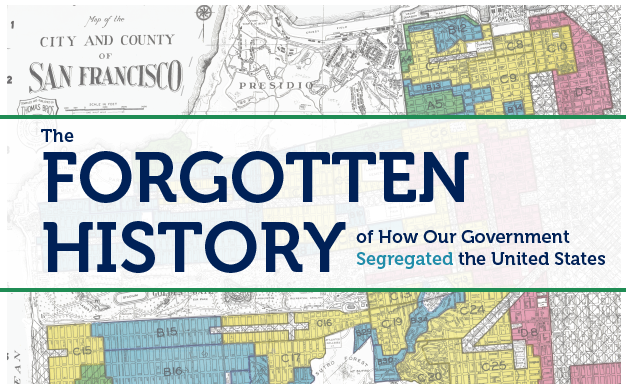
The Forgotten History of How Our Government Segregated the United States

By Richard Rothstein
Racial segregation characterizes every metropolitan area in the United States and bears responsibility for our most serious social and economic problems — it corrupts our criminal justice system, exacerbates economic inequality, and produces large academic gaps between white and African American schoolchildren. We’ve taken no serious steps to desegregate neighborhoods, however, because we are hobbled by a national myth that residential segregation is de facto — the result of private discrimination or personal choices that do not violate constitutional rights.
Continue reading

Christopher Columbus: No Monuments for Murderers

By Bill Bigelow
A New York Times article said the symbolism of Christopher Columbus is "murky.” But there is nothing murky about Columbus’ legacy of slavery and terrorism in the Americas. The record is clear and overwhelming. The fact that the New York Times could report this with such confidence — adding that “most Americans learn rather innocently, in 1492 [Columbus] sailed the ocean blue until he discovered the New World” — means that educators and activists still have much work to do.
Continue reading

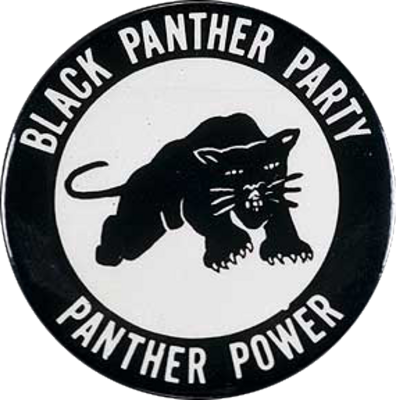
What We Don’t Learn About the Black Panther Party — but Should

By Adam Sanchez and Jesse Hagopian
Black Panther Party history holds vital lessons for today’s movement to confront racism and police violence, yet textbooks either misrepresent or minimize the significance of the Black Panthers.

This local organizing that Panthers engaged in has been erased in the textbooks, yet it is precisely what won them such widespread support. Armed with a revolutionary socialist ideology, as the Panthers grew, so did what they organized around. They fought in Black communities across the nation for giving the poor access to decent housing, health care, education, and much more.
Continue reading
White House Black History | Zinn Education Project

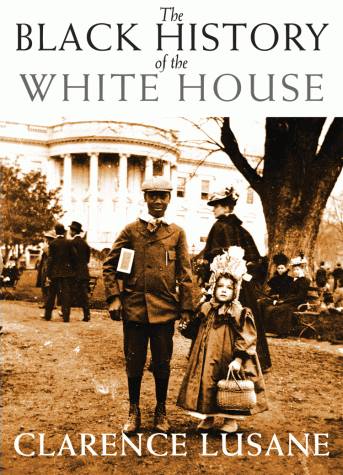
Missing from Presidents’ Day: The People They Enslaved

By Clarence Lusane
Schools across the country are adorned with posters of the U.S. presidents and the years they served in office. U.S. history textbooks describe the accomplishments and challenges of the major presidential administrations — George Washington had the Revolutionary War, Abraham Lincoln the Civil War, Teddy Roosevelt the Spanish-American War, and so on. Children’s books put students on a first-name basis with the presidents, engaging readers with stories of their dogs in the Rose Garden or childhood escapades. Washington, D.C.’s Smithsonian Institution welcomes visitors to an exhibit of the first ladies’ gowns and White House furnishings.

Nowhere in all this information is there any mention of the fact that more than one in four U.S. presidents were involved in human trafficking and slavery.
Continue reading

American History Lessons

The original idea for the Zinn Education Project’s “If We Knew Our History” column grew out of our reading “American History Lessons,” by Melissa Harris-Perry in The Nation magazine. Harris-Perry’s article, reproduced here, is a meditation about the role of Black History Month.

She argues that we suffer from a “national deficit of historical knowledge” and that this deficit has contemporary political consequences. If we knew our history, she suggests, people would be less likely to follow the bigots who patch together historical symbols and soundbites to justify their right wing nostrums. And if we knew our history, we’d be more likely to appreciate and defend the accomplishments of social movements.
Continue reading
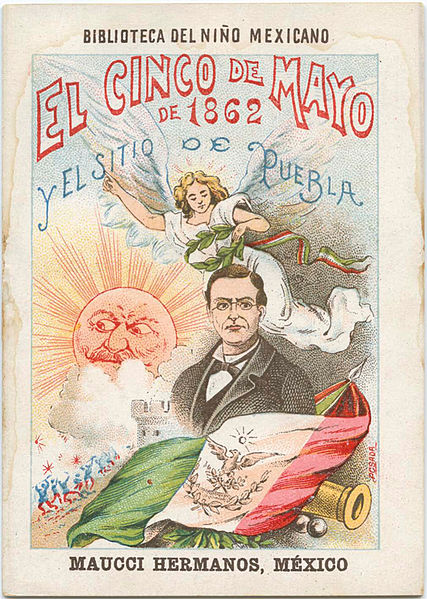
Rethinking Cinco de Mayo (Article) - 1901 poster for Cinco de Mayo by Jose Guadalupe Posada | Zinn Education Project: Teaching People's History

Rethinking Cinco de Mayo

By Sudie Hofmann
I recently came across a flier in an old backpack of my daughter’s: Wanted: Committee Chairs for this Spring’s Cinco de Mayo All School Celebration. The flier was replete with cultural props including a sombrero, cactus tree, donkey, taco, maracas, and chili peppers. Seeing this again brought back the moment when, years earlier, my daughter had handed the flier to me, and I’d thought, “Oh, no.” The local K-6 elementary school’s Parent Teacher Student Association (PTSA) was sponsoring a stereotypical Mexican American event. There were no Chicana/o students, parents, or staff members who I was aware of in the school community and I was concerned about the event’s authenticity. I presumed the PTSA meant well, and was attempting to provide a multicultural experience for students and families, but it seemed they were likely to get it wrong.
Continue reading

‘Repeat After Me: The United States Is Not an Imperialist Country — Oh, and Don’t Get Emotional About War’

By Bill Bigelow
You may have seen that an administrative law judge in Arizona, Lewis Kowal, just upheld the decree by the State Superintendent of Public Instruction that Tucson’s Mexican American Studies program violates state law. Judge Kowal found that the Tucson program was teaching Latino history and culture “in a biased, political, and emotionally charged manner.” According to CNN, one lesson that the judge objected to taught that the historic treatment of Mexican Americans was “marked by the use of force, fraud and exploitation.”

Try this “history detective” experiment. Ask the next person you encounter to tell you what they know about the U.S. war with Mexico. More than likely, this will be a short conversation, because that war (1846-48) merits barely a footnote in U.S. history textbooks.
Continue reading

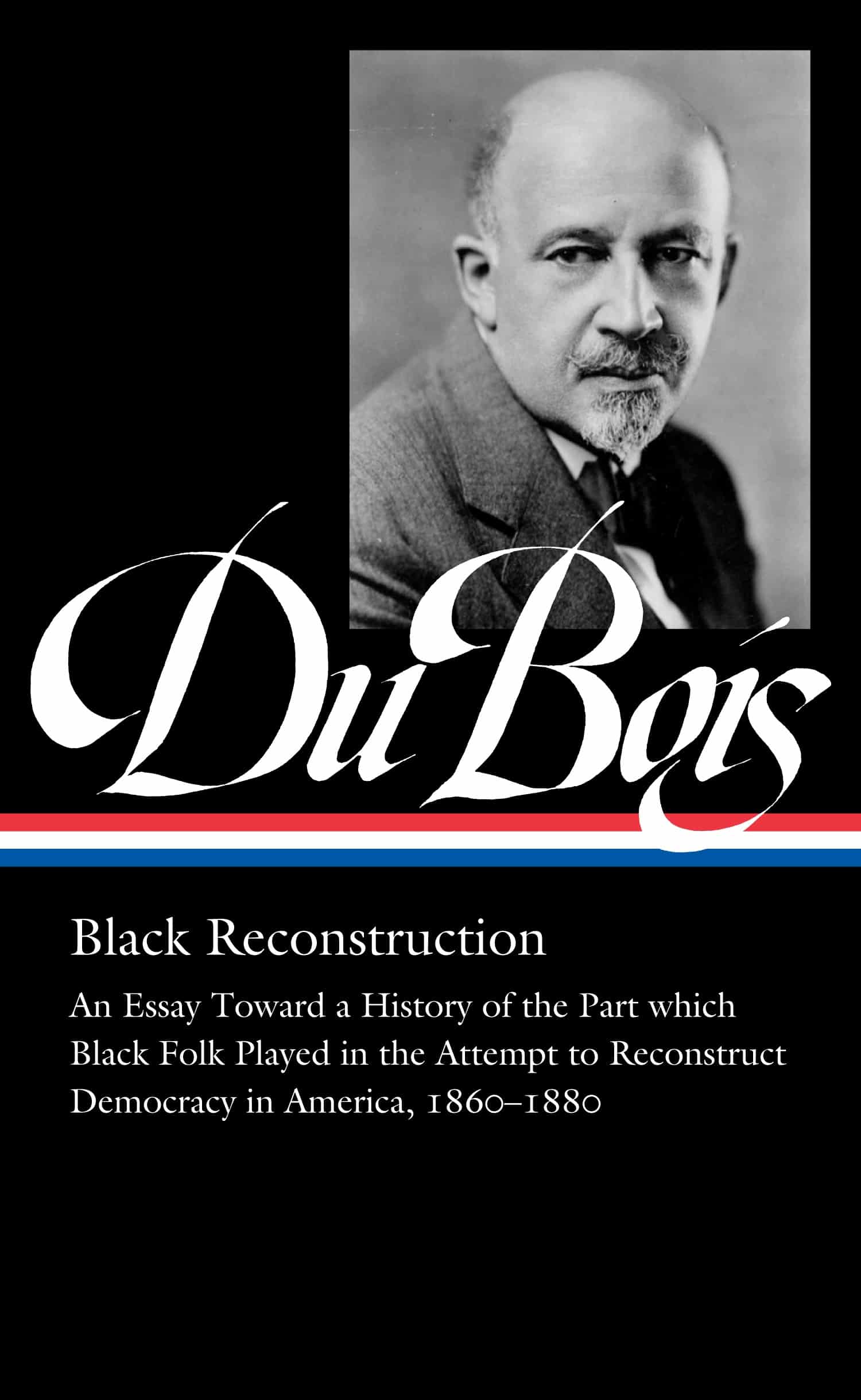
Black Reconstruction in America

Book — Non-fiction. By W. E. B. Du Bois. Edited by Eric Foner and Henry Louis Gates. 2021. 1097 pages.
Originally published in 1935, Du Bois’ Black Reconstruction was the first book to challenge the prevailing racist historical narrative of the era and in sharp, incisive prose, tell the story of the Civil War and Reconstruction from the perspective of African Americans.
Continue reading
Riot Sweeps Chicago | Zinn Education Project

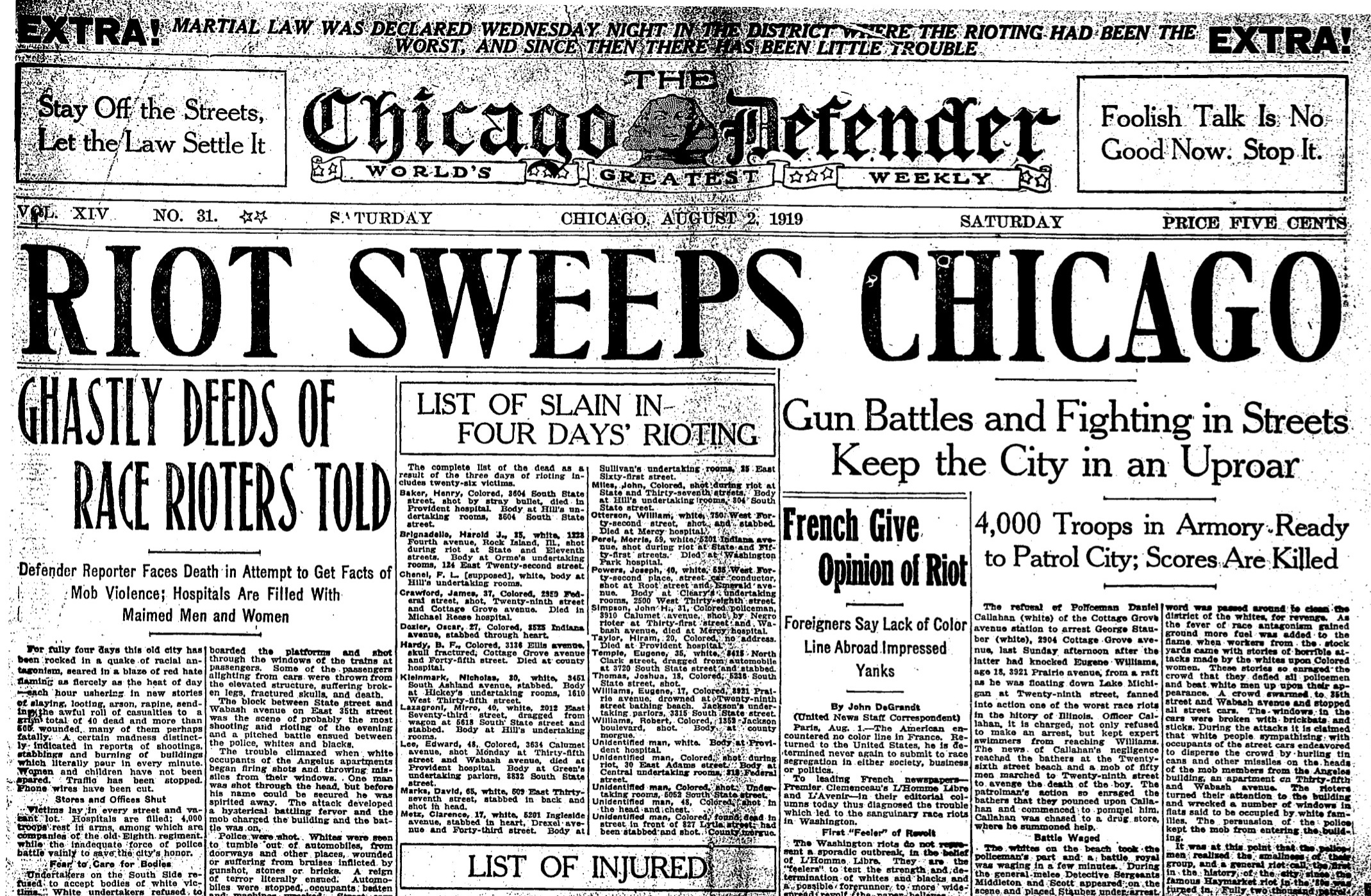
July 27, 1919: Red Summer in Chicago

Sparked by a white police officer’s refusal to make an arrest in the murder of a Black teenager, violence in Chicago lasted almost a week. At least 38 people were killed and thousands of Black homes were looted and damaged during Red Summer.
Continue reading
Burning Tulsa: The Legacy of Black Dispossession

By Linda Christensen
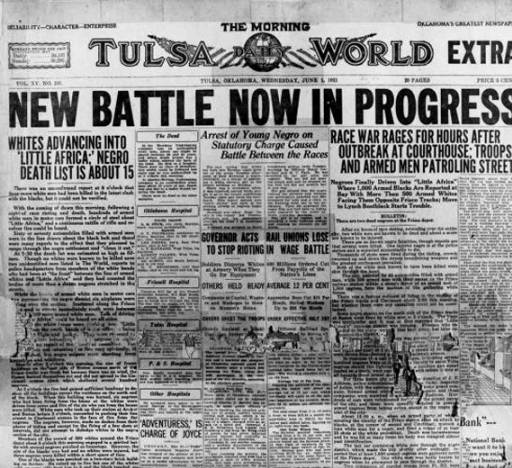
The author describes teaching about racist patterns of murder, land theft, displacement, and wealth inequality through the 1921 Tulsa Massacre.

The term “race riot” does not adequately describe the events of May 31 - June 1, 1921 in Greenwood, a Black neighborhood in Tulsa, Oklahoma. In fact, the term itself implies that both Blacks and whites might be equally to blame for the lawlessness and violence. The historical record documents a sustained and murderous assault on Black lives and property. This assault was met by a brave but unsuccessful armed defense of their community by some Black World War I veterans and others.
Continue reading