

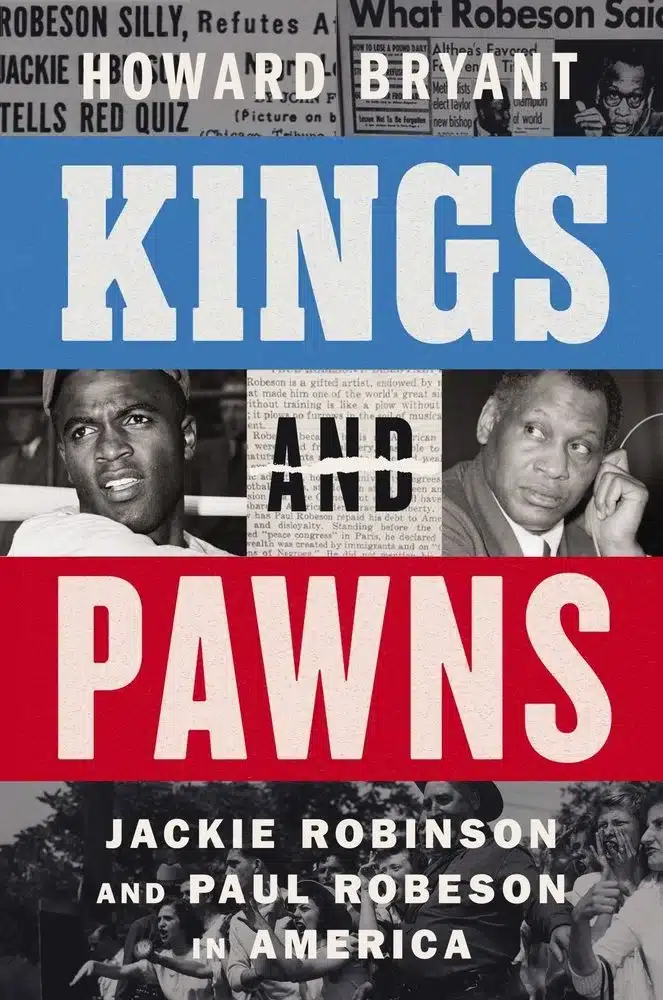
On October 26, sports journalist and author Howard Bryant joined Rethinking Schools editor Jesse Hagopian to talk about his recent book, Kings and Pawns: Jackie Robinson and Paul Robeson in America. Robeson and Robinson never met, yet were pitted against each other by the U.S. government during the Cold War. Bryant explores the striking parallels between the Robeson–McCarthy era and today: media complacency, attacks on civil liberties, and demands for public displays of loyalty.
(Watch our previous Teach the Black Freedom Struggle online classes and register for upcoming classes here.)
In the excerpt below, Bryant discusses how Paul Robeson and Jackie Robinson — two of the most famous and accomplished Black men in the world — were pitted against each other and grew disillusioned with the “American experience.”
Participants shared what they learned and additional reflections on the session:
I learned about the story of Jackie Robinson and Paul Robeson, which I hadn’t known before, and really appreciated the nuance in how it was taught.
The long history of pitting well-known Black celebrities/voices against each other to try to mute progressive ideals.
Throughout our history as Black people, we constantly find ourselves not only having to watch our backs from the oppressors, but at times our own people. On the positive end, we still manage to survive and move forward.
Teaching truth is an absolute necessity RIGHT NOW!
Event Recording
Transcript
Click below for the full transcript with resources mentioned in the discussion.
Transcript
Jesse Hagopian (he/him): My name is Jesse Hagopian. I’m a Zinn Education Project campaign director and editor with Rethinking Schools. Today’s class is hosted by the Zinn Education Project, which is coordinated by Rethinking Schools and Teaching for Change, and we offer free, downloadable people’s history lessons. We are so glad you’re all with us. I am happy to welcome author Howard Bryant. He is an esteemed journalist, an award-winning producer, and author of 11 books, including our feature title for tonight, Kings and Pawns: Jackie Robinson and Paul Robeson in America. Howard, welcome!
Howard Bryant: Oh, thank you, it’s good to be here. Let’s see if I can see everybody. Hello. Good to see you, Jesse, in person.
Hagopian: I know, this is wonderful to finally get connected with you. Dave Zirin has been singing your praises for a long time, and I’ve been reading your work forever. As a Black socialist baseball player and coach, I’m pretty excited about this book that you wrote, and so glad to get to chop it up with you. So I guess we’ll just dive in.
I’ll start with a question about this book, because I had so much fun reading this book. There are just all these historical Easter eggs throughout the book, and surprising ways that Jackie Robinson and Paul Robeson’s lives intersected that I had never known about. For example, you write that when Robinson was promoted to the Brooklyn Dodgers, when that was announced, Robeson was celebrating his 49th birthday. You wrote, “The paths of the two men, born 21 years apart, were so similar, they literally trod the same ground.” I was hoping you could talk about that. And you suggest so many clues connecting their lives have been there all along, but it took you time to recognize that, and so I just wanted to ask what led you to connect their stories, and when did you realize there was a book to be written about them? And lastly, tell us about this title, Kings and Pawns.
Bryant: Well, once again, thank you all for having me. I think that’s the first order of business. It was great to have an invitation to come here and to talk about this, about these two men who I just found to be just titanic in so many different ways for me.
I think that to really answer the question, it’s more out of embarrassment. I mean, I’m a baseball guy. I’ve covered baseball for 30 years and obviously knew my baseball history, and really digging into the history, it’s such a great omission, this moment in history. The great Pulitzer Prize winner David Maraniss, I always quote him whenever we get into topics like this, where he would always say that “history writes people out of the story, and it’s our job to write them back in.” That really felt important when it came to a figure like Paul Robeson, and that was one of the things that I had been asking myself. How can you forget Paul Robeson? How can he be erased from history? How is that possible when you think about who he was, what he did, and how he had done everything that this country could ever ask anyone to do? You look at his accomplishments and you think about everything that this man was, and then you add the political sensibilities to it as well.
Here I am as a baseball fan, knowing my baseball history, and the number of times that I had known that Paul Robeson spoke in front of the baseball owners to advocate for integration in 1943. How many times did I know about the 1949 HUAC testimony where Jackie testified against Paul Robeson in the number of books where it says that this testimony took place?
And then you just kept reading and kept on moving, and it kind of qualifies as news that two of the most famous African American voices in our country were actually pitted against one another. And so I was embarrassed, and it really wasn’t until I worked on a book in 2018 called The Heritage: Black Athletes, A Divided America and the Politics of Patriotism. It wasn’t until I was researching that book, and I was like, where did this heritage of Black athletic and political activism start? Where does it really begin?
And I decided that, for me at least, I think it really was when Robinson testified against Robeson, because he was subversive in that. And that brought me to Robeson. It was like, well, maybe it wasn’t there, maybe it goes all the way back, to the great Robeson. Then it was at that point where it was like, wait a minute, this deserves more than a paragraph in somebody else’s book. This deserves its own moment. And so that’s when I really started to think that this was going to be a project I was going to do.
Hagopian: Yeah, I love that. No doubt. I’ve had the same experience of reading that passage about Robinson testifying against Robeson and just saying, “Oh, that’s a shame,” and then moving on.
Bryant: Well, exactly. What happened? How did they get to all of the different questions? How did Jackie end up there? How did it all come together? Who contacted him? How did this whole thing go down? And that, to me, was the great omission and the great embarrassment.
Hagopian: Yeah, I want to get into all that. Before we answer those questions, let’s pause on the question you asked before about how Paul Robeson could be forgotten, given everything he achieved. I mean, we’re talking about a guy who was more than a renaissance man. I mean, how many languages did he speak?
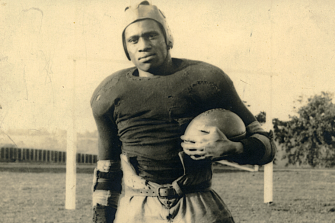
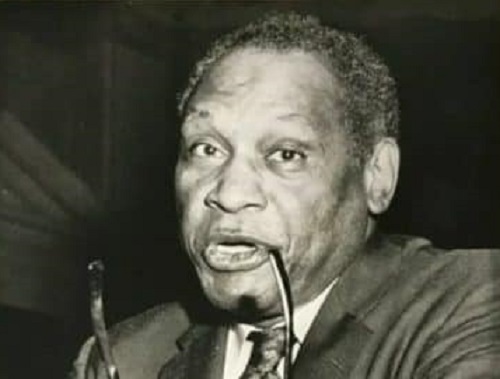
Bryant: Multiple languages. He’s arguably, for his time, the greatest college football player. He’s a trained lawyer. He’s one of the first Black stage actors. We talk about Jackie Robinson integrating Major League Baseball. Well, Paul Robeson integrated Broadway. He’s the first Black actor to play Othello in the United States for a Shakespearean play. He’s the first. So all of these different things. Valedictorian in college, acclaimed singer, an actor, I mean, he was famous in high school. He was winning national debate and oratory contests, as well. He became famous when he was a sophomore in high school.
And to me, it wasn’t just the fame, it was that, at one point, you could make the argument that Paul Robeson was the most famous Black man in the world. And he is replaced as the most famous Black man in America by Jackie Robinson. My point is that you have these two men who have done everything that this country has asked. He was the one that everyone pointed to as what was possible, even in a segregated society. And yet, by the end of their lives, both of them were completely disillusioned with the American experience. So, to me, that was the arc of the story. How did these two men who did everything that the nation had asked of them, how did they end up where they ended up?
Hagopian: Yeah, no doubt. Well, I think one of the most striking revelations in your book is how Paul Robeson helped create the political condition for Jackie Robinson’s historic breakthrough. I may have thought about, just generally, that Robeson was a trailblazer and made space for Black folks, but I didn’t understand how specific it was. You describe Robeson’s 1943 appearance before baseball owners. I had no idea about that. And he directly challenged them to end segregation, as you put it. Robinson and Robeson were linked in a historic journey, so tell us about Robeson’s confrontation with these baseball owners in 1943. What arguments did he make, how did the owners respond, and what was the result?
Bryant: Well, actually, one of the things that you had asked earlier was, where did the title come from? The title came from the fact that I’m a chess player. But it also came from this constant moving of the definition of your thinking about who was doing what at what time, and how were those chess pieces moving? When the title was done and the book was getting close to being finished, I talked to my friend Della Britton, who’s the CEO of the Jackie Robinson Museum and the Jackie Robinson Foundation. Anyone who gets to New York, please go to the museum, it’s tremendous. But when she saw what the title was, the first question she had was who’s the pawn? Is Jackie the pawn? Who’s the pawn? I told her, “Well, it’s a triple entendre in a lot of ways. They were both kings, obviously.”
Was Jackie the pawn when he testified against Robeson in 1949? Yep. But then in 1943, Robeson testified on behalf of baseball, but he did so at the behest of the most racist commissioner in baseball history, Kenesaw Mountain Landis. And the reason that he testified was because it was essentially a flanking move. I know this is a room full of educators, so I don’t need to go too deep into it. You all know the Double V campaign in 1943 was a movement spurred by the Black press — victory abroad, victory at home — as a recompense to the Black strategies in World War I, in which we’re going to take our demands for civil rights and we’ll put them on hold during the war. Then they saw what happened after the war was the most violent, racist period in American history. If you look at all the massacres and things that took place right after World War I and into the early 1920s, whether it’s Tulsa, East St. Louis, North Carolina, there are so many different examples of terrible violence. The Black press decided in 1943 that now they’re going to do it concurrently — we will support the war effort, but we will also fight for our civil rights. We’re not putting anything on hold.
So the Black press is going to these different institutions and they’re protesting these different institutions. And one of the institutions that they are planning to protest is Major League Baseball, at the 1943 Winter Meetings, December 3rd. On hearing this in October of 1943, Paul Robeson integrated Broadway with the debut of Othello. So Robeson is the man. He’s the talk of the town, he’s the guy, he is all over the country, and everyone remembers him also as an athlete. He had some friends in that room with all the different baseball owners, and so it was baseball that actually reached out to Robeson to [counteract] the argument that baseball was purposely segregated. It’s a really interesting confrontation there, because one of the first things Robeson says in that meeting was, “Do not try to separate me or pit me against my friends from the Black press. We are here for the same reason.” So, in some ways, he walked in as a setup, but he ended up emerging saying, “I understand.” He was actually very sympathetic to the baseball owners. “I understand why you think that this can’t happen.” And he’s actually very conciliatory toward them. They give him a standing ovation, and then they leave once the Black delegation leaves. The owners ignore the rest of everything that Robeson said. They have no interest in following up with anything that he said. Essentially, during that meeting the Black press actually gave the baseball owners a five-point program on how we would recommend you integrating the game.
It’s not until the end of the meeting, when they start getting into new business. There’s one voice in the meeting, who says, “Is anyone going to talk about the Black delegation that just addressed us this morning?” And it was Branch Rickey. That is the first moment where you can see that Branch Rickey has a plan and that Branch Rickey is going to be the one to at least try to integrate baseball. It’s not necessarily heroic in some ways, and we can talk about Rickey in a moment, but the beauty of that, and of being able to do this book at this time period, is for the first time, the actual minutes of that meeting, of the Winter Meetings, is available. It’s at the Baseball Hall of Fame up in Cooperstown, New York. For decades, the minutes of that 1943 meeting had been unavailable. And I love the fact that baseball refers to it as we’ve declassified them, as if it’s the CIA or something. But those minutes, for the first time you can actually see who was in the meeting and what was said, instead of dealing with the scraps of quotes from newspapers. That was really, really key. And you started to see what actually happened. And nobody in baseball wants to talk about it.
One of the things that Rickey talks about in that meeting was he wanted to just know what to say, because the communist press, the Daily Worker, led by Lester Rodney and a few other really, really influential writers, are really pressing, and it really is the communists, the socialists, the left-wing and progressive political movements that are really pressing baseball. And they’re pressing baseball in New York. They’re not pressing in St. Louis, where Branch Rickey had been the year earlier, or in some of the other cities, or Boston, or Washington, or not even really Harlem, where the Giants were, or the Bronx, where the Yankees were. The focus was really on Brooklyn. And I think the reason for that, of course, is because the political climate in Brooklyn, the political sensibilities there were so labor-based. So Rickey is really saying, “Okay, well, what kind of guidance do I have? Because these guys are knocking on my doorstep. They’re coming after me. There’s 10,000 signatures every day that they’re coming after me to get me to move in this direction.”
Also, the Ives-Quinn Act in New York is slowly starting to gain more momentum, barring discrimination in the workplace. There’s an avalanche taking place here. There’s a perfect storm taking place, and it’s all happening during the war. So the Daily Worker would have these different advertisements, and they would show dead soldiers and dead Black soldiers in these different trenches with the ad copy, “Good enough to die, but not good enough to pitch.” So there’s certainly a movement taking place where you’ve got to do something. And baseball’s response to that, having to do something, is to continue to avoid. And they used Robeson at that time to just prove that, see, Paul Robeson’s on our side. These different shades of these years really did inform the title as well, because sometimes Robeson looks like the pawn, sometimes it’s Jackie, and then sometimes, in a lot of ways, if you listen to the Malcolm X piece of it, it was, “No, it’s you, Black America, you’re the pawn, because you keep asking for a love and a respect and a citizenship from a country that’s not going to give it to you.”
Hagopian: Yeah. I love that, and I really appreciate how you complicate the Branch Rickey story . . .
Bryant: Well, can I interrupt you right there, Jesse, for just a minute? I mean, Dave [Zirin] and I have talked about this for years, as well. It is amazing to me, when I was working on the research here, nobody that I can think of. I mean, obviously, there are others, but I cannot think of another example where one person’s history, where one person’s version of history has become the official, unchallenged narrative of baseball integration like Branch Rickey. His story has been the story. And if you think about the number of books that have been written about Jackie, the number of books that have been written about integration, the number, the volume. It’s only his story. Whether it goes all the way back to when he was at Wesleyan and he’s talking about poor Charley Thomas, the catcher who wasn’t allowed to room with his teammates, and so he sat in a cot in Branch Rickey’s room, and he was trying to tear the skin off of his hands, because if only he weren’t Black he would be able to live like everyone else.
And Branch Rickey had his own personal motivations as a Methodist and a Christian. Branch Rickey was being pressured by progressive political forces. That’s the reasoning. Maybe all of those different things were true, but he absolutely was driven by pressure. It was political pressure that made him respond. Because he joined the St. Louis Cardinals in 1917. He never did anything. There’s no record of him trying to integrate the sport for the 25 years that he was with the Cardinals. There’s no record of him integrating, and there’s also no record of him even trying to integrate after he was let go by the Dodgers in 1950. He runs the Pittsburgh Pirates and he never signed a single Black player. And he’s the guy who brought Jackie Robinson into the major leagues.
Rickey is a very complicated character, and very shaded in a lot of ways. You also have to give him credit, because he did do the thing. Whatever the reason was, he actually did the thing when nobody else was actually even willing to do that. So, I just thought it was a fascinating three-person or three-character act, because there’s Robinson, there’s Robeson, but there’s also Rickey. And Rickey has a real fascination with Paul Robeson. The argument that I make in the book is that a lot of his motivation in cultivating Jackie was that he was looking for his own version of Paul Robeson. And Rickey was very much a right-wing, anti-New Dealer. And it’s his influence that really moves Jackie into these uncomfortable political spaces that he had no interest in before or after his relationship with Branch Rickey.
Hagopian: Yeah. No, your portrait of Branch Rickey is a must-read for everyone to understand a story that has been shaped by a master narrative that’s been so full of falsehoods and distortions. And to finally read the story where the communists and socialists and Black journalists were the ones pushing him, and to see that, it was really remarkable. It reminds me of how we talk about Abraham Lincoln, too. Like, Lincoln freed the slaves, Branch Rickey integrated baseball, and it’s completely devoid of the context of a mass abolitionist movement. As Frederick Douglass pushed on Lincoln, the same is true with Rickey. I love how you broaden that history, and I hope all the educators here will dig into that history and teach it differently.
But I wanted to jump to the athletic part of this. Some people might be here for politics, some people might be here for baseball and sports, or both, like me, but both Robeson and Robinson were extraordinary athletes. Robeson, as you said, was an All-American football star at Rutgers. I didn’t know that he was a catcher, so that was cool to learn, because I was a catcher in college. Even though he wasn’t a standout baseball player, he was an incredible athlete. And Robinson was a four-sports star! Not just baseball. I think they both also had to endure horrific racism to compete. So I thought maybe you could talk about those experiences that they had as athletes dealing with racism and tell us about how these exceptional athletes had to endure so much to continue playing the games that they loved.
Bryant: Well, 100 percent, and I think that someone like Robeson, as a college football player, the very first challenge is, can you take it? Can you handle what it’s going to take? And this is one of the things that Robeson and Robinson both went through, this sort of balancing between looking for fairness and justice, and also being called a whiner because you couldn’t handle the pressure that these guys were putting on you.
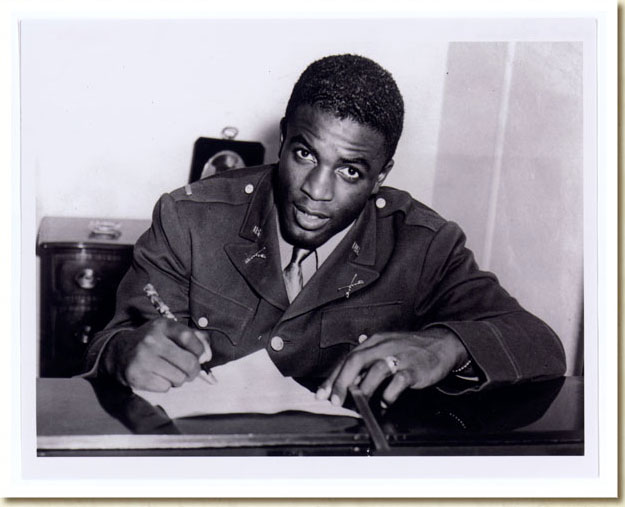
The Robeson [anecdote] is his own teammates, when he’s playing at Rutgers and he gets tackled in the middle of a scrum. One of the teammates that didn’t want him on the team because he was Black, essentially ripped the fingernail off of his right index finger. And when Jackie was playing at UCLA against Stanford at Stanford, there’s a photo in the UCLA yearbook of Jackie being tackled by a rival player on the Stanford team, who, in addition to tackling him, punches him in the face. These are the types of things that you have to go through to prove that you are worthy of the competition, all of the extra legal stuff that’s taking place. So these athletes are being challenged in a way that their contemporaries aren’t.
Hagopian: Yeah, no doubt. And then to go on to be Rookie of the Year, MVP, Hall of Famer . . .
Bryant: Not including being subject to court martial when he was in the army. So I think one of the things that really interested me about this idea, it was really twofold, but one of the big things, too, was this idea that when you think about the WNBA, or when you think about Colin Kaepernick, or even Muhammad Ali or Jim Brown, that this continuum of Black protest goes all the way back. It goes so far back. There’s a great book that’s in the bookcase over there somewhere called Pamphlets of Protest. And it’s really all about, once again, the Black political voice and the continuum. Also when you bring someone like Du Bois into it as well, this constant moving of what does it take for us to be seen as American. And one of the pieces of it that I thought was really interesting in sort of the taking the puzzle pieces and making a book out of it, was this idea that this idea of fame, when you look at the 19th century and the 18th century in terms of Black political protests, you’re looking at the clergy, you’re looking at writers, you’re looking at educators. And then by the time you get into the 21st century, you’re looking at athletes. You’re looking at athletes to do that heavy lifting, and they’re horribly overmatched. So I thought there was also an interesting opportunity to discuss how that political responsibility began to fall to athletes when the actual lineage is through education and politics, and through the non-sports piece of it. But because the athletes are so famous, and they are so well known now that they have been asked to carry something, and that begins with Robinson as well, in a lot of ways. Even if you go back to Jesse Owens and Joe Louis, it was never really cultivated as a philosophy until you get to Jackie Robinson.
Hagopian: Right on. And everybody should read The Heritage as well. But I think one of the central dramas of Kings and Pawns is Robinson’s 1949 testimony before the House Un-American Activities Committee (HUAC), where he’s called upon to respond to Robeson’s political statements. You quote Robinson reflecting on that experience later in life. He said, “Negroes warned that I should beware of letting myself be used in that old white man’s plot to divide and conquer the colored peoples of the world.” And he later acknowledged, “I had not yet enough experience handling delicate problems of Negro progress.” So I wanted to ask you, what was Robeson doing and saying that made politicians and powerful elites want to enlist Robinson against him in the first place? And then how did McCarthyism and Cold War politics turn these two Black freedom fighters into political adversaries?
Bryant: Well, I think one of the most amazing things about the research, and I had been afraid of it, and I remain afraid of it, is the fact that in doing the research, there’s no record of them ever meeting each other. And I was just waiting, like, how could that be? They’re both in Harlem and it’s not a very big place. I mean, all the Black people at that level kind of all know each other. At some point, there’s some connection somewhere, especially in Harlem, but they had never intersected. So what made it even more interesting to me was the fact that you’ve got these two guys who have no history together. They know of each other, obviously, because of their fame, and now they’ve been placed by the House and American Activities Committee to counter one another. And it’s really not to counter one another, it’s to counter Robeson, because of the talk he gave at the Paris Peace Conference in April 1949, where he essentially was misquoted. The quote that went across the news wires was, “It’s unthinkable that Black people would fight on the side of the United States in a war against the Soviet Union.” This, once again, brings us back into this idea of being considered American or un-American, and having to prove your Americanism to the world. And who is the most famous Black man in America in the spring of 1949 but Jackie Robinson? So now you have this drama of the most famous Black man in America presently testifying in front of Congress against the man who was foundational to everybody, which is Robeson.
The interesting piece of that testimony to me, and that was really one of the centerpieces of the book, was the fact that Robinson had been told by many, many people not to do this, that HUAC is notorious. Why on earth would you go and testify on behalf of a government body that doesn’t even want you to have your own rights? That wouldn’t shake your hand. Why would you do this? And that, of course, is one of the pawn moments in the book. And Rachel Robinson, Jackie’s widow, who, by the way, is still alive, she’s 104 years old.
Hagopian: I saw her at Dodger Stadium!
Bryant: Exactly, and she’s incredible, and July 19th is Rachel Day. It is fascinating that she gave an interview in 1976, four years after Jackie passed, where she essentially said, “Look, we got bad advice.” And there are two things that she found regrettable about the Jackie Robinson story. One was testifying against Robeson in 1949, and the other was supporting Richard Nixon in the 1960 presidential election. As much as Branch Rickey drove the 1949 testimony — and he did, and people don’t pay enough attention to this — Jackie Robinson felt a huge debt and responsibility to Branch Rickey. Here’s the man who changed my life, here’s the man who changed American history, here’s the man who allowed all of us to play. And at the same time, he also felt personally that I have a responsibility here, and it’s my responsibility, if somebody is saying that Black people are not loyal to the United States, no matter who it is, I have to do this. And Rachel gave a great quote in that Newsday article where she said Jackie’s attitude was ‘my country, right or wrong.’ It’s very difficult to argue that point, except for the fact that HUAC is a terrible government. I mean, these are the people who are your enemies. And Jackie went anyway, and Jackie went for his reasons, and his reasons were to defend his people. But he was being used, and he recognized later that he was being used. And it’s a really difficult moment.
And Robeson stayed quiet on this. He allowed Jackie to sort of savage him. And it wasn’t just Jackie. That’s the other piece of this book you and I were talking off-camera about. When you’re talking to different audiences, you really emphasize different things. One of the things that really focused me on this project was the infighting in the Black leadership. And the Black leadership turned on Robeson, and they turned on Robeson for their reasons, and one of their reasonings was because if you go back and look at the very, very tumultuous history between the Communist Party (CPUSA) and the Black leadership, they’ve been fighting since the Scottsboro Boys. Since that case, because they felt, once again, that the Soviet Union was simply using the Black plight as a way to leverage itself against the United States. And it’s a really interesting battle because, once again, whatever you believe the reasons were, there was one group of people who had constantly stood on behalf of Black liberation, and it was the white, heavily Jewish, left-wing progressives. They were there, all the way. So there’s this real interesting infighting going on. And the Thurgood Marshalls, the Roy Wilkinses, and the Walter Whites of the world at the NAACP, they believe that Robeson was actually hurting their cause. He said, and they’re not wrong, that you cannot, in 1949, associate us with the Soviet Union. And when you think about what was happening at that time. But what I took real issue or interest in was the way that the Black leadership chose not to be silent. They really piled on, and by isolating Robeson, they have a very big hand in destroying his life.
Hagopian: Yeah, no doubt. Well, thank you for breaking all that down for us.
[breakout rooms]
Hagopian: I hope everybody had a great breakout group, and welcome back!
The next time you visit New York City, you have to visit the Jackie Robinson Museum. I was just there with Dave Zirin for an amazing event where Dave Winfield was presenting his new book.
But you’ve got to go to learn about the life and legacy of Jackie Robinson through artifacts, historical imagery, and multi-layered storytelling. And Howard, I know that you contributed to the museum.
Bryant: I did, yes, yes, yes. When the museum was in its infancy, when they were thinking about it in terms of its idea, they asked me to write the original script for the museum, for all the different exhibits and all the pillars and all of it. It was quite an honor and a lot of fun.
Hagopian: Yeah, amazing work, beautiful museum, and I hope people will check it out. I have a couple more questions for you.
I really liked what you said and what you wrote about Jackie that moves away from a simple political caricature, or freezes his ideas in one moment in time. Instead, I love how you reveal a much more complicated figure whose political views evolved over the course of his life. He did testify against Paul Robeson at HUAC, and he did support Richard Nixon, as you pointed out. And he also supported Curt Flood in the fight for free agency. He also supported Tommie Smith and John Carlos when they raised their hands in the Black Power salute.
Bryant: He did.
Hagopian: And he had some pretty radical things to say about the flag, and about America as well. I was blown away. I didn’t know that the Black Panther Party published a remarkable obituary saying that Jackie stood for the total liberation of Black and all oppressed people. So, just talk briefly about his evolution politically.
Bryant: Well, there’s no question. I think one of the reasons why he was such an interesting character when he testified in 1949, was because he had this idea of promise. He had this idea of what he feels America’s supposed to be, which is no different from a lot of us and a lot of the different incarnations of our lives. And the interesting thing about him was when he testified in the summer of 1949, July 18, 1949, there were still only seven Black players in the game. And he was signed by Branch Rickey on October 23, 1945. So, in those first five years there were only seven Black players, and five of them played for Cleveland or the Dodgers. So the rest of the league really never came along. You’ve got this very, conflicted figure in Jackie.
So, by the time you start getting into the 1960s, not only did he support Nixon, not only was he in a bit of a disagreement with both Malcolm X and Ali, he also, in 1964, realized that this party — and he was an independent, but he leaned Republican — and he’s seeing what’s happening to the Republican Party. It sounds familiar. So, in 1963, he writes a piece in the Saturday Evening Post called The GOP for White Men Only?. So he’s seeing what’s happening. It’s very interesting that, in addition to that, he was a supporter of the Vietnam War, and he and MLK broke on that. Then, by the time he starts getting to the mid-1960s, right after the Goldwater 1964 election, he’s now recognized that he’s been on the wrong side of this. And maybe it took too long, but the reason why he was so anti-Kennedy was because when he met with JFK, he was convinced that he could never support a man who knew so little about Black people. So it wasn’t like he was just this kind of sellout who didn’t understand. He had his reasons, but Robinson was very much, you could call him politically naive in some ways. It’s like one of those things that we all go through where you’re trying to find this place. Who can I trust? And when you’re the problem with Black people in this country has always been at 10, 12, 12.5 percent of the population, you have to have political allies. You can’t just win those elections by yourself.
So Robinson was constantly looking for people who he thought were about it, and what he discovered, first with Eisenhower when he retired in 1957, when he would send cables to the White House and say, “Look what’s happening in this country,” when he would go down to the Deep South, and he would find that all these political allies who shook his hand [because] he was the great Jackie Robinson, but politically, they did nothing. You could see his disillusionment just grow and grow and grow, to the point where when you get to 1969, the Vietnam War is raging, and there are all kinds of different battles taking place about patriotism and who’s an American and who isn’t an America, love it or leave it, and all the hippies and the rest of all the political unrest.
The New York Times did a piece on July 4th about the upsurge of sales in American flags and the reporter calls Jackie Robinson, and has Jackie Robinson lead off the story. And in that article, Robinson says, “I don’t stand for the American flag. I don’t stand for the national anthem.
And when I see a car with an American flag bumper sticker on it, I assume the guy behind the wheel is not my friend.” And that is where Jackie Robinson ends up for the rest of his life.For a who had been everything to this country, in terms of he’s the antidote to racism, he’s proof of what is possible in this country. He’s the one who had put himself in that position, like, I believe in what this country’s capable of. And by 1969, that is his outlook? It’s pretty remarkable. So he’s not a stick figure, he’s not a cookie cutter by any stretch of the imagination.
Hagopian: I hope they come to you to make the next version of the Jackie Robinson story, and we get this version, because it’s an incredible story.
Bryant: But that’s the whole book, Jesse, is that this, and it really does. I think one of the things that absolutely informed this project was the Du Bois article that he did in, whatever year it was, 1896, 1898, somewhere in there. He did a piece in The Atlantic and really just talked about essentially what would be called double consciousness. It was called two-ness, and it was really talking about this two-ness. What does it take to belong here? And you take that, and then you combine it with what happened to Robeson after the Robinson testimony. The United States takes his passport for 8 years, and takes Du Bois’ passport for 8 years. And all of the political progressives were not even allowed to travel.
So you can see all of this happening, and so much of that playbook is being relived today. It’s the Roy Cohn/Donald Trump playbook coming directly out of this period, from closing the borders to Black countries, to the attack on higher education. All of it is happening the same way it happened at that time.
Hagopian: Yeah, and I hope to get to that. But before we jump into those similarities with today, one of the things that struck me about your book is the way you weave in the stories of the extraordinary women who shared their lives with Paul and Jackie, and you write about Rachel Robinson, who was . . .
Bryant: Yeah, Rachel’s remarkable. I mean, she’s just so incredible, and that it’s really Rachel — if you want to just tell the truth, which I think we should all do, I think we can handle it, we’re grown-ups — no Rachel, no Jackie today. When Jackie Robinson retired in 1957, baseball wanted nothing to do with him. And he really didn’t want anything to do with them. Jackie is a real stubborn guy, he’s a fighter, and he would say constantly that baseball owes me nothing, and I don’t owe baseball anything. By the time he gets into the Hall of Fame in 1962, he’s got no relationship with baseball. None. The great Jackie Robinson. And all through the 1960s, he’s fighting with different people in baseball. And by 1972, right before he died, he’s not even sure he’s going to Dodger Stadium. He doesn’t go to old-timers’ games. He has no relationship with baseball.
And yet Rachel is there, and Rachel had so much respect for the game. Rachel had a great relationship with the O’Malleys. She still had a great relationship with Walter O’Malley, and she had a terrific relationship with Peter O’Malley. Rachel essentially spent much of her life following Jackie’s death repairing all the different relationships that Jackie was just too proud to mend. Even five years after Jackie died, they’re not really celebrating Jackie. It’s not until 1987, really, when Al Campanis on Nightline, the embarrassment of that, when he came on and said, “Black people just don’t have the necessities to be managers or general managers. It’s really because they’re not buoyant. Because they can’t swim because they lack buoyancy.” He said this on Nightline, on national television. But it’s Rachel behind the scenes who’s mending all the fences.
And now it’s Rachel that, when you get to 1997, it’s the 50th anniversary, now it’s Rachel doing all of this work. And if Rachel doesn’t do this work, baseball’s not even celebrating Jackie Robinson, because they didn’t even see the importance. I mean, Jackie’s original Hall of Fame plaque doesn’t even mention that he was the first Black player in the big leagues.
Hagopian: Wow.
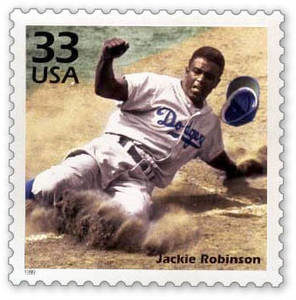
Bryant: And behind the scenes, Rachel is the one who . . . now Jackie’s on a stamp. Now there’s schools named after Jackie. Now there’s the Jackie Robinson Parkway going into Long Island. Now there’s all of the different accolades and recognition and memorializing. That’s Rachel Robinson’s work right there, not just because of her looking out for her husband, but because of the respect that people had for her.
Hagopian: And I will say, as a Mariners fan, you know I’m in Seattle, that Ken Griffey, Jr. had a role to play in helping to get Jackie’s number retired in all of Major League Baseball.
Bryant: Yeah, and that was Len Coleman as well, who’s on the board of the Jackie Robinson Museum. It just cannot be overstated how much Rachel is responsible for the Jackie Robinson that we talk about today.
Hagopian: Yeah, and likewise, everyone should read the book Eslanda, too. She was an incredible anthropologist, writer, journalist, and political activist who shared Paul’s internationalist and socialist commitments. So you’ve got to learn that story as well. Some of it is in this book, but we are at the end of time. I just wanted to say very, very quickly, you hinted at some of the parallels between the political repression of Robeson’s era and the attacks on education today. So, for all the educators out there who are facing these attacks, and people are saying you can’t teach about Black history, you can’t teach about race and racism, why is it important right now for teachers to introduce young people to the lives of Jackie and Paul?
Bryant: Well, what is past is prologue. I mean, when I was a student at Temple University, Robeson’s a giant there, he died there. There’s a 50-foot mural to Robeson over on the west side, over on 52nd and Walnut. But I was embarrassed. When I was a kid growing up in Boston, Paul Robeson was one of those names that you knew he was important, you didn’t know what he was, didn’t know why he was important, but he was so famous and so important. He was one of those names that you knew you were supposed to know, but you didn’t know. And so the reason why it’s really important, no matter how subversive you have to be in finding those different ways, just to get people to know, once again, it goes back to what David Mariner says, “History writes people out of the story. It’s our job to write them back in.”
And that was one of the things that I was really thinking about when I was working on this book the whole time. How is it that people do not know this? And I’m talking about Black people! I would tell Black people I’m working on this, and they’d say, “Who’s Paul Robeson?” I’m like, for real? I mean, but then again, that was also me when I was 18, when I was 20, when I was 25. You didn’t really know. And it’s just very, very important to understand. I mean, I wrote an email to my editor when we were playing with the title — and by the way, for all of you authors out there, or future authors, authors do not have a say over their titles; the publisher has a say over the title — so when I was thinking about Kings and Pawns as a title, I said, “How do we forget our own kings?” And she was sold on the title. But that was really the reason why this is so important is because people will have you believing that you don’t have a history. And while I was working on this book, I kept thinking, what happens to people that can’t tell their own story.
Hagopian: Thank you so much for all of this. We’re at our time, but this was an incredible conversation, and it is so needed to fight for the memory and the lessons that these two have brought us, especially at a time when they scrubbed Jackie Robinson off of one of the federal websites.
Bryant: And, Jesse, to that point, very quickly, why was his name restored? Because people spoke up. It wasn’t because they recognized, “Oh, well, we made a mistake.” It was because of the backlash. It was because of the response.
Hagopian: That’s right. Thank you so much, Howard Bryant. Everyone’s got to go out and get Kings and Pawns right away. Read this book and teach this book.
While this transcript was edited, there may be minor errors or typos — if you notice something you believe to be incorrect, please contact us at [email protected].
Audio
Listen to the recording of the session on these additional platforms.


Resources
Here are many of the lessons, books, and other resources recommended by the presenters and participants:
Lessons and Articles
|
|
Subversives: Stories from the Red Scare by Ursula Wolfe-Rocca The Forgotten Fight Against Fascism by William Loren Katz More than McCarthyism: The Attack on Activism Students Don’t Learn About from Their Textbooks by Ursula Wolfe-Rocca Disguising Imperialism: How Textbooks Get the Cold War Wrong and Dupe Students by Ursula Wolfe-Rocca A Review of ‘42’: Jackie Robinson’s Bitter Pill by Dave Zirin |

Books
|
|
In addition to Kings and Pawns: Jackie Robinson and Paul Robeson in America, from Mariner Books, the following books were referenced.
A People’s History of Sports in the United States by Dave Zirin (The New Press) Ballad of an American: A Graphic Biography of Paul Robeson by Sharon Rudahl, and edited by Paul Buhle and Lawrence Ware (Rutgers University Press) Eslanda: The Large and Unconventional Life of Mrs. Paul Robeson by Barbara Ransby (Haymarket Press) Robeson in Spain by The Abraham Lincoln Brigade Archives (ALBA) Pamphlets of Protest: An Anthology of Early African-American Protest Literature, 1790-1860 edited by Richard Newman, Patrick Rael, and Phillip Lapsansky (Routledge) |


Interviews
Watch a Democracy Now! interview with author Howard Bryant, “Kings and Pawns”: Howard Bryant on What Jackie Robinson & Paul Robeson Reveal About America, below.
This Day In History
The dates below come from our This Day in People’s History collection, which contains hundreds of entries all searchable by date, state, theme, and keywords.
|
|
Sept. 29, 1877: City of Sanford Incorporated April 9, 1898: Paul Robeson Born Oct. 14, 1916: Paul Robeson Excluded from Rutgers Football Team July 4, 1940: Black World’s Fair Held in Chicago July 6, 1944: Lt. Jackie Robinson Refuses to Give Up Seat on Bus Sept. 4, 1949: Concert in Peekskill Attacked Feb. 9, 1950: Sen. Joseph McCarthy Announces “Enemies Within” Dec. 17, 1951: “We Charge Genocide” Petition Submitted to United Nations April 7, 1954: Norfolk’s African American Baseball Fans Win Desegregation Victories Aug. 16, 1955: Paul Robeson Lost Court Appeal June 12, 1956: Paul Robeson Testifies Before HUAC Oct. 25, 1958: Youth March for Integrated Schools April 18, 1959: Students Petition and March for Integrated Schools Jan. 1, 1960: Greenville Airport Protest |


Participant Reflections
With more than 155 attendees, a poll of participants’ primary roles in education showed 33 percent K–12 teachers, 13 percent teacher educators, 12 percent historians, and more.
Here are more comments that participants shared in their end-of-session evaluation:
What was the most important thing (story, idea) you learned today?
That behind significant individual decisions in history there is more than likely consistent collective pressure. But it is often the individual that is remembered.
So many things, but the final thing stuck with me: Rachel Robinson helped promote the importance of Jackie — and how he has become such a hero through her advocacy. Right on Rachel!
I didn’t know the political life of Jackie Robinson beyond integration of baseball, and I didn’t know Paul Robeson fought to integrate baseball too.
I learned about the pressure brought to bear on Branch Rickey to integrate the Brooklyn Dodgers and about the complexity around HUAC bringing Jackie Robinson in to testify against Paul Robeson.
How we run the risk of sanitizing Jackie’s radicalism in the sense that his politics are silenced when we (re)tell his story.
I resonated with how Robinson and Robeson were pitted against each other, because it’s something that I see happening to marginalized groups even today.
Jackie Robinson’s eventual stance against the national anthem and the pledge of allegiance. This is a piece of information I was unaware of, but look forward to sharing with my students.
What will you do with what you learned?
As an English teacher, I typically use broader McCarthyism examples in conjunction with the Salem Witch Trials to address scapegoating, fear, and hysteria. I can now use the Robeson and Robinson examples to address the same concepts, expose a mostly caucasian population to information they are unaware of, and give minority students examples of figures they didn’t know details about.
I will continue to push for students to look at multiple perspectives and question the dominant narrative.
I will remind my students that standing up for what is right is not just a one and done, and also that people are not static in time, like Jackie Robinson changing his stance on many topics.
I will tell the broader story of both Jackie and Paul in my U.S. History II classes.
OMG!!! My colleague and I were texting during the class. We will be incorporating this into our ELA units, especially our research project on activists.
I teach a Sports and Literature course which includes many opportunities to use excerpts from the book in my class.
I took this as an organizing lesson about coalition and united front politics and responsibilities.
How was the format for the class?
Everything worked wonderfully!
I appreciated the format and the way this group session was facilitated. Everything worked out just fine in my opinion.
The format was great, and I enjoyed the breakout room for deeper discussion.
I always get nervous at the breakout rooms but I learn so much.
I always love the format. After a long day of teaching, the 12-minute breakout is perfect.
I am inspired and encouraged by the large and diverse turnout of folks who were here today. I look forward to joining in on more classes.
Presenters
Howard Bryant is the author of 11 books, an esteemed journalist, and an award-winning producer. Besides Kings and Pawns, his books include Sisters and Champions: The True Story of Venus and Serena Williams, Rickey: The Life and Legend of an American Original, Full Dissidence: Notes From an Uneven Playing Field, The Heritage: Black Athletes, A Divided America and the Politics of Patriotism, The Last Hero: A Life of Henry Aaron, Juicing the Game: Drugs, Power, and the Fight for the Soul of Major League Baseball, and more.
Jesse Hagopian is an editor for Rethinking Schools, co-editor of Teaching for Black Lives, editor of More Than a Score: The New Uprising Against High-Stakes Testing, author of Teach Truth: The Struggle for Antiracist Education, and the Teaching for Black Lives campaign director for the Zinn Education Project. He previously taught Ethnic Studies and was the co-adviser to the Black Student Union at Garfield High School in Seattle.



Twitter
Google plus
LinkedIn