
Resource Type: Articles

Articles
The Truth About Helen Keller (Lesson) | Zinn Education Project

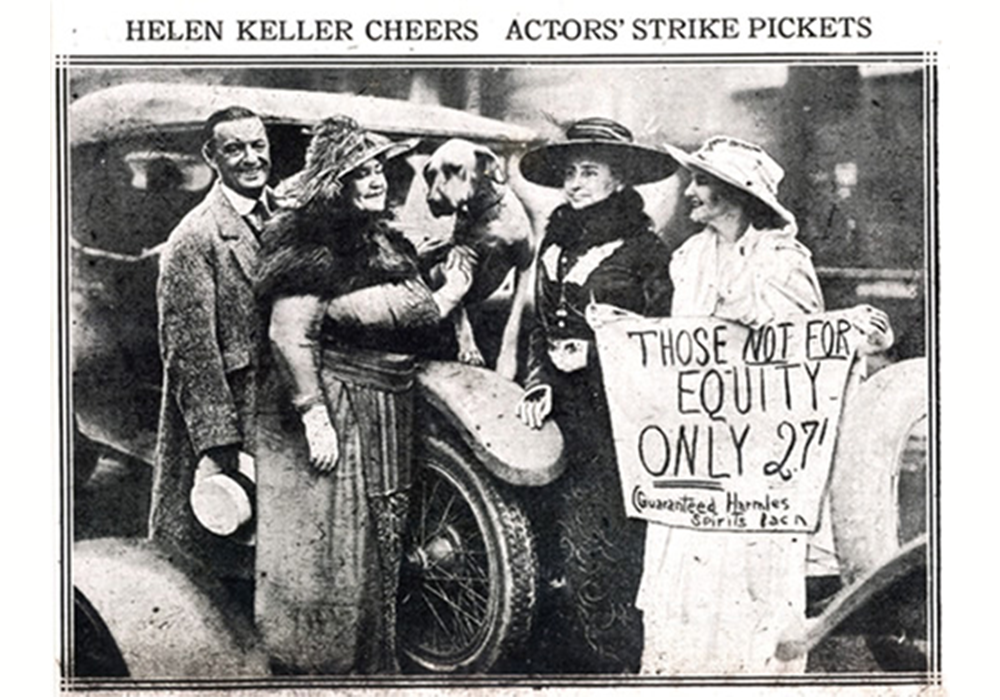
Who Stole Helen Keller?

By Ruth Shagoury
In these times of vast economic disparities and ecological crisis, children need examples of people throughout history who committed their lives to justice — to bringing more equality and fairness to the world. Helen Keller, whose birthday we celebrate this month — June 27th — could be one of those role models. Instead, textbooks and children’s literature distort her life’s work, and miss key opportunities to inspire young people to make a difference in the world.

Continue reading

American History Lessons

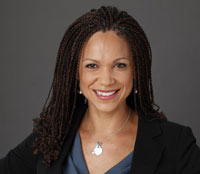
The original idea for the Zinn Education Project’s “If We Knew Our History” column grew out of our reading “American History Lessons,” by Melissa Harris-Perry in The Nation magazine. Harris-Perry’s article, reproduced here, is a meditation about the role of Black History Month.

She argues that we suffer from a “national deficit of historical knowledge” and that this deficit has contemporary political consequences. If we knew our history, she suggests, people would be less likely to follow the bigots who patch together historical symbols and soundbites to justify their right wing nostrums. And if we knew our history, we’d be more likely to appreciate and defend the accomplishments of social movements.
Continue reading
Abolition/Earth Day | Zinn Education Project

An Earth Day Message: Take Heart from the Abolition Movement

By Bill Bigelow
Imagine for a moment that it is 1858 and you are an abolitionist. Talk about discouragement: The previous year, in its Dred Scott decision, the U.S. Supreme Court ruled that no Black person — whether enslaved or free — was entitled to become a U.S. citizen. A few years before, Congress had passed the Fugitive Slave Act, which vastly expanded the U.S. government’s authority to seize and return to slavery individuals who had fled to freedom — or even those Blacks born free in the North. Many Northern Blacks crossed into Canada rather than live in constant fear.

And abolitionists were waging not just a moral struggle against the enslavement of human beings. Slavery was the largest industry in the United States, worth more than all the factories, banks, and railroads combined. In effect, the abolition movement aimed to expropriate without compensation the wealth of the most powerful social class in the country.
Continue reading

Burning Tulsa: The Legacy of Black Dispossession

By Linda Christensen
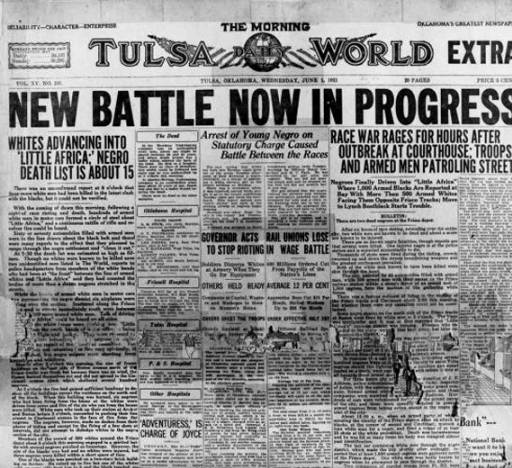
The author describes teaching about racist patterns of murder, land theft, displacement, and wealth inequality through the 1921 Tulsa Massacre.

The term “race riot” does not adequately describe the events of May 31 - June 1, 1921 in Greenwood, a Black neighborhood in Tulsa, Oklahoma. In fact, the term itself implies that both Blacks and whites might be equally to blame for the lawlessness and violence. The historical record documents a sustained and murderous assault on Black lives and property. This assault was met by a brave but unsuccessful armed defense of their community by some Black World War I veterans and others.
Continue reading
James Baldwin: "A Talk to Teachers" (Article) | Zinn Education Project: Teaching People's History

A Talk to Teachers

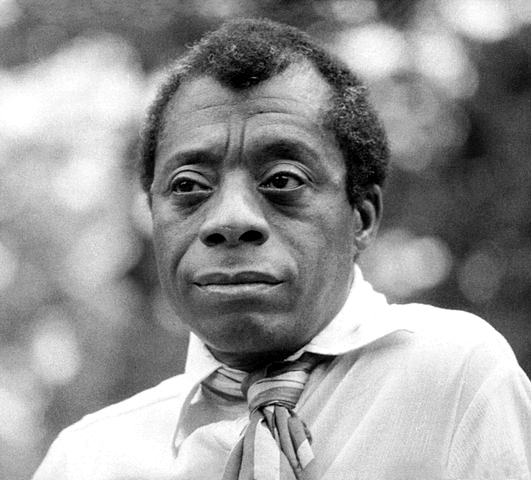
Article. By James Baldwin. October 16, 1963.
Baldwin addresses the challenges of education to prepare children to grapple with the myths and realities of U.S. history.
Continue reading

Changing the Climate in School

By Bill McKibben and Bill Bigelow
Maybe you’ve heard. We are facing a climate crisis that threatens life on our planet. Climate scientists are unequivocal: we are changing the world in deep, measurable, dangerous ways — and the pace of this change will accelerate dramatically in the decades to come.

Then again, if you’ve been a middle school or high school student recently, you may not know this.

That’s because the gap between our climate emergency and the attention paid to climate change in the school curriculum is immense. Individual teachers around the country are doing outstanding work, but the educational establishment is not.
Continue reading

Christopher Columbus: No Monuments for Murderers

By Bill Bigelow
A New York Times article said the symbolism of Christopher Columbus is "murky.” But there is nothing murky about Columbus’ legacy of slavery and terrorism in the Americas. The record is clear and overwhelming. The fact that the New York Times could report this with such confidence — adding that “most Americans learn rather innocently, in 1492 [Columbus] sailed the ocean blue until he discovered the New World” — means that educators and activists still have much work to do.
Continue reading

Fighting for Okinawa — My Home, Not a Military Base

By Moé Yonamine
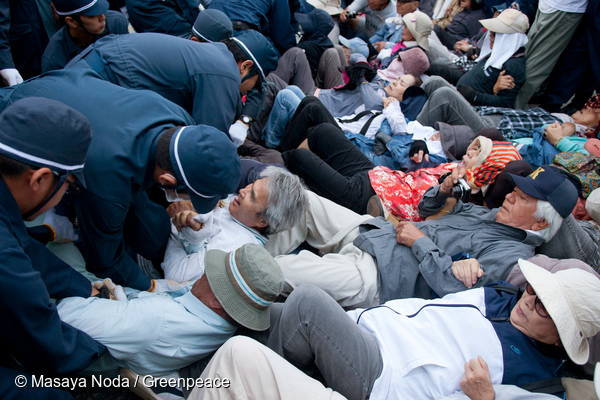
My family moved to the United States from Okinawa when I was 7. But Okinawa is still home — and I’m hurt and angered at how the United States and Japan continue to treat Okinawa as little more than a colonial outpost. As a teacher, I’m even more dismayed at how the conventional school curriculum keeps young people in this country ignorant about the abuse, but also about the resistance, in my home islands.
Continue reading

Because Our Islands Are Our Life

Article. By Moé Yonamine. Rethinking Schools, Summer, 2019.
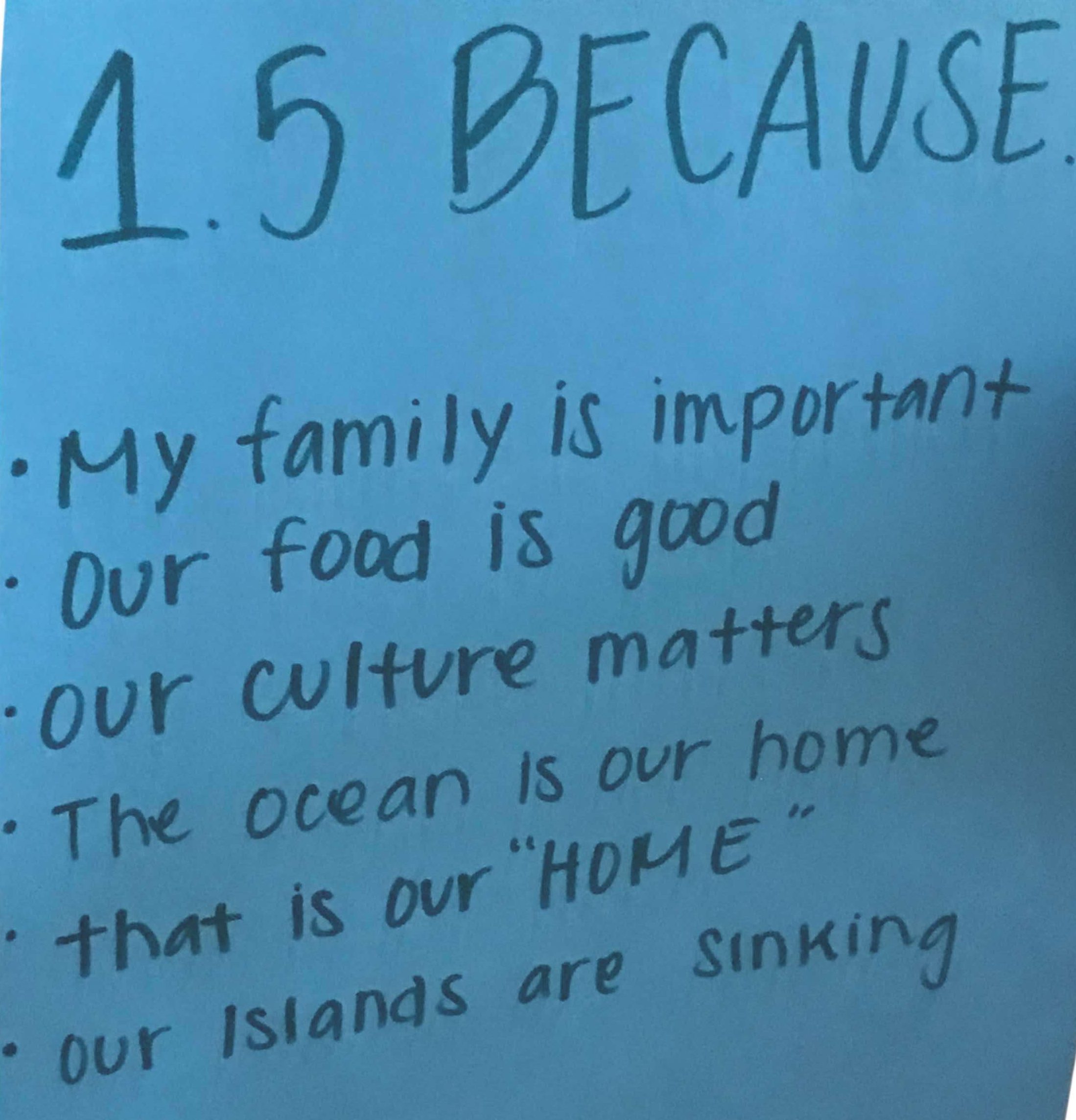
A high school ethnic studies teacher describes how students in the Pacific Island Club used poetry to refocus the narrative surrounding climate justice onto frontline communities.
Teaching Activity by Moé Yonamine
Continue reading
Bound for the Rio Grande | Zinn Education Project

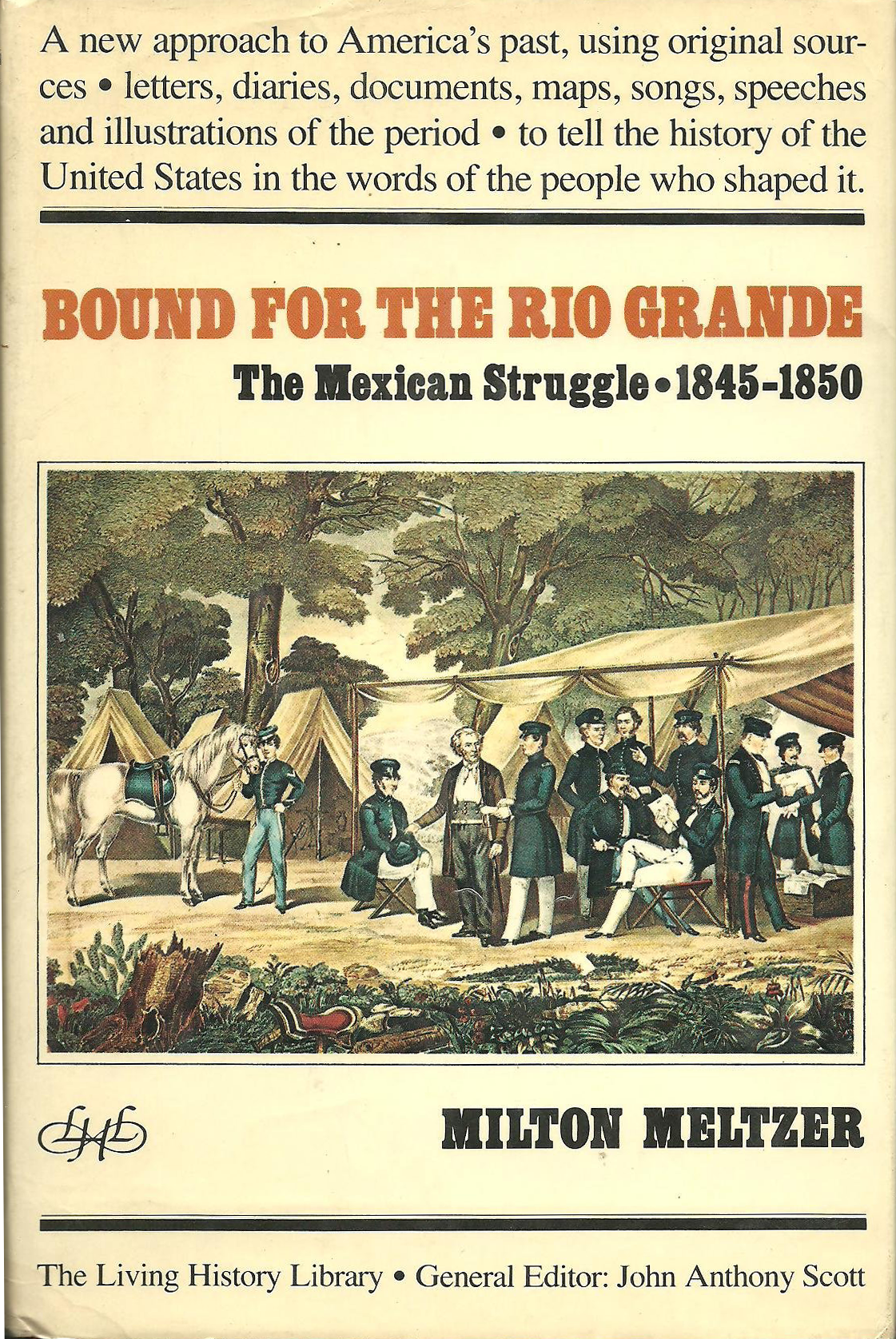
Bound for the Rio Grande: Traitors — Or Martyrs

Background Reading (PDF) and Song. Reading by Milton Meltzer and song by David Rovics. 1974. 4 pages and 5 minutes.
The story of the San Patricio Battalion, Irish-American soldiers who deserted the U.S. Army during the U.S.-Mexican War and fought on the side of the Mexicans.
Continue reading

Fists of Freedom: An Olympic Story Not Taught in School

By Dave Zirin
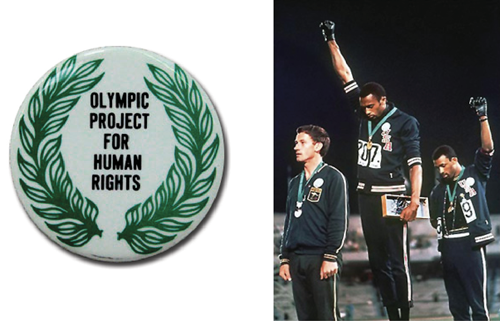
It has been almost 44 years since Tommie Smith and John Carlos took the medal stand following the 200-meter dash at the 1968 Olympics in Mexico City and created what must be considered the most enduring, riveting image in the history of either sports or protest. But while the image has stood the test of time, the struggle that led to that moment has been cast aside.

When mentioned at all in U.S. history textbooks, the famous photo appears with almost no context. For example, Pearson/Prentice Hall’s United States History places the photo opposite a short three-paragraph section, “Young Leaders Call for Black Power.” The photo’s caption says simply that “. . . U.S. athletes Tommie Smith and John Carlos raised gloved fists in protest against discrimination.”
Continue reading

Howard Zinn at 90 — Lessons from the People’s Historian

By Bill Bigelow
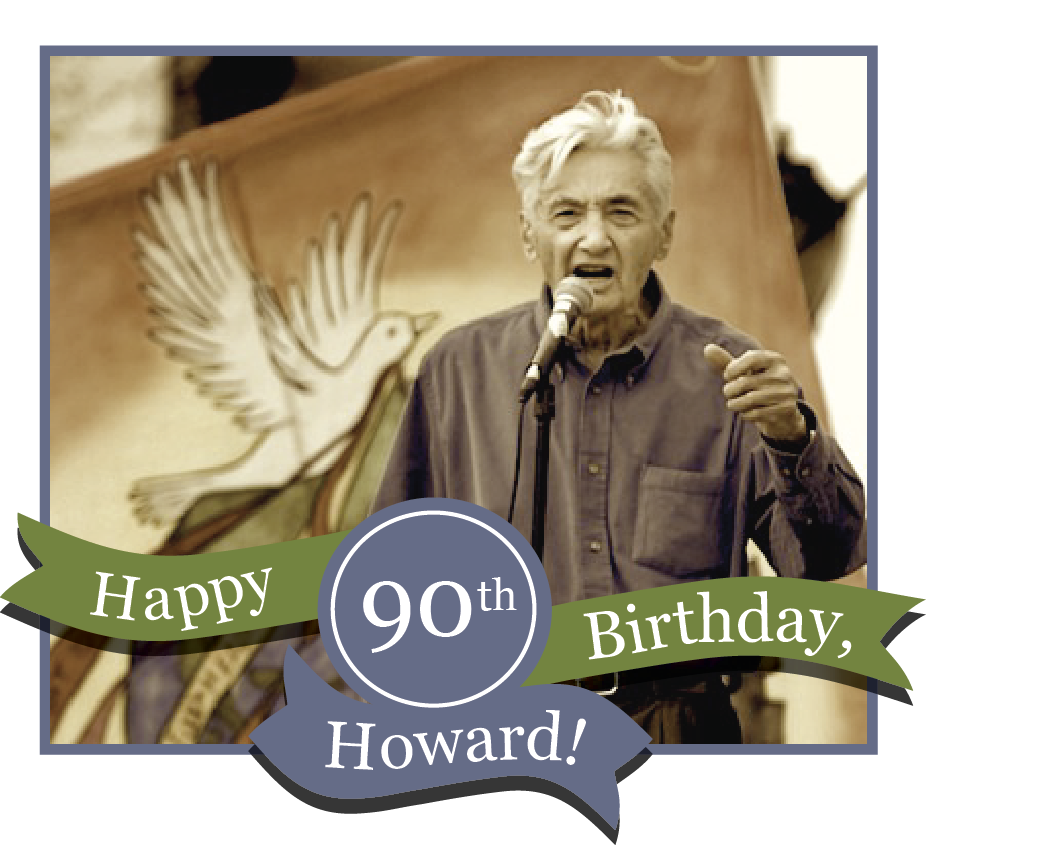
This week — August 24 — would have been the 90th birthday of the great historian and activist Howard Zinn, who died in 2010. Zinn did not merely record history, he made it: as a professor at Spelman College in the 1950s and early 1960s, where he was ultimately fired for his outspoken support of students in the Civil Rights Movement, and specifically the Student Non-Violent Coordinating Committee (SNCC); as a critic of the U.S. war in Vietnam, and author of the first book calling for an immediate U.S. withdrawal; and as author of arguably the most influential U.S. history textbook in print, A People’s History of the United States. “That book will knock you on your ass,” as Matt Damon’s character says in the film Good Will Hunting.
Continue reading
Mitch Daniels and academic freedom cartoon | Zinn Education Project

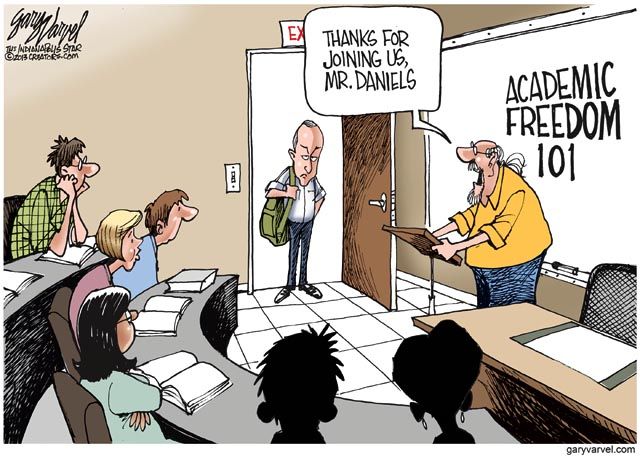
Indiana’s Anti-Howard Zinn Witch-hunt

By Bill Bigelow
Howard Zinn, author of A People’s History of the United States, one of the country’s most widely read history books, died on January 27, 2010. Shortly after, then-Governor of Indiana Mitch Daniels got on his computer and fired off an email to the state’s top education officials: “This terrible anti-American academic has finally passed away.”
Continue reading
Columbus resources | Zinn Education Project

It’s Columbus Day . . . Time to Break the Silence

By Bill Bigelow
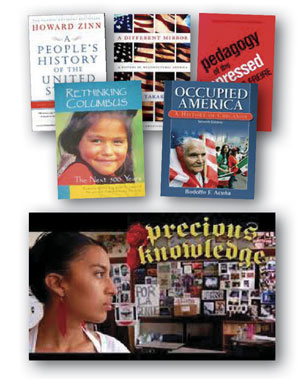
This past January, almost exactly 20 years after its publication, Tucson schools banned the book I co-edited with Bob Peterson, Rethinking Columbus. It was one of a number of books adopted by Tucson’s celebrated Mexican American Studies program — a program long targeted by conservative Arizona politicians.

The school district sought to crush the Mexican American Studies program; our book itself was not the target, it just got caught in the crushing. Nonetheless, Tucson’s — and Arizona’s — attack on Mexican American Studies and Rethinking Columbus shares a common root: the attempt to silence stories that unsettle today’s unequal power arrangements.
Continue reading
It’s Constitution Day! Time to Teach Obedience or History? (Article) - Teaching about the Constitution requires a critical and nuanced exploration—one that is alert to the race and class issues at the heart of our governing document. | Zinn Education Project: Teaching People's History

It’s Constitution Day! Time to Teach Obedience or History?

By Bill Bigelow
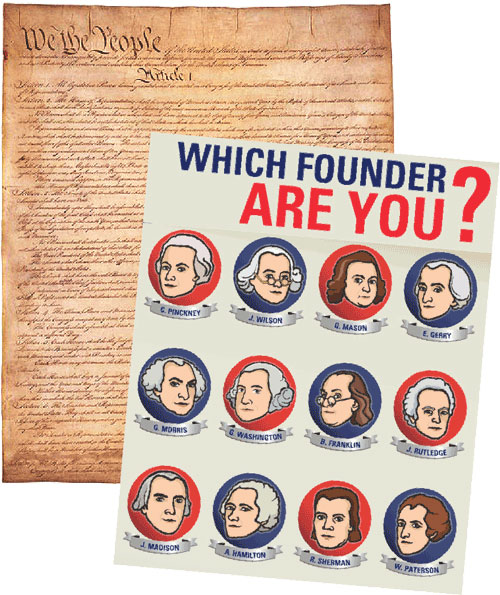
Pearson-Prentice Hall’s high school textbook, United States History, opens its chapter on the Constitution with this Daniel Webster quote: “We may be tossed upon an ocean where we can see no land — not, perhaps, the sun and stars. But there is a chart and a compass for us to study, to consult, and to obey. The chart is the Constitution.” United States History tells students approvingly that Ronald Reagan and others have recited this Webster quote at celebrations of the Constitution.

This is the kind of on-bended-knee Constitution worship that has long been a staple of our country’s social studies curricula.

Sure, these days, most U.S. history textbooks acknowledge that the Constitution was not without controversy. Holt McDougal’s The Americans offers a perfunctory couple of pages on the debate between elite groups of Federalists and Anti-Federalists. But corporate textbooks present the Constitution as a wise inevitability, awaiting only the Bill of Rights as the icing on a delicious cake of compromise.
Continue reading

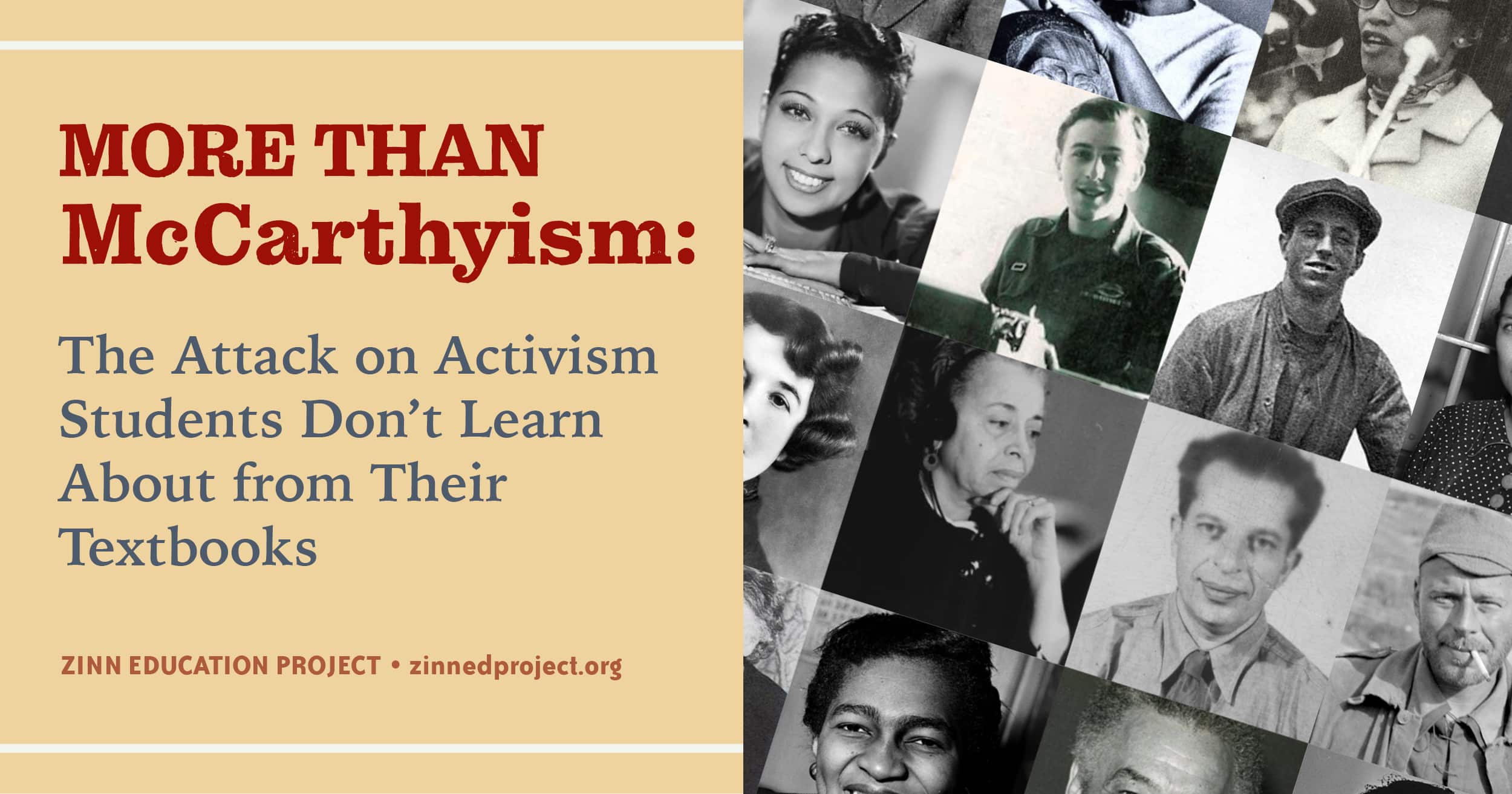
More than McCarthyism: The Attack on Activism Students Don’t Learn About from Their Textbooks

By Ursula Wolfe-Rocca
In legislatures across the country, Republican lawmakers are introducing bills to curtail what educators — in public schools and universities — can say and teach about racism and sexism. This latest moral panic from the Right comes on the heels of recent legislation dangerously curtailing the rights of transgender people — especially young people — and enacting another round of voter suppression. It is paramount that we organize to defeat these threats to the health and safety of LGBTQ people, voting rights, and the freedom of educators to tell the truth. It is also worth reminding ourselves — and our students — of other times in U.S. history when powerful politicians manufactured threats and whipped up fear to neutralize progressive challenges to the status quo — the McCarthy Era being a well-known high-water mark of state repression.
Continue reading
Fasanella - The Great Strike | Zinn Education Project

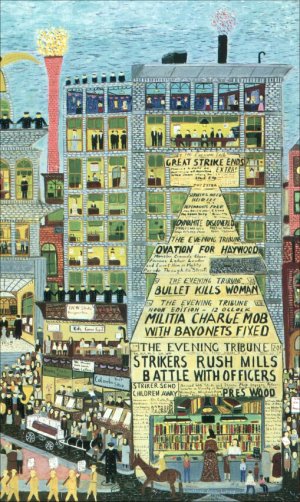
One Hundred Years After the Singing Strike

By Norm Diamond
Today’s Occupy movement is a reminder that throughout U.S. history a major engine of change has been grassroots organizing and solidarity. As an old Industrial Workers of the World song goes:

An injury to one, we say’s an injury to all, United we’re unbeatable, divided we must fall. —“Dublin Dan” Liston, The Portland Revolution

Major history textbooks, however, downplay the role of ordinary people in shaping events, especially those who formed labor unions and used the strike to assert their rights. One of the most significant strikes in U.S. history occurred exactly 100 years ago, in the Lawrence, Mass. textile mills, and yet it merits barely a mention in the most widely used U.S. history textbooks.
Continue reading