Resource Type: Articles

Articles
Fireworks over New York | Zinn Education Project

Rethinking the 4th of July

By Bill Bigelow
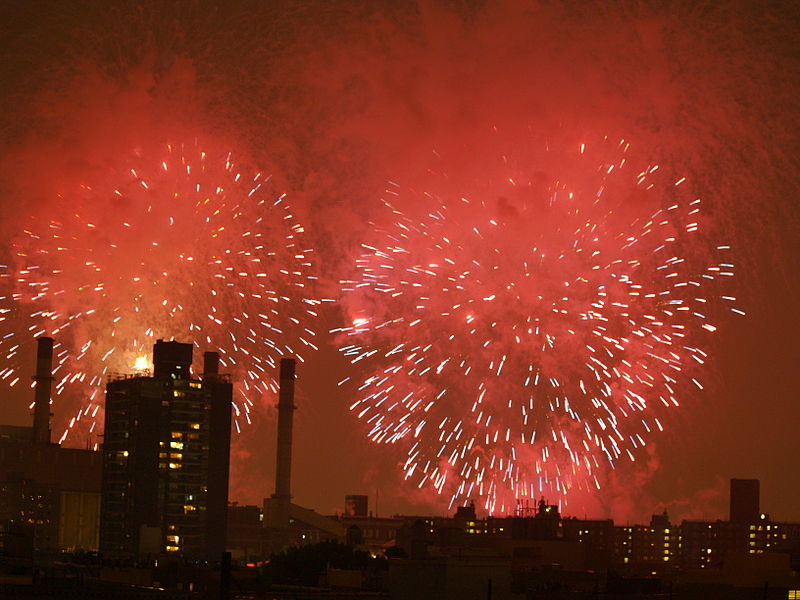
Apart from the noise pollution, air pollution, and flying debris pollution, there is something profoundly inappropriate about blowing off fireworks at a time when the United States is waging war with real fireworks around the world. To cite just one example, the Bureau of Investigative Journalism in London found recently that U.S. drone strikes in Pakistan alone have killed more than 200 people, including at least 60 children.
Continue reading
Collage of anti-slavery efforts | Zinn Education Project: Teaching People's History

Rethinkin’ Lincoln on the 150th Birthday of the Emancipation Proclamation

By Bill Bigelow
Here’s a history quiz to use with people you run into today: Ask them who ended slavery.

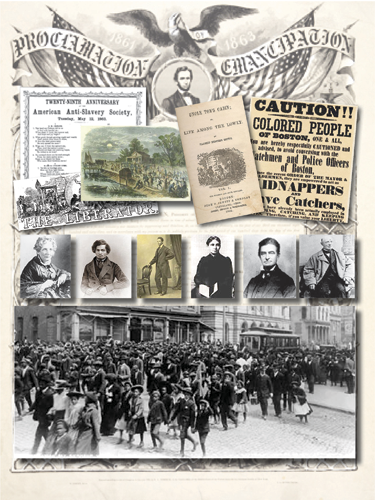
I taught high school U.S. history for almost 30 years, and as we began our study, students knew the obvious answer: Abraham Lincoln. But by the time our study ended, several weeks later, their “Who ended slavery?” essays were more diverse, more complex — and more accurate. In coming months and years, teachers’ jobs will be made harder by Steven Spielberg’s film Lincoln, in which Daniel Day-Lewis gives a brilliant performance as, well, Lincoln-the-abolitionist. The only problem is that Lincoln was not an abolitionist.
Continue reading

Stripmining Black History Month

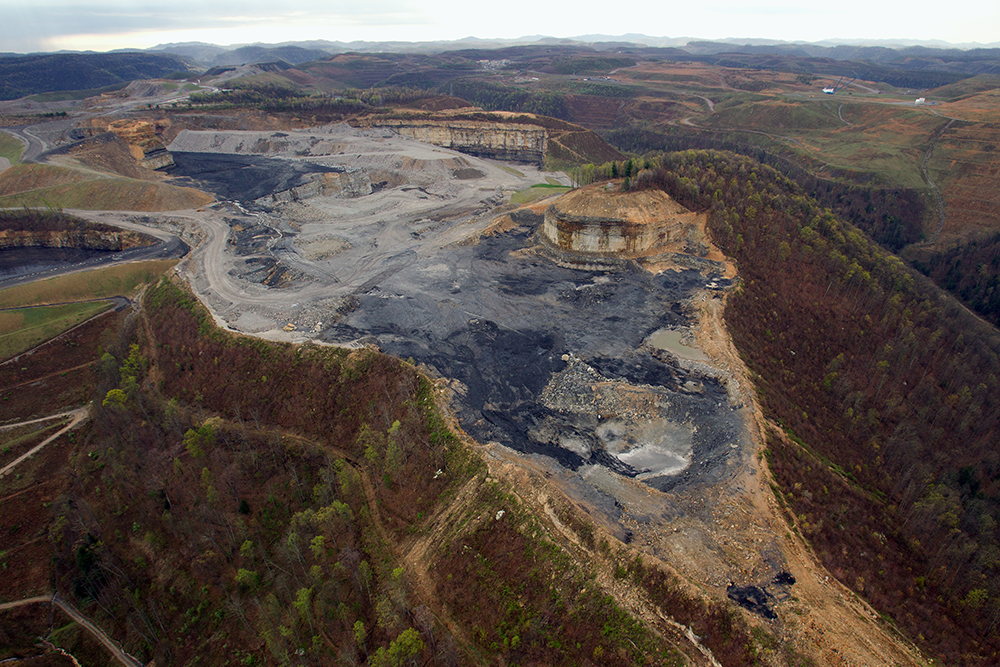
In “Stripmining Black History Month,” Jeff Biggers writes that “the neglect and degradation of a region and its history have always mirrored the neglect and abuse of the land.” And there is no more abused land in the United States than Appalachia, where coal companies continue to scrape away mountains to get at the thin coal seams buried within. The coal companies call everything that is not coal, “overburden” — streams, trees, animals, plants. Surely history itself is also a burden for the coal companies, because if we knew our history, we would know the rich legacy of activism that has characterized Appalachia — activism that does not conform to the whitewashed ignorant “hillbilly” stereotypes that the rich and powerful have found so convenient to promote.
Continue reading
Children holding signs - Indigenous Peoples Day Parade - Seattle | Zinn Education Project: Teaching People's History

Support Indigenous Rights: Abolish Columbus Day

By Bill Bigelow
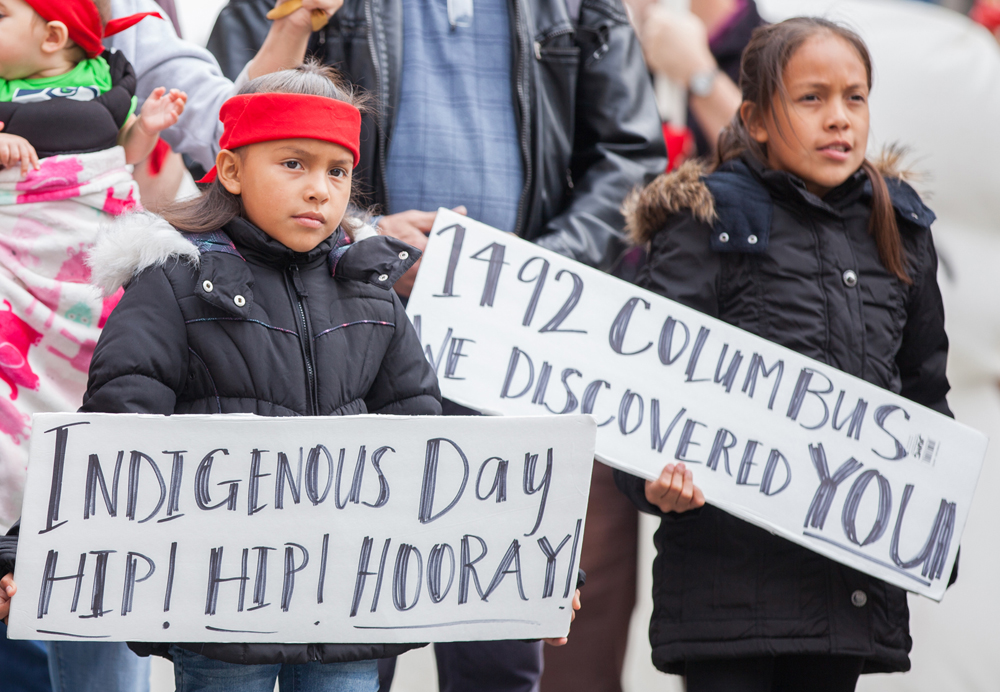
The movement to abolish Columbus Day and to establish in its place Indigenous Peoples' Day continues to gather strength, as every month new school districts and colleges take action. This campaign has been given new momentum as Indigenous peoples throughout the Americas assert their treaty and human rights. Especially notable is the inspiring struggle in North Dakota to stop the toxic Dakota Access Pipeline, led by the Standing Rock Sioux.

Dave Archambault, chairperson of the Standing Rock Sioux Tribe, explains that the oil pipeline “is threatening the lives of people, lives of my tribe, as well as millions down the river. It threatens the ancestral sites that are significant to our tribe. And we never had an opportunity to express our concerns. This is a corporation that is coming forward and just bulldozing through without any concern for tribes.”

The “bulldozing” of Indigenous lives, Indigenous lands, and Indigenous rights all began with Columbus’s invasion in 1492.
Continue reading

Teaching Untold Stories During Asian Pacific American Heritage Month

By Moé Yonamine
“They’re Latinos . . . I think they’re some kind of farm workers.”

“No, they’re Asians with name tags.”

And then a student in a quiet voice walked by me slowly and muttered, “I think something really bad is happening to them.”

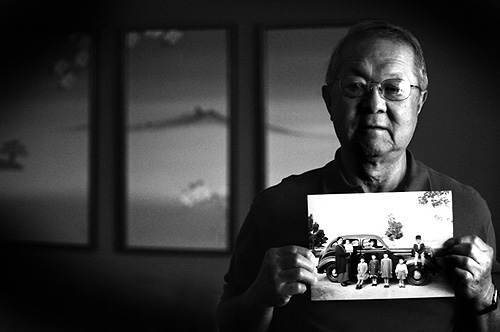
My students at Roosevelt High School in Portland, Oregon — one of the state’s most racially diverse schools — studied each black and white photo posted around the room, inspecting the background and the facial expressions; confused, anxious, frustrated. They began a journey to uncover the hidden story of the Japanese Latin American removal, internment, and deportation during World War II.
Continue reading

Ten Years After: How Not to Teach About the Iraq War

By Bill Bigelow
In 2006, with U.S. troops occupying Iraq, the great historian and humanitarian Howard Zinn expressed his desire for the end of the war: “My hope is that the memory of death and disgrace will be so intense that the people of the United States will be able to listen to a message that the rest of the world, sobered by wars without end, can also understand: that war itself is the enemy of the human race.”

At least in a formal sense, our country’s memories of war are to be found in school history textbooks. Exactly a decade after the U.S. invasion, those texts are indeed sending “messages” to young people about the meaning of the U.S. war in Iraq. But they are not the messages of peace that Howard Zinn proposed. Not even close.
Continue reading

The Forgotten Fight Against Fascism

By William Loren Katz
Anyone who has gone through school in the United States knows that history textbooks devote a lot of attention to the so-called “Good War”: World War II. A typical textbook, Holt McDougal’s The Americans, includes 61 pages covering the buildup to World War II and the war itself. Today’s texts acknowledge “blemishes” like the internment of Japanese Americans, but the texts either ignore or gloss over the fact that for almost a decade, during the earliest fascist invasions of Asia, Africa, and Europe, the Western democracies encouraged rather than fought Hitler and Mussolini, and sometimes gave them material aid.
Continue reading
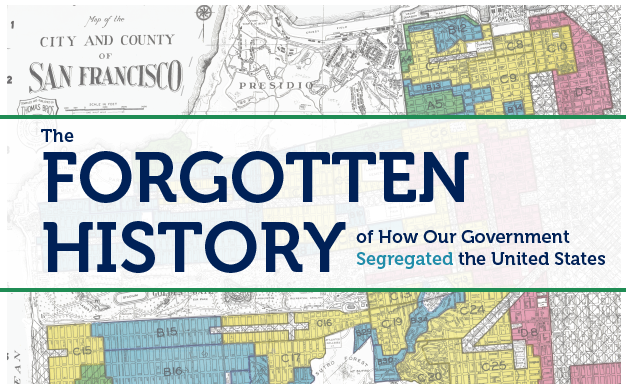
The Forgotten History of How Our Government Segregated the United States (Article) | Zinn Education Project

The Forgotten History of How Our Government Segregated the United States

By Richard Rothstein
Racial segregation characterizes every metropolitan area in the United States and bears responsibility for our most serious social and economic problems — it corrupts our criminal justice system, exacerbates economic inequality, and produces large academic gaps between white and African American schoolchildren. We’ve taken no serious steps to desegregate neighborhoods, however, because we are hobbled by a national myth that residential segregation is de facto — the result of private discrimination or personal choices that do not violate constitutional rights.
Continue reading
Rethinking Columbus: The Next 500 Years (Teaching Guide) | Zinn Education Project: Teaching People's History

The New (and Improved?) Textbook Columbus

By Bill Bigelow
Recently, I ran across an old manual that described itself as “An easy step-by-step guide to obtain U.S. Citizenship.” A page of history and government questions begins:
Q: Who discovered America?
A: Christopher Columbus in 1492.

This was the simple, and simplistic, history that I learned in 4th grade in the early 1960s growing up in California — a kind of secular Book of Genesis: In the beginning, there was Columbus; he was good and so are we.

And it stayed the history that most everyone learned until the Columbus quincentenary in 1992 brought together Native Americans, social justice organizations, and educators to demand a more inclusive and critical version of what occurred in 1492 and after.
Continue reading
Coal Kills by Paul Anderson | Zinn Education Project

The Poison We Never Talk About in School

By Bill Bigelow
The most dangerous substance in the world is barely mentioned in the school curriculum. Coal.

According to the International Energy Agency, burning coal creates more greenhouse gases than any other source — including oil. James Hansen, director of NASA’s Goddard Institute for Space Studies and arguably the world’s foremost climatologist, has called coal “the single greatest threat to civilization and all life on the planet.”

And, as 350.org founder Bill McKibben pointed out recently in a remarkable article in Rolling Stone magazine, “Global Warming’s Terrifying New Math,” from a mathematical standpoint, it is demonstrably impossible to prevent the climate from spinning out of control with unimaginably horrible consequences, if we burn the fossil fuels that energy corporations are in the process of exploiting and selling.
Continue reading

The United States Is Not a Democracy. Stop Telling Students That It Is.

By Ursula Wolfe-Rocca
When our students only learn about this exceptionally strange system, the electoral college, from their corporate-produced history and government textbooks, they have no clue why this is how we choose our president. More importantly, they develop a stunted sense of their own power — and little reason to believe they might have the potential to create something better.
Continue reading

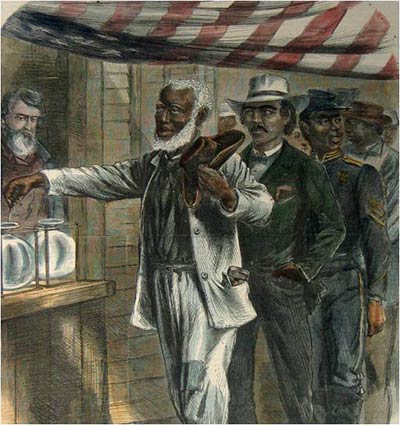
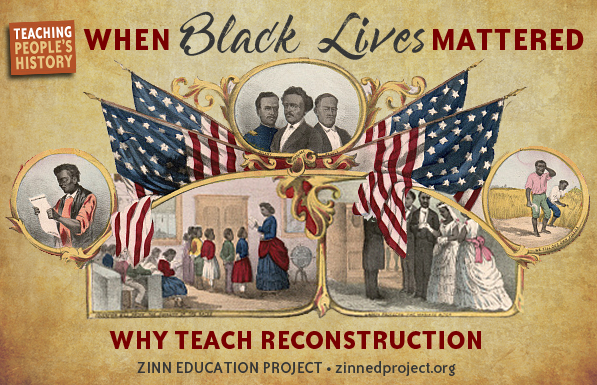
When Black Lives Mattered: Why Teach Reconstruction

By Adam Sanchez
Every day seems to bring new horrors as the U.S. president’s racist rhetoric and policies have provided an increasingly encouraging environment for attacks on Black people and other communities of color. The acquittal of yet another police officer accused of murdering a Black man in St. Louis, the raging battle across the country over whether symbols of slavery should be removed from public spaces, and the formation of a “Commission on Election Integrity” to further suppress voting by people of color are just a few of the recent reminders that racism is as American as apple pie. In moments like these, it’s worth remembering a time in U.S. history when Black lives mattered.
Continue reading
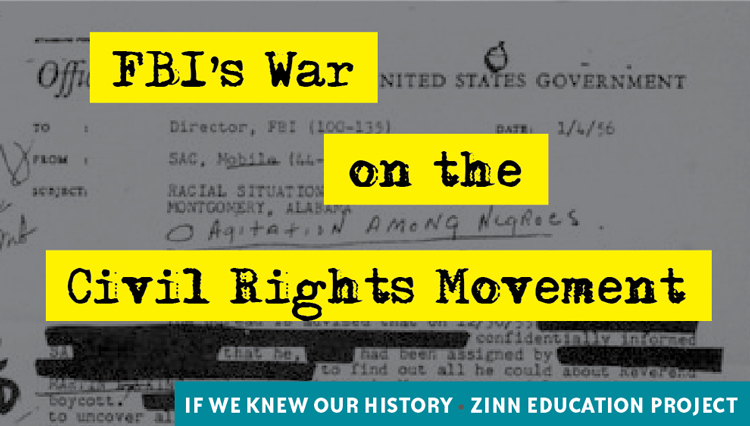
Why We Should Learn About the FBI’s War on the Civil Rights Movement (If We Knew Our History) | Zinn Education Project: Teaching People's History

Why We Should Teach About the FBI’s War on the Civil Rights Movement

By Ursula Wolfe-Rocca
On March 8, 1971 — while Muhammad Ali was fighting Joe Frazier at Madison Square Garden, and as millions sat glued to their TVs watching the bout unfold — a group of peace activists broke into an FBI office in Media, Pennsylvania, and stole every document they could find.

Delivered to the press, these documents revealed an FBI conspiracy — known as COINTELPRO — to disrupt and destroy a wide range of protest groups, including the Black freedom movement. The break-in, and the government treachery it revealed, is a chapter of our not-so-distant past that all high school students — and all the rest of us — should learn, yet one that history textbooks continue to ignore.
Continue reading