

By Ricardo Levins Morales. Click image to order poster. Do not reprint without permission of artist.
Labor Day is a time to remind ourselves of the importance of solidarity — that progress comes when people recognize that we need each other and act together on that recognition.
One aim of today’s right-wing attacks on history is to stop young people from learning about the rich legacy of workers acting for justice. It’s no surprise that people of wealth and power are threatened by education that explores grassroots efforts to challenge exploitation.
The Zinn Education Project offers free lessons on labor history and campaigns for teachers’ right to teach.
Find examples below of free lessons and other resources about labor history — interracial solidarity, feminism, “organize the unorganized,” environmental justice and health & safety, immigration, workers’ rights — including “This Day in People’s History” stories.
Students Uncover “The Power in Our Hands”
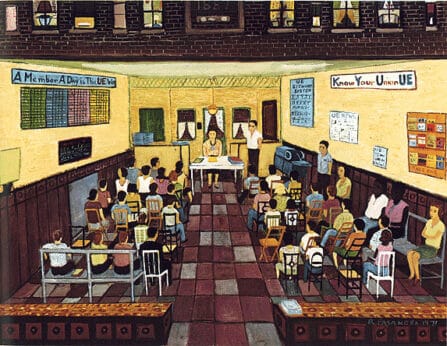
Art: Organizing Committee by Ralph Fasanella
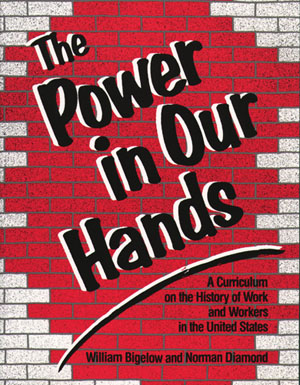
The Zinn Education Project offers a collection of free lessons on labor history from the teaching guide by Bill Bigelow and Norm Diamond, The Power in Our Hands: A Curriculum on the History of Work and Workers in the United States.
This curriculum introduces students to the Homestead Strike, the Academy Award-nominated film Union Maids, Southern Tenant Farmers’ Union, the Wobblies, “scientific management,” the impact of racism on labor organizing, labor rights, and more — with complete lesson instructions and handouts.
“Starcups Workers Unite!” — Workplace Rights Lesson
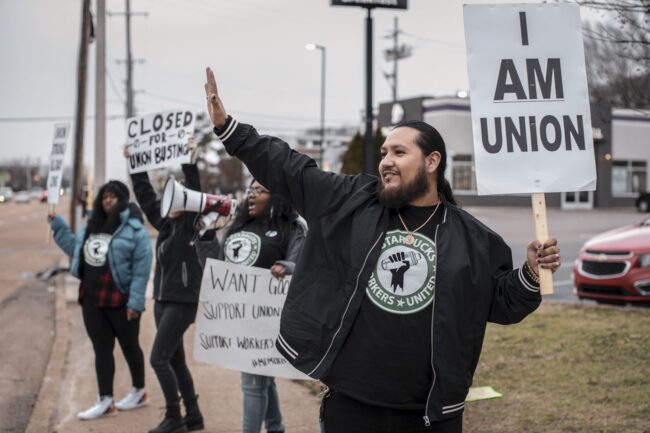
February 26, 2022. Photo by Andrea Morales
In “’Starcups Workers Unite!’ — Students Learn Their Workplace Rights” by Nicolle Fefferman, students engage in a simulation of a National Labor Relations Board union election based on the Starbucks Workers United organizing over the last few years. Fefferman is the director of the Young Workers Education Project and a Prentiss Charney Fellow. The lesson and teaching story were published in Rethinking Schools magazine.
Free Book for Your Labor History Teaching Story
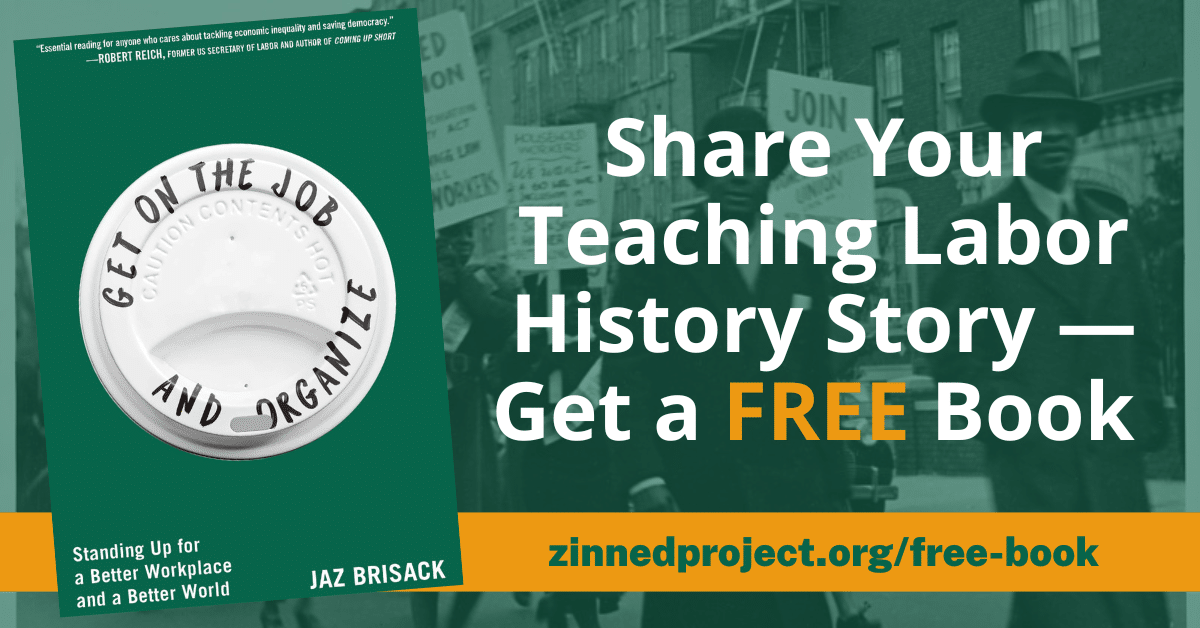
Thanks to donations by authors and publishers, we can offer you a copy of Get on the Job and Organize: Standing Up for a Better Workplace and a Better World by Jaz Brisack in appreciation for teaching stories about using any of our lessons on labor history and labor organizing. Here are some examples of those lessons:
“Starcups Workers Unite!” — Students Learn Their Workplace Rights
Southern Tenant Farmers’ Union: Black and White Unite?
and many more.
Deportations on Trial
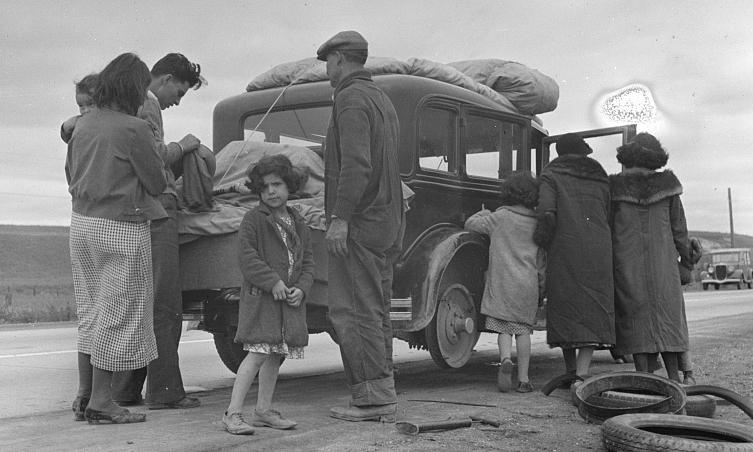
From the late 1920s to the late 1930s, adults and children, immigrant and U.S.-born, citizen and noncitizen, longtime residents and temporary workers, all became targets of a massive campaign of forced relocation, based solely on their perceived status as “Mexican.”
In the role play, Deportations on Trial: Mexican Americans During the Great Depression by Ursula Wolfe-Rocca, students analyze who or what is to blame for the illegal, mass deportations during the Great Depression and consider parallels to today. This lesson could not be more timely, as ICE agents terrorize U.S. communities.
This Day in People’s History
Below are a few key events in labor history. There are dozens more in our This Day in People’s History collection.
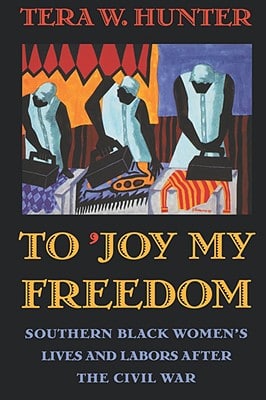 |
July 19, 1881: Atlanta Washerwomen’s StrikeBlack women in Atlanta who washed clothes for a living organized an effective Reconstruction-era strike — with demands, strategic timing, and door-to-door canvassing. They sought higher pay, respect, and autonomy over their work and established a uniform rate at $1 per dozen pounds of wash. With the help of the city’s Black ministers, they held a mass meeting and called a strike to achieve higher pay at the uniform rate. |
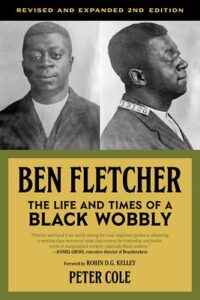 |
May 14, 1913: Longshore Strike in PhiladelphiaMore than four thousand Philadelphia longshore workers went on strike and shut down one of the busiest U.S. ports. During their two-week strike, they joined the Industrial Workers of the World (IWW), a revolutionary union committed to racial equality and socialism. They were led by Ben Fletcher — a brilliant organizer, humorous speaker, and the most prominent African American in the IWW. |
 |
Jan. 31, 1938: Emma Tenayuca Leads Pecan Sheller Strike12,000 pecan shellers marched out of San Antonio factories to demand better working conditions and higher wages. They elected Emma Tenayuca as their strike leader. Later, as a result of anti-Mexican, anti-Communist, and anti-union propaganda, Tenayuca fled Texas for her safety. Eventually, she returned to San Antonio to work as a teacher. |
|
|
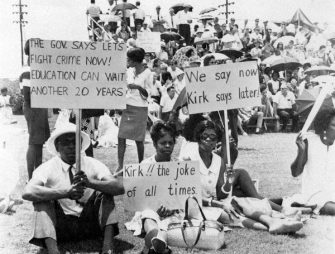
Feb. 19, 1968: Florida Teachers StrikeMore than 27,000 teachers and administrators from the Florida Education Association (FEA) handed in resignation letters and walked out. It was the first statewide teachers strike in the United States. “Buoyed by the civil rights struggle of the ’60s,” wrote Jody Baxter Noll, “the teachers saw 1968 as the time to engage in a radical fight against a system that had little concern for the education of Florida’s children.” |
Women in Labor History
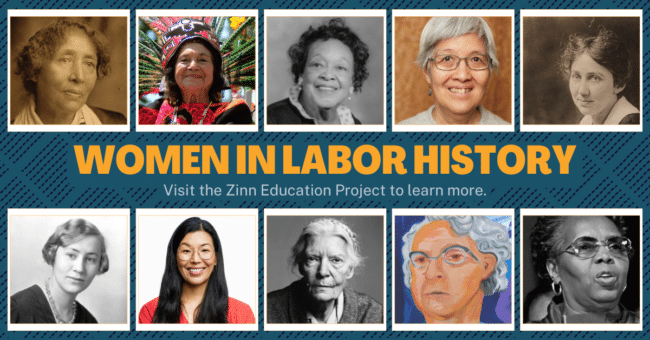
Textbooks and media often ignore women’s activism in labor history, despite the many roles women have played to organize, unionize, rally, document, and inspire workers.
From championing better workplace conditions to cutting back the 12-hour day to demanding equal pay across racial lines, women have contributed to the labor movement.
Book Recommendations
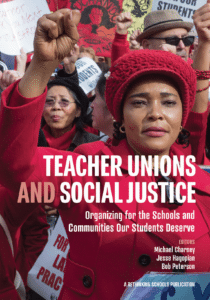
Teacher Unions and Social Justice: Organizing for the Schools and Communities Our Students Deserve
Teacher Unions and Social Justice is a Rethinking Schools anthology of more than 60 articles documenting the history and the practical details of social justice unionism. Together, they describe the growing movement to forge multiracial alliances with communities to defend and transform public education. The collection is edited by Michael Charney, Jesse Hagopian, and Bob Peterson.
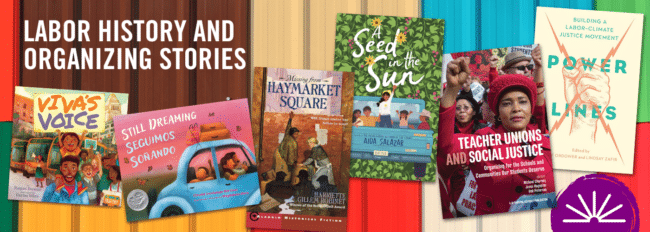
Social Justice Books offers a list of recommended titles for pre-K–12 and background reading for educators on labor history and labor organizing.
Films with a Conscience
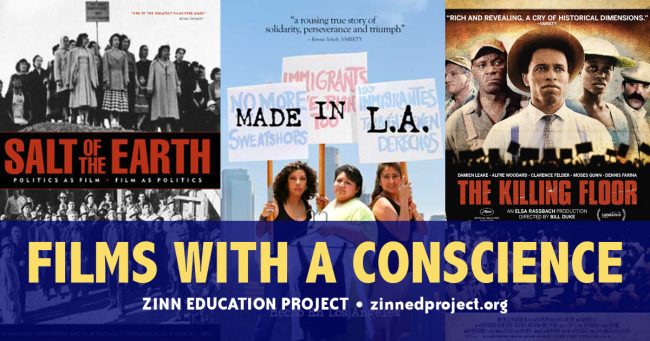
These “films with a conscience” can help young people think deeply about the world. Many of these films alert students to how individuals and social movements have tried to make life better. The list includes 11 films about labor history and organizing. Many are available to stream online for little or no cost.
Most of the Zinn Education Project funding comes from individuals like you. Make a donation today and help bring people’s history lessons to millions of students.


Twitter
Google plus
LinkedIn