

Michael Charney, April 2, 2022. Following the dedication of the Thaddeus Stevens statue in Gettysburg. Photo by Larry Miller.
With sadness, we share the news that Michael Charney suffered a heart attack and died on January 2, 2026. Charney was a passionate educator, political strategist, and labor organizer, committed to ensuring students and the broader community learn the truth about U.S. history and have a voice in their own education. He was warm, funny, curious, generous, and committed in his bones to the fight for racial justice.
Charney, and his wife C. J. Prentiss (who died in 2024), played a big role in the work of the Zinn Education Project for many years.
Charney’s ideas, energy, and generous support shaped our Teach Reconstruction campaign, the Prentiss Charney Fellowship, and publications of the ZEP co-coordinating organization, Rethinking Schools.
As Scott Stephens wrote in a beautiful tribute in The Cleveland Plain Dealer,
Charney devoted the majority of his 75 years to changing the lives of others. Through thousands of classroom lessons, impassioned union hall speeches and testimony in the Ohio Statehouse, Charney spent most of his waking hours making a difference.
Here is a brief introduction to Charney’s life and philosophy, based on interviews conducted by the Zinn Education Project in 2022 and additional sources.
Early Years
When asked what inspired his activism, Charney shared childhood memories:
Growing up in central Massachusetts, my parents (Albert and Shirley Charney) were involved in the Friends of SNCC, a support group for grassroots organizing in the South.
When I was 12, my parents raised some money to purchase something from a SNCC cooperative in Mississippi.
For my costume that Halloween, I went as a SNCC organizer, with overalls and the SNCC button with black and white hands shaking. That was my introduction to SNCC, which is different from many people who connected to the Civil Rights Movement through King-inspired protests. It gave me a grassroots outlook on social change.
When I was in 6th grade, Abbie Hoffman was a substitute teacher of morals and ethics at Temple Emanuel Sinai. This was before he became a Yippie — a leading spokesperson for the Youth International Party. He was a SNCC organizer, more or less, in the North and incredibly provocative.
Hoffman walked in the first day and said, “You see where the students are protesting against United States control of the Canal Zone?” None of us even knew what the Canal Zone was!
The next time he came, he said, “Two hundred yards from this temple, there are Jewish homeowners who won’t sell to Negroes.” He knew that because he had been involved in fair housing testing.
A few years later, I read Howard Zinn’s book SNCC: The New Abolitionists.
So, by the age of 14, I had an understanding of U.S. imperialism, Northern racism, and the importance of grassroots organizing. That was my early political development.
At the memorial service for Charney in Cleveland, lifelong friend Ron Joseph shared additional stories from their childhood. Ron is one of the seven Worcester Boys, all born in 1950, who grew up with with Michael in Worcester, Massachusetts.
Michael and I met around 4th grade at Temple Emanuel where we went to Hebrew school Tuesday, Thursday, and Sunday. When substitute teacher Abbie Hoffman talked about his experiences in Freedom Summer in Mississippi, it had a great impact on us.
From 7th grade, at Chandler Junior High School, till the end of high school at Doherty High School, Michael and I were in the same class about 98% of the time. I was there with Michael as he developed his strong views about racial justice, equality, imperialism, and capitalism.
In sophomore year, we joined the debate club. This was 1965 and our first topic was the Vietnam War. We debated two seniors and argued, of course, for immediate withdrawal. I think we won the debate, but I don’t know.
I was with Michael many times over the next few years as he began to cause what John Lewis so eloquently called “good trouble.” It was mostly small scale. At high school it began when the senior class election was administered unfairly. We collected signatures on a petition to have the election nullified and we were successful. The new election had the exact same results, but it was a good lesson in organizing.
When the school administration was reportedly searching lockers for marijuana, we got a bunch of people together and published an underground newspaper.
During our senior year, an English teacher thought it would be a good idea to start a literary magazine. So Michael and I went to the first meeting and we were elected co-editors. The principal said, “No, not happening.”
We continued to do things together. Even through college. We were arrested together on Hiroshima Day in 1970 at Hanscom Field (an air force base) with about 350 other people blocking the roadway. We went to demonstrations in Washington, including the counter-inauguration in 1973.
Michael was one-of-a-kind: a friend, a force for good in the world.
Educator and Organizer
In 1967, at the age of 17, through Temple Mitzva Core, Charney spent a few weeks in Roxbury with Black communities. Responding to Stokely Carmichael’s analysis that whites needed to organize whites, Michael decided to become a teacher to organize against racism.
He attended Oberlin College. In May 1972, the Lorain Journal profiled three Oberlin graduates. Charney was quoted as saying, “How can we have a society where 1 percent of the people own 50 percent of the wealth?”
He got a job as a high school teacher in Cleveland at a school that was 90 percent white (before desegregation). Administrators blamed Charney for a student-led protest against school policies and he was sent to the superintendent’s office. With the support of a lawyer (who had also represented the American Indian Movement in South Dakota), Charney was transferred to adult education, which he enjoyed.
Around this time, a court order brought desegregation and busing to Cleveland. Charney strategized about how to avoid the racist violence that had erupted with court orders in other cities. He helped to create a program called WELCOME with a message based on the SNCC logo.

West Siders and East Siders Let’s Come Together (WELCOME) group greet school children at John Marshall High School. Cleveland Memory Project
This is how he met his future wife and political collaborator, C. J. Prentiss, a Black organizer doing similar desegregation and non-violence work.
Prentiss said, “Desegregation is the first step; what we really need is economic equality.”
Michael went on six-week and 11-week strikes because of budget issues. He was granted a leave of absence to work on the WELCOME Institute, which evolved into Youth United to Oppose Apartheid in the mid-1980s.
C. J. became a delegate for Jesse Jackson in 1984, and together they worked with the Rainbow Coalition in 1987–1988.
Education Policy and Practice Advocate
Charney worked for more than three decades in the Cleveland Metropolitan School District — as a public school social studies teacher, and vice president of the Cleveland Teachers’ Union.

Cynthia Triplett (concerned parent), C. J. Prentiss (school board), Michael Charney (teacher), and Javier Rosa (student) at a public forum on education in Cleveland in 1987. Used with permission of The Plain Dealer.
Charney also was the union’s professional issues director, working to improve student literacy. He was one of the founders of the Cleveland Teachers Academy, a professional development project.
I spent eight years being in charge of Teacher Leadership, a part of Cleveland Teachers Academy, which came out of this whole reform nexus. Which was basically a partnership between the district foundations and the Cleveland Teachers Union. We could bring people together during the school day. We brought teams of teachers and principals, and I basically facilitated their reflection on how they move their Academic Achievement Plan. We created a whole rubric. One summer we brought in Diana Porter to lead a week-long series of workshops for everyone. I also created something called The Union’s Role in Improving Teaching and Learning. We brought together chapter chairs from about 15 schools and hosted full day sessions with people such as the president of New Orleans Teachers Union, an AFT representative, Rethinking Schools editor Bob Peterson, Cincinnati Federation of Teachers and later Ohio Federation of Teachers president Tom Mooney, and others.
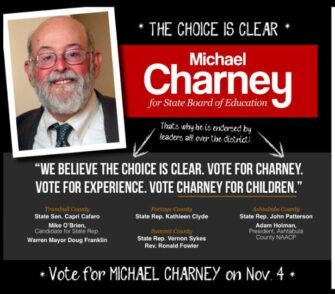 In 2014, Charney ran for State Board of Education to represent District 7 in Ohio, covering Ashtabula, Trumbell, Geauga, Portage, and portions of Lake and Summit counties. In Help Take Back Ohio State Board of Education from Far Right, Jan Resseger summarized Charney’s platform:
- listen to the expertise of classroom and school educators to define classroom life;
- focus on the literacy life of 3- and 4-year-olds;
- regulate online charter schools so that public school districts do not lose hundreds of millions of dollars;
- promote public education — not the privatization of public schools;
- emphasize arts, music, extracurricular activities and physical education, as well as career and college ready preparation;
- and use the insights of motivated high school students to help their peers who fall behind.
While Charney ran for office (and lost), most of his political work was in support of the political campaigns and legislative initiatives of his wife of 43 years, C. J. Prentiss.
In 2016, he and Prentiss were delegates for Bernie Sanders at the Democratic National Convention.
Late 1980s
Charney noted that three things happened in the late 1980s that engaged him as a political organizer:

Michael Charney and fellow labor activist Tony Sarmiento, 2016.
The Independent Caucus won the majority of Cleveland Teachers Union (CTU) Executive Board positions in 1988. Michael served on the collective bargaining team and became the editor of the CTU newspaper and co-editor of the Ohio Federation of Teachers statewide newspaper.
At the height of Rainbow Coalition, Michael developed the concept of the Future Leaders Summer Camp. For 10 years, activist high school students came together for summer activities, political workshops, and strategy seasons. The project was co-sponsored by the National Committee for Independent Political Action and New African Voices from Philadelphia.
The National Coalition of Education Activists (NCEA) formed, bringing together parent and teacher activists from all over the United States for an annual conference and strategy sessions. Charney helped to organize the first NCEA convening in Lisle, Illinois, in 1988.
Policy Research and Leadership Development
Prentiss and Charney played a major role in launching the nonpartisan economic policy research institute Policy Matters Ohio. In 1999, they met Amy Hanauer who was new to Cleveland and interested in doing policy research that focused on working people and the economy. They introduced her to other labor and civic leaders, took part in early meetings, and provided the validation that got early funders on board.
Policy Matters was established a year later, in 2000, to “create a more vibrant, equitable, sustainable and inclusive Ohio through research, strategic communications, coalition building and policy advocacy.” Charney and Prentiss were both on the founding board of directors, helped Amy convince their good friend journalist Zach Schiller to be the group’s research director, and helped establish the organization’s focus on workers, education, labor rights, economic justice, and the needs of Black and working class communities. They remained key mentors to Amy and over the years collaborated with Policy Matters to work to raise the minimum wage, restore collective bargaining rights to public sector workers, and fund Ohio’s public schools.
More than 25 years later, Policy Matters remains a crucial voice for Ohio’s working people.
As noted in Prentiss’s obituary, “The pair also created the C. J. Prentiss Emerging Leaders Project, designed to develop the skills of progressive leaders under 40. Its graduates include national leaders such as former Ohio State Senator Nina Turner, and Stacey Abrams’ campaign manager, Lauren Groh-Wargo.”
Author and Curriculum Writer
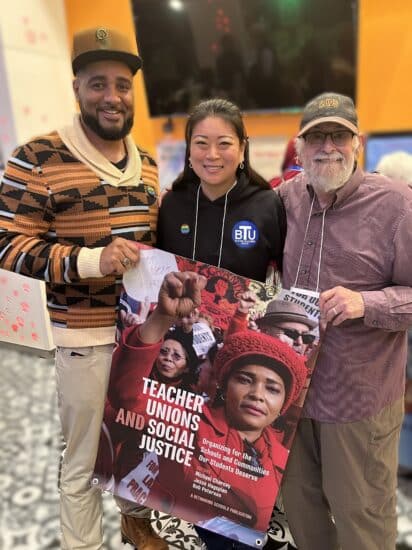
Jesse Hagopian, Jessica Tang, and Michael Charney.
Charney wrote curriculum guides to support student organizing, including Fulfilling the Promise of America: The Struggle for Voting Rights, The Minimum Wage and the Youth Vote, and The Present as History: A Look into the Origins of the Cleveland School Desegregation Case. To teach outside the textbooks, he wrote lessons and readings for his classes. Charney said,
When I did my student teaching, I used to write short stories and plays. I remember I wrote one about a Russian immigrant woman at the age of 13 who led a strike among the textile workers. They weren’t great literary inventions, but they were good teaching tools.
In 2021, he co-edited the Rethinking Schools book Teacher Unions and Social Justice: Organizing for the Schools and Communities Our Students Deserve with Jesse Hagopian and Bob Peterson. This was a revised edition of Transforming Teacher Unions: Fighting for Better Schools and Social Justice that he co-edited in 1999. Charney noted,
In the first edition, I wrote about when the Cleveland Teachers Union set up literacy campaigns, exactly what the AFT is doing now. We created book ownership plans for kids at local schools and the Cleveland Teachers Union put in $50,000. It created a different focus of what a union could be about.
About 20 years later, when we were working on the new edition, people told us, “Oh, we read your first book, and we used it to basically take over our union.” I was pretty proud of that.
Additional Rethinking Schools articles by Charney include: “High Court Takes Up Vouchers“ (Winter, 2001), “An Open Letter to Bill and Melinda Gates“ (Summer, 2005), and “Tom Mooney – Ohio’s Children Lose a Labor Leader“ (Spring, 2007).
In addition to these published articles, Charney frequently wrote “dispatches” that he shared with colleagues around the country. For example, while a delegate to the DNC, Charney offered everyone on his email list a ringside seat with insights and analysis.
Reconstruction

Michael Charney speaking at dedication of Thaddeus Stevens statue. April, 2022. Photo by Larry Miller.
In any conversation with Charney, it would not take long before he raised the Reconstruction era of U.S. history. He appreciated the example it offered of an interracial coalition that brought public education, the right to vote, and other progressive policies to people of all races.
Charney used creative strategies to raise awareness about key people in the Reconstruction era, such as the Radical Republican congressman Thaddeus Stevens. He explained,
We named our dog Thaddeus. When I walked my dog, people would ask me what’s his name, and I’d say, “Thaddeus.”
When they looked puzzled, I would say, “Named for Thaddeus Stevens.”
“Who’s that?” they would ask.
There was my opening to enlighten them about Stevens, with his unflinching commitment to both racial and economic equality for the newly freed people.
Charney also spoke about Albion Tourgée, a Reconstruction era lawyer, judge, politician, diplomat, and novelist from Ashtabula County.
Fiercely dedicated to the cause of young people learning about Reconstruction and recognizing that most school districts gave short shrift to the era, Charney funded and guided the Zinn Education Project’s Teach Reconstruction campaign in 2016 with lessons and workshops.
In 2020, Charney focused attention on the 150th anniversary of the 15th Amendment, offering mini-grants to teachers for school-based projects.
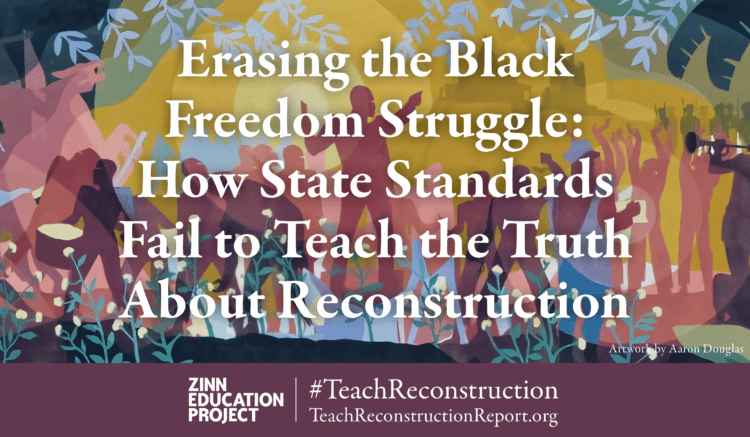
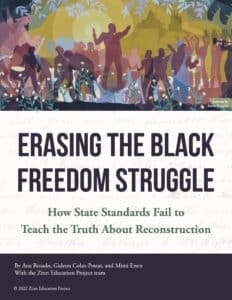 Once the campaign caught on, he suggested the Zinn Education Project move from providing resources for individual teachers to ensuring that Reconstruction was embedded in the curriculum. Toward that end, he provided the core funding for a national report on teaching about Reconstruction. The Zinn Education Project released this comprehensive, two-year study of state standards, Erasing the Black Freedom Struggle, in January 2022.
In September of 2019, Charney and Prentiss drove from Ohio to Baltimore to see the performance of The Moment Was Now, a musical about Reconstruction by Gene Bruskin.
Charney was also a lead funder for the Gettysburg statue of Thaddeus Stevens, dedicated in April of 2022.
In his moving speech at the dedication, Charney emphasized the importance of the 14th Amendment and recognizing freedom fighters in every community.
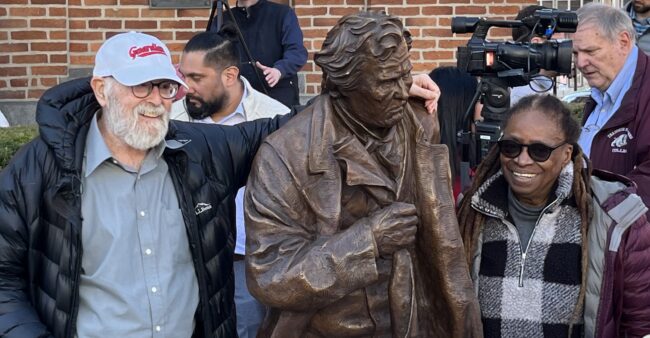
Michael Charney and C. J. Prentiss with the Thaddeus Stevens statue at Gettysburg.
Teach Truth Campaign
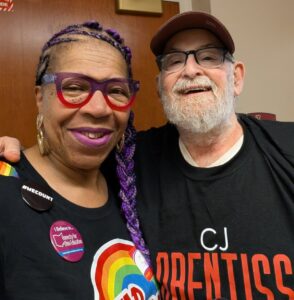
Meryl Johnson and Michael Charney in Cleveland.
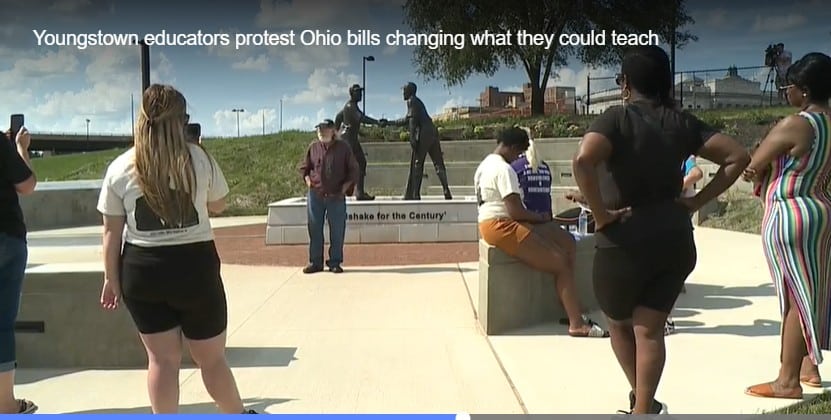
When teachers organized Teach Truth Days of Action to challenge the anti-CRT laws, Charney showed up annually at every rally he could get to. These included rallies organized by Heather Smith in Youngstown and Meryl Johnson in Cleveland. He emphasized the need to combat the chilling effect of the laws.
I think the strongest atmosphere isn’t the teachers who might get fired. It’s the whole stifling of any thought of teaching, and that’s bigger.
In his remarks in Youngstown in 2021, he highlighted the importance of truth telling and the history that the right seeks to erase.
Albion Tourgée was born eight miles from my house in Kingsville, Ohio. His house is still there, with a marker on it on State Route 193. Tourgée fought in the Union Army and then decided he wanted to fight for African American rights. So he left Ohio, went to North Carolina. . . where he wrote the North Carolina Constitution that included free public education for everyone through college. He became a judge.
He was run out of the state by the Ku Klux Klan . . . Then he became the lawyer for Homer Plessy in the Plessy v. Ferguson case and developed a theory: equal rights under the law.
He was so threatening to the white supremacists and the believers in the Lost Cause, that in this famous movie called Birth of a Nation . . . they had a little section about how bad Albion Tourgée was. . . . He was one of the people who gave a eulogy for Frederick Douglass. But he’s been erased from history. And that’s what the fight for truth is.
Teacher Leadership
Charney recognized the need for grassroots leadership to sustain education activism, which led to the creation of the Zinn Education Project Prentiss Charney Fellowship.
Charney met with each of the two cohorts that have been selected to date. He offered advice and in return felt encouraged by the dedication and creativity of the fellows.
Recognition and Reflections
In 2018, Charney received the Teaching People’s History Award from the Zinn Education Project.
In April of 2022, when the Thaddeus Stevens statue was dedicated in Gettysburg, many of Michael’s friends and family gathered from around the country to celebrate.
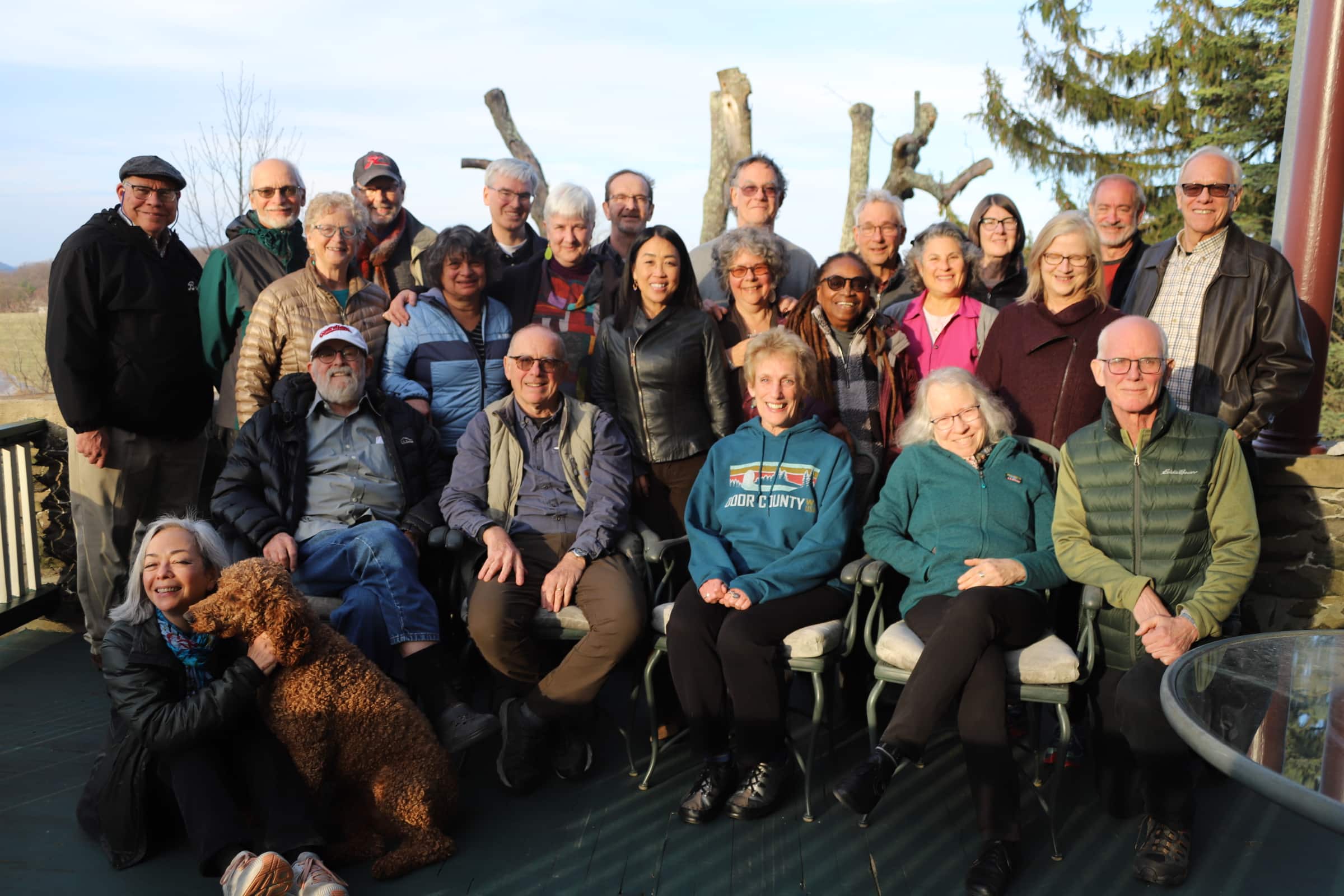
Gene Bruskin, MJ and Stan Karp, Diana Porter, Deborah Menkart, Helen Gym, Evie Frankl, CJ Prentiss, Jill Charney, Paul Pinsky, Michael Charney, Mark Simon, Ellen Bravo, Bob Peterson, Thea Lee, and more. Photo by Larry Miller.
When his wife and political partner C. J. Prentiss died in April of 2024, Charney did all he could to honor her memory and carry on her legacy. This included continued support for the Prentiss Charney Fellowship and launching the C. J. Prentiss Education Resource Center.
Along with Prentiss’s sons, Charney organized a celebration of her life for people from around the country in July of 2024.

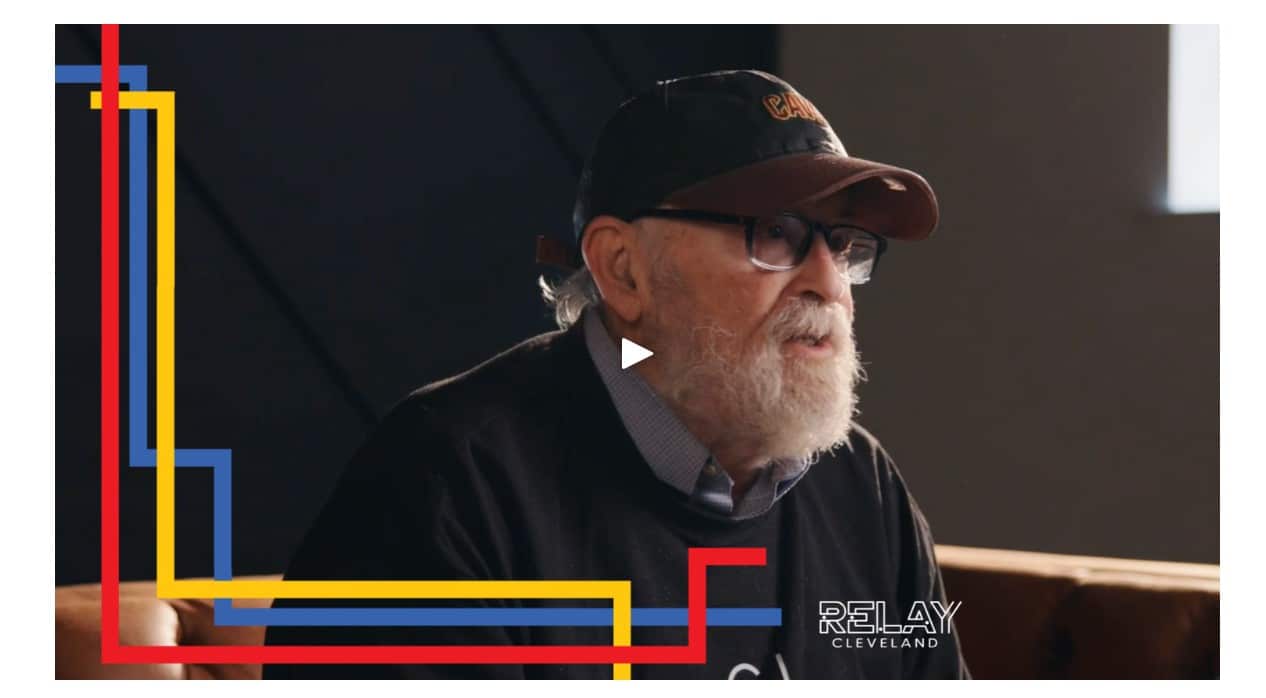
He also conducted a number of interviews to reflect on lessons learned, such as the one below by Relay Cleveland.
More Photos
Click the Flickr album below to see more photos.

Michael Charney Celebration of Life
Friends, family, colleagues, former students, and more gathered in-person and online on October 5, 2026 to celebrated the life of Michael Charney with stories and tributes. Below is a recording of the event. Here is the program with the list of speakers.
In Memory
We invite you to honor the memory of Michael Charney by donating to the Zinn Education Project campaigns he inspired, Teach Reconstruction and Prentiss Charney Fellows. You can also vote in your local school board election or consider running for office. In the spirit of the Thaddeus Stevens statue, shine a light on local heroes. Give gift subscriptions of Rethinking Schools magazine to teachers. Teach outside the textbook. Charney’s years of activism suggest endless possibilities. As his colleague Amy Hanauer said, “I’ll remember his refusal to conform, his boundless energy, and his willingness to give his short bark of derisive laughter at the latest outrage. He was always on the outside, always pushing, and somehow always hopeful despite the evidence.”
Send corrections or additions to this post to [email protected]

Thank you for your kind note and for honoring the amazing CJ Prentiss and Michael Charney. We will update the page and alert you when a celebration of life is planned.
This is a wonderful tribute. I was just writing a check to send to the Zinn Project in Michael’s memory and decided to look up his obituary for contact information and found this webpage. I will share with other friends. Michael and CJ were so unique and committed. Thank God for the gift of their lives.