
On February 2, historian Jarvis Givens joined Rethinking Schools executive director Cierra Kaler-Jones and editor Jesse Hagopian to discuss his latest book, I’ll Make Me a World: The 100-Year Journey of Black History Month. (Watch our previous Teach the Black Freedom Struggle online classes and register for upcoming classes here.)
Listen to the audiogram below to understand why Jarvis Givens says Black history is descriptive, corrective, and prescriptive.
Participants shared what they learned and additional reflections on the session:
The most important thing I learned today was Mary Church Terrell’s impact on the establishment of Negro History Week, and ultimately Black History Month, through the establishment of Frederick Douglass Day.
I want to reflect and act on the fact that 2026 is the 100th-year celebration of Black History Month and the 250th anniversary of the United States. In particular, I’m interested in how this 100-year history is the bedrock of the United States, and how it might prevent the erasure of Black/African American History and preserve Black futures.
Zinn Education Project Mondays are one of the best parts of every month. The learners and presenters remind me of why I became a teacher, and I learn so much every time — from the interview and the breakout rooms.
Event Recording
Transcript
Click below for the full transcript with resources mentioned in the discussion.
Transcript
Jesse Hagopian (he/him): On behalf of the Zinn Education Project, we would like to welcome everybody to our Teach the Black Freedom Struggle class with the great Jarvis Givens on this 100th anniversary of Black History Month. And I’m excited to say that we are also celebrating the 8th Annual Black Lives Matter at School Week of Action nationally. My name is Jesse Hagopian, I’m a Zinn Education Project campaign director and an editor for Rethinking Schools magazine. I am joined by my colleague and comrade, Dr. Cierra Kaler-Jones, executive director of Rethinking Schools.
Cierra Kaler-Jones (she/her): Thanks, Jesse. Hey, everybody! So good to be with you in this virtual space. We’re so, so glad to fill this space with so many folks who are dedicated to teaching the truth, especially during these times.
Hagopian: Thank you, Cierra. It’s great to be with this growing community of educators and organizers for this important conversation this evening. I’m really happy to welcome educator and our friend, Jarvis Givens. Thanks for being with us today.
Jarvis R. Givens: Absolutely, thanks for having me back.
Hagopian: Yeah, no doubt. [There’s] so much to talk about. I mean, you got a couple new books out that are both just so powerful. I wish we had more time to go into all the lessons of American Grammar as well. But, Cierra’s going to start us off with some questions.
Kaler-Jones: Yeah, and just another hearty congratulations for all of your books. I’m seeing some folks in the chat that are lifting up Fugitive Pedagogy. And we’re so grateful that now we’ve had a couple of conversations with you in this space about your books, and about your scholarships, so we’re just really grateful, and thanks for coming back, especially at this historic time. A 100-year celebration. But before we get into Negro History Week, can you briefly introduce us to Carter G. Woodson, the founder of this Week of Action — who he was, what he was up against, and why his work was so threatening to the dominant version of U.S. history?
Givens: Thank you so much for asking that question, because I was excited to write this book about the 100-year journey of Black History Month. But for me, coming to these questions, it really was through my interest in Carter G. Woodson, an important scholar in the Black intellectual tradition, who was a public school educator for a large majority of his time. I just always really appreciate opportunities to lift up his name.
Before I even say that, I just also want to say I just recently looked at results from a poll, kind of a national sampling about Black history education in the U.S, and with this kind of national sampling, it was only about 8 percent of the thousands of people that were polled who said that they had been taught anything about Carter G. Woodson in their journey through school. And these were adult Americans, so that lets me know that while everyone is familiar with Black History Month in some way, they’re not actually familiar with Carter G. Woodson. I’m not only interested in folks being interested in Carter G. Woodson because of his name — I think it’s important to speak the names of these people that did important work — but not knowing his story means that we don’t have a full understanding of the political origins of something like Negro History Week and Black History Month, because it was so bound up with the intellectual work that he was working to put forward and to mobilize around.
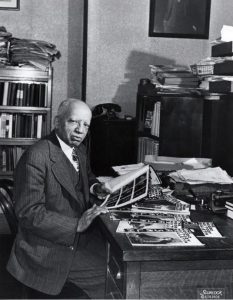
Carter G. Woodson is the second African American to receive a PhD in history from Harvard after W. E. B. Du Bois. I always emphasize that he was the child and student of formerly enslaved people. His first teachers were his formerly enslaved uncles. Then the high school he attended, the principal was his formerly enslaved cousin, when he attended the Frederick Douglass School, where he graduated at the age of 20. Carter G. Woodson’s unconventional educational trajectory is really important as someone who had this gap between his primary education and his secondary education. He also was a worker in the coal mines, among former illiterate Civil War veterans, people who had seen both sides of the experience of enslavement. But also the coming of freedom.
The stories of these people that he worked alongside, and from his family, were really integral to the formation of his own historical consciousness. Such that when he later on down the line became a student at Harvard and the University of Chicago, his professor said that there is no such thing as Negro history, or at least none worthy of respect. He had all of this evidence from his lived experience, from all of these people around him in these communities, these common folks, these common people. This is not the Benjamin Banneker’s and the Phillis Wheatley’s, but these were people who were ordinary parts of the community that he came from, who gifted him with all of these stories. It was the knowledge that was contained in Black communities that gave him the confidence to think against the grain of leading scholars at Harvard, who paid no attention to the role that Black people played, whether it be in the American Revolution or the Civil War, so on and so forth.
And [Woodson] is a public school teacher. Even as he’s going to college. Then in 1915, he founded the Association for the Study of Negro Life and History on a public school teacher salary. He had a PhD and was a public school teacher. Several Black folks with advanced degrees early on were not allowed to hold roles in the American Academy and at American colleges, sometimes even at HBCUs, unfortunately. But he founded this academic organization that became this hub for traditionally trained scholars, for school teachers, for community educators, and Black memory workers working in community to come together and really establish what we might think of as the early iteration of Black Studies, before we get to the late 1960s with the establishment of Black Studies departments.
Again, we’re not at 1926 yet, when Negro History Week is founded. So fast forward, as Carter G. Woodson is creating this organization, he gradually is no longer in the classroom. He’s starting to build out this academic institution that he created with the association. By the early 1920s, he’s publishing school textbooks in order for Black teachers across the country, and anyone who would listen to the truth that he was trying to uncover about history. But especially Black teachers were really eager and captive audiences for this work that he offered. They were using these textbooks and they were circulating through Black teacher organizations. In a previous class that we did together, we talked about the Black Teacher Archive, where we’re able to see Carter G. Woodson showing up in Tennessee, in Washington, D.C, and Louisiana, at these Black Teacher Associations, where his textbooks are circulating.
Fast forward… One example that I would give. In August 1925, the Baltimore Afro-American, which was an important Black independent newspaper, there’s a headline in August 1925 that reads, “Dr. Woodson’s Negro History Confiscated.” That article in the Afro-American newspaper in 1925, it’s documenting a story about a Black segregated high school in Muskogee, Oklahoma, that had purchased class sets of Carter G. Woodson’s The Negro in Our History that they were using for education there. When the local white school board, which had Klan affiliations, learned and decided to inspect the textbook a little more, they raised questions about his treatment and discussion of sexual violence that enslaved women experience at the hands of white Southern men. They raised questions about his discussions of the Red Summer of 1919 and the fact that he emphasized that Black people fought back, and there were also white people who were killed, with Black people resisting the mob violence. They also didn’t like his treatment of discussions around America’s mistreatment of Black veterans in the various American wars. So they confiscated the textbooks, the teachers were reprimanded, and the principal of this particular school in Muskogee, Oklahoma, his life was threatened, and he was forced to resign.
I’m painting this to say that Carter G. Woodson is someone who’s coming from this Black educational tradition. He gets an unusual opportunity when he achieves a PhD in history at Harvard, but he’s still among rank-and-file Black educators, and he’s working to try and create an institutional force behind this work of Black study. This is something that begins in 1915 with him, and by 1926, in that story that I just shared with you, that’s the context that Negro History Week emerges from.
So that’s who Carter G. Woodson is, and it’s important to understand him as a scholar and as a thinker as representative of a particular tradition in the African American intellectual tradition, and to see the story of Negro History Week’s emergence as a part of that. It’s not just about knowing his name, but it’s about knowing what he represents in the tradition and how that helps us appreciate something like Negro History Week. Sorry, that was much longer than what I intended to share, but hopefully some of that was useful.
Hagopian: That was great. Thank you so much, Jarvis, for giving us a proper introduction to Carter G. Woodson. You write about, also, the contribution of Mary Church Terrell’s central role in establishing Frederick Douglass Day in Washington, D.C. schools. My teaching career began in Washington, D.C, and I didn’t know about her contribution, so it was really powerful to learn that history. You write that it was work that formally set aside time to commemorate Douglass’ life and legacy, and then reflecting on that tradition. Terrell later suggested, quote, “Perhaps Douglass Day inspired Dr. Carter G. Woodson to establish Negro History Week many years afterwards.” So I was hoping you could take us through the radical origins of Negro History Week, including how Terrell’s organizing Douglass Day helped to shape it all. What does this tell us about Black women’s roles in the struggle, and also about the political commitments that animated the founding of Negro History Week?
Givens: Absolutely. I thank you for lifting up that point, and I love that line. I loved coming across that line in the archive by Mary Church Terrell, to write that into the story. This story that Jesse’s lifting up is from part one of the book that’s called The Creation: The Many Beginnings of Black History Month. Essentially, I talk about the beginning of Black History Month in my own life. I give this personal narrative about my first experience of Black History Month as a preschool student in Compton with my teacher, who was from Grenada, Mississippi, a child of Negro History Week celebrations. But I also talk about the beginning.
There are ways that we can trace the origins of Black History Month back to Negro History Week in 1926. But sometimes origin stories are complicated, right? Because we know that Woodson was not operating in a vacuum. Woodson also wrote about Douglass Day. He explicitly said he chose this particular week in February because it was already a popular celebration of the life of Frederick Douglass and Abraham Lincoln. But we hadn’t really taken that seriously when we told the story.
Also, it’s important to note that Mary Church Terrell and Carter G. Woodson were colleagues on the faculty of Dunbar High School, which was formerly the M Street School, this really, really important Black public high school in Washington, D.C, that people like Charles Hamilton Houston went to, Nannie Helen Burroughs went to, Anna Julia Cooper taught at, so on and so forth. It’s a very, very important place.
But yes, Mary Church Terrell in 1897, she formalized the practice of celebrating Frederick Douglass’s chosen birthday. We know he chose February 14th as his chosen birthday. After he died in the late 1890s, she went to the school board — it’s there in the school board meeting minutes, that Mary Church Terrell is the person that introduced this motion, and it’s something that was taken up in Washington, D.C. schools, and also community institutions. Then there is also evidence, even before it was formalized, that Black people still did something like Douglass Day even before it was recognized by the school board. Mary Church Terrell is the person that introduced it there, but essentially that point in the book is to demonstrate that Negro History Week is a part of a much longer intellectual and organizing tradition in Black communities, where African American communities identify important historic events relevant to their communities that they could organize around to continue teaching about the lives of individual people, or the lives of particular events. Juneteenth is an example of this. That has important lessons for the future, but are also opportunities to study history as a way of making sense of our lives today and thinking about the future.
Mary Church Terrell, we know the majority of Black school teachers were Black women, so absolutely, Black women’s labor was central to the expansion of Negro History Week. Carter G. Woodson often wrote explicitly about Black women teachers doing the heavy lifting in local communities to organize through the institutions that they were a part of, whether it be through their sorority groups, through their religious organizations, and through Black women’s organizations. He talks about these things explicitly. Because he was attentive to the way Black institutional life, by which I mean the institutions that Black people created within this segregated world to address their particular needs, the way in which women used these organizations to help share ideas, share practices, [and] to respond to various different political and social challenges in the world that they lived in. Mary Church Terrell and that story of Carter G. Woodson was an opportunity for me to talk about this prehistory to Negro History Week and Black History Month that was much more expansive than any individual person.
Hagopian: I just want to say, it was just so striking to me the way that I saw a parallel with this, Douglass Day to Negro History Week to Black History Month, with what emerged organically from Seattle, where we had Black Lives Matter at School Day in 2016. And then the teachers in Philadelphia took it to the next level and made it into Black Lives Matter at School Week of Action. Then we were debating when to celebrate this week of action. Should we do it in September, October, where we’re like, “Well, everyone celebrates Black history already in February, so let’s do it the first week of February.” That just seems similar to the way Carter G. was like, “Well, let’s do it on Douglass Day because people are already celebrating,” and just to know that history is continuing.
Givens: If I could say one other thing, that’s also one of the reasons why I have this visceral reaction when people make comments about, “We got the shortest month of the year,” and all this sort of stuff, because it erases the agency of Black folks, whether it be Mary Church Terrell with Frederick Douglass Day in February, or Woodson and Negro History Week. The idea that we were given the shortest month just exposes the unfortunate reality that we haven’t really created space to really grapple with the origins of this important commemorative holiday, and why it continues to have political significance in our lives. Those sort of comments exposed that, but hopefully no one here would go out and say anything like that. But that was also one of the reasons why I thought it was important to lift up that part of the origin story, because I hear it all the time. It is picked up as a soundbite, that we got the shortest month. It’s like, no, we didn’t get anything, we created this for ourselves. And perpetuating that narrative participates in the erasure of the labor of ordinary Black people and Black scholars who were very intentional in organizing and crafting this tradition that so many of us have grown to a point to where we can take for granted. Though right now we’re living in a time when we know that we cannot take these things for granted.
Kaler-Jones: Everything that you were saying was also just really grounding me in thinking about this long history, and how you keep lifting up the word tradition is sitting really deeply with me, of how we are a part of this tradition, something that we pass down. In I’ll Make Me a World, you write that Black history emerged as critical history, and that it had three major tasks. So, can you talk about the three major goals that Black people had with the project of recovering and telling Black history, this process of seizing this Black history, as you’re naming for us?
Givens: Yes, well, actually my writing there is really informed by the work of Manning Marable, who’s a really important scholar of African American history. But I’m writing about Black history as descriptive, corrective, and prescriptive. And I do broadly frame Black history as critical history because it emerges from a conscious awareness among scholars like W. E. B. Du Bois and Woodson, and so many other scholars, like Leila Amos Pendleton, who was also a schoolteacher in D.C. She also wrote a textbook. But these people recognized not only the absences in historical narratives, but also the distortions. The distortions of Black life at the times when Black people were represented.
Oftentimes people say they didn’t teach you anything about Black history, so on and so forth. However, there were a lot of absences, but there were some ideas about Black heritage that were communicated through curriculum, and they were quite denigrating. They were extremely distorted and informed by all sorts of deficiency narratives about Black life, about Africa and people who descended from Africa, so on and so forth. People like Carter G. Woodson recognized that their role was not only to describe details in Black life with as much truth and honesty and texture and nuance and beauty as possible, and beauty as possible. To just offer these descriptive accounts, to write about things that were ignored, intentionally and unintentionally, by mainstream white scholars.
But it was also corrective. It was descriptive in some ways, but then it was also corrective, because there were also lots of examples and lots of historical narratives that were created, but that did not account for Black sources of historical memory, where Black people were not consulted and Black interpretations of historic events were not accounted for with the historical analysis that was put forward.
An example of that, for instance, is Reconstruction. When we think about W. E. B. Du Bois’s important work, Black Reconstruction, he wasn’t just writing about the period of Reconstruction and the role of Black people in government during that period because they were not talked about before. No, he was aware that a lot of white scholars wrote about Black leaders as inept, as inefficient, as unprepared, unfit for leadership, and responsible for what they refer to as the failure of Reconstruction. And he was aware that those narratives were used to justify Black disenfranchisement through the Jim Crow period. So, while there are some things that were not talked about at all, where Black scholars felt needed to be documented and written about, there were also things that needed to be corrected.
Then the last part is prescriptive, because people like Carter G. Woodson and Leila Amos Pendleton and Du Bois and these folks were not just interested in history for the purposes of developing encyclopedic knowledge about the past. Oftentimes, their motivations to think more critically about history was motivated by social issues, dilemmas, and experience, violent experiences of the world that they were living in in the context of Jim Crow. And they were working to correct the historical record in order to help new generations see the past with more nuance and more clarity about past injustices and how the problems in the world that they lived in came to be, so that they can make more informed decisions about moving forward and addressing social issues. I refer to Black history as critical history because it’s descriptive, corrective, and prescriptive. And again, that’s thinking with Manning Marable’s work that really informed some of the early conceptualization in the book and my writing there.
Hagopian: Yeah, I love that framework. Thank you for drawing that out and lifting up Manning Marable, one of the scholars I’ve learned the most from over the years. Something else I love about your book is the way you lift up the lives of everyday Black people. It’s so important and useful for educators who want to teach people’s history and look at our world from the bottom up, and not just the top down, as most textbooks do. You call these folks “work-a-days”, whose stories have often been excluded from dominant historical narratives. So I was hoping you could share a few stories of these “work-a-days” and why recovering them is so essential to how we understand Black history.
Givens: Yeah, and that’s Woodson’s language. Woodson referring to them as the work-a-days. Sometimes he even used the language, their essays and excerpts in early issues of the Journal of Negro History that are just titled undistinguished Negroes. Sometimes their names are not even known. But these are excerpts from the historical record that he finds, important stories about Black people that help us think more deeply about some aspects of Black social and cultural life. Or sometimes these people are named, but we wouldn’t know them otherwise. We only know them from these individual fragments that he’s able to pull from the archive. There are various early issues of the Journal of Negro History where we see him talking about these undistinguished Negroes, or his work on Black rural workers.
But I felt like that was important because I think we’ve gotten to a place where a lot of people’s approach to teaching Black history is to focus on individuals of rare achievement.? The Martin Luther King Jr.’s, the Phillis Wheatley’s. Even when they talk about those people, they’re usually in very contained, very neat ways. Certainly there are some scholars that have written more complicated accounts of some of these figures that helped us step outside of the frames that we typically get to think about even these individuals of rare achievement. But I think it’s important to note that people like Woodson were not only invested in just telling the names of these monumental men and women, they were interested in those people as folk heroes, as people who did very important things, as leaders, as inventors, as creators, as institution builders. But they were also interested in the complex realities of everyday Black people who are a part of the communities that they come from.
I told you that story about Carter G. Woodson and those Civil War veterans who were illiterate. The stories of those men, even though they could not read and write, were very important to someone like Carter G. Woodson or his mother, who was one of the first people to tell him intimate stories about things that she witnessed and experienced during her period of enslavement. So Carter G. Woodson never really moved too far away from those experiences in the way that he wrote about history. Yes, he held up these important figures, but he also tried to offer a much more expansive vision about where we look for meaningful Black history and stories from the past that are worth telling and teaching in order to help us learn important lessons about what it means to live a good life, what it means to be in right relationship with communities and the world around us.
So, in writing I’ll Make Me a World, I’m intentional to talk about familiar figures, but I’m also intentional to lift up names that we wouldn’t otherwise hear about. Ordinary teachers whose papers I came across when searching for stories about Black History Month and Negro History Week, but whose personal letters gave me a glimpse of some aspect of everyday life during a period that I didn’t live in. I felt like I wanted to sit with, pick apart, and to think historically about in the context of the time in which they lived in order for us to think about the past in new ways, and to invite people today to also remember that Black history is not just these individual, larger-than-life figures, but it’s also often in the room, sitting right beside us. There’s a lot of history that needs to be uncovered that’s a part of our family history, our local community histories, that there’s a lot of important work to be done there. And that’s absolutely a part of the tradition that we need to reclaim and to model in more rigorous and intentional ways during our commemorative practices in February and beyond.
Hagopian: I just had that experience, because my dad discovered a box of letters from my great-grandfather, who went to Alcorn State University and became a teacher, then a principal, and he went around starting schools in Louisiana and Mississippi. We found a letter of his demanding more funding from the school district for his Black school, and it just was revelatory for me to see that connection and to know that there were thousands more like him. We’ll never know their names, but they were part of social movements that were crucial in changing how we understand American history and Black history.
Givens: And often essential to the shaping of the political imaginations of the people we often hold up. I told that story about Carter G. Woodson and the illiterate Civil War veterans who were so central, who cared enough about education that they paid him in the evenings after working in the coal mines to read newspapers to them, that they could speak back to. And in the process, he’s learning all this information about Black history. Those people are important and shaped his life and much of the work that he did around the early Black history movement.
But also, in the book I write about people like Alice Walker and Martin Luther King Jr., and I place them in the context of the rural, segregated schools that they attended, where we see them as children. I include in the book a high school Black history speech that Martin Luther King Jr. wrote when he was 15 years old, and I’m intentional to talk about Miss Sarah Grace Bradley, his high school English teacher who worked with him on that essay, and who caught the bus with him to the oratorical competition he participated in. Because knowing her name and the influence and the role that teachers like her played in shaping generations of leaders like MLK is important to talk about.
Or with Alice Walker, before she writes The Color Purple and wins all the prizes for her writing, we come across a reference to her as a second grade student participating in an oratorical and literary competition in February 1955 in rural Georgia, where she wins second place, where we see her amongst all the rest of these ordinary, brilliant Black students striving in the context of their communities, being nurtured along the way by these teachers and these communities that valued their education and their flourishing.
Hagopian: I love that. Also, Alice Walker had Howard Zinn as a professor in college, too, which is pretty cool.
[breakout rooms]
Kaler-Jones: Welcome back, everyone! We hope that you all had rich discussions.
So, as promised, our next question for Jarvis is really about joy. I’m excited to ask this question in particular because a good friend of mine, Karen Lee, who I believe is on the call, we co-wrote and co-taught a lesson called Snapshots of Joy, which is in Rethinking Schools magazine. And what we did was we actually took images that we found of Black organizers, activists, and artists throughout history doing everyday joyful things. So it was Martin Luther King Jr. eating a slice of pizza, it was Mrs. Rosa Parks doing yoga, it was Fannie Lou Hamer laughing with her family, and we had students do an exhibit where they walked around and they talked about who these people are and what they are doing, and lifting up just the everyday joy. So thanks so much for reorienting us back to the everyday people, the everyday organizing, because it’s always been the everyday people that have come together to organize for justice. And we see ourselves as part of this history when we learn these stories of joy.
You quote Imani Perry’s reminder that joy is not found in the absence of pain and suffering, it exists through it. And you argue that Black history is often presented in sanitized ways in public memory. At the same time, you emphasize that preserving Black history has always required labor, often invisible, uncompensated, and collective. And when we lift up this joy, it’s a re-humanizing of Black people, of Black history. So, how does the work of Black memory workers make it possible to hold pain and joy together in historical storytelling, and what does this reveal about education as a site of struggle over whose histories are preserved and how they are taught?
Givens: For me, it’s never really been difficult to hold those things in tension with one another when writing about Black life, because I’ve always, and maybe it’s because I talked about my early introduction to Black history, but I was always taught that there’s both these beautiful truths that we have to face and there’s also some beautiful things about our history and our experiences that are there for us to lean on and use as a resource, as well when it comes to what it means for me to be in relationship with this very complicated history. Sometimes I hear people, when they talk about teaching the history of slavery as just re-traumatizing young students or something like that, and I think about the fact that my teachers were honest about the realities of slavery. But it wasn’t only the story of Black people being victims. I was always given narratives where Black agency and dynamism and vitality of Black life were always present as well, and I was able to wrestle with both of those things. And I was always clear that that was necessary to be a part of my writing, because the same way that even today, Black people, we experience anti-Blackness in the world around us. But, internally in Black communities, we are not only the sum of our suffering. There’s always these moments of joy, these resources that are created within communities, and I’m intentional to talk about those things. I’m never trying to do one at the expense of the other, because that would be dishonest of me as a scholar.
But I also think there are lots of models in the book. I write about Nannie Helen Burroughs in the third part of the book, called When Truth Gets a Hearing. She’s telling a very complicated history. All the students who attended the National Training School for Women and Girls were required to pass a Negro history exam before they graduated. I have a photograph in the book of this Black history library at the school. But, I talk about this play that she wrote on her own, as a school founder. She wasn’t a historian by traditional ways of thinking about a historian, but she was a school leader and she was a writer, she was a very effective public speaker, a very creative thinker, and she wrote this play informed by all of her own personal studies of scholarship produced by people like Carter G. Woodson that was translatable to the students in her school. And they traveled around the country performing this play.
When I read the reviews from people like W. E. B. Du Bois and Alice Dunbar Nelson, when they talked about how amazed they were at what Nannie Helen Burroughs achieved with writing this play that talked about the complicated aspects of Black life. But then there were also these moments with music and Black creative expression where they said, at certain points we lost some of the lines because the audience was so wrapped up, and they were talking back to the characters on stage. So, that’s a moment of joy in the archive, where I see this teacher, Nannie Helen Burroughs, who was absolutely invested in telling the truth about Black history in the U.S., but she also wrote very explicitly about colonialism in Africa. When we see the newspaper at her school, when she’s writing about it with her students.
But there are absolutely moments of joy as well. And I talk about both of those things, because these people that I write about lived at the intersection of these realities. Black life was never just one or the other, whether it be in the period of slavery or otherwise. And that doesn’t mean that I’m painting an overly triumphant narrative. It’s a complicated human narrative where Black people, despite unimaginable pains and suffering, continued to pursue beauty, continued to find ways of nurturing themselves and the communities that they were a part of for their own dignity. And for their own humanity. We can be honest about those tensions, because that’s the reality of this particular human story that we’re trying to tell when thinking about this issue.
Kaler-Jones: That’s beautiful. It’s holding both together as part of the fullness and the complexity of our human experience, also getting at humanizing ourselves and rehumanizing ourselves, and how important it is to be able to tell these stories of joy. And like you’re talking about, Negro Week or Black History Month, we’re seizing these days, we’re seizing these months for ourselves and for our celebration in the same ways that we’re seizing our own joy in community with each other.
Hagopian: Yeah, and thank you for raising that story about When Truth Gets a Hearing by Nannie Helen Burroughs. My next question was about that, but maybe you covered a lot, so I don’t know if you have anything else you want to add.
Givens: What was your question about it? I’m happy to . . . well, what’s your question? Then I’ll say something, I’m sure.
Hagopian: Sure. It’s an amazing story about this play where they put ideas like justice, truth, and injustice personified on trial. And you write, quote, “She operated in a long tradition of Black memory workers,” and that this work shows that Black history was preserved through what you write, quote, “a collective process, a historical enterprise forged by and through community.” So, the question was really about what does When Truth Gets a Hearing reveal about how Black memory workers use performance and collective creativity to preserve history?
Givens: Well, it demonstrates the way that Black novelists, Black poets . . . The title of the book is I’ll Make Me a World, which comes from James Weldon Johnson’s poem, “The Creation”, in which so many Black youth were required to memorize a very long poem. They talked about memorizing this poem that was written in the vernacular style of Black preachers, but they performed these poems that were also transmitting and carrying forth important knowledge about Black cultural practices when it came to Black oral traditions, so on and so forth. So much of that was reflected in Black artists across the spectrum, not just poets.
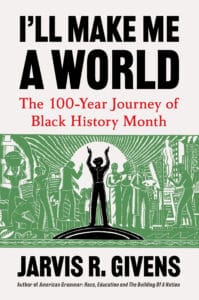
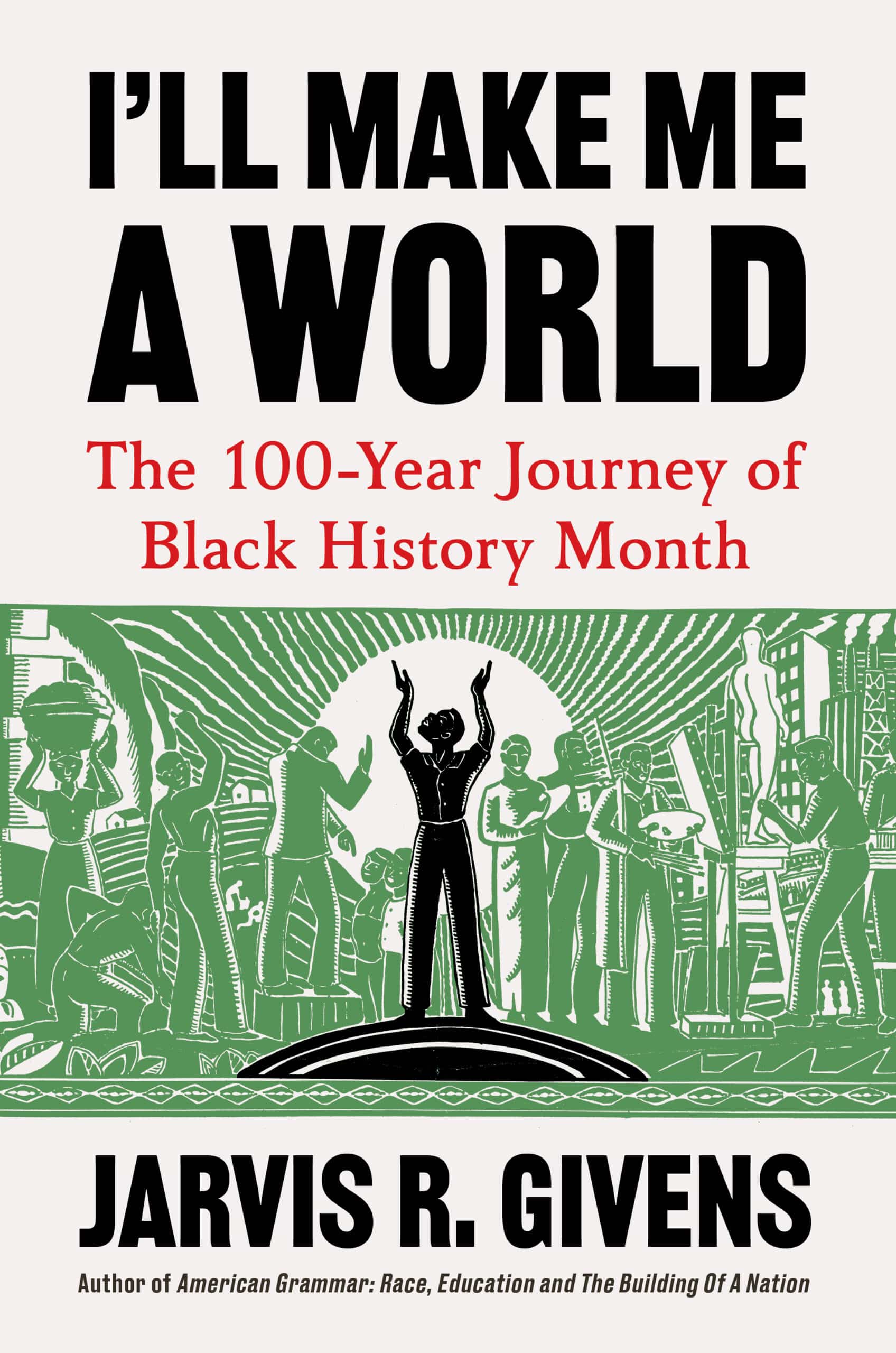
But even if I think about the cover of the book, the image that’s zoomed in on is from this calendar that Carter G. Woodson partnered with Lois Mailou Jones on. She was a very important artist during the Black Renaissance era. She illustrated most of his textbooks and so many of the materials that circulated around Negro History Week and around the early Black History movement. In that illustration, you see her expressing, through this illustration, important ideas and concepts that are really shaping the New Negro movement, if you will, that Negro History Week is a part of. So that’s what I’ll say in terms of Black historical memory being preserved by more than just historians.
But the story of that play in particular, I would just say, Nannie Helen Burroughs, she wrote that play and her students performed it all over the country, from California, Chicago, Baltimore, and D.C. Nannie Helen Burroughs was important during her time period. She died and not many people knew who she was. It wasn’t until the 1970s, when Evelyn Brooks Higginbotham was a graduate, had just finished her master’s at Howard University. This is when Black women’s history was really blossoming as a field, when the Association of Black Women Historians was founded in the 1970s, when Negro History Week is expanding to Black History Month. But she decides she wants to go get her PhD, and she wants to write about a Black woman that not many people know about, but that they should know about. And it was Evelyn Brooks Higginbotham’s mother who said there was this woman that was in your grandfather’s church in D.C. People don’t know about her now, but she was really important. A labor rights activist for domestic servants, working for the rights of everyday Black women who were working as maids and domestic servants, and who was a very gifted speaker, and founded this school, led this important school.
Evelyn Brooks Higginbotham, because of that story from her mother about who Nannie Helen Burroughs was, goes looking for Nannie Helen Burroughs’s papers to write about her, and essentially finds her entire archive, before she even really becomes the well-known name that we know her today as a historian. She writes her dissertation, but she also works to get Nannie Helen Burroughs’s paper, her personal papers in the school, taken to the Library of Congress to make sure that they’re preserved for future generations to study. So, this language of Black memory work, Nannie Helen Burroughs is modeling it with this work that she was doing, introducing community members to the knowledge that she was being able to pull into her school during the moment in time when she lived. Evelyn Brooks Higginbotham’s mother is also doing this work by carrying it forward, by remembering her name and passing that information on to a new generation. And Evelyn Brooks Higginbotham, as a historian, but also as someone helping to preserve rare and at-risk Black collections as well, in terms of the preservation work that’s a part of that story, is also a part of that. Now, I’m a scholar. I was able to read this unpublished play by Nannie Helen Burroughs only because Evelyn Brooks Higginbotham worked to make sure it was preserved. And I’m able to write about it in my book, I’m able to assign it as a primary source in my classes every year, because of that legacy and that labor.
Kaler-Jones: I love that. It makes me think of one of my favorite activities to do with my students, which is to have them collect oral history testimonies from their loved ones. It’s so powerful, not only the collection process and engaging in that collective memory, but when they come together and they share the stories and they start to analyze all of the different stories and see the connections between them. This is not just an individual experience, this is a collective experience, and it’s part of history. Which is so powerful about what you’re lifting up for us.
So, we’re going to go into our last question. As you know, Jesse and I could talk to you forever about this, and we’re really grateful to learn from you. But you write, “When I think of the accusation by Florida Governor Ron DeSantis in 2023 that the College Board’s AP African American Studies course lacks educational value, I cannot help but recall Carter G. Woodson’s recollections of disparaging comments made by scholars at Harvard and the University of Chicago, where professors explicitly told him that Black people had no history or culture.” So, how do you understand this continuity, and what does it reveal about why Black history continues to be treated as illegitimate, dangerous, or disposable when it enters formal educational spaces and we know it’s powerful?
Givens: I think that the way in which social hierarchies within the society that we live in, they’re expressed through curriculum in all kinds of ways, but especially through the telling of history. The telling of the stories about who we are, who we have been, and who we are today, and who we’re trying to become. And I think more than any other parts of our curriculum, I think history is one of the most contested sites for that. This is not to say that what we’re experiencing is exactly the same thing as what people like Carter G. Woodson and those folks were experiencing. Because it’s different, right? But they were in a position where they were having to literally create from the ground up so many of the traditions, fields of study that ome of us, like my generation, were able to benefit from, like African American studies, African American history, and Black women’s history. So many books and monographs that have been written, so many national historic sites that people fought in local communities and organized around to create, some of us were able to take some of that stuff for granted. But we’re realizing that those are not things that we can take for granted, because we’re experiencing a backlash that has always been a revolving door when it comes to history, when it comes to public memory around these questions. It’s one of the challenges of the human condition when it comes to education and how it’s always fundamentally political. There’s no escaping the politics of history, and the politics of education are inherent to what education is supposed to do in the social world of our lives as human beings.
Toni Morrison has a quote where she reminds us of this. It’s in 1991 at a humanities festival, and she says, “Nothing has been so fought over as our approach to knowledge and its parameters.” “Nothing has been so fought over as our approach to knowledge and its parameters.” I would say, especially in the context of history, we’ve seen that ongoing tug of war when it comes to power dynamics in terms of who gets to be seen as a legitimate interpreter of history, whose perspective about the past is deemed legitimate and reliable and important to hold up and to preserve and to file away for people to come back and study years later. Whose lives are worthy enough and valuable enough that we should look to them and study them to understand what it means to be human and what it means to live a good life in this world that we live in? That’s a universal challenge when it comes to education and history in the context of complex human societies. And especially when it comes to aspects of race, gender, and also class, in the world that we live in as well, and especially when it comes to race in the context of the U.S.
Hagopian: Jarvis, this has been amazing. Thank you so much for taking the time to speak with our community today. Just so many important lessons in both of your new books. I hope people will pick up those books very soon.
Givens: I appreciate that. I always appreciate the thoughtful questions that you all ask, and also the work you do maintaining this community. It’s really important right now, and I feel inspired every time I come to this space, so thank you.
Hagopian: Mmm, that’s beautiful. Thank you so much, Jarvis. I mean, this was the best way I could think of to launch Black Lives Matter at School Week, to launch Black History Month. So y’all were here for the right session.
While this transcript was edited, there may be minor errors or typos — if you notice something you believe to be incorrect, please contact us at [email protected].
Audio
Listen to the recording of the session on these additional platforms.


Resources
Here are many of the lessons, books, and other resources recommended by the presenters and participants:
Lessons
|
|
Legalize Black Education: The Long Fight for the Right to Learn by Jesse Hagopian The Color Line by Bill Bigelow COINTELPRO: Teaching the FBI’s War on the Black Freedom Movement by Ursula Wolfe-Rocca “Founding” Documents We Don’t Learn About by Mimi Eisen ‘What We Want, What We Believe’: Teaching with the Black Panthers’ 10-Point Program by Wayne Au Teaching With Vanguard: How Black Women Broke Barriers, Won the Vote, and Insisted on Equality for All by Ursula Wolfe-Rocca Teach Reconstruction Campaign, including lessons, books and films, student projects compiled by the Zinn Education Project, and a national report, Erasing the Black Freedom Struggle Teaching the American Revolution, a collection of lessons, books, articles, videos, discussion questions, and other resources compiled by the Zinn Education Project Discussion questions for Kellie Carter Jackson’s We Refuse chapter on revolutions. Questions for reflection by Mimi Eisen SNCC Legacy Project Toolkits by the SNCC Legacy Project Teaching for Black Lives edited by Dyan Watson, Jesse Hagopian, Wayne Au (Rethinking Schools) Black History Month 100, Campaign Zero, in partnership with Dr. Jarvis Givens, offers four lessons for elementary through high school, with primary documents, drawing from I’ll Make Me a World: The 100-Year Journey of Black History Month |

Books
|
|
In addition to I’ll Make Me a World: The 100-Year Journey of Black History Month (Harper), the following books were referenced.
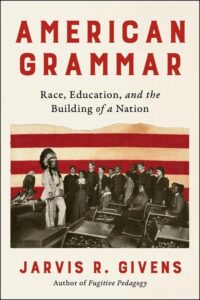
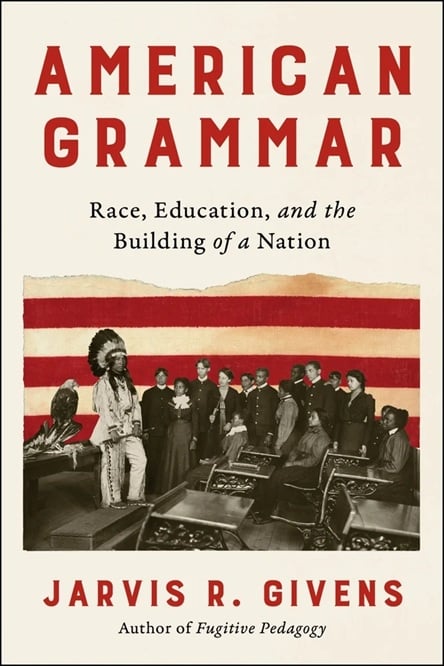
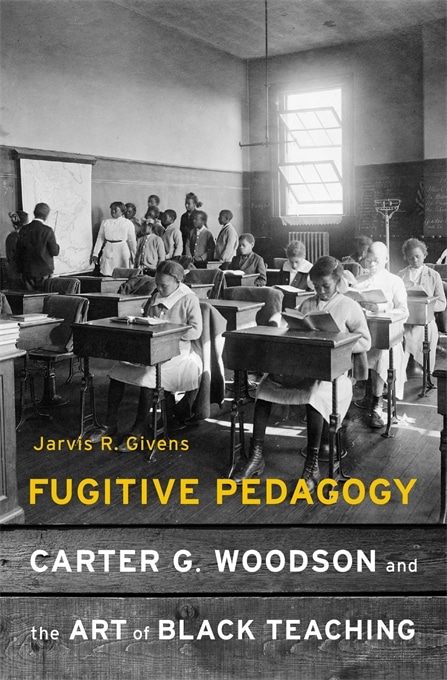
American Grammar: Race, Education, and the Building of a Nation by Jarvis R. Givens (Harper) Fugitive Pedagogy: Carter G. Woodson and the Art of Black Teaching by Jarvis R. Givens (Harvard University Press) A Worthy Piece of Work: The Untold Story of Madeline Morgan and the Fight for Black History in Schools by Michael Hines (Beacon Press) Black Reconstruction in America by W. E. B. Du Bois (Penguin Random House) Carter Reads the Newspaper by Deborah Hopkinson (Peachtree) The Mis-Education of the Negro by Carter G. Woodson, with an introduction by Jarvis Givens (Penguin Group) Race, Reform, and Rebellion: The Second Reconstruction and Beyond in Black America, 1945-2006 by Manning Marable (University Press of Mississippi) |
Articles
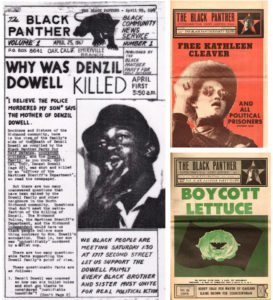 |
Stripmining Black History Month by Jeff Biggers (If We Knew Our History series) What We Don’t Learn About the Black Panther Party — but Should by Adam Sanchez and Jesse Hagopian (If We Knew Our History series) Snapshots of Joy: Using Photo Analysis to Challenge Dominant Narratives by Cierra Kaler-Jones and Karen Lee (Rethinking Schools) Five Ways Textbooks Lie About Reconstruction by Mimi Eisen (an addendum to the Zinn Education Project’s report, Erasing the Black Freedom Struggle) |
Previous Classes with Jarvis Givens
|
|
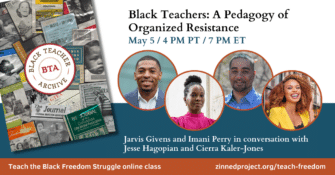
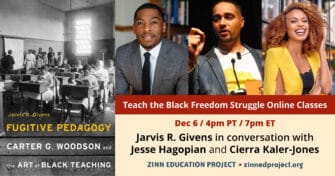
Black Teachers: A Pedagogy of Organized Resistance: Historians Jarvis Givens and Imani Perry discussed the Black Teacher Archive, a digital portal centralizing materials created by professional organizations of African American educators, historically referred to as Colored Teachers Associations (CTAs). Fugitive Pedagogy: Carter G. Woodson and the Art of Black Teaching: Jarvis Givens joined Jesse Hagopian and Cierra Kaler-Jones for a talk on his book, Fugitive Pedagogy: Carter G. Woodson and the Art of Black Teaching. |
This Day In History
The dates below come from our This Day in People’s History collection, which contains hundreds of entries all searchable by date, state, theme, and keywords.
|
|
Feb. 3, 1868: First Freedmen’s Bureau Teacher Appointed in Lafayette Parish Feb. 23, 1868: W. E. B. Du Bois Born Feb. 3, 1870: 15th Amendment Ratified Feb. 25, 1870: Hiram Revels Sworn into Office Feb. 12, 1900: “Lift Every Voice and Sing” Was First Publicly Performed Sept. 9, 1915: The Association for the Study of African American Life and History Feb. 7, 1926: Carter G. Woodson Launched Negro History Week Dec. 25, 1951: Murder of Harriette and Harry Moore in Florida Feb. 1, 1960: The Greensboro Sit-in Begins Sept. 2, 1966: Grenada, Miss. School Desegregation Battle |

Participant Reflections
With more than 190 attendees, a poll of participants’ primary roles in education showed 38 percent K–12 teachers, 16 percent teacher educators, 9 percent historians, and more.
Here are more comments that participants shared in their end-of-session evaluation:
What was the most important thing (story, idea) you learned today?
The myth-busting of the origin of Black History Month was important; I had been taught the myth that February was the shortest month of the year and that’s why it was picked, but that’s not true.
I loved learning about the history of Black History Month and its relationship to Fredrick Douglass’ birthday. I did not know why this month had been chosen!
So much of our history lies in our hands, and we have to tell our story and carry it forward.
It’s always helpful to be reminded to focus on “workaday” people like Woodson. I was glad to learn a more detailed background story for Black History Month and the agency involved.
Education as liberation. What continuously amazes me is the strength of the community to keep on keeping on. As legal or illegal practice, the truth gets taught and preserved.
The stories of average Black Americans are important to include in history.
A reminder of how powerful everyone is in a movement. It was great to hear women elevated.
Today was a helpful reset in my understanding of Black History Month and how it originated from a range of work and effort by Black historians and activists.
What will you do with what you learned?
My school is working very hard to celebrate this 100-year anniversary of Negro History Week. As the leader of the celebration, I’m striving to honor Dr. Woodson’s legacy. But this class reminded me to make sure I uplift Mary Church Terrell and others.
I’m going to design an oral history project where students interview adults in their lives, which is inspired by the discussion about the stories of everyday Black people who are important even if not “exceptional.”
I help facilitate the student council in our middle school, and this session helps me look at the community aspect of teaching and celebrating Black History Month in our school. The students have taken it upon themselves to research and highlight different Black individuals for Black History Month daily during morning announcements.
I am already rethinking some of my presentations about Black History Month. I usually spotlight a different person, and now I want to find more of the “undistinguished.” I really do lean into the fact that there are so many beyond the chosen few that are always talked about.
How was the format for the class?
Consistently excellent!
The format was perfect.
I think the format works very well! I love the breakout rooms. I always get nervous about them and they are always so fun.
It worked. Sometimes I feel like I’d rather not have breakout rooms, but I’m always proven wrong.
Shout out to the breakout rooms. Time to process. It’s the “chew” in Zaretta Hammond’s Ignite-Chunk-Chew-Review.
Presenters
Jarvis Givens is a professor of education and faculty affiliate in the department of African & African American studies at Harvard University. As an interdisciplinary scholar, he specializes in 19th and 20th century African American history, history of education, and theories of race and power in education. Givens is the author of Fugitive Pedagogy: Carter G. Woodson and the Art of Black Teaching, School Clothes: A Collective Memoir of Black Student Witness, American Grammar: Race, Education, and the Building of a Nation, and I’ll Make Me a World: The 100-Year Journey of Black History Month.
Cierra Kaler-Jones serves as the executive director of Rethinking Schools. Cierra is also on the leadership team of the Zinn Education Project, which Rethinking Schools coordinates with Teaching for Change, and has hosted many of our Teach the Black Freedom Struggle classes. Cierra is a teacher, a dancer, a writer, and a researcher. She previously served as director of storytelling at the Communities for Just Schools Fund.
Jesse Hagopian is an editor for Rethinking Schools, co-editor of Teaching for Black Lives, editor of More Than a Score: The New Uprising Against High-Stakes Testing, author of Teach Truth: The Struggle for Antiracist Education, and the Teaching for Black Lives campaign director for the Zinn Education Project. He previously taught Ethnic Studies and was the co-adviser to the Black Student Union at Garfield High School in Seattle.


Twitter
Google plus
LinkedIn