
On September 9, 1980, a group of eight Catholic and anti-nuclear weapons activists, including two priests and a nun, were arrested at a General Electric facility in King of Prussia, Pennsylvania, after pouring blood on nuclear weapons’ nose cones, hammering at the metal with household tools, and gathering in prayer until their arrests. They were then charged, convicted, and sentenced to up to ten years in prison.
Hoping to put nuclear warfare on trial, the Plowshares Eight, as they became known, sabotaged weapons of war in adherence to the bible verse that “they shall beat their swords into plowshares, and their spears into pruning hooks; nation shall not lift up sword against nation, neither shall they learn war any more.” This was the first action of the Plowshares Movement, though certainly not the last.
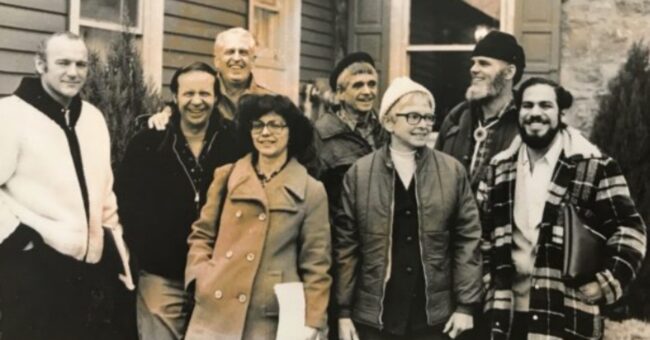
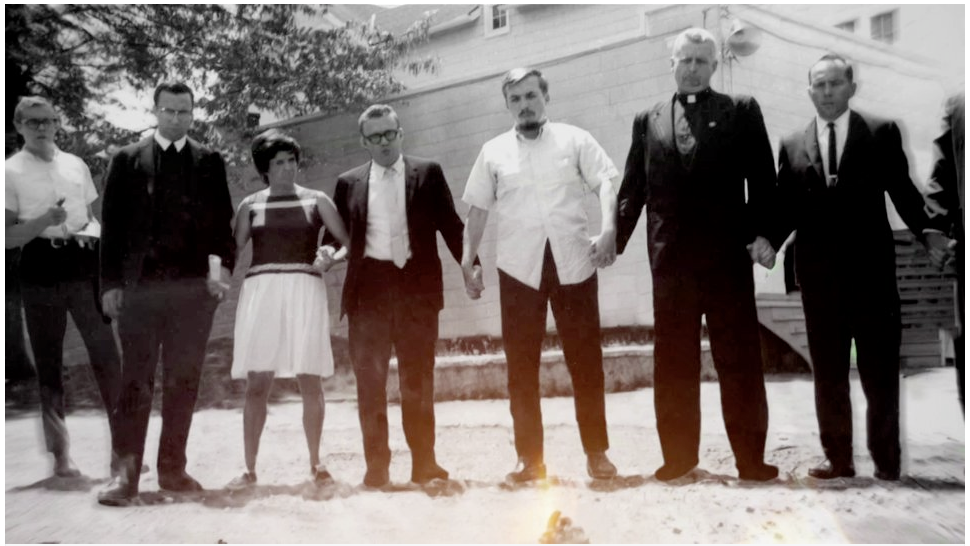
The Plowshares Eight, from left to right: Fr. Carl Kabat, Elmer Maas, Phil Berrigan, Molly Rush, Fr. Dan Berrigan, Sr. Anne Montgomery, John Schuchardt, Dean Hammer. Source: Waging Nonviolence
Describing the Plowshares Movement, Frida Berrigan, daughter of Plowshares Eight defendant Philip Berrigan (and Kings Bay Plowshares Seven defendant Elizabeth McAlister), writes,
It was largely white, largely Catholic and relatively small. Their purpose was to take personal responsibility for nuclear weapons — these implements of mass destruction shrouded in almost mystical secrecy and reverence — and label them improper property, converting, transforming, exposing, and ultimately abolishing them. Plowshares activists don’t just hold these views or espouse these beliefs. They conspire. They pray. They act through nonviolent means.
Over and over in the last 40 years, small groups of activists have gained entry to military installations, warships, submarines, missile silos, weapons manufacturer’s office parks and warehouses, air shows, communication hubs, and other sites. They have carried bibles and banners, densely researched indictments, blood, hammers, and other household tools. More than a hundred of these actions have happened since the Plowshares Eight, and the activists involved have cumulatively spent lifetimes in jails and prisons. . . .
That first Plowshares action set off a chain reaction. Over the last 40 years, there have been more than 100 similar actions. People are attracted to, and inspired by, the alchemic mixture of symbolic disarmament and real transformation that carries through the action, jail witness, courtroom saga, and time in prison. It is a long haul commitment that measures effectiveness in the ineffable stirrings of conscience, the trim-tab turnings toward nonviolence, new strands of conversation and musings — rather than in Senate bills passed, dollars raised, or ground gained.
In April 2018, the Kings Bay Plowshares Seven broke into the Kings Bay Naval Base in Georgia and sabotaged weapons of war on the 50th anniversary of Martin Luther King’s assassination. Watch a Democracy Now! interview with Kings Bay Plowshares Seven defendants Martha Hennessy, Carmen Trotta, Patrick O’Neill, and Clare Grady below.
Additional Resources
Plowshares: Protest, Performance, and Religious Identity in the Nuclear Age by Kristen Tobey
Hammer of Justice: Molly Rush and the Plowshares Eight by Liane Ellison Norman
After 4 Decades of Plowshares Actions, It’s Nuclear Warfare that Should Be on Trial — Not Activists by Frida Berrigan (Waging Nonviolence)
The Plowshares Eight: Thirty Years On by Mary Anne Muller and Anna Brown (Waging Nonviolence)
Reflections on Plowshares Eight by Dean Hammer (ROOM: A Sketchbook for Analytic Action)
Plowshares Disarmament Chronology 1980–2018
Watch a shorter National History Day 2018 documentary by Mason Brooks and Alejandro Kulick below, and also check out a longer documentary, In the King of Prussia: The Trial of the Plowshares 8 by Emile de Antonio.




Twitter
Google plus
LinkedIn