

On Monday, April 13, historian Matthew Delmont joined Rethinking Schools executive director Cierra Kaler-Jones to discuss his latest book Until the Last Gun Is Silent: A Story of Patriotism, the Vietnam War, and the Fight to Save America’s Soul.
Delmont tells the story of the Vietnam War through the lives of Coretta Scott King and Dwight “Skip” Johnson and includes the history of schooling in Detroit, SNCC, Winter Soldier events, the 1968 Democratic National Convention in Chicago, the Fort Hood Three, the massacres at Jackson State and Kent State, racism in the military, the Tet Offensive, Rep. Conyers, PTSD, and much more. (Watch our previous Teach the Black Freedom Struggle online classes and register for upcoming classes here.)
In the audiogram below, Delmont discusses why it is important to show students that anti-war and civil rights struggles have long been intertwined — and that a more just future is possible.
Participants shared what they learned and additional reflections on the session:
I really appreciated the way Dr. Delmont highlighted that the Black critics of the war often had the sharpest understanding of how imperialism abroad was/is intimately connected to unjust systems and poverty at home.
I was unaware of how involved Black people were in the anti-war movement, especially Coretta Scott King. I also was unaware of the Project 100,000 to intentionally send Black men to the front lines as a means to sabotage the Civil Rights Movement.
This will make me a better teacher. Better thinker. Better citizen.
Event Recording
Transcript
Click below for the full transcript with resources mentioned in the discussion.
Transcript
Cierra Kaler-Jones, she/her: I am very honored and happy to welcome historian Matthew Delmont. He is the Sherman Fairchild Distinguished Professor of History at Dartmouth College, and the author of six books, including Until the Last Gun is Silent, which we’ll be discussing today. An incredible, fantastic resource. Also Half American, which we have been in conversation with Matthew Delmont about before in this series, and also Why Bussing Failed. He is a generous ally of people’s history teachers, and he’s gotten copies of Half American and Until the Last Gun Is Silent into hundreds of classrooms across the United States. So, Matthew, we’re so grateful for you, we’re grateful for your scholarship, and also for you being an ally to us in this people’s history work. Welcome.
Matthew Delmont: Thank you so much for the nice introduction, Cierra, and it’s great to see everyone here this evening, and see all the people chiming in in the chat. I really appreciate you taking time to join the conversation this evening, and I’m just a huge fan of the Zinn Education Project and everything that you all do, and so happy to be in collaboration with you.
Kaler-Jones: Thank you, thank you. Now, before we dive into the book, can you help us set the stage for readers, for our audience members, by briefly explaining the broader context of the Vietnam War? How Vietnam’s struggle for independence from French colonial rule evolved into a U.S. Cold War intervention, and how the set at home was often criminalized and stigmatized
through McCarthyism and accusations of disloyalty. And then from there, what made you want to write this book right now? What was the impetus for this book right now?
Delmont: Important questions and a good place to start. So, France colonized Vietnam in the late 1800s, and there were various national movements over the early 20th century where Vietnamese were pushing back against that colonization. During World War II, when France fell, they briefly lost control of Vietnam, but almost immediately after the end of World War II, they fought to try to get that control back. And so, from the end of World War II until 1954, France was at war with Vietnam, trying to regain Vietnam as a colonial possession.
And to zoom out a little bit, I think as most teachers know, that period after the end of World War II is a period where the maps are literally being rewritten, particularly in Asia and Africa and Latin America. You have the formal colonial powers, France, Great Britain, the United States, trying to lay claim to different parts of the globe. At the same time, the Soviet Union is trying to lay claim to certain parts of the globe, as well. And then the countries that we broadly refer to as the Third World were trying to seek a different way, trying to establish their own national priorities, their own national identities, and not have to choose sides in the Cold War. And so Vietnam was certainly in that category.
By 1954, they’re successful in fighting off the French. They defeat this massively resourced colonial power and are able to briefly claim independence. The U.S. is on the scene and helps to set up a puppet regime in South Vietnam. It’s during that Cold War period where, under President Eisenhower, he establishes the domino theory where he sees the potential for any nation to become a communist nation to be a potential threat to U.S. interests. And so, while Vietnam is a relatively small country, one could say, why does this matter for the United States? The reason it matters for politicians and people in power in the 1950s is they think, well, if Vietnam turns communist, then that’s going to be a series of dominoes that’s going to potentially threaten U.S. interests over the long term. So that’s why the U.S, by the late 1950s, early 1960s, started to send increasing numbers of advisors and eventually more military personnel there to try to determine the direction that the country was going to take over the 1950s.
In the early 1960s, you had activists across the United States pushing back against this, saying, what business do we have trying to determine the direction another country’s going to take? And if this sounds familiar to people today, it should. It’s a lot of the same questions about what are the boundaries around which the United States should be trying to implement foreign policy and make determinations about the political choices that other countries are going to make. The context in which activists like Coretta Scott King, Martin Luther King Jr., and so many others were operating, though, in the 1950s and 60s, was that almost any movement that was against the politicians in power in the United States was seen as being sympathetic to Communism. The Cold War binary was either you’re with us or you’re against us. So there was tremendous scrutiny and harassment and, in some cases, violence against people who raised their voices against the kind of interventions that the U.S. was planning to stage and eventually did stage in Vietnam.
So that’s a very kind of rapid 10,000-foot level overview of how the U.S. got into Vietnam. In terms of why I wanted to write the book, my last book project was on World War II, the Black experience in World War II. At this point, I’ve given almost 100 presentations on that book, and as I was talking about that book and explaining the complicated experience of Black men and women who served in the military during World War II while it was a segregated military, I kept getting questions about how the story changed by the Vietnam era. So it made me curious to explore and trace the story forward, trace the story of dissent and patriotism ahead a generation into the Vietnam War. And from there, I knew I wanted to focus on an anti-war part of the story, and then a military part of the story. I want to credit my friend and fellow historian, Jeanne Theoharis, who’s on the call tonight, for being a thought partner and thinking about the incredible work and activism and legacy of Coretta Scott King. I really wanted to use Coretta Scott King’s story as an entry point to be able to talk about the larger anti-war story in the Vietnam era.
Kaler-Jones: Thank you. And thank you for writing this incredible resource. Thinking about everything happening today, and you’re making those direct connections, even in what you shared, thinking about how history continues to repeat itself, right? And that’s why there’s so much backlash against teaching the truth. And that’s why there’s also so much resistance in terms of all of the educators on the call who are teaching the truth about history. We have a strategy, we have a playbook to be able to think about more equitable and just futures.
You mentioned Coretta Scott King, and I’m so excited to talk more about her. In the preface to Until the Last Gun Is Silent, it opens with Martin Luther King Jr. acknowledging that Coretta often educated him politically and morally. You also write about her role in the anti-war movement, as you shared, and standing before half a million people at the moratorium Coretta declared, “We have been told we cannot afford the humiliation of withdrawal. I feel that even less can we afford the humiliation of pursuing a war for ignoble ends.” So, how do you see Coretta’s leadership helping to really legitimize and broaden and deepen the anti-war movement? And why was it important to challenge this conventional narrative of Coretta as the “supporting cast” rather than as a co-architect of movement leadership?
Delmont: One thing I found when I got into the sources is that so many people talked about the importance of Coretta Scott King being at these rallies, being at the podium and speaking, or helping to lead marches. What they said is that she made people feel emboldened to be able to speak up and raise their voices, that it made it possible for people to be brave together. And I think when you look at how many protests she led in the 1960s, into the early 1970s, just focusing on the anti-war piece, it’s remarkable that she was truly at the forefront of almost every major protest in the Vietnam era.
I think one of our jobs as historians is to go back and look at the primary sources from the era. So I spent a lot of time looking at newspaper reports on these marches, particularly where she was involved. And one of the things that was interesting when going back to look for these sources is when you search in these digital newspaper databases for Coretta Scott King, you get about 300 results. When you search for Mrs. Martin Luther King Jr., you get three times that number. Because that’s how she was referred to in the parlance of the era. And so one of the key things for scholars is to understand how to look back in the past to find all these sources.
But once you start to find all these different examples, month after month after month, she’s leading rallies and speaking at marches. You get a sense of how many people identified her as one of the leading voices of the time speaking out against the war. I think part of the importance of re-centering her at the forefront of this movement is it gives us a more accurate and honest sense of who is helping to galvanize people. It certainly isn’t the case that she was the only anti-war activist, but I think she helped to bring a wider demographic array of people into the streets. And she was conscious of this. She was willing to accept invitations from almost any group that she felt like she could help to activate. She spoke to beauticians, she spoke to college students, she spoke to doctors and lawyers and spoke at churches all across the country, combining it with her work singing to raise money for the Civil Rights Movement, as well, with these freedom concerts she would give.
So I think what was impressive for me, going back and trying to immerse myself in that history, is just how tenacious she was at trying to speak to as many people as possible, how clear-eyed she was about the dangers of the Vietnam War, and the cost of the Vietnam War. I think that’s one of the points she kept coming back to, is that this war has a tremendous cost to the country, both in terms of the moral values that the country claims to hold, the prestige that the country would have internationally, but also the economic cost. She kept coming back to, if we’re going to spend these billions of dollars to fight this war, that’s money that’s not being spent here in the United States on healthcare, on jobs, on food, on homes — things that were deeply important to average Americans.
So, I think to sum up that piece, it was the people who described her, and also Martin, as being kind of an umbrella that made people feel safe to protest against the war. I think it’s easy when we look back at the Vietnam era to think, oh, it’s obvious that everyone was going to stand up against the war. But early polling that was done in 1965 said that fewer than 1 in 10 people felt comfortable protesting publicly about anything, and of that 1 in 10, fewer than 1 in 10 felt comfortable protesting their own government about the war. So it took months and months and years and years of activism to get people to feel comfortable speaking out against this war that was costing the U.S. so dearly.
Kaler-Jones: Wow. As you’re talking, and after reading the book, too, I just have so many different teaching ideas that are being sparked, and even thinking about looking in the archives, and looking at the different types of search terms, and having students interrogate why you would get more responses from Mrs. Martin Luther King Jr., as opposed to her name, Coretta Scott King. I’m also thinking about the cost of war as being an exercise or an activity that students might be able to do to think about this. What does that mean in terms of the budget of the country, and what does that mean, and where is the money going, and how we’re taking away money from important things like education and putting it towards war. So many sparks.
Delmont: Yeah, I love the sparks, right? We’re history nerds, we love to sort of get into that. If I can add one thing there, part of what I think is so powerful is thinking about all the different rhetorical devices and examples and frameworks one can use to try to persuade people that this is wrong. That’s what’s powerful about having to get up in front of 1,000 people, 10,000 people, and convince them that this is something that they need to be concerned about.
One other anecdote I would share in terms of newspapers is that a lot of the reporting on Coretta Scott King showed up in what were called the women’s pages within the newspapers. They weren’t in the foreign policy section, where the “serious” world news was, but they would be in the women’s pages. But those are fascinating articles to have students read, because they cover a gamut of Coretta’s life. They talk about what it is like to be a mother while Martin’s traveling all the time. They talk about some of her own health issues, and then immediately they’ll say, “and I noticed you were talking to 18,000 people at Madison Square Garden last weekend?” So, getting students to follow these, this is where this news was showing up, in that era. It’s kind of eye-opening for them.
Kaler-Jones: Yeah, absolutely. That’s fascinating. Thank you. In your book, you show how Project 100,000 was designed to bring hundreds of thousands of poor and working-class young men, disproportionately Black, into the Vietnam War under the guise that military service could socialize the youth and reduce unemployment. You also note that Robert McNamara insisted the program was succeeding beyond even our most hopeful expectations. But your research reveals something very different. Through the story of Skip Johnson, a young Black man from Detroit who became a decorated soldier and public symbol of heroism, even as he was deeply traumatized and ultimately destroyed by the war, we see the gap between rhetoric and reality, as we were just talking about. So, how does Skip Johnson’s experience complicate McNamara’s claim of success? And what do we learn when we place these confident promises alongside the lived realities of young men and communities who bore the human costs of this policy?
Delmont: The other key figure I tell this story through is Skip Johnson. I try to talk about the military history side of the Vietnam War, particularly the Black and working-class experience of the war, through a story of a man named Skip Johnson, who won the Medal of Honor for his heroism in Vietnam, but had a very challenging return to the country. He’s one of the first people to be diagnosed with what they later called PTSD. He was an average young man from Detroit who grew up in the Jefferies Housing Projects, and was drafted in 1966, almost immediately after he graduated from high school.
For people who might not have heard of Project 100,000, it’s a really fascinating and troubling moment in the history of the Vietnam War that would connect to lessons you might use on the culture of poverty debates. Because for leaders in the White House at the time, including McNamara, they saw Project 100,000 as a way to address unemployment. They saw what they considered to be particularly young, Black men, other poor men, in what they call the culture of poverty. And they thought one solution to this would be to draft more of them to be able to serve in the military. They thought they could address two things at the same time — address unemployment, but also get more men serving in the military.
Through Skip Johnson’s story, I try to personalize that sense of military service. I think when they were thinking about Project 100,000, they were thinking about manpower. But each of those young men that were drafted to serve in the war was an individual story. It was a life that was risked and inevitably changed by being asked to serve, fight, in some cases die, in the Vietnam War. Part of Skip Johnson’s story also reveals that the military was concerned about sending these young men off to war, but gave very little consideration to them returning to the United States when they were veterans.
Skip Johnson, when he got back, wanted to be able to go to college. He wanted to be able to get a college degree and become a computer programmer. That was one of the hot careers in the late 1960s. He thought that would be a way to get out of poverty in Detroit. But even though he had served his country for a year, the army didn’t have anything to offer him in terms of future employment. After he received the Medal of Honor, then they see the power of him as a symbol, and they sign him up to be a military recruiter, send him to all these different high schools and corporations to kind of tout the heroism of this young Black man in Vietnam. But even still, they’re not paying attention to the trauma and the psychological wounds he experienced during the Vietnam War. So through Skip Johnson’s story, I’m trying to talk about the costs of the war, the broader impact that the war had on so many thousands and thousands of young, working-class men from all across the country, from across different racial and ethnic backgrounds, and how they were asked to sacrifice so much for the country that gave so little back to them when they returned as veterans.
Kaler-Jones: Yeah, absolutely. And not just the cost in terms of the economic cost, but the cost of people’s lives and of humanity, and our ability to connect with each other. Your book certainly highlights the anti-war activism of Coretta Scott King, but it also reveals a much broader ecosystem of activists, from SNCC organizers to clergy to veterans groups, who insisted that opposing the war was both a moral and political necessity. So, can you talk about the coalition of Black organizers who built opposition to the Vietnam War, and how their work helped shape both the anti-war movement and the broader Black Freedom Struggle?
Delmont: Yeah, I really love that question, because while Coretta Scott King is the most prominent story I use in the book, I try to weave in a number of other stories to give a sense of that broader coalition of voices that emerge. So, some of the people I’d highlight: One was General Baker in Detroit, who was an activist in the auto industry, a labor activist in Detroit. But he was one of the first people to publicly refuse his induction into the military. As a young man in Detroit, he wrote this powerful open letter where he said, “I will not serve for this country that has,” I think the phrase he used was “blood on its fangs,” that he is part of this colonial project. He wants to do something about that. He wanted to see freedom in South Africa. He wanted to see freedom in Detroit. He wanted to see freedom in Georgia. And so, again, it’s a wonderful primary source. But it in the course of about 500 words, it articulates so powerfully how he was connecting what he was experiencing locally in Detroit to what was going on, not just in Vietnam, but in Zimbabwe, in South Africa, in Latin America, and how this was all part of a larger colonial project, and decolonial project, that he was trying to make.
I also talk in the book about local activists in McComb, Mississippi, who were among the first youth activists to speak out against the Vietnam War. They helped to influence SNCC, the Student Nonviolent Coordinating Committee, to issue their first public statement against the Vietnam War. This was in late 1965, early 1966, and [it was] tremendously controversial at the time, because it was seen as being potentially treasonous to declare that they not only were not willing to go to war, but they were advising other Black Americans not to submit to the military draft. So getting these perspectives and voices out in public not only galvanized the stories showing up in the media, but it helped to influence conversations that were happening all across the country. These were things that local high school students and college students were talking about in all different parts of the United States.
From SNCC, I talk about Julian Bond, who you mentioned earlier, who is one of the key leaders of SNCC. But also, once he gets elected to the Georgia legislature, his position against the war via SNCC gets him blocked from being able to take a seat as an elected official in Georgia. He’s one of the first politicians that runs a real political risk for having spoken out so powerfully against the war. Then, bringing it back to Detroit, I talk about John Conyers, who is one of the key congressmen, one of the first Black congressmen, nationally, but one of the first from Detroit, who even as a freshman congressman was willing to stand up to his own party, President Johnson, and speak out against the war. Coincidentally, John Conyers went to the same high school that Skip Johnson, the young man I talk about on the military side, went to as well. And so, Skip Johnson would have seen John Conyers speak at his graduation, saw him around Detroit, and that would have been one of the perspectives that he understood as being a person speaking out against the war.
I think what’s important about all those different Black voices speaking out against the war is, one thing people kept coming back to was that they understood the danger of the Vietnam War because they understood America so clearly. They were always connecting the Black Freedom Struggle, the Civil Rights Movement, with the Vietnam War. I think it’s easy to teach those things as being separate issues, separate groups of activists, but for the people I’ve just mentioned, these were always intertwined. And they’re intertwined because they understood that these were people’s lives that were being shaped by the same currents. The people who were protesting against civil rights were also at risk of being drafted into the Vietnam War and being asked to fight, potentially die, for a country that, just as in World War II, didn’t yet treat them as first-class citizens, and still treat them as half-American.
I think for us as educators, giving students the opportunity to see that these were not separate movements. I think there’s a danger when you focus just on the white college students who protested against the Vietnam War, whose stories are certainly important. If you focus just on those stories, you can get a sense that that was somehow a parallel and separate movement from the Civil Rights Movement of the same era. But bringing in more Black voices gives you a sense that these were clearly intertwined stories.
Kaler-Jones: Yes, absolutely. All of the systems and structures of oppression are intersecting, as are our experiences, absolutely. You talked about Coretta Scott King, and you also re-mentioned Skip Johnson, and they both push us to rethink patriotism, not as symbolic loyalty, but as a commitment to justice, economic dignity, and truth. So, in that sense, they stand in one central tradition of the Black Freedom Struggle that has really tried to redeem and redefine American democracy. But there’s another powerful tradition within Black radical and anti-imperialist movements that rejects patriotism as a framework altogether, maintaining a deep skepticism of the nation-state, even an improved one, as a vehicle for Black liberation. I’m really interested in what you think about how you see Coretta Scott King’s politics and the stories in the book really sitting within this tension between redefining patriotism and also just stepping beyond it entirely.
Delmont: It’s a great question. I think the way I would frame it is in a both-and framework. I think from the time she was a college student, Coretta Scott King had broad, global views about the importance of freedom and justice, and so she was never one who was confined just within the nation-state, or just within a simplistic notion of the bounds on which someone should be trying to act, and the bounds in which people are accountable. At the same time, I think she did care deeply about the construction that is America, and sought and kept coming back to this framework of this country belongs to us, we have equal claim to this country, both its myths, its ideals, but also, as a practical matter, its resources. That was part of what the fighting for the War on Poverty was about. It’s part of what the Poor People’s Campaign was about, making claim that the nation-state, for all its flaws, has resources that we’ve paid into, that we’ve helped to build. We deserve those resources back to us in ways that will help to nourish our communities.
So when I think about her redefining patriotism, it was about a broader, inclusive, multiracial democracy in the United States that would truly value the lives and well-being of all people, and taking care of their basic needs. When you get into some of her work on economic policy in the 1970s, I think she was thinking in pretty advanced ways about what it means to create a peacetime economy that would actually serve average working-class Americans. When I think about redefining patriotism for her, I think about that. At the same time, like I said, she was never bound by strictly the nation-state. She kept coming back to these ideas of freedom and justice globally. She had a globally-minded politics. I think that’s where she would reject patriotism as the sole container of anyone’s politics.
Again, I want to credit Jeanne Theoharis for continuing to push me and think in this way. But after Martin Luther King received the Nobel Prize in 1964, Coretta really saw that as a challenge to both of them, to broaden their horizons and broaden their framework. That it wasn’t just about civil rights in the United States, but it was truly about human rights, freedom, and justice globally. We think about all the international travel she did from the 1950s into the . . . I mean, for the rest of her life, really. She was consistent with that approach, that she wanted to make connections to activists internationally, and wanted to form alliances with people who shared those values of freedom and justice globally. Again, I would try to frame it as both-and in terms of patriotism, that patriotism in a complex, nuanced, forward-looking, open way that tries to redefine what it means to be American, but also make claim to it, but then not allow that to be the container of one’s politics or ambitions.
Kaler-Jones: Absolutely. Thank you for that. Before we head into the break, another question. Black leaders like Dr. King and Julian Bond really paid a real price for telling the truth about Vietnam. And as you show in the book, Bond’s election to the Georgia legislature, as you talked about earlier, was effectively overturned when lawmakers refused to seat him. And because he spoke out from the war, we’re seeing a lot of that backlash again today with the doxing and the determination of educators who are teaching the truth. So, why was criticizing U.S. militarism seen as such a political threat, and what does that backlash actually reveal about U.S. power?
Delmont: I think the criticism of U.S. militarism and foreign policy more broadly was seen as a political threat in part because the people in power in the era, and again, this will sound very familiar, were incredibly thin-skinned. The two politicians I talk about most prominently in this book were President Lyndon Johnson and President Richard Nixon, who were different in many ways politically. But in terms of their leadership styles, they were very clearly, either you’re with me or you’re against me. And if you’re against me, I’m going to do everything within my power to destroy you. That’s one thing that Martin Luther King understood clearly, and it’s why it was so difficult for him and other Black activists to speak out against the war, because they formed strong partnerships and were able to get real advances in terms of civil rights legislation when they were able to partner with first Kennedy and then later Johnson. But they understood that if they crossed him at all on the war, even said some of the most mild criticisms, he would cut them off and potentially end his support for civil rights activism and his support for the war on poverty.
Thinking about King, I think most people are familiar with his “Beyond Vietnam” speech at Riverside Church in 1967. But one of the things I talk about in the book is that he started to make some preliminary comments against the war in 1965. He raises concerns about it, and this gets picked up in the press. Senator Dodd from Connecticut attacks King in all the major newspapers and basically says, “What are you doing, as a civil rights activist, stepping out of your lane, speaking out against the Vietnam War? This is foreign policy. You don’t know anything about that. You’re a domestic person, right?” That is partly why King steps back in those next 18 months, doesn’t come out to speak out powerfully again against Vietnam until 1967, because he both understands the political stakes, but he’s also chastised for making very mild critiques of the war.
In terms of what that backlash reveals, I think it reveals some of the fragility of U.S. power. And again, it’s why it was so important that Coretta Scott King and others tried to drag this issue into the public. One thing that first Johnson, then later Nixon, wanted to do was make it impossible for anyone to question anything that the White House did with regards to foreign policy, or anything they did with regards to escalating the war. Foreign policy, regardless of where one falls on the political spectrum, these are things that citizens are meant to be discussing, debating in a rigorous, open way. At least that’s ideally how it should work. But it took activists to be able to forcibly drag those issues into the public forum to get newspapers and magazines and TV to actually start talking about them. Without those brave voices, it would be too easy for the White House and its PR apparatus to just determine the entire contours of how the debate was going to unfold.
Kaler-Jones: Yeah. Wow, that’s so helpful for us, and I’m also looking in the chat, too, and just want to lift up Judy Richardson in the chat [who is] offering some of her personal experience as a SNCC veteran organizer. She was talking about how Julian Bond was SNCC’s communications director. After he entered electoral politics and won his seat two times, the white supremacist Georgia House still refused to allow him to be seated. It took the Supreme Court to mandate it. And she continues that Julian Bond was denied the seat because he refused to disavow SNCC’s anti-Vietnam War statement. So, we’re seeing, too, in the chat, everybody’s talking about deja vu, making those connections between history and what’s happening today. So, thank you for this really important information and for this resource.
[breakout rooms]
Kaler-Jones: Welcome back, everyone. You write about the Winter Soldier investigation becoming a powerful moment of courageous veteran truth-telling, where Black and working-class soldiers publicly challenged the myths of heroism, patriotism, and necessary war that the nation depended on. Winter Soldier forced Americans to confront the moral and human costs of Vietnam for the Vietnamese and for U.S. soldiers, many of whom returned home carrying trauma, guilt, and betrayal that the country rarely acknowledged. So, how do you see Winter Soldier really reshaping the national understanding of the Vietnam War, and what does that moment reveal about the power of veterans really speaking the truth about what they were asked to do in America’s name, which we’re seeing a lot of today as well.
Delmont: The Winter Soldier investigations, if people aren’t familiar with them, was three days of panels organized in Detroit in early 1971 that brought together more than 100 veterans that were testifying directly about what they experienced or witnessed in Vietnam, some of the atrocities that they either saw or, in some cases, participated in. It was powerful for a couple reasons.
One, it was one of the first and largest public accountings of what was happening in Vietnam. There had been isolated media reports previously, isolated veterans who had been talking, but this was one of the largest times when veterans were together speaking about this. It was organized by the Vietnam Veterans Against the War, which is the largest veterans organization to speak out against the war. They held large and really important protests, including medal protests, where veterans were throwing the medals that they’d received in Vietnam back on the steps of buildings in Washington, D.C.
The other reason the Winter Soldier investigations were really important, and the larger organizing that Vietnam Veterans Against the War did, is that it was actually a chance for veterans to process some of what they experienced. A lot of the early work about the mental trauma that veterans experience was actually veterans talking in community with other veterans, because they felt like they were the only people who could actually experience and understand what they had experienced there, and actually be able to listen to each other. They call these rap sessions or rap groups that formed first in major cities like New York, Chicago, Detroit, Los Angeles, but eventually started to spread all across the country. The Winter Soldier investigation, again, can be a great source of primary sources because it’s one of the first public accountings of what was going on in Vietnam, but it also demonstrates veterans trying to process through some of their own traumatic experiences in the war.
Kaler-Jones: Thank you. After years of being publicly celebrated but privately abandoned, Skip’s partner and later widow, Katrina May, fights tirelessly to have the government finally recognize what the war actually did to him, emotionally, psychologically, and morally. We’re seeing, again, this resistance that you were talking about, and also through the lens of their partners and the people that care about them, their families and their communities, speaking out. So, can you talk about what ultimately comes out of her struggle, and how that moment reshaped not only how we remember Skip Johnson, but also the national understanding of the Vietnam veterans’ PTSD, and the responsibility the country owed to those who sent it to war?
Delmont: As I mentioned earlier, Skip Johnson is the story used to tell the military history part of the war, and if you were to Google Skip Johnson’s name, you would find some stories about him online already. You’ll find his bravery that earned him the Medal of Honor, and then you’ll find an incident later in Detroit when he came home where he was killed in a convenience store in an attempted robbery. Once I knew about some aspects of Skip Johnson’s story, I knew I wanted to try to tell a broader and fuller version of his story. And I have to give a huge amount of credit to Katrina May, who’s this fabulous, feisty, dynamic woman. She’s in her late 70s now, lives in suburban Detroit, and is Skip’s widow. She was kind and generous enough to share her experience with me of falling in love with this young man.
They met when they were teenagers in Detroit. She was just 15 years old when he first asked her out, and one of my favorite parts of the book is that she initially didn’t want to go out with him because she said, “I was too busy playing baseball on the streets to want to go out with this 16-year-old. What do I need a boyfriend for?” I tell this story about how they fell in love through letters when he was deployed to Detroit, how they got married when he came home, how she tried to stand by him while he was spiraling through this despair and the health and psychological issues he was experiencing after Vietnam. And then after he’s killed, how she fights for his legacy.
Initially, because he dies in Detroit, his death isn’t considered to be in the line of service. So in terms of widow benefits from the army, she gets $100 a month, rather than $300 a month, like it would have been if he had died in Vietnam. And she actually fights this case. She works with a lawyer to fight against the VA to make a case, and the first person to successfully do this, make the case that his death was service-related because he was suffering from, what they call it at the time, post-Vietnam syndrome. what they later call PTSD, post-traumatic stress disorder, when he was killed. She’s eventually successful in winning that case in 1977. She says it ends up being about $3,000. It wasn’t about the money, it was about trying to show that this war cost her the man that she loved. It costs her the father of their child. She was just 21 years old when she became a widow. Their son, Christopher, was a year and a half old.
I think a throughline in our conversation has been the cost of war. Part of the cost of war wasn’t just Skip’s tragic death, but it was Katrina who had to live the rest of her life without the man that she loved, without the father of her young son. Katrina is still with us today, thankfully, but one of the last times I interviewed her for the book, I asked her, “What would things have been like had Skip still been around?” And it was just the mundane, quotidian aspects of being able to grow old with the person you love, right? She said she wished she could go to a Detroit Tigers game with him. That’s part of the cost of the war. Skip’s name doesn’t appear on the Veterans Memorial in D.C., but his life was ended because of the Vietnam War. But like so many of those names that are on the Vietnam Memorial, there are sons and daughters and aunts and uncles and wives and partners and husbands of the people who died in the war whose lives were also inevitably, irrevocably changed because of the war.
Kaler-Jones: Yes, thank you. And thanks for lifting up his story, her story, their story. One of the beautiful parts of this book, and also of Half American, is just the way that you lift up the individual stories. Speaking of that, I just want to lift up a couple of things that are coming up in the chat. Sarah L says the accessibility and the empathy that comes from history that both zooms in and zooms out, like Matt’s works, and spotlighting stories that resonate and reflect the historical moment, as well as connect to current events. So we just love how you zoom in and zoom out, giving us this historical context, but allowing us to really be in the story with the individual. And same thing, Mark Levy, one of our facilitators, says one of the things that both of your books have shown for us, the Until the Last Gun Is Silent and Half American, is how teachers can take historical moments and academic theory to teachable and personal stories, understandable by students of all ages.
As we get into our last question that we have for you, throughout this book, you really raise urgent questions about responsibility, what a nation owes to its soldiers, to the poor and working class communities disproportionately sent to fight its wars, to the movements that challenge militarism and injustice. Skip’s life, Coretta’s leadership, and the courageous work of veterans, clergy, community leaders, and student groups like SNCC all push us to rethink how we can understand American wars and their consequences. So, at a time when the U.S. continues to project military power across the world, from Gaza to Iran to Venezuela to Nigeria and everywhere else and beyond, what do you hope students today can take from this history?
Delmont: My greatest hope is that students will understand that different futures are possible. And that when we see so much that’s in the news that can be so disheartening and can make us feel so disempowered, that I think one thing history can provide us as a guide is recognizing that some of what we’re living through today is not new, it’s very old. IT doesn’t make it easier to have to live through it, but it’s been going on for a number of years. We owe a great debt of gratitude to people who’ve fought these battles in the past, and we owe it to them to keep fighting these battles into the future. When we think about some of the things that have been in the news recently, it was disheartening, so many things have been disheartening that come out of the White House currently, but when President Trump was saying we don’t have money for healthcare or for daycare, we only have money to fight wars, right? And just putting it that blankly.
In our small chat group, Jeanne Theoharis was saying, you could have a quote from Coretta Scott King about the war every day for months and months and months, and that was one where I thought, you know, this is exactly what Coretta Scott King was speaking out against. This idea that we have to choose between having a military and having taken care of the needs of people at home. These are choices where we can, collectively, as a people, make a different set of choices. We can help students understand that different futures are possible. You don’t have to be boxed into a never-ending cycle of war. In most of my adult life, the country has been at war. It doesn’t seem that our leaders are going to take us in a different direction.
If we want the country to make different choices in terms of how it’s spending its resources, Coretta Scott King and so many others can be one of the historical examples we can point to. For Skip Johnson’s story, I take seriously the fact that we’ve been at war for so long that military servicemen and women who are disproportionately coming from working-class backgrounds and their families are bearing a disproportionate cost of those foreign policy decisions. When we see the people who are losing their lives in these military misadventures, those are real individual lives, with real individual loved ones and families that go along with them. Skip Johnson’s story is one story from the Vietnam era that I think is a prelude to so many people who’ve lost their lives in the wars on terror in Iraq and Afghanistan. I think it’s also important [to note that] Skip Johnson was 18 years old when he got drafted. He’s not much older than our high school students. He was the same age or younger than my college students here at Dartmouth. Helping our students today see that these are real, active, live issues, that it’s not just a matter of when you say you’re sending the military somewhere, it means you’re sending actual people — classmates and sons and daughters and future neighbors and parents and whatever else. That’s the level of the potential human cost of the foreign policy decisions we’re making.
So, for me, it’s about helping students understand that different futures are possible. I’ll just conclude by saying how much I respect and admire the work that all of you do as fellow educators, willing to take the time to think through these histories and share these histories with as many people as possible. It’s why I’m so glad to be able to collaborate with the Zinn Education Project. At a time when books, including Half American, have been banned from different libraries, banned from different contexts, we’re willing to work together to try to make sure that people are teaching the truth of what actually happened.
Kaler-Jones: Absolutely. Thank you. Thank you so much for your stories, for your wisdom, for your insights, and for your generosity. We’re so grateful to be able to be in conversation with you, and also so grateful to be able to share your book as a trusted and important resource for so many educators across the country.
While this transcript was edited, there may be minor errors or typos — if you notice something you believe to be incorrect, please contact us at [email protected].
Audio
Listen to the recording of the session on these additional platforms.


Resources
Here are many of the lessons, books, and other resources recommended by the presenters and participants:
Lessons
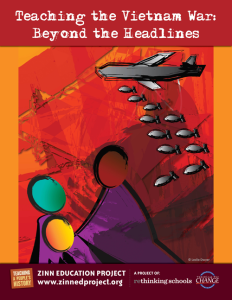 |
Rethinking the Teaching of the Vietnam War by Bill Bigelow Teaching the Vietnam War: Beyond the Headlines a teaching guide A Revolution of Values by Rev. Dr. Martin Luther King Jr. |
Books
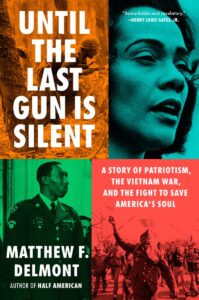 |
In addition to Until the Last Gun Is Silent: A Story of Patriotism, the Vietnam War, and the Fight to Save America’s Soul (Viking), the following books were referenced.
Half American: The Epic Story of African Americans Fighting World War II at Home and Abroad by Matthew Delmont (Penguin Books) King of the North: Martin Luther King Jr.’s Life of Struggle Outside the South by Jeanne Theoharis (New Press) Soldiers in Revolt: GI Resistance During the Vietnam War by David Cortright (Haymarket Books) |
Articles
|
|
Camouflaging the Vietnam War: How Textbooks Continue to Keep the Pentagon Papers a Secret by Bill Bigelow (from the If We Knew Our History Series) W. E. B. Du Bois to Coretta Scott King: The Untold History of the Movement to Ban the Bomb by Vincent Intondi (from the If We Knew Our History Series) Don’t Overlook Coretta Scott King: Nick Hilden interviews Matthew Delmont (Jacobin) |
Films
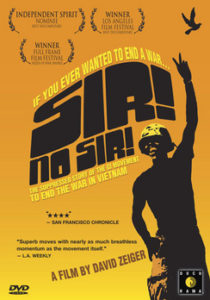 |
Sir! No Sir! by David Zeiger The Boys Who Said No by Judith Ehrlich The Most Dangerous Man in America: Daniel Ellsberg and the Pentagon Papers by Judith Ehrlich and Rick Goldsmith Regret to Inform by Barbara Sonneborn |
This Day In History
The dates below come from our This Day in People’s History collection, which contains hundreds of entries all searchable by date, state, theme, and keywords.
|
|
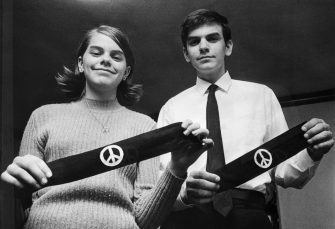
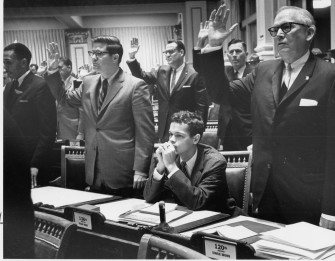
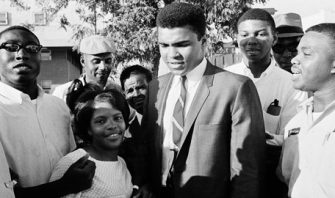
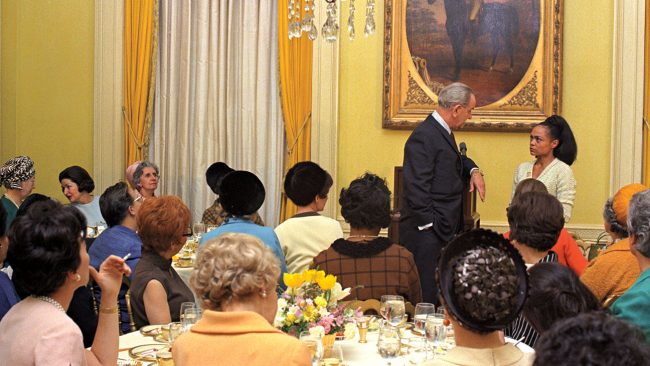
March 24, 1965: Anti-Vietnam War Teach-in at University of Michigan Dec. 16, 1965: Students Suspended for Anti-War Armbands Jan. 3, 1966: Sammy Younge Jr. Murdered Jan. 19, 1966: Georgia State House Refused to Seat Julian Bond June 30, 1966: Fort Hood Three Release Public Statement on Vietnam Refusal April 4, 1967: Martin Luther King Jr. Delivers “Beyond Vietnam” Speech May 10, 1967: Army Captain Howard Levy Refuses to Train Green Berets During Vietnam War June 1, 1967: Vietnam Veterans Against the War Founded June 20, 1967: Muhammad Ali Convicted for Refusing the Vietnam Draft Jan. 18, 1968: Eartha Kitt Spoke Truth at the White House April 26, 1968: Kiyoshi Kuromiya Led Protest of Vietnam War Napalm Aug. 29, 1968: Prisoner-led Uprising at Long Binh Jail in Vietnam April 22, 1969: Student Strike Shuts Down City College of New York May 4, 1970: Kent State Massacre May 15, 1970: Jackson State Killings April 30, 1975: End of U.S. War Against Vietnam |
Participant Reflections
With more than 125 attendees, a poll of participants’ pimary roles in education showed 43 percent K–12 teachers, 19 percent teacher educators, 8 percent historians, and more.
Here are more comments that participants shared in their end-of-session evaluation:
What was the most important thing (story, idea) you learned today?
The Winter Soldier Investigation — I feel like these panels would be just as important today. We still train soldiers to dehumanize “the enemy” and, according to my friends and family who have served, we do not do any work to reverse that way of viewing the world.
I really want to dive deeper into Coretta Scott King and her role in this time period — getting to know her more than Dr. King’s wife, but as an agent of change herself.
Coretta Scott King represented the misogyny and patriarchy that tried to keep women, including activist women, as supporting men as opposed to leading efforts themselves.
I had no idea about the statistics of how few people are willing to join protests. 10 percent?! And I want to look up Skip Johnson, too.
Both the newspaper search under Coretta Scott King’s names (great lesson in research for students), but also thinking about connections between Chicane anti-war activism (which I teach) and the activism of African American communities.
The Black vet, Skip Johnson, who succumbed to his PTSD. It’s so important to highlight that aspect of the violence of war and one most folks don’t think about unless they experience it personally through friends and family.
One of the most important things I learned was about Project 100,000 to address unemployment and more details about Mrs. Coretta Scott King. I will definitely add her story to my lessons in Social Studies 8 about women.
The story of Skip Johnson. And how society and the media make choices about how to memorialize women.
The importance of looking critically at the U.S. influence of power, and the bravery of Coretta Scott King in speaking out against the war and helping to build the anti-war movement. In addition, the importance of supporting veterans and the deception that many veterans were given and how many poor people of color and immigrants were looking to get out of poverty through signing up to fight. I was really thinking about PTSD and the human cost of war and the impact on our shared humanity.
What will you do with what you learned?
Help youth understand that everyone, regardless of gender, can and should step forward shoulder-to-shoulder with others to lead us out of oppression.
I like the idea of using tonight’s discussion to talk about how movements in the United States are not separate from one another, that the struggles we’ve faced means we’re more connected than not.
I will definitely elevate the instruction around women in civil rights struggles, especially Coretta Scott King. And I will challenge students to examine policies today that want to restore the draft, but remove rights like the vote.
This might make a great workshop at some of our community spaces — drawing parallels between the anti-war struggle during the Vietnam War and lessons for the fight today.
I will share what I have learned with my colleagues and will try to find a way to fit this into a lesson in my math classes.
I will create a lesson on the intersection of civil rights activism and anti-Vietnam War activism.
Move beyond simple recall/trite responses and challenge students to develop questions based on what they learned about the Vietnam War — and how historical perspectives and/or personal biases affect the way they interpret information, including how the information relates to them.
I learned so much and the book is so accessible. I have already shared it with co-faculty members and I look forward to sharing it with students, too.
How was the format for the class?
This format is awesome and the breakout rooms really elevated our dialogue.
It was ALL fabulous!
I liked the format. I felt that everyone was able to type in questions, participate in the discussion in the breakout room, and it still allowed time to listen in while doing things like finishing dinner, helping take care of kids, etc.
I like the breakout rooms as both break and community building.
I loved the format! It was really beneficial to have an opening and then time to listen to the speaker. Having the breakout room, and the ability to collaborate with others, fit perfectly and broke up the pace really well. As we know as educators, it is best practice to chunk larger items together into small parts. More significantly, however, it is highly effective to consider, synthesize, and share information gained in order to see reflections and new perspectives.
I will again give a shout out to the breakout group format. I love active processing with others.
Presenters
Matthew Delmont is the Sherman Fairchild Distinguished Professor of History at Dartmouth College. A Guggenheim Fellow and expert on African American history and the history of civil rights. He is the author of six books: Until the Last Gun Is Silent, Half American, Black Quotidian, Why Busing Failed, Making Roots, and The Nicest Kids in Town. His work has also appeared in The New York Times, The Atlantic, the Washington Post, NPR, and several academic journals.
Cierra Kaler-Jones serves as the executive director of Rethinking Schools. Cierra is also on the leadership team of the Zinn Education Project, which Rethinking Schools coordinates with Teaching for Change, and has hosted many of our Teach the Black Freedom Struggle classes. Cierra is a teacher, a dancer, a writer, and a researcher. She previously served as director of storytelling at the Communities for Just Schools Fund.



Twitter
Google plus
LinkedIn