

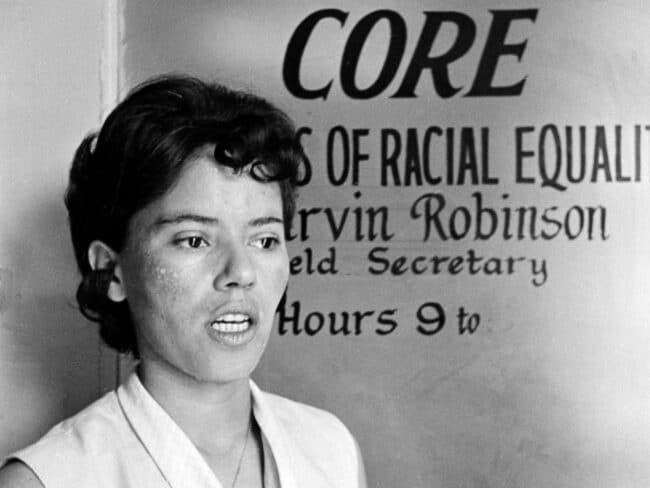
Mary Hamilton, April 1, 1964. Source: Associated Press
By Civil Rights Movement Archive
In June of 1963, CORE Field Secretary Mary Hamilton was one of many protesters arrested in Gadsden, Alabama for opposing segregation. At a habeas corpus hearing on June 25th, NAACP lawyers demanded that the demonstrators be released because their arrests violate the Constitutional right of free-speech to peacefully protest. As is customary throughout the South (and much of the North as well), white prosecutors and judges addressed all white witnesses and defendants with courtesy titles and surnames such as ‘Mr. Jones’ or ‘Mrs. Smith,’ but they addressed everyone else — African Americans, Latinos, Asian Americans, and Native Americans — by their first name only.
Mary Hamilton was called to the witness stand:
Prosecutor: “What is your name, please?”
Witness: “Miss Mary Hamilton.”
Prosecutor: “Mary, who were you arrested by?”
Witness: “My name is Miss Hamilton. Please address me correctly.”
Prosecutor: “Who were you arrested by, Mary?”
Witness: “I will not answer a question until I am addressed correctly.”
Judge: “Answer the question.”
Witness: “I will not answer them unless I am addressed correctly.”
Judge: “You are in contempt of court.”
Without any trial or opportunity to defend herself, Judge Cunningham cited her for ‘contempt of court,’ fined her $50, and remanded her to jail.
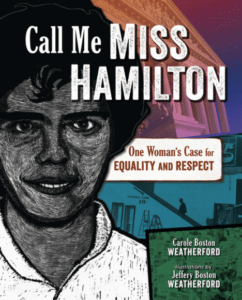
Introduce this story to young people with this picture book by Carole Boston Weatherford.
It took five long days of legal maneuvering for the Movement to bail her out on appeal. During that time behind bars she endured systematic physical abuse, threats, and intimidation. The police and guards told her the abuse would stop if she agreed to testify in court without being addressed as ‘Miss.’
She did not break. And she refused to pay the $50 fine.
Her case was appealed to the Alabama Supreme Court on the grounds that omitting courtesy titles when addressing people of color violated the equal protection clause of the 14th Amendment. The Alabama court ruled against her.
NAACP lawyers appealed to the U.S. Supreme Court in Hamilton v. Alabama. On March 30, 1964, the Supreme Court summarily over-turned the contempt citation, ruling that all those brought to the bar of justice must be addressed equally with titles of courtesy, regardless of race or ethnicity — a ruling that governs every court in the land to this day.
Over time, the “Miss Mary” ruling established precedents that unequal treatment, discourtesy, and gratuitous brutality are grounds for dismissal of charges against a defendant.
Lightly adapted from 1963 entries on the Civil Rights Movement Archive.
As is explained in the NPR Code Switch episode below, Hamilton’s white college roommate and lifelong friend, Sheila Michaels, played a key role in bringing the title “Ms.” from obscurity into mainstream use.




Twitter
Google plus
LinkedIn