
To the People of Mexico: We, the men and women, full and free, are conscious that the war that we have declared is our last resort, but also a just one. The dictators are applying an undeclared genocidal war against our people for many years. Therefore we ask for your participation, your decision to support this plan that struggles for work, land, housing, food, health care, education, independence, freedom, democracy, justice, and peace. We declare that we will not stop fighting until the basic demands of our people have been met by forming a government of our country that is free and democratic. JOIN THE INSURGENT FORCES OF THE ZAPATISTA NATIONAL LIBERATION ARMY. — from the First Declaration of the Lacandon Jungle, the EZLN’s Declaration of War

Mural painted on a meeting place for Zapatistas in Oventic, Mexico. Source: Dane Strom
On January 1, 1994, the Zapatista Army of National Liberation (EZLN) began an uprising of approximately 3,000 armed insurgents that lasted for 12 days, occupying six cities and towns in and around Chiapas, the southernmost Mexican state. They chose the first day of 1994 to coincide with, and to protest, the launch of the North American Free Trade Agreement (NAFTA), a trilateral trade pact between the governments of Mexico, Canada, and the United States. NAFTA removed trade restrictions and championed privatization, globalization, and the “free” market while exploiting workers and natural resources. With their calls for “¡Ya basta!” — “Enough is enough!” — the Zapatistas quickly became a symbol of the international anti-globalization struggle.
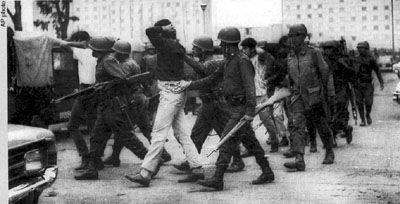
The Zapatistas formed clandestinely in 1983 to coordinate Indigenous Mayan resistance to the ongoing dirty war that the Mexican government had been engaged in since the 1968 Tlatelolco massacre to violently suppress any and all forms of resistance to increasingly neoliberal policies. They remained underground until the 1994 insurrection — growing their base, building an organizational infrastructure, and refining their politics. Since the January 1 uprising, though, the Zapatistas have remained aboveground, building autonomous zones of resistance to the ongoing military siege by the Mexican army on the people of Chiapas.
Jose Rostier writes,
These autonomous spaces, in permanent exchange with the country’s indigenous and urban activists and the international revolutionary movement, thus became places of politicization and democratic experimentation, enriching through practice the ideological bases of the EZLN. These bases, a mixture of Marxist, libertarian, and anti-colonialist Amerindian ideas, would in turn irrigate the global left.

Displaced women from the Otomi Indigenous community of Querétaro commemorate the 30th anniversary of the uprising and the 40th anniversary of the founding of the Zapatista Army of National Liberation (EZLN) in Mexico, at the House of Indigenous Peoples and Communities in Mexico City, November 2023. Photograph by Gerardo Vieyra/NurPhoto via AFP. Source: Equal Times
In Compañeras: Zapatista Women’s Stories, Hilary Klein describes what she cherishes most about the Zapatistas and why their resistance has remained such an inspiration for generations.
[. . .] the quiet dignity of their resistance, their unflinching commitment, their unquestioned assumption that the collective well-being takes priority over the individual, and their combination of discipline and humor, militancy and tenderness . . .
Additional Resources
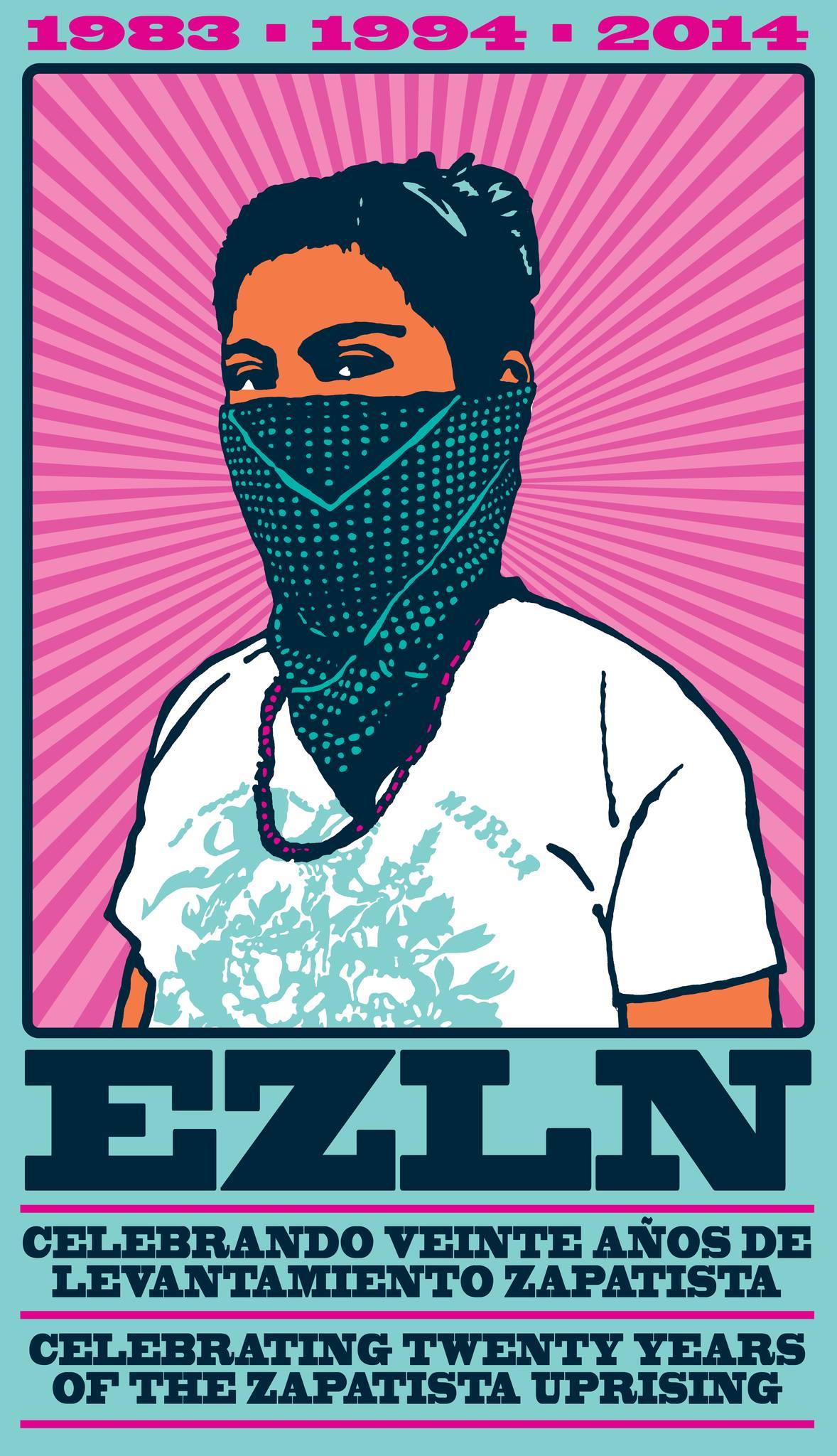
“Celebrating Twenty Years of the Zapatista Uprising” by Jesus Barraza. Source: Justseeds Artists’ Cooperative
Find lessons and a comprehensive Zapatista Timeline by Schools for Chiapas
Compañeras: Zapatista Women’s Stories by Hilary Klein
The Zapatista Experience: Rebellion, Resistance, and Autonomy by Jérôme Baschet
Wobblies and Zapatistas: Conversations on Anarchism, Marxism, and Radical History by Staughton Lynd and Andrej Grubačic
The Transcendental Revolutionary Zapatista Murals of Oventic, Mexico by Dane Strom
A Spark of Hope: The Ongoing Lessons of the Zapatista Revolution 25 Years On by Hilary Klein at NACLA
Lessons in organization and dignity from the Zapatistas by Marta Molina at Waging Nonviolence
Lessons from Mexico’s Zapatista Uprising (1994): Resistance and Solidarity by Malvika Murkumbi at The Amnesty
Watch the documentary The Zapatista Uprising, 30 Years Later below.






Twitter
Google plus
LinkedIn