
Jesse Olsavsky’s The Most Absolute Abolition: Runaways, Vigilance Committees, and the Rise of Revolutionary Abolitionism, 1835–1861 tells the dramatic story of how vigilance committees organized the Underground Railroad and revolutionized the abolitionist movement. These groups, based primarily in northeastern cities, defended Black neighborhoods from police and slave catchers. As the urban wing of the Underground Railroad, they helped as many as 10,000 refugees, building an elaborate network of like-minded sympathizers across boundaries of nation, gender, race, and class.
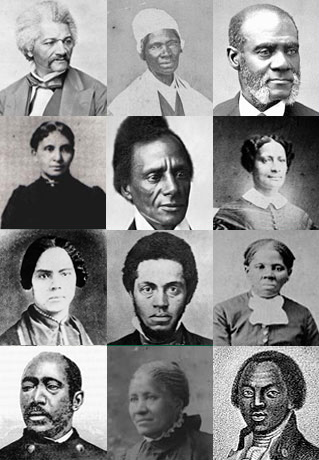
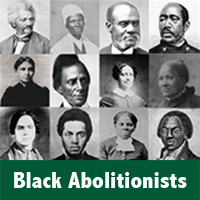
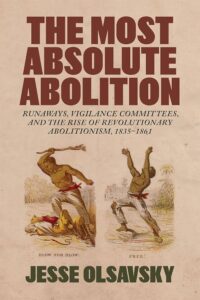 Olsavsky reveals how the committees cultivated a movement of ideas animated by a motley assortment of agitators and intellectuals, including famous figures such as Frederick Douglass, Harriet Tubman, and Henry David Thoreau, who shared critical information with one another. Formerly enslaved runaways — who grasped the economy of slavery, developed their own political imaginations, and communicated strategies of resistance to abolitionists — serve as the book’s central focus.
The dialogues between fugitives and abolitionists further radicalized the latter’s tactics and inspired novel forms of feminism, prison reform, and utopian constructs. These notions transformed abolitionism into a revolutionary movement, one at the heart of the crises that culminated in the Civil War. [Adapted from publishers’ description.]
ISBN: 9780807177303 | LSU Press





Twitter
Google plus
LinkedIn