

By Say Burgin
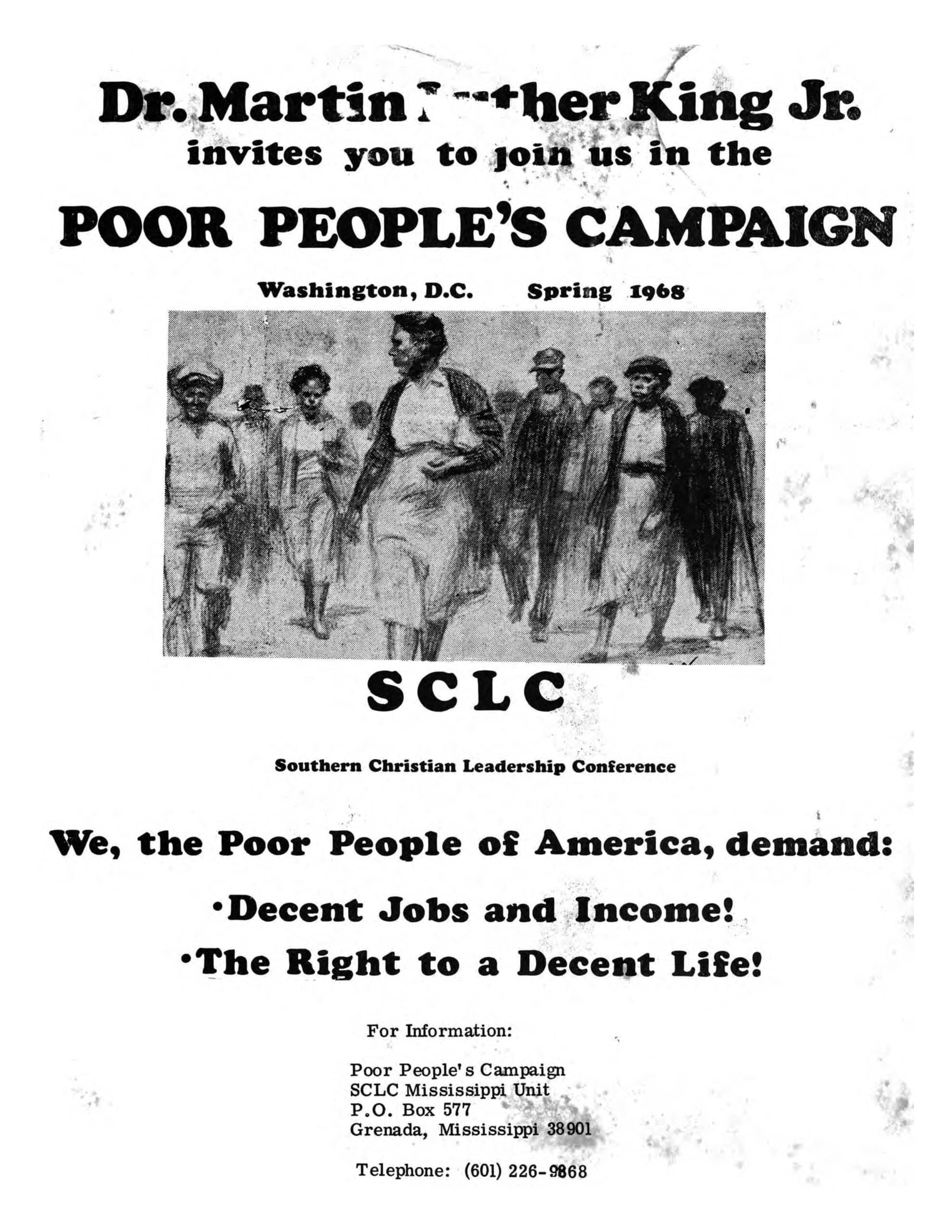
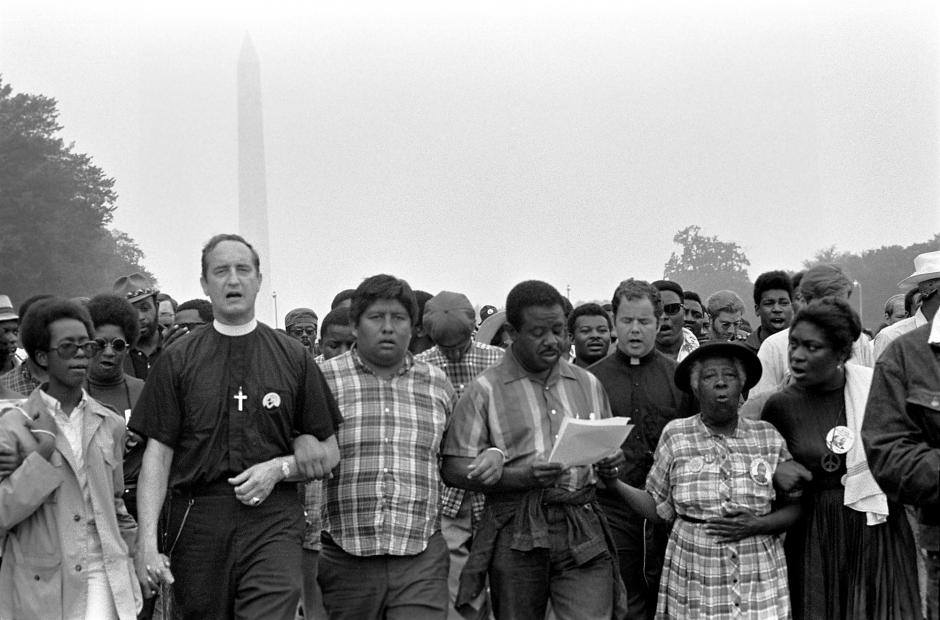
On May 13, 1968, the Poor People’s Campaign was on its way to Washington, D.C., as part of a major effort to build an interracial movement of the poor. On this day, the Midwestern contingent of the PPC rolled into Detroit and was attacked by police. Campaign organizers said it was the only time during that week of travel that police were violent with them.
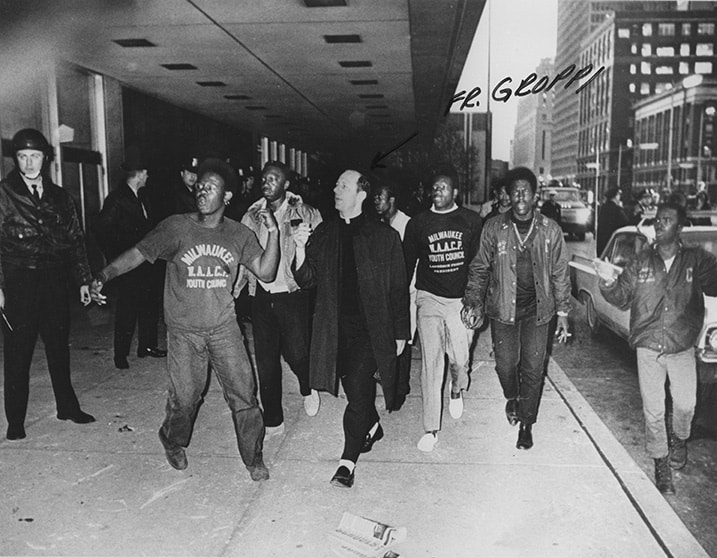
Father James Groppi, Midwest caravan leader, in Detroit with NAACP youth from Milwaukee. From Detroit Under Fire. Source: Jerome Cavanagh Papers, Walter P. Reuther Library, Wayne State University
The PPC had been welcomed to the city by its Democratic mayor, Jerome Cavanagh. But outside the convention center (Cobo Hall) where it held its major rally, a PPC command car stalled. Police grew agitated and as they tried to have it towed, activists tried to get them to stop. In response, a dozen mounted police officers rode their horses into the PPC crowd and attacked bystanders outside the hall. One witness testified that police said, “Lets ride them down.”
Meanwhile, officers used their nightsticks to beat people inside Cobo Hall, especially Black people. A witness reported seeing police “chasing and trampling . . . the Blacks indiscriminately.” He said he also saw “at least four instances of groups of police officers, six or eight to a group, bent over a fallen or grabbed Black person, sometimes appearing to be rolling him over while roughing him up.”
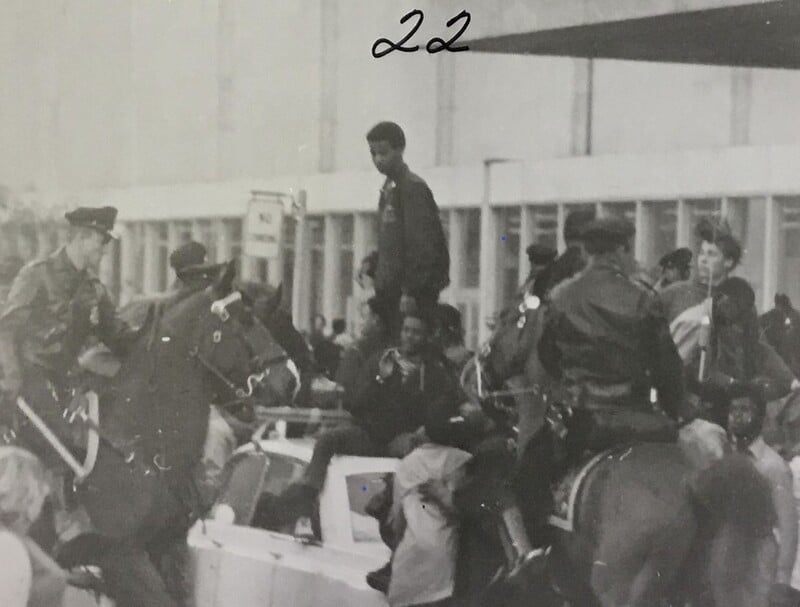
Police mounted on horseback charged the young activists gathered around the stalled car and also attacked random members of the crowd. From Detroit Under Fire. Source: Jerome Cavanagh Papers, Walter P. Reuther Library, Wayne State University
Police called in the “riot control” unit, over the objections of Department of Justice officials who were witnessing the chaos and police violence. Ultimately, more than two dozen people sustained injuries.
In response to this police violence, Black Power and religious groups formed a united front to demand accountability and major reforms to the Detroit Police Department. At first, major Cavanagh sided with them, but he quickly retreated and blamed protestors for the violence. PPC leaders asked a young white woman with wide movement connections — Sheila Murphy — to organize white people to demand action. Murphy founded the Ad-Hoc Action Group which spent months trying to do that. Ad-Hoc sat-in at the mayor’s office, took witness testimony, joined a lawsuit against the city, and, eventually, created a city-wide cop-watching program.
But the victims from May 13th never saw accountability from the police.
 Say Burgin is an associate professor of history at Dickinson College, where she researches and teaches 20th-century African American and social movement history.
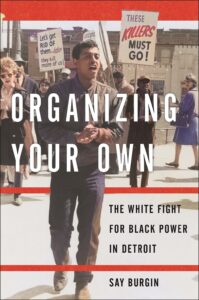
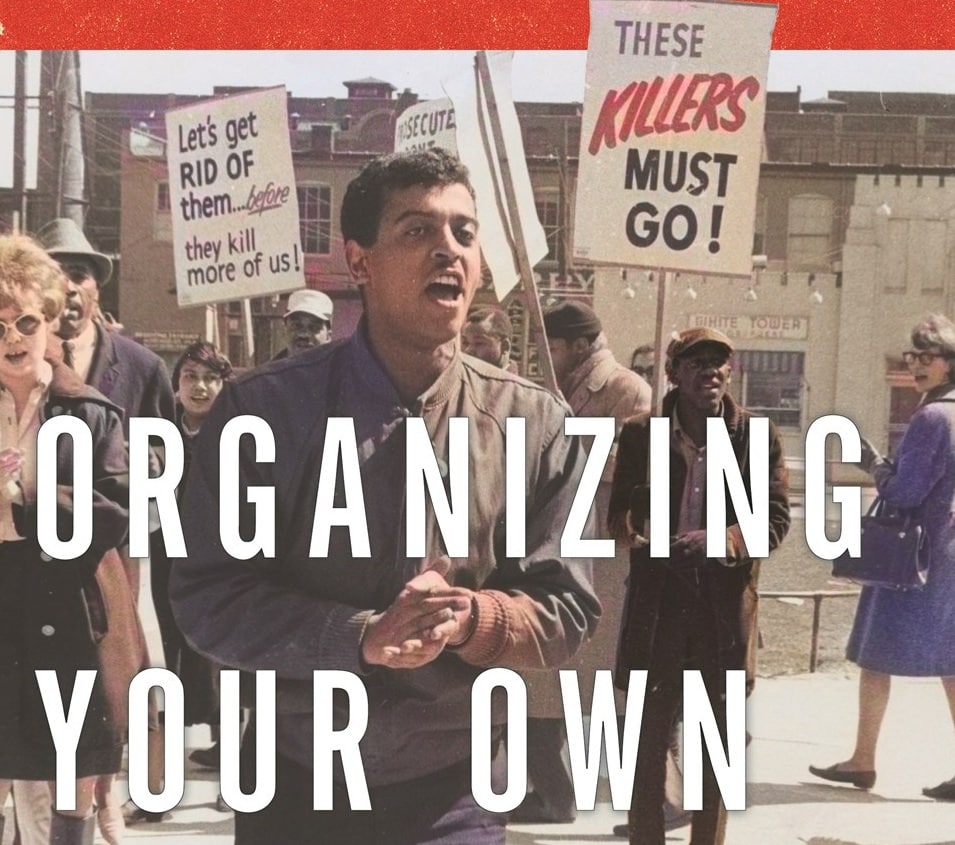
She is the author of Organizing Your Own: The White Fight for Black Power in Detroit.


Twitter
Google plus
LinkedIn