

Teaching Activities (Free)

“Semiquincentennial Blues” – Teaching the 250th Anniversary of the United States through Blues Poetry

Teaching Activity. By Jesse Hagopian. 2025. 19 pages.
A lesson for the 250th anniversary of the U.S. founding exploring the blues as both a cultural art form and a vehicle for political resistance.

By Jesse Hagopian

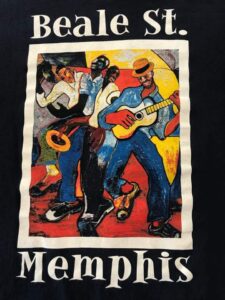
Beale St. Memphis t-shirt. Art by George Hunt. Source: Public domain

This lesson explores the blues as both a cultural art form and a vehicle for political resistance. Students begin by learning about the historical conditions that gave rise to the blues — born from the suffering and resilience of Black people in the post-Emancipation South and rooted in African musical traditions.

They study the influence of the Mississippi Delta and early blues artists, especially the foundational role of Black women who brought the genre to national prominence.

The songs in the lesson include Gil Scott-Heron’s “Bicentennial Blues”, a poem that uses the blues to critique the United States’ 200th birthday celebration and highlight the hypocrisy of honoring liberty while denying justice to so many.

The text above is from the introduction to the lesson. You can download the full lesson from the links above and below.


Classroom Story

After teaching “Semiquincentennial Blues” – Teaching the 250th Anniversary of the United States through Blues Poetry, I was struck by how deeply engaged students were when history, music, and poetry were woven together as tools of resistance rather than treated as separate subjects. Students demonstrated strong historical thinking skills, especially when connecting Gil Scott-Heron’s critiques to contemporary issues during discussion and writing.

The poetry writing component allowed even reluctant students to find a voice, though some needed additional scaffolding to integrate historical references smoothly. In future iterations, I would build in more time for peer sharing and revision, as students were clearly eager to refine their ideas and learn from one another’s perspectives.

—Kaleb Moode
High School Social Studies Teacher, Birmingham, Alabama

Share a story, question, or resource from your classroom.

Your email address will not be published. Required fields are marked *