
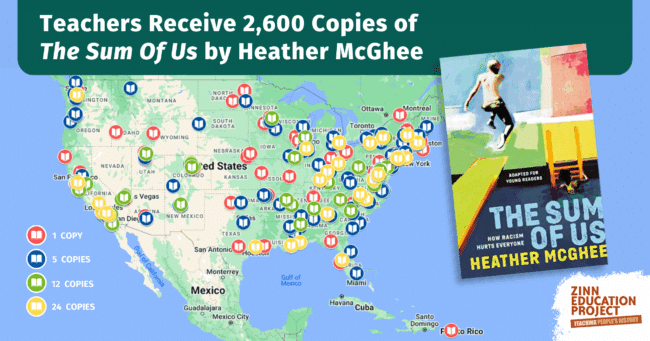
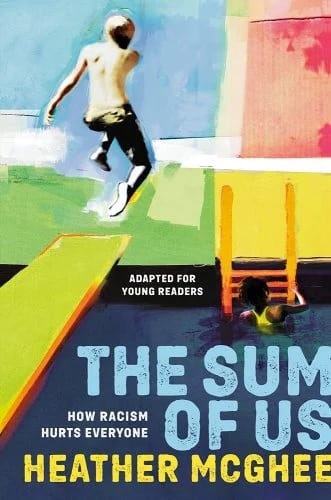
Educators received 2,600 free copies of the young readers’ edition of Heather McGhee’s book, The Sum of Us: How Racism Hurts Everyone, thanks to a generous donation from the REI Co-op. As is indicated on the color-coded map above, educators received either 1 copy, 5 copies, 12 copies, or 24 copies.
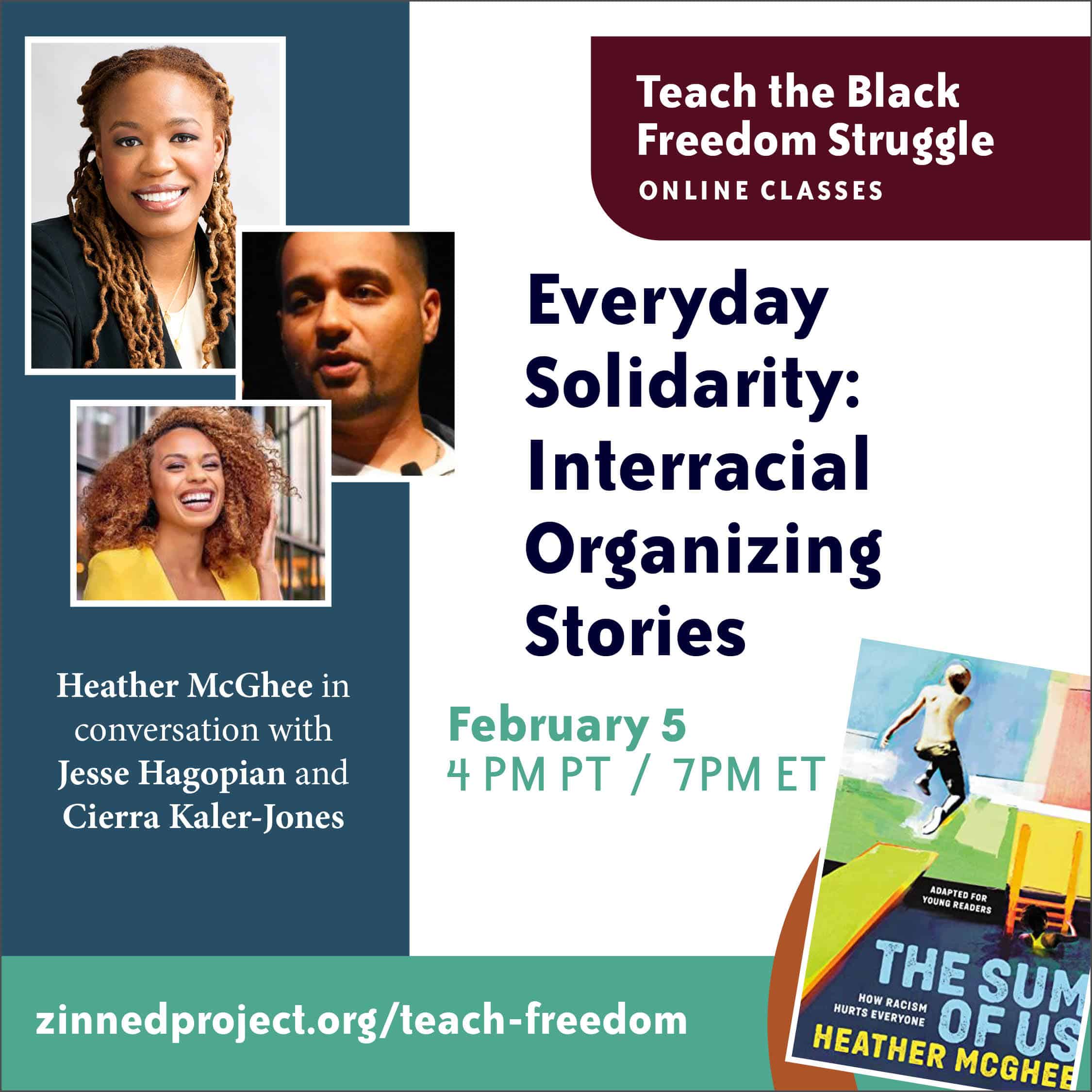
Many of the teachers also attended a Teach the Black Freedom Struggle class with McGhee.
Teachers who received copies of the book shared their appreciation and teaching stories, including those below.
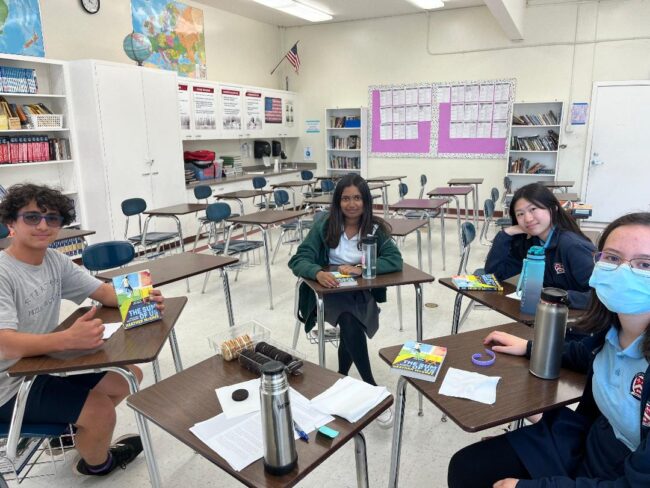 Students joined me in reading and discussing The Sum of Us for a book club. We met twice, once after reading chapters 1–5 and again after chapters 6–10. Both times we met with cookies and had a good discussion. Eighth graders commented on how they could make connections between the book and what they were learning in their history and literature classes. One of the 7th graders said our discussion was the most interesting conversation he ever had! What a great way to introduce my middle schoolers to this important information. — Jane DeRosa, middle school teacher, San Jose, California
 |
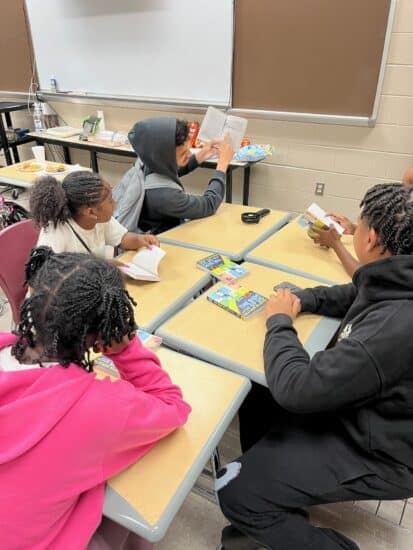 |
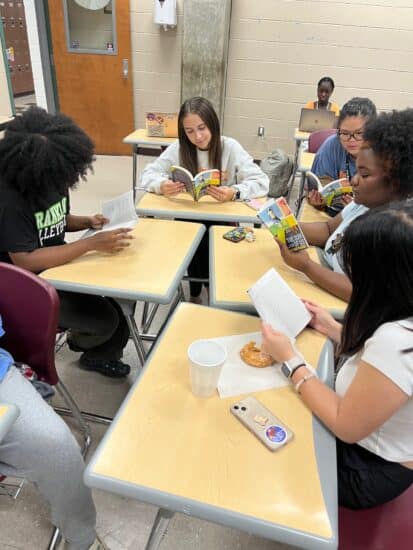
About a quarter of my students (pictured above) selected The Sum of Us when we approached the relevant unit. They met in groups to discuss essential questions based on the book. — Chris Dier, high school teacher, New Orleans, Louisiana
The Sum of Us was a tremendous addition to our teacher book group series. One of our School 5 teachers received five copies from the Zinn Ed Project, and I ordered additional copies for those who wanted to join our book group discussion. We discussed one chapter per week. It was so powerful and successful that I purchased copies so that the teachers at my other school also have the opportunity to read it. — anonymous, New Jersey
Our school just created a peer mediation team, and the students went through their first training a week ago. All the students who completed the training so far received a copy of The Sum of Us to further their education and be able to better support their peers. The peer mediators are planning discussions around the book. — Lindsay Shields, high school teacher, Brooklyn, New York
I recorded myself reading the book so it can be shared digitally with a wider audience. I also sent out emails to coworkers to join the club and read one of the free copies I have. — Miss Sawyers, elementary school teacher
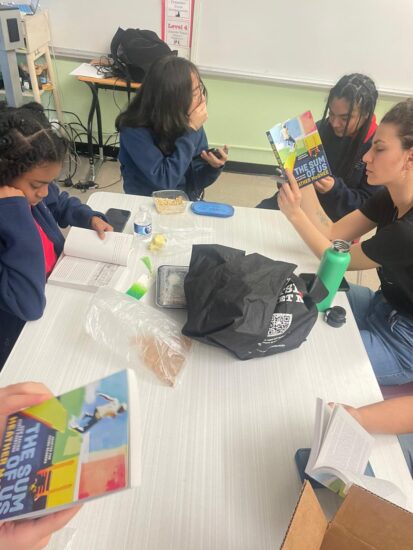 We had a book club for The Sum of Us where students could opt in, receive a book, and read with teachers. They discussed it each Friday during lunch. It was excellent. Thank you for the opportunity! — Michael Duque, school administrator, New York, New York

I had the opportunity to critique and assist with updating a lesson for our county’s 4H Center. I shared The Sum of Us at the end of the presentation, to help the staff process the history and culture information that they received. — Valencia Abbott, high school teacher, Rockingham County, North Carolina
The Sum of Us helped prepare teacher education candidates for the Warren Fellowship for Future Teachers seminar at the Holocaust Museum in Houston. — Eileen Angelini, teacher educator, Manlius, New York
Our educator group found this book helpful in the discussion about dividing groups based on a perceived advantage/disadvantage that harmed everyone. We are using The Sum of Us in our Voices in African American Literature course this year to help students understand how policies affect everyone, not just minorities.
After Heather McGhee visit our campus to discuss her work, the students created conversations about how life is affected by policies that favor one group. The students created conversations and called for more diverse curriculums so that they really understand how policymakers continue racist practices and how voting can change things. — Andrea Wilson-Harvey, high school teacher, Rosemont, Pennsylvania
Reading a book like this always gives me a different perspective of the life of others in this nation. I did not use excerpts of the book, but the concepts were discussed as we work through U.S. history. — Eric Kaesermann, Arlington, Minnesota
We had a Professional Learning Community (PLC) with about seven teachers, and we discussed each chapter of The Sum of Us as it related to our grade levels. We shared how to bring this information to students in kindergarten through 5th grade. — Denise Pelosi, teacher, Paterson, New Jersey
I shared my thoughts about The Sum of Us with my colleagues, and I put copies of the book in our department library. This book gave plenty of excellent examples from history of how people in power have relied on working class people to remain separated in order to retain control. I can see using this with my students to help them see, as the book suggests, how racism negatively impacts us all.
My students are primarily Latinx newcomers and I’ve heard many make disparaging comments about other minority groups. I’d like to read excerpts from this book to help them see how discriminatory attitudes, practices, and policies hurt everyone. The youth version of the book is still too difficult for my newcomer students to read. I wish this was translated in Spanish, as I like the message better than Stamped, but Stamped is in Spanish. — anonymous, Massachusetts
I’m a math teacher. I have a classroom library and have added The Sum of Us for my students to borrow. Thank you! — anonymous, Nevada
Thank you for this great opportunity to share how racism affects us all. The young readers’ edition made this content easier for my students to appreciate the themes in The Sum of Us. As an added text to our anchor text (When the Emperor Was Divine or All American Boys) it gives a greater, more well-rounded perspective. — anonymous, Mesa, Arizona
We used these books to expand the learning of a few of our 8th grade students who were nominated for our Campus Cultural Leadership group. This group met eight times to discuss systems of oppression and ways to bring that information back to the rest of their peers. The Sum of Us provided them with a much deeper understanding of how oppressive systems impact all citizens — an important message for their classmates to better understand. — anonymous, Illinois
Our teen group has chosen this as their Fall book club selection and I will be using the study guide to assist us as we go. I’ve learned so much and have re-read my own copy of The Sum of Us, so I was excited to have a young adult version to share with the students. — anonymous, Maine
My weekly research class is reading The Sum of Us. We began with the intro then jumped to Chapter 2, “Racism Drained the Pool,” followed by the section on “Racial Exclusion from Homeownership.” For each section, I’ve used video to support McGhee’s text. First, I showed the clip from Ava DuVernay’s Origin about Al Bright when he couldn’t join his triumphant baseball team members in the city’s segregated pool. The lesson went as follows: The kids listened McGhee’s section “Racism Drained the Pool” through my Audible audiobook account. We then saw the Origin clip and they reacted with raw emotion during and after the clip. After the reading on “Racial Exclusion from Homeownership,” we saw the episode from Eyes on the Prize, “The House We Live In,” which serves as a mirror image to McGhee’s text.
Students are reading The Sum of Us to analyze McGhee’s thesis that racism hurts us all, and whether or not she proves that thesis. My students are greatly impacted by McGhee’s book and the accompanying audio-visual media. At the end of the year, they’ll write an essay about the material we’ve covered. As you can see, we’re essentially developing a curriculum based on McGhee’s excellent book. Thanks for making the book available to teachers and students. — anonymous, New York
Students engage in book clubs throughout the year and one group chose The Sum of Us. They were moved by the content and eager to share connections between the book and what they are learning in their U.S. history class. — anonymous, Washington
These books were used in a book study in the African American history class at our school. Students said it was eye-opening. It prompted thoughtful discussion. — anonymous, Virginia
Lessons
These Zinn Education Project lessons can help students explore issues in selected chapters from The Sum of Us. They are aligned to the topics and themes in the respective chapters. Share a story if you use any of them and we’ll send you books in appreciation.

Twitter
Google plus
LinkedIn