
Rather than asking how we can change schools, students, or teachers, how might we see the transformation of schools as part of the broader work of transforming society? How do we acknowledge school as a mirror facing a world that mirrors right back, with images bouncing recursively against one another forever and ever, and therefore requiring interventions that keep sight of the whole shebang? — Eve L. Ewing, Original Sins
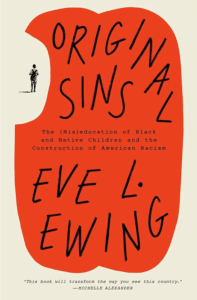
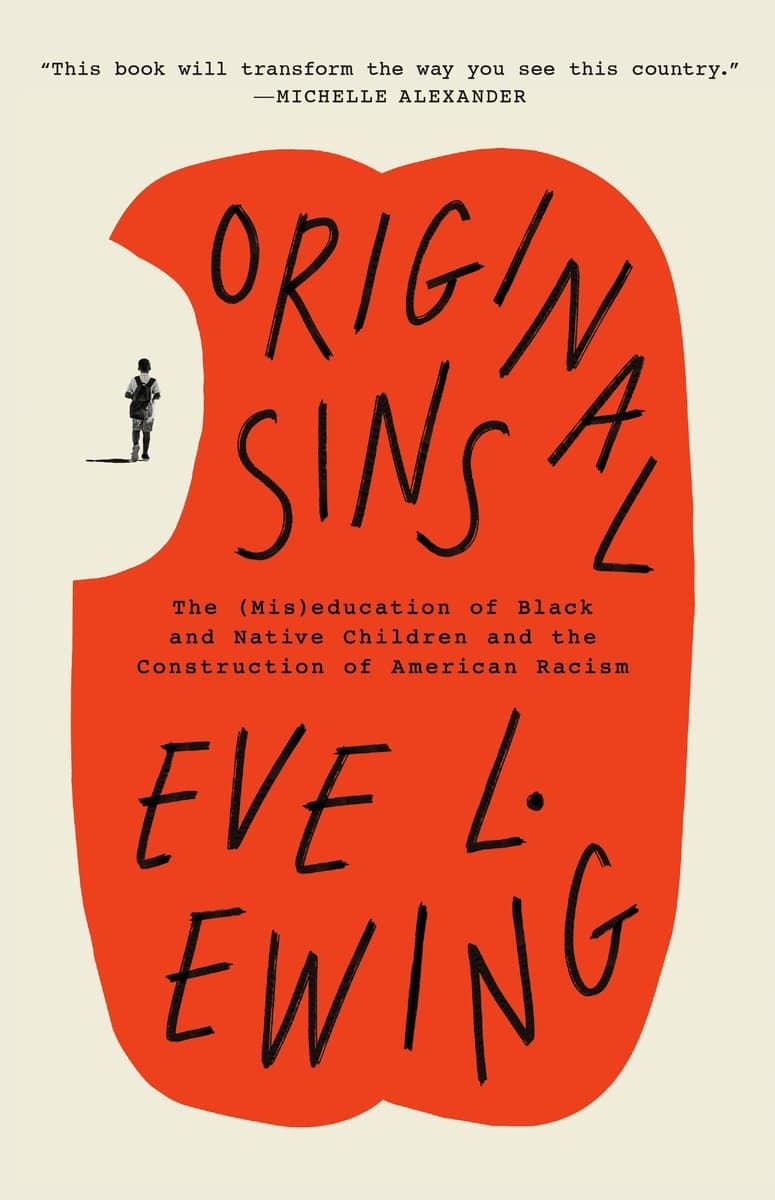
On September 25, scholar Eve L. Ewing spoke with Rethinking Schools executive director Cierra Kaler-Jones and editor Jesse Hagopian about her book, Original Sins: The (Mis)Education of Black and Native Children and the Construction of American Racism, an examination of how the U.S. school system helps maintain racial inequality and social hierarchies.
Watch our previous Teach the Black Freedom Struggle online classes and register for upcoming classes here.
See below for two excerpts from the class. In the first, Ewing emphasizes the power of educators and students, and schools as sites of struggle. In the second, she lays out the thesis of Original Sins.
The most important thing I learned today came from Eve L. Ewing’s “Race Machine” metaphor. She explained how racism and inequality function like a machine, built from many connected parts that keep running even when individuals want change. This taught me that injustice is not random, and because it was built, it can also be dismantled.
I very much appreciated the idea of bringing love into the classroom as the first step. This is how I try to foster trust in my classroom, and I’ve found it to be invaluable.
Hearing Ewing learn as she answered questions was a really powerful and important reminder that we are always learning — and that is imagination, and that will make us free.
I really appreciated the connection made about queer liberation as a beacon for the liberation of all.
I learned that racism is ingrained into the school system and we have to actively fight racism in the classroom.
Ewing’s quote — “In order to create pathways towards that which we have not seen, we have to lead with imagination” — is very insightful!
The most important idea for me today is that I am not in the teaching career by myself. There are so many like-minded teachers across the nation. I started this Zoom meeting feeling a bit down and hopeless, but this meeting has energized me!
Transcript
Click below for the full transcript with resources mentioned in the discussion.
Transcript
Jesse Hagopian (he/him): Welcome, everybody. Thank you for being here. It is so great to reconvene with so many of you. On behalf of the Zinn Education Project, we would like to welcome everybody to our Teach the Black Freedom Struggle class tonight with the great Eve L. Ewing. My name is Jesse Hagopian, I’m a Zinn Education Project campaign director and an editor for Rethinking Schools. And I’m joined by my dear colleague, Cierra Kaler-Jones, executive director of Rethinking Schools.
Cierra got to interview Eve for the summer issue of Rethinking Schools. It’s a fantastic interview, so y’all should check that out. I’m going to pass it over to my comrade, Cierra.
Cierra Kaler-Jones (she/her): Thanks, Jesse. I’m so excited to be with y’all tonight. Our thanks to everyone who recently participated in Teach Truth on Constitution Day. Hundreds of teachers signed up to participate and have been sharing incredible stories about feedback from their students, and how they really enjoyed being able to dig into this important and critical history. Many young people were shocked at the long list of human rights not included in our Constitution, and are determined to take action to remedy that. So, great to see all of the classroom stories that are coming out of Teach Truth on Constitution Day. I’ll pass it back to Jesse for the introduction.
Hagopian:It’s so great to see everyone introducing themselves in the chat. We’ve got people here from all over the country. I love everyone here, but it is especially great to see people from states that have passed truth crime laws that are trying to criminalize the truth about Black history and queer history and other histories. So, shout out to y’all from Florida and from all over the country that are in the struggle.
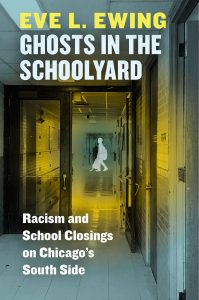
I’m so happy now to introduce you to Eve L. Ewing, author of some of our favorite books, including Ghosts in the Schoolyard: Racism and School Closings on Chicago’s South Side, Maya and the Robot, 1919 (an incredible book of poetry), Original Sins: The (Mis)Education of Black and Native Children and the Construction of American Racism, and not featured here, but my kids’ favorite, is Ironheart. Eve’s just not only one of my favorite thinkers, but one of the most creative people I know that inspires me.
Eve L. Ewing (she/her): Wow, thanks, Jesse!
Hagopian: Yeah, so thank you for being here.
Ewing: That’s really nice. Thank you. Your check is in the mail!
Hagopian: Haha, that’s right. I appreciate that. Yeah, thank you for being here. I’m excited about this conversation. I absolutely loved your book. It expanded my understanding of the project I think we’re both a part of. One of the things I love most about Original Sins is how you analyze the connections between structural racism and settler colonialism while revealing the foundational role that schooling has played in both. And these systems are often, when we learn about them — if we ever get to learn about them — they’re treated as completely separate.
Ewing: Totally separate, totally separate. Yeah.
Hagopian: Right? And you reveal how they’re connected, but you do it with a lot of care and a lot of clarity because you foreground Black and Native experiences without flattening them in identical experiences. So I was hoping we could talk about how Original Sins identifies what the original sins are and how we might understand the interlocking but distinct forms of exploitation and oppression that Black and Native people have faced, especially in schools. Then, finally, what does it look like for educators and students today to engage both histories with care?
Ewing: Oh, Jesse. Please, please keep me honest, because that was, like, three really good questions, and I want to make sure that I don’t lose track of any of them. I’ll start by just talking about the architecture of the title and what the book is referring to, and then maybe we can go from there.
So, the original sins to which the title refers are two: One is the genocide of Indigenous peoples, and the other is the institution of chattel slavery. And this is not my unique insight, but the United States, as we understand it in the contemporary moment, does not exist in its current formation without these two horrific, ongoing crimes against people, against children, against land, against relationships. These are not things that happen at one moment in discrete time, right? We understand that for settler colonialism to be an ongoing project, that requires ongoing theft, that requires ongoing disappearance of Indigenous peoples and Indigenous stories and Indigenous narratives, right? And we think about what scholars refer to as the afterlives of slavery, the many ways in which we see the echoes and the resonances of slavery and its impact politically, economically, [and] socially, on the United States. So those are the two original sins to which the book refers.
The basic argument that I’m trying to make is that we think of schooling as a remedy, as something that takes us closer to equality, something that helps us live out our best values and our best ideals. And year after year, incredible people, generation after generation, they see the inequality that characterizes our schools, and it’s like we’re throwing everything against the wall to fight it, and nevertheless facing so many of the same challenges year after year. And the argument that I make in the book is that schooling was never meant to disrupt settler colonialism. It was never meant to disrupt white supremacy. It was never meant to disrupt racial hierarchy. But rather, it is an institution that normalizes those things. It does that as an extension of the project of the U.S. nation state. It also does it because, as so many of that 39% of teachers in the audience understands, teaching is always an inherently political act.
One of the things that we learn through schooling is the architecture of the ideas that tell us what is normal in the world. What we ought to expect from the world, what we ought to expect from one another, [and] what we ought to expect from life for ourselves. So, if we’re going to teach kids at a very young age that this is supposed to be a country, a nation state, that is founded on these ideals of freedom and liberty, and at the same time, we understand these two horrific acts of violence that, again, are ongoing violence that stretch far into the past and into the present, then schooling becomes a place where we offer this ideology that makes these two obviously contradictory things somehow okay. We’ll talk over the course of this conversation about many examples of what that looks like, but those are the two original sins.
To your point about solidarity, I really appreciate what you’re saying because the history of the ways that Black history and Native history have often been, well, like you said, most often not talked about in conversation at all — and we see that from the perspective of those of us that teach about and think about and write about Black freedom struggles. We see those silos in the way we think about these issues all the time. To be clear, I just as well could have written a book that is about the ways that surveillance and government harm against Black people has also been used against undocumented people who are not Black and non-Black undocumented people, or Black and non-Black Muslim communities in the United States. We could just have as well have written about the ways that anti-Blackness, and the ongoing genocide in Gaza are related. We could just as well talk about the joint struggles between Asian American communities and Black communities.
As I articulate my own politics, I’ve come to think of myself as a little bit of a child of the Harold Washington generation. So, I grew up in Chicago, and one of my earliest baby pictures is a picture of my mom holding me at a Harold Washington street festival [and] rally. For those who don’t know, he was the first Black mayor of Chicago, and he won by defeating the infamous white supremacist Daley machine through coalitional politics. It’s a time in our lives when a lot of us are reflecting upon what our politics are, how we articulate them, and I think that for me, I’ve been saying in a lot of interviews that this is my most teacherly book. I brought so much of my teacher self to this book. But I think your question also helps me think about the ways that I’ve brought my political self, my organizer self, my community self, to this book.
Those of us who are like everybody in this room committed to social transformation understand that coalitional politics never means pretending like we’re all the same. It doesn’t mean flattening our experiences. It doesn’t mean that solidarity is an easy word. It doesn’t mean pretending that we don’t have any conflict, that there’s not anti-Blackness in Indigenous communities, that there’s not anti-Indigeneity in Black communities. But it’s a way of saying, “Hey, if we’re going to survive, we actually do have to understand the ways that these technologies, these mechanisms of violence, have been used against us.” Often, in this case, in wildly convergent ways. I think that there’s a lot of power in that. I think that for Black and Native communities specifically — and by the way, I want to be really careful, because obviously there are Black, Indigenous people. There are Afro-Indigenous people. I am not one of them, so it’s always a linguistic discomfort for me. I don’t want to semantically suggest that those two groups are mutually exclusive, so please forgive me for not having a good English language fix for that. But, I think that for these two groups in particular, because of our originary status in thinking about the foundations of the United States project, that there is something particularly powerful, subversive. and ultimately dangerous to the project of settler colonialism and white supremacy, for us to get together and understand each other better. I think that that’s a profoundly dangerous possibility that I love.
I told you all up front, I’m very long-winded. I feel like I answered two of your questions, and I don’t remember what the third was, because you tried to . . . Did I get them all?
Hagopian: Okay. I think you did. I appreciate that.
Kaler-Jones: I’m sitting with, too, how deeply you’re interrogating the difference between schooling and education. So, to dive a little bit more into that, you write about “the Race Machine” as a metaphor for how race operates as a sorting mechanism. “. . . [S]chool helps to keep the Race Machine running. School is one of the laboratories where the Race Machine and its technologies have been developed, honed, perfected, and maintained, generating the steam that makes the engine go.”
Could you talk more about what the race machine is, how it’s used to construct what you call racial technology, and how this “sorting” plays out in classrooms today for Black and Native children.
Ewing: Yes, absolutely. The distinction between schooling and education is one that a lot of scholars have made. Dave Stovall, who I’m sure many folks in this room know and have read, is somebody who talks about this a lot, especially as he talks about the idea of abolition [and] abolishing schools. For me, one of the first folks that I really heard bring this insight was my mentor, Sara Lawrence-Lightfoot. So it’s not my innovative idea, but for me it’s really important to make this distinction because sometimes our conversations about school unreasonably capture the conversation about education in a way that narrows our imagination.
What I mean by that is, I’m going to put my middle school teacher hat on for a second and give everybody a prompt. I’d like to invite everyone to take a moment and think about a time in your life when you learned a really important lesson, something that really means a lot to you, something that was really memorable. Think about a time in your life when you learned something really powerful, something really transformative, something that means a lot to you. It’s possible that this is a lesson that you learned in school, but most likely, many of us, when we think about the most transformative lessons, the things that we’ve learned in our lives, we think about things that we learned in relationships, perhaps with peers. We think about things that we learned from our family, right? We think about things that we learned through our own reflection. We think about things that we learned, perhaps, in relation to lands and waters.
There are so many things that can constitute education, and I think it’s really important to expand that conversation. So when I say education, I’m referring to this kind of infinitely miraculous process of teaching and learning that has existed in every society, in every human community, everywhere since the beginning of time, all over the world. And schooling is this very specific and somewhat narrow kind of institutional idea, right? Sometimes, because we have designated schooling as something that the government runs, that is compulsory, that is done by these designated adults, we forget how much agency and autonomy we still have over the process of what education can be. For me, that’s really important.
The metaphor of the Race Machine, you know, I’m a poet, so I like a governing metaphor. I wanted to do a lot of things with this book. I started writing the book because I was dissatisfied with the things that I was putting on my syllabus for my own teaching classes. One of the things that I teach college students is, I teach classes on the sociology of race, and when we say race is socially constructed, what we really mean by that. I find that even as that phrase, “race is socially constructed,” has crossed into popular culture, there are still ways in which we, deep down in our gut, often think that race is really real. It’s something that you can touch, that you can track, that you can trace in some kind of biologically essentialist way.
So the Race Machine is my metaphor for thinking about the ways that the infinite variety of human life, the infinite variety of human bodies — of height, hair texture, hair color, skin color, the shape of your nose, and how many freckles you have or don’t have, if you have a forehead or a fivehead, the way your lips are shaped, and if you’re skinny or white, or all these types of things — the way that infinite variety gets structured through a very specifically hierarchical set of categories that we come to think of as being neutral, that we come to think of as being permanent, that we come to think of as being essential when they are none of those things. And how you have certain things that you just say over and over to your students. Like, if I say it the twelfth time, they’ll remember. The thing I tell my students over and over is that race is historically, politically, and geographically contingent. The racial categories that you take for granted today are not the racial categories that were operating 150 years ago, and nor are they always the racial categories that are relevant in people’s lives in other parts of the world. This becomes apparent when you start getting in conversations with artists from South Africa that identify as colored and come to the U.S and are like, “I’m not Black, I’m colored,” and Black people here are like, “You need to slow your roll,” and they’re like, “No, no, that’s actually literally a different social category that exists.”
Or, if you look at folks that come from the East Asian part of the Asian continent, folks from Korea or Japan or China, who have completely different histories, completely different internal political relationships with one another, and they arrive in the United States and congratulations, everybody is Asian now, right? The thing is that because some of those categories were developed relatively more recently in the United States context, I think that people become more aware of those tensions. For instance, there’s a live conversation around the notion of Latinidad, right? Is that an ethnicity? Is it a race? I feel like there’s a greater awareness of the ways that all these folks that have different cultural practices, different national contexts, are lumped under this one category of being Latine or being Hispanic.
But the thing that we often forget is that the exact same thing is also true of Black people in this country. The exact same thing is also true of Native people in this country. And there’s a way that it’s easy for folks to forget that, where they’re like, “Well, Black people are just Black,” like that’s a real race, but these other things are fuzzy around the edges. The people that we consider to be Black people in this country came here, our ancestors came here speaking different languages, having their own internal beef with each other, coming from different political, national, social contexts, engaging in different faith practices, eating different foods. They came here, and they became Black.
To paraphrase Hortense Spillers, the United States needed them to be Black. The United States invents something called Black, the United States invents something called the Negro, the United States invents something called the Indian, as a way of lumping together huge groups of people and, conversely, as a way of identifying whiteness. So, whiteness comes to define itself as not Black, not Negro, not Indian. And it’s this interesting tripartite relationship that really, in my view, is essential to understanding the fabric of the United States. And that certainly transmits itself into the way we think about structures of schooling.
But yeah, race is made, and race is made on an ongoing basis. We make and remake race as a signifier all the time. It is not something that Moses came down from the mountain with a bunch of tablets. One other thing I’ll note about this, and I don’t know if this is true of you all, but I think about this as a kid who grew up in Chicago — I grew up as an African-American person in an almost entirely Mexican and Puerto Rican neighborhood, and I went to school with kids that were from other parts of Chicago — but if you had asked me when I was 5 or 6 what are the races that people can be, I probably would have said something like, “Well, you can be Black, you can be white, you can be Mexican or Puerto Rican.” It would not have occurred to me as a child to put those things in the same category. I’m from Chicago, so you can be Polish [too]. Polish people are not white in my child mind because they have a different set of cultural practices, they have a different set of linguistic practices, and social contexts of being there, and socioeconomic status within Chicago. So we are left to make these categories, partially through our own reading. I remember having that conversation when I was a kid, the Sammy Sosa and Mark McGuire home run race was happening, and I remember seeing Sammy Sosa on TV, and I was so confused about why a Black man was speaking Spanish, because I wasn’t around a lot of dark-skinned Puerto Rican folks. Had I grown up on the East Coast, where there were mad Dominican folks, or dark-skinned [folks], I would have had a totally different perspective. But in my kid mind being Black and speaking Spanish are two mutually exclusive things. And that is completely contingent upon the geographic context and the social reality in which I was raised.
So the Race Machine is kind of my metaphor for thinking about how the U.S. power structure takes in people into the big Play-Doh thing that spits out the spaghetti, or you can think of it as a conveyor belt. However you want to do it. But takes in people and spits out races, spits out categories that never fully capture the kind of infinite multiplicity of the human experience.
That’s why, every year I have my students do an assignment that I call an autobiography of race. I have them write about when did you start to understand that race was a thing, race salience. When did you start to experience race salience? What are the early messages you got about your own race, [and] about the race of other people that you interacted with? It’s wild how so many students from all these different perspectives, at some point in their lives say, “Well, I felt like I wasn’t really Asian,” or “I felt like I wasn’t really Black,” “I felt like I wasn’t really Latina.” And each of them has experienced something in their life where they’ve been told that there’s this fundamental, inscrutable thing that is at the essential core of racial identity that they themselves don’t identify with, the music that they listen to, or the the religion that they practice at home, whatever the case may be. And 30 different students all say, “I always felt like I wasn’t quite this,” becomes really illustrative year after year, and you start to realize that these categories can be so essentializing for people. Anyway, I’ll wrap it up. You are asking me about all my favorite topics.
Hagopian: Yeah, that is so good. I was just talking to a doctor friend of mine that drove home to me just how powerful this Race Machine is. When she was in medical school they would learn just an incredible essentialized view of race, and some of them still persist to this day. Like scientists who are supposed to be investigating the world, and then drawing conclusions from that, have gone through the same Race Machine education that we all have, and still cling to these biological categories and believe that Black people can endure more pain, or so many other myths.
Ewing: It’s wild. There’s a lot of good reading on it, but I know that folks are going to be getting their resource packet, and for me, my favorite readings on this is just the work of Dorothy Roberts in general. Her book Fatal Invention is one that I really recommend for folks to think about.
Hagopian: No doubt. Well, I wanted to ask you this next question, because I just had an incredible opportunity to go to Mississippi this summer, and Louisiana, and see the plantations where my family was enslaved. Also, my great-great-grandma, Laura Lenoir, who was enslaved there, put all 14 of her children through college after she was emancipated, and they went to school at Alcorn State, the first federally sponsored land-grant HBCU.
During Reconstruction, newly freed Black communities held powerful, self-determined visions of what public education rooted in liberation and literacy and collective uplift could be about, and you show in Original Sins that this vision clashed with the dominant white view of education during Reconstruction as a tool for controlling Black labor and behavior. You cite William Hauser, a Freedman’s school leader in Georgia, who wrote that Black people “must become educated and useful citizens of the country, or they will relapse into barbarism and become a curse to themselves and the country.”
As you point out, textbooks written for the newly freed people reflected this fear, right? I mean, it was amazing to read that, even Toussaint Louverture’s enslavement was described as “days of domestic joy.” Domestic joy. So, how did the grassroots Black vision for education differ from the models that were imposed, such as the missionary model, or the industrial, vocational model, or even just more explicitly white supremacist approaches? What can that tension teach us about the long-standing struggle over the purpose of schooling?
Ewing: I want to start with the last part of your question and say that I think one of the things that people often ask me is, “What are the ways to be in conversation about this book?” I think that one of the best questions that we can always ask ourselves is what is the purpose of school? What do you think you’re actually doing with schooling? Then, to take that down to a granular level, when you’re thinking about a lesson or you’re thinking about a policy in your school, to actually ask, why are we doing this? What are we trying to accomplish? And to think about the values that you hold as an educator, or as an institution, or as a group of people, and to ask, are the things that we are doing in line with those values or not? I think the examples you’re talking about, historically there are these multiple visions of what Black education is going to be, and I want to shout out, there’s a new book that just came out called The Battle for the Black Mind by Karida Brown, and I’m doing an event with her in Arkansas next week. If any of you happen to be in Arkansas, you should come through and hear me talk to her about this.
But, she makes this argument that the Black mind becomes this battlefield, and I see that as an extension of something that historian Eric Foner said, which is that as soon as slavery ends, the problem of free Black labor becomes the central problem of the United States. What he means by that, and how those two things are related, is that . . . think about the conditions of the southern United States, specifically immediately after the end of legal enslavement. Think about the fact that wealthy plantation owners had an economic imperative to make as many enslaved people as possible. The system of chattel slavery is historically unique, distinct in the history of slavery. It’s not invented in the United States, but the distinct thing about chattel slavery is that part of it is that you are property forever, you are an object forever, and your kids are property forever. There’s an economic incentive for people to make as many Black people as possible. So you have these areas where the number of free Black people wildly eclipses the number of white people, and there is this intense fear of what they are going to do to us. This assumption, first of all, that Black folks would engage in even a fraction of the violence that had been visited upon them for generations, but also what if they did. If you have been terrorized, if your children have been kidnapped, if you have been sexually assaulted, if you have been separated from your family, if you have been brutally beaten, and so on and so on and so on, it is a reasonable fear to be like, “You know what, some of these Black people might be mad at us.”
Schooling intervenes as a really unique and powerful tool, because, as Carter G. Woodson tells us, lynching can begin in the classroom. If you teach people that it is their lot in life to be docile, it is their lot in life to be subservient, it is their lot in life to be endlessly forgiving, to never turn to violence, to never be vengeful against their former masters, then that is a valuable tool of internalized repression that you can hopefully come to rely on, according to this logic, so that you don’t have to worry that this person’s going to take up a machete against you. So the textbooks that we see — and to be honest, this is one of my favorite parts of the book, because it’s something that I did not expect to find when I started doing this research. A lot of the things in the book where I was like, I’m going do this, I’m going to talk about this, and in this chapter I’m going do this, and I kind of knew what I was going to do, but this was very surprising to me. Frankly, it challenged a lot of my own assumptions about the kind of educational project that was shaping the United States in the moment of Reconstruction. But a lot of these textbooks that I quote extensively, as well as the model of industrial education that we saw at places like Hampton — well, I’ll talk about the textbooks first, then I’ll talk about the post-secondary, institutions.
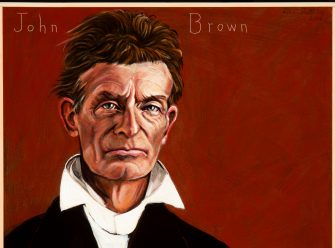
The textbooks would tell these stories that, like you said, they would say, “Toussaint Louverture, he was a quiet, peaceful person who never wished for vengeance against anybody.” There’s another one I like to talk about, which tells the story of John Brown, who of course led the revolt at Harpers Ferry. The story is that John Brown walked to the gallows like Jesus, and as he walked to the gallows, a small child looked up at him, and they had this holy moment of exchange. And that’s the end of the story; it never explains why he was going to the gallows, or what he had done, which I find fascinating. Really, this focus on teaching Black people to read, teaching Black people to write, but doing so through these moralistic tales that where the most important thing is always for you to forgive, forgive, forgive.
Lydia Maria Child, who’s an abolitionist that I talk about quite a bit, she wrote a number of these textbooks, and she says things like “you should go work for your former masters” and “you should let them know that you are not a slave anymore, but if they abuse you or they mistreat you, you should forgive them.” And “if they hit your children, or if they abuse your wife, do not strike them back.” And “if they still don’t treat you with respect, you should let them know that you are a free citizen of the United States and that you have rights, and if they still don’t listen to you, you should write a letter to your congressperson.” Telling Black folks to do anything other than strike back, do anything other than be angry. You can understand why this was a devastating, debilitating fear for these folks, that Black people would rise up.
Now, in the industrial models of education that were overseen by people like Samuel Armstrong, people like Booker T. Washington, even Black folks that were going to college, the expectation was that they were going to do manual labor, and that they were not going to learn things like classics, that they were not going to learn things that would make them too uppity, or make them unfit for this role of subservient labor that they were still supposed to be holding. It’s really important that even though the countless Black educators who had a different vision of what education means — and again, this is why that distinction of education and schooling becomes so important, right? There are Black folks that said, “That is a certain vision of schooling, but we have a different idea of education.” Because of the ways that archives reflect systems of power, we will never know as much or have as much documentation of those folks as we do of the folks that were on the making Black folks subservient tip. But, there were always Black educators that said, “It is our job to teach our people the things that they need to be truly free.”
I think it’s important to note that those actions were also met with retributive violence, and that Black teachers [and] white people who taught Black people, and who taught them anything other than staying in their place post-emancipation, were often targets of violence, of fires, of attacks, of beatings, of things like that. And again, this is why Karida Brown’s title, The Battle for the Black Mind, is so important, because it is dangerous to the political project of the United States. It upends the political project of the United States for Black people and Native people to see themselves as full humans deserving of full, flourishing lives, in concert with their loved ones, in concert with their dreams, in concert with the lands and waters and ancestors that they’re in relationship with. That is fundamentally antithetical to the intellectual hierarchy that built this nation state.
The primary founding father who gets the most juice, Thomas Jefferson, is this person who said Black people and Native people do not have fully formed brains and minds and hearts and spirits and capacity for complex thought. That presumption shapes the political architecture of the nation state. So, for Black folks or Native folks to come out and say, “Actually, no, that’s not true about me,” upends the very foundations on which the white supremacist settler colonial nation state exists. So you can see why this becomes a very threatening idea for people.
Kaler-Jones: And this is why we see right now all of the legislation and critical conversations about racism and oppression in school, because they don’t want us to learn this history. They don’t want us to learn the history of resistance. They don’t want us to learn these critical histories. They’re sanitizing the history, and they’re actually trying to get teachers to reteach everything that you have just shared with us.
Ewing: And you know what, Cierra? Until you said that, a connection that I don’t think I had fully made for myself is that we see two of the biggest fronts right now in the attack on teaching and classroom spaces are Black history, ethnic studies, insurgent history of racially minoritized peoples, and then we see the attacks on queer folks, on queer kids, on trans kids. I think that until this moment, I wasn’t . . . I’m going to articulate something that’s an idea in process, so pardon me. Transness is unto itself an emancipatory idea that is dangerous to the system of patriarchy that these folks are also dedicated to upholding. Some of the attacks on trans people and trans kids are absolutely scapegoating, like leaning on people’s internalized transphobia in order to turn attention away from all the vile stuff that they’re doing over here. But it’s also that trans people teach us lessons about the ways that gender is not essentializing or controlling. Trans people, in their very existence, in their thriving, in their joy, in their survival, teach us things that are liberatory about all of our relationships to gender in a way that is also profoundly dangerous to patriarchy.
So yeah, I think that that’s something. That to me is an insight that I think about from folks like C. Riley Snorton, who wrote the book Black On Both Sides, and who writes about intersections between Black and trans struggles and histories, and people like SA Smythe and other folks that I’m grateful to call friends and colleagues. Trans people being themselves is liberatory to everyone. It’s in the same way that people like Barbara Ransby or folks like the Black Youth Project have said when you organize through a Black queer feminist lens, that is liberatory to everybody. Anyway, thank you. That’s not two dots that I connected until right now when we were in this conversation.
Kaler-Jones: Yes, yes, yes, yes. Oh, I appreciate you. You’re getting a lot of appreciation, too, in the chat, just for the critical connections that are being made.
Ewing: Thank you. Thank you for making space for my own learning.
[breakout rooms]
Kaler-Jones: Eve, Jesse got to sing your praises earlier, but I also wanted to make sure to do so as well, because things that I’ve been able to learn from you and your work is just about imagination and creativity and how important that is to liberation. I actually had the opportunity a little bit ago to interview Mariame Kaba for Rethinking Schools, and she cited you.
Ewing: One of my faves.
Kaler-Jones: Yes, and she said one of the things that you always remind her is you say that in order to create pathways toward that which we have not seen, we have to lead with imagination. So in that vein, for the next question, you use this really powerful metaphor of hair braiding, which I love, a tradition shared in both Black and Native communities. It brought me back to all of those moments of sitting with my mom. My hair was an important part of community building and family time. But you talk about hair braiding through the lens of reimagining education as something that is interwoven, intentional, and rooted in care and love. How might this metaphor of hair braiding really help us reframe curriculum design, pedagogy, and how classrooms are structured, especially during dire times like these?
Ewing: Thank you for that. Mariame is somebody that I have learned so much from. I think a wonderful thing about writing a book — you have to find the wonderful things, because writing books is, for me at least, really hard and not fun most of the time — is you get to be in a lot of conversations in your head with texts, with people that you are reading and learning from. For me, I consider myself to be a Black feminist writer, to be a Black feminist thinker, and that means different things to different people. To me, this is part of the argument that I’m trying to make. There is a Black feminist argument. For me, one of the things that that means is this idea of centering care. Hair braiding to me is a metaphor, it’s an image for me to try to get at this idea of care and what it would look like to recenter care, and the antecedent of care, which is love, in the way that we make decisions on an everyday basis as educators.
Again, I want to broaden that to include both folks that are formerly in a K–12 teaching role, but also, educators in the world. One of my friends and collaborators, trina reynolds-tyler, she is a Black girl from the Southside who has 6 chickens in her yard, and she says that one of the reasons that she keeps chickens is not because eggs are hella expensive, but she says she keeps chickens because she wants the kids in the neighborhood to understand where eggs come from and how chickens work. That is her being an educator. If you are that person who teaches gardening, or who teaches quilting, or who makes sure that the history of your neighborhood or your community that isn’t written down anywhere, to make sure folks know about it. If you’re that person, you are also an educator.
When you’re a teacher, it’s very easy to get sucked into a technocratic apparatus that you have very little control over, that you didn’t make, [and] that you are surveilled into complying with. Where there’s 20,000 checklists of what you are supposed to be doing in your classroom, how you are supposed to be doing it, and often, when you really look closely, those things start to have very little to do with even teaching and learning sometimes. Often they have very little to do with care. They have very little to do with love. I remember my first year as a teacher, and you make all these mistakes, and you mess up all these things, and you end every day being like, “Oh, I did this wrong, and that wrong, and this wrong.”
I remember talking to my mom about it, and she said something like, “Well, if you show up, and if you love kids, they are always going to be able to tell that you love them, and that really counts for a lot.” At the time, I felt almost frustrated by that. I felt like she was letting me off the hook. No, I was supposed to do the word wall this way, and the data . . . The further I get into my life as an educator — I’ve been teaching one way or another for 20 years now — the more I’m like, “Oh, that’s actually the whole thing. If you love children, if you have children in your life that you love — your nieces, your nephews, your biological children, your fictive kin, whatever the case may be — you send your kid that you love your one special precious kid off to a place, and you just hope and pray that somebody is going to act like they love them, that somebody is going to act like they care about them, right? It doesn’t mean that we move away from rigor or from academic high expectations or things like that. But what does it look like if we begin with love, if we begin with care? How does that then take us to a place of higher expectations, to a place of wanting every young person to live the life that for them is a life of flourishing? But to do so in a way that isn’t about punishment, that isn’t about stratification, that isn’t about sorting, that isn’t about capitalism, that isn’t about all these other things.
Again, the poet in me, Cierra, when you said reading about braiding took you back to those tender moments, that’s everything I want to hear, because I think part of the way I try to write prose, not to get too crafty with it or whatever for the English teachers in the audience, but when I write a book like Original Sins, I’m mostly trying to build this really vast evidentiary basis. I’m trying to say this was this, and I know it was this because this archive, this quote, this thing, this statistic, this, that, and the other, right? But what I’m trying to do as a poet, to me poetry is about using an economy of language in a way that I’m suggesting something that is going to let you go on your own journey towards an emotional place that I’m trying to get you to land. So if I’m trying to make you remember what it felt like to fall in love for the first time, it’s actually not great to be like, “Remember what it felt like to fall in love for the first time?” “Remember what it was like to open your locker and see a note that somebody had slid in?” And then you time travel to this place.
So, in thinking about braiding, which is a deeply embodied practice, right? Even the phrase, tender-headed, I think is an amazing poetic phrase. Like, your head is tender, it’s very sweet. I’m not tender-headed, and I’m always kind of judgy of people who are, but there’s something about taking people to that place of vulnerability and tenderness that I think that’s what I aspire to in our schooling spaces. One of the hardest things about touring for this book is people read the book about how schools are really rough, and then they get to the end and they’re like, “Okay, now give me my checklist that I can bring to my PD to be like, tell me the ten simple facts that I can post on Pinterest or whatever about these are the things you need to do to fix your school.” And I can’t do that. I can’t do that for you. I’m so sorry. It would be disingenuous of me to do that. But what I can do is remind folks to ask themselves those questions. Why am I doing this? Why are we doing this? What are we actually trying to attain? Is it in line with our values? What would it look like here if we started first with loving this young person, with caring for this young person? Where does that take us in this moment? That’s what I’m hoping people will . . . What you do with that is up to you, but that’s the place that I hope is generative to start.
Hagopian: Yes. That’s so needed in these schools that are trying to reduce our kids to data points and test scores. No, we’re in this because we love these kids, and we see what they can become. Thank you for sharing all that.
I have one last question. We just have a couple minutes, but there’s a beautiful passage that you write in the final chapter, so I just want to read this section to have us reflect on it. You write,
Rather than asking how we can change schools, students, or teachers, how might we see the transformation of schools as part of the broader work of transforming society? How do we acknowledge school as a mirror facing a world that mirrors right back, with images bouncing recursively against one another forever and ever, and therefore requiring interventions that keep sight of the whole shebang?
I love this metaphor and this passage, not just because it’s beautifully written, but also because it reframes school reform, and it helps us understand that schools are inseparable from the society that we’re in. I mean, how can we imagine a liberated school system as we’re in a society with rising fascism, right? It just doesn’t make any sense. So, can you talk about what it means to keep sight of the whole shebang? And they’re like the current moment of all these overlapping crises, right? What can that look like, and how might that shift the questions we ask in education and the kinds of movements we build?
Ewing: Thank you for that. I think this is another one where I feel like I’m learning and articulating my own thoughts through being in conversation with you. One way that we look at that recursive mirror is that it’s hopeless. That’s one possibility. And I think that oftentimes conversations about school transformation end in that place, where it’s like, how are we supposed to change the schools when there’s poverty, there’s no housing, and there’s no healthcare? So we feel hopeless. And it’s a catch-22, it’s a chicken and egg conundrum, and we can’t start anywhere, so schools are always going to be bad.
I’m thinking as we’re talking about the Prison+Neighborhood Arts/Education Project, which is an organization that brings folks to teach inside prisons, and of a class I co-taught with Dave Stovall at Stateville Correctional Center, which is a maximum security prison. And I’m thinking about how, through many years of reading and study, and then also interaction with incarcerated folks, how often folks who are incarcerated have been at the forefront of giving us political tools for thinking about liberation. I think a lot of educators who’ve taught inside would say that. But also thinking about the long legacy of intellectual and political work that comes from incarcerated folks. I bring that up to say that when you find yourself at the center of a deeply evil system, what that can sometimes mean is that you also have profound insights about that system. Then also, aside from that, you have to just start somewhere.
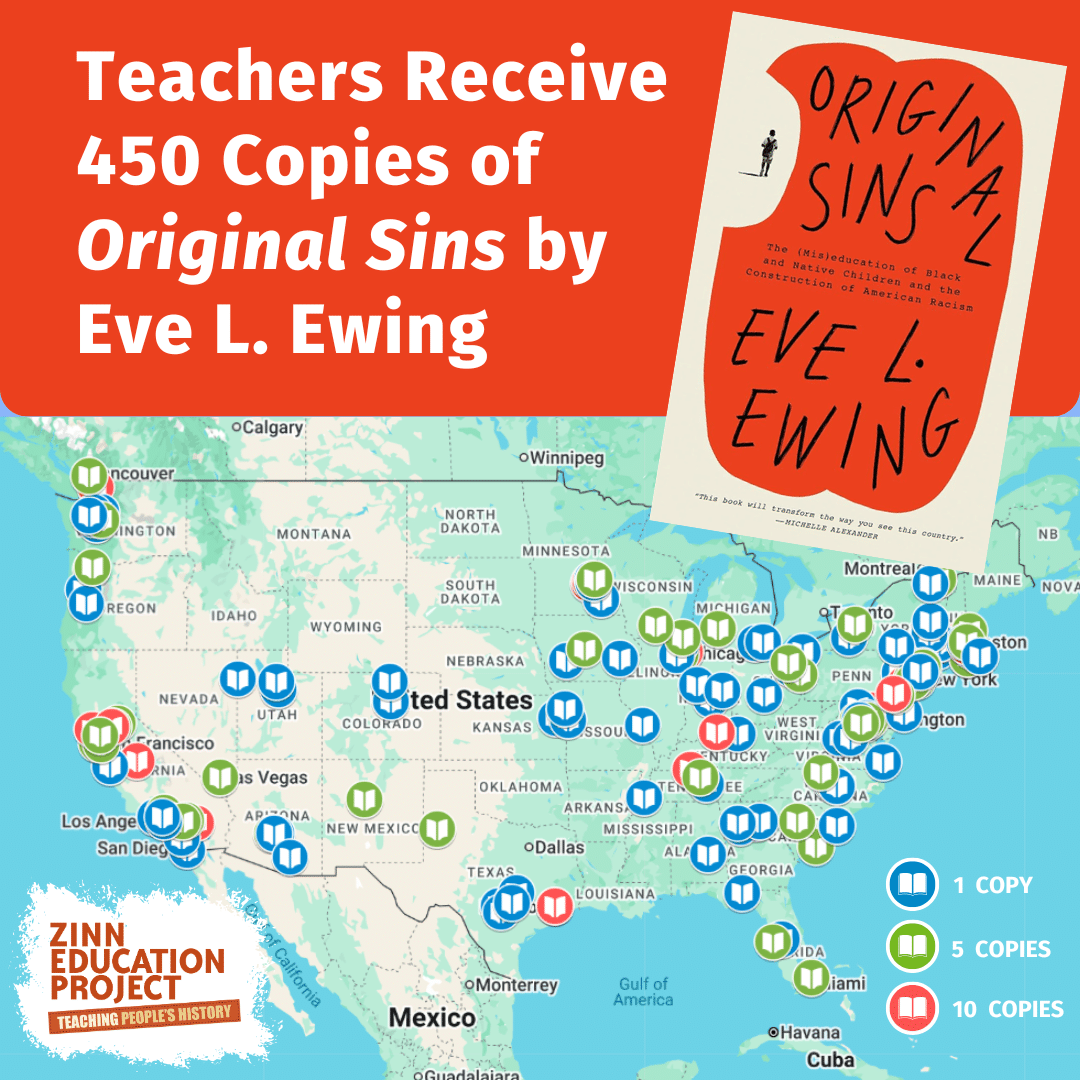
I think that right now, as I’m thinking about schooling, I’m thinking about the ways that our school spaces have become emblematic of fascist and authoritarian ambition. At the same time, I think of everything that we have that folks in other spaces don’t have. I think about what it means for 220 people from across the country and the globe to be on this call right now. I think about that map that you shared. I think about how I have never before been in a Zoom room where some of the just pedagogical choices that you all are making are happening. Something I’ve been thinking about is how teachers are organized, teachers know how to make an agenda, teachers know how to run a meeting smoothly. We have all these networks; we have so much at our disposal.
Our young folks are experiencing the vanguard of everything that we know is wrong and broken about this society, and therefore they bring with them a profound expertise about what it could look like to imagine something different. So, my insurgent and absurd dream in this moment is that even as things could be and can be, and in many cases are, so hopeless in so many of our schools, that this will be the time for these conflagrations of new possibility to spark and to emerge. And that the way that they are making it so evident how scared they are of us, how terrified they are of these relationships, how terrified they are of young people loving themselves and each other, how terrified they are of teachers understanding the profoundly political and radical nature of this work, they are tipping their hand. They are letting us know. In case you didn’t already know, now you know. If you don’t know, now you know. We are so dangerous.
I’m dreaming of a world where those new formations, that vanguard of new possibility, can emerge from school spaces, and I’m looking to see school folks that are going to teach us how to think differently about mental health, how to think differently about healthcare, how to think differently about fighting ableism. How to think differently. I mean, even the ways that so much organizing around undocumented folks, for undocumented folks, and by undocumented folks has come from schools, right? So much organizing around disability, right? So much conversation about all these things is coming from our school spaces historically. So yeah, I’m looking to us, I’m looking to y’all to be the places where we say, “Okay, but what if we just fed people?” “Okay, but what if we just make sure that everybody has clean clothes and a safe place to sleep?” You know what I’m saying? I feel like there’s possibility here. There’s possibility in these spaces. And they know that. They’re trying to get us, you know.
Hagopian: Exactly, exactly. They know we’re dangerous. I agree with you, because actually they love the hidden curriculum method of ruling society a lot, and it was very comfortable for them to use that. And now these uncritical race theorists, as I call them, these uncritical race theorists want to ban us from teaching Black history. That means that they’re worried about what we’re doing.
Ewing: Well, here’s the thing. Our ancestors were in conditions where it was illegal for them to read, it was illegal for them to write, and when it was illegal in this country for Indigenous people to speak their own language, or to practice their own faith practices. It’s not like people are like, “Oh well, guess we just won’t.” People risked life and limb to educate — in the woods, in the church basement, by the river. People risked their lives to do that work. And those are our people! Those are our ancestors. Biologically, but also politically, those are our ancestors. I’m not trying to diminish the gravity of the moment, but when folks were sneaking off into the woods at night to teach each other how to read, and if they got caught, they could die . . . We can do this. They’re not smarter than us, they’re not cuter than us, they’re not more organized than us, they’re not better resourced — well, they are in some ways better resourced than us, but they’re not more organized, smarter, better, cuter, or any of that. They don’t have better food at their meetings.
Hagopian: No doubt. Let’s get to it. We’ve got a world to win. Thank you so much, Eve.
Ewing: Thank you. Thanks, everybody, for being here. Thank you.
Hagopian: Thank you for sharing your brilliance and your laughter with us, and your imagination.
While this transcript was edited, there may be minor errors or typos — if you notice something you believe to be incorrect, please contact us at [email protected].
Resources
Here are many of the lessons, books, and other resources recommended by the presenters and participants:
Lessons and Curriculum
|
|
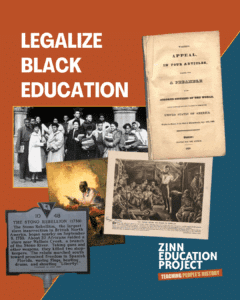
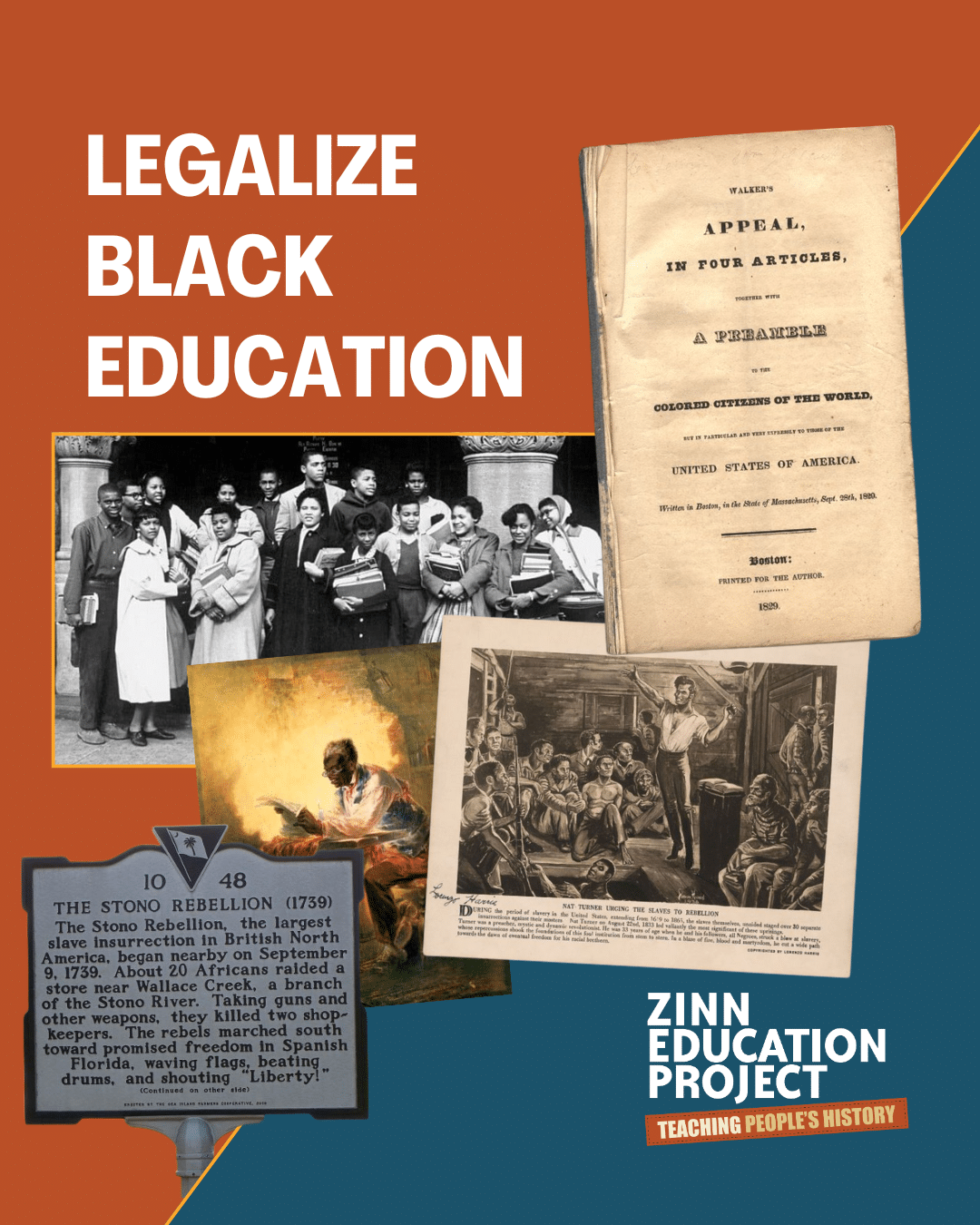
Legalize Black Education: The Long Fight for the Right to Learn by Jesse Hagopian “Founding” Documents We Don’t Learn About by Mimi Eisen The Cherokee/Seminole Removal Role Play by Bill Bigelow Testing, Tracking, and Toeing the Line: A Role Play on the Origins of the Modern High School by Bill Bigelow Teach Reconstruction Campaign lessons and our national report Teaching for Black Lives edited by Dyan Watson, Jesse Hagopian, Wayne Au (Rethinking Schools). Discussion guide by Cierra Kaler-Jones and Jesse Hagopian |

Books

Articles
 |
Original Sins — and What to Do About Them: An Interview with Eve L. Ewing by Cierra Kaler-Jones (Rethinking Schools) Mariame Kaba: Everything Worthwhile Is Done With Other People by Eve L. Ewing (Adi Magazine) Black Life and Death in A Familiar America by Eve L. Ewing (Fader) |
Videos
Eve L. Ewing on Original Sins with Clint Smith, Politics & Prose, March 8, 2025
This Day In History
The dates below come from our This Day in People’s History collection, which contains hundreds of entries all searchable by date, state, theme, and keywords.
|
|
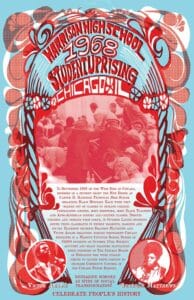
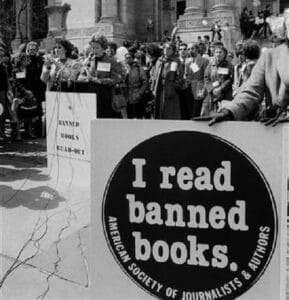
May 26, 1637: Pequot Massacre Oct. 16, 1859: Abolitionist Raid on Harpers Ferry Dec. 2, 1859: John Brown Executed Jan. 1, 1862: Parkersburg Colored School Founded Feb. 20, 1884: Indian Industrial School Opens in Nebraska July 19, 1919: White Mobs in Uniform Attack African Americans — Who Fight Back — in Washington, D.C. July 27, 1919: Red Summer in Chicago Sept. 28, 1919: The Omaha Courthouse Lynching and Riot Dec. 8, 1936: Gibbs v. Broome Leads to Pay Equity for Black Teachers Aug. 21, 1939: African Americans Arrested for Going to Public Library Sept. 22, 1954: Hillsboro’s “Marching Mothers” Sue to Desegregate Schools July 16, 1960: Greenville Eight Stage Read-In at Local Library April 1, 1965: Blackwell v. Issaquena Board of Education Sept. 16, 1968: Harrison High School Student Uprising Jan. 4, 1977: Students Successfully Sue School Board Over Book Bans May 4, 2016: Indigenous People March to Demand Revocation of the Doctrine of Discovery |
Participant Reflections
With more than 300 attendees, a poll of participants’ primary roles in education showed 39 percent K–12 teachers, 21 percent teacher educators, 4 percent K–12 students, and more.
Here are more comments that participants shared in their end-of-session evaluation:
What was the most important thing (story, idea) you learned today?
I loved all the gems dropped today by Dr. Eve Ewing. Her down-to-earth, tell-it-like-it-is nature uplifted and validated us all. I think that the most important thing was when Ewing shared about hair-braiding and care of our bodies as love. I still braid my daughters hair, and my own, and she is 25 years old! And it always takes at least seven hours.
The most important idea that I am glad was articulated was the connection between what it means to be trans and transgress against mistreatments, injustice, and social ideas of who we should be.
I loved listening to the discussion about the difference between education and schooling. It was powerful on reflect on the “purpose” of school, and more specifically, the school where I teach.
Suppressing Black history in textbooks is not a recent phenomenon.
There was so much to think about! The explanation about the “Race Machine” was very thought-provoking, and thinking about our own racial autobiography as a way to build a deeper understanding of constructing race lines that promote patriarchy and white supremacy.
When Ewing said that lynching begins in the classroom. I’m thinking about the behaviors we value in the classroom (i.e. compliance, silence, docile behavior). It’s really sticking in my head.
The idea that “lynching can start in the classrooms” was profound. What I needed to hear most was that love is truly the center of this work. In the middle of lesson planning and creating ELA groups, I needed to be reminded of this.
Hard to narrow it down to one thing. The connection between trans and queer liberation as threatening to the patriarchy, just as Black liberation, and Native liberation has been, was thought-provoking! I also appreciated the braiding metaphor. The idea that race has a geographical component gave me ideas for my classroom.
The framing questions:”Why are we doing this? What are we trying to accomplish?” I’m not in the classroom anymore but these questions can be used in all my movement work, in all our movement work. I wish I had had these questions as a touchstone when I was teaching, when it’s so easy to feel like best intentions for liberation education aren’t going right.
What will you do with what you learned?
I’m taking the ideas I learned here and going to incorporate the framing into my practice. I’m teaching literature to a 9th grader this year and I hope to bring in as much critical thinking as possible. This lecture gave me a lot of inspiration. I love the idea of having students write an “autobiography of race.”
This session has put a different lens on how I will teach history. I must not sanitize the information that I provide.
I will read the book that I just bought. I am curious about the analysis of Native American education and hoping to apply it to my classes that have many Native American students.
I would like to have more conversations with my colleagues. Are we here for “schooling” or “educating”? And it’s a reminder to focus on what matters — helping my students get an education so they can be the best humans they can be.
Stay centered in standing in truth and love, and that this is such important work. School is a definite mirror of the society we are living. Thanks for the reminder to focus on what I can control — center love for students in a space they can feel authentically seen for all that they are.
As a student, I will apply the connections we made today to my future classes. Especially someone who is interested in studying politics and history, these ideas and topics will stick with me throughout my years in school, and after.
I will use what I learned to look more critically at the systems shaping my students’ experiences. As a teacher, this means I will not only focus on individual behaviors or outcomes but also on how structures in the classroom and school can reinforce inequity. I will work to design instruction that interrupts those patterns and creates space for all students to feel seen and supported.
How was the format for the class?
I love how these meetings are formatted: Stimulating presentations coupled with small group discussions.
Beautiful format. I loved the size and timing of the breakout rooms. It felt intimate and safe, and not overwhelming.
I enjoyed every moment.
I love this format and the pedagogy of practice and participation that it embodies.
I love the time to talk with colleagues across the country!
It was pretty cool. I liked Ewing answering questions from facilitators, and I liked the breakout rooms — not too long, not too short.
I liked this format and the breakout groups! It was nice hearing from other educators’ perspectives.
I came to one class and I loved it so much, I keep coming back. Thank you for hosting these sessions. They make my week happier.
Presenters
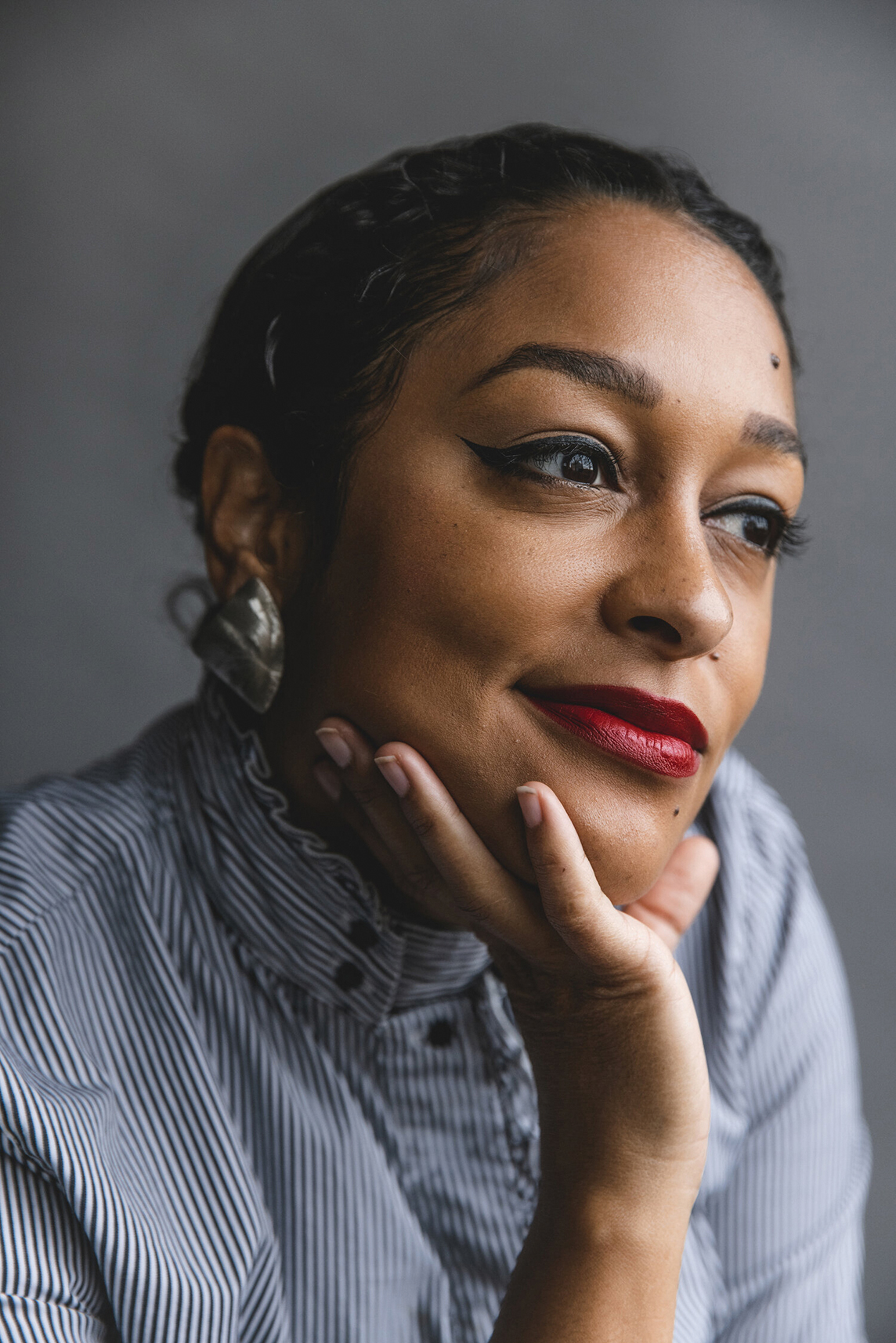
Eve L. Ewing is a writer, scholar, and cultural organizer from Chicago. She is the award-winning author, most recently, of Original Sins: The (Mis)education of Black and Native Children and the Construction of American Racism, as well as the poetry collections Electric Arches and 1919, the nonfiction work Ghosts in the Schoolyard: Racism and School Closings on Chicago’s South Side, and a novel for young readers, Maya and the Robot. She is the co-author (with Nate Marshall) of the play No Blue Memories: The Life of Gwendolyn Brooks. She has written several projects for Marvel Comics, most notably the Ironheart series and Black Panther, and is currently writing Exceptional X-Men. Ewing is an associate professor in the Department of Race, Diaspora, and Indigeneity at the University of Chicago. Her work has been published in The New Yorker, The Atlantic, The New York Times, and many other venues.
Cierra Kaler-Jones serves as the executive director of Rethinking Schools. Cierra is also on the leadership team of the Zinn Education Project, which Rethinking Schools coordinates with Teaching for Change, and has hosted many of our Teach the Black Freedom Struggle classes. Cierra is a teacher, a dancer, a writer, and a researcher. She previously served as director of storytelling at the Communities for Just Schools Fund.
Jesse Hagopian is an editor for Rethinking Schools, co-editor of Teaching for Black Lives, editor of More Than a Score: The New Uprising Against High-Stakes Testing, author of Teach Truth: The Struggle for Antiracist Education, and the Teaching for Black Lives campaign director for the Zinn Education Project. He previously taught Ethnic Studies and was the co-adviser to the Black Student Union at Garfield High School in Seattle.


Twitter
Google plus
LinkedIn