
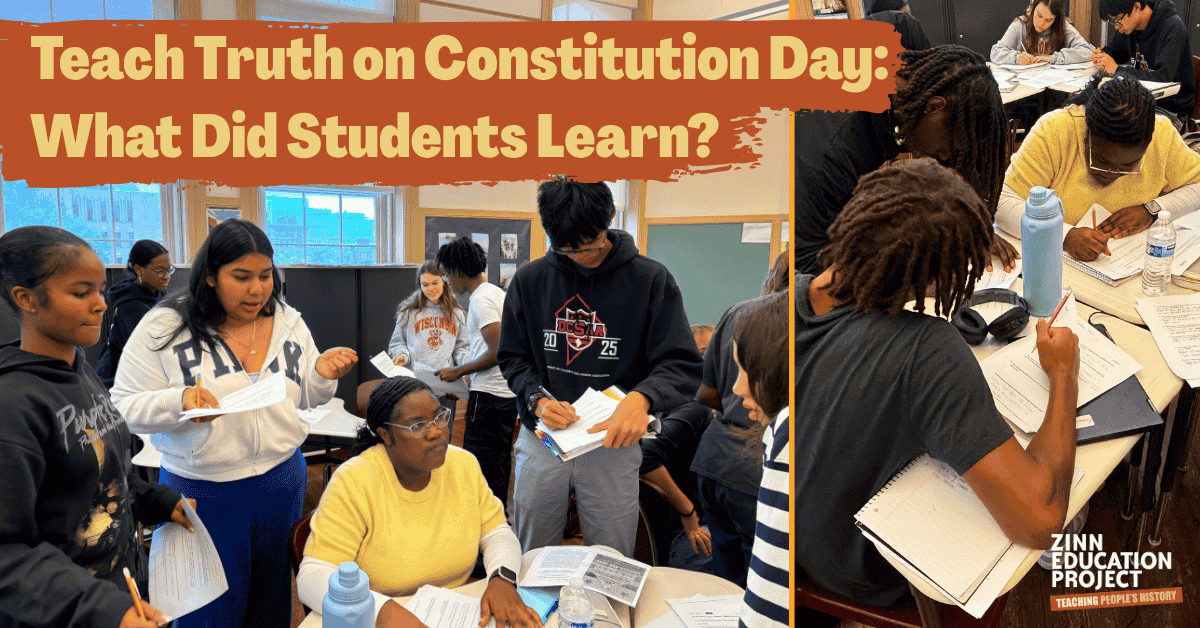
In hundreds of classrooms on Constitution Day, students examined who was invited to write the Constitution (and who was excluded) and what rights are included — and which are left out.
No wonder the right insists on mind-numbing worksheets about the Constitution and recitations of the Preamble — anything to avoid the insights shared below.
Students were amazed to learn that clean water, food security, and employment are not rights guaranteed by the U.S. Constitution — and that perhaps they should be! — Chelsea Freeman, high school teacher, Tonasket, Washington
One student said, “My main takeaways are that the United States still has a lot of work to do as a nation to guarantee its citizens well-being, and that we need to play an active role in making sure our government upholds our rights.” — Ben Williams, high school teacher, Washington, D.C.
 I gave students a “pop quiz” on their rights in the Constitution. Most were confident they had aced it because to them, the rights listed seemed like no-brainers.
But as the 50% (and lower) scores started rolling in, their confusion quickly turned to curiosity . . .
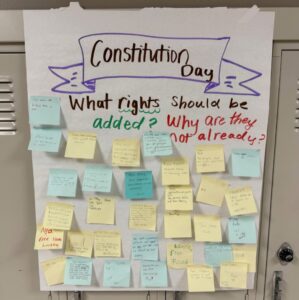
Students added sticky notes to a poster, naming the right they believe should be added to the Constitution and why. The most common themes were food and housing. — Victoria Nagy, middle school teacher, Brooklyn Park, Minnesota
Students were floored that essentials like clean water, housing, healthcare, and employment, among many others, were not guaranteed in the Constitution. The conversation that followed was both productive and powerful. Students explored many possible solutions to these clear and obvious gaps in our founding documents. — Kenneth Roundy, elementary school teacher, Gearhart, Oregon
I have to say, it’s the most engaged I’ve ever seen my students get about the Constitution, and it really has them thinking about who benefitted from the original document and what social groups had the most say and which voices were ignored. — Gabe Doss, high school teacher, Detroit, Michigan
The first four teachers above used “We the People”: Whose Rights Does the Constitution Protect? and the last one used Race, Class, and the Constitutional Convention.
Our lessons on the Constitution are relevant year-round. As with all lessons at the Zinn Education Project, they are free, thanks to individuals donors like you.
Race, Class, and the Constitutional Convention by Bill Bigelow
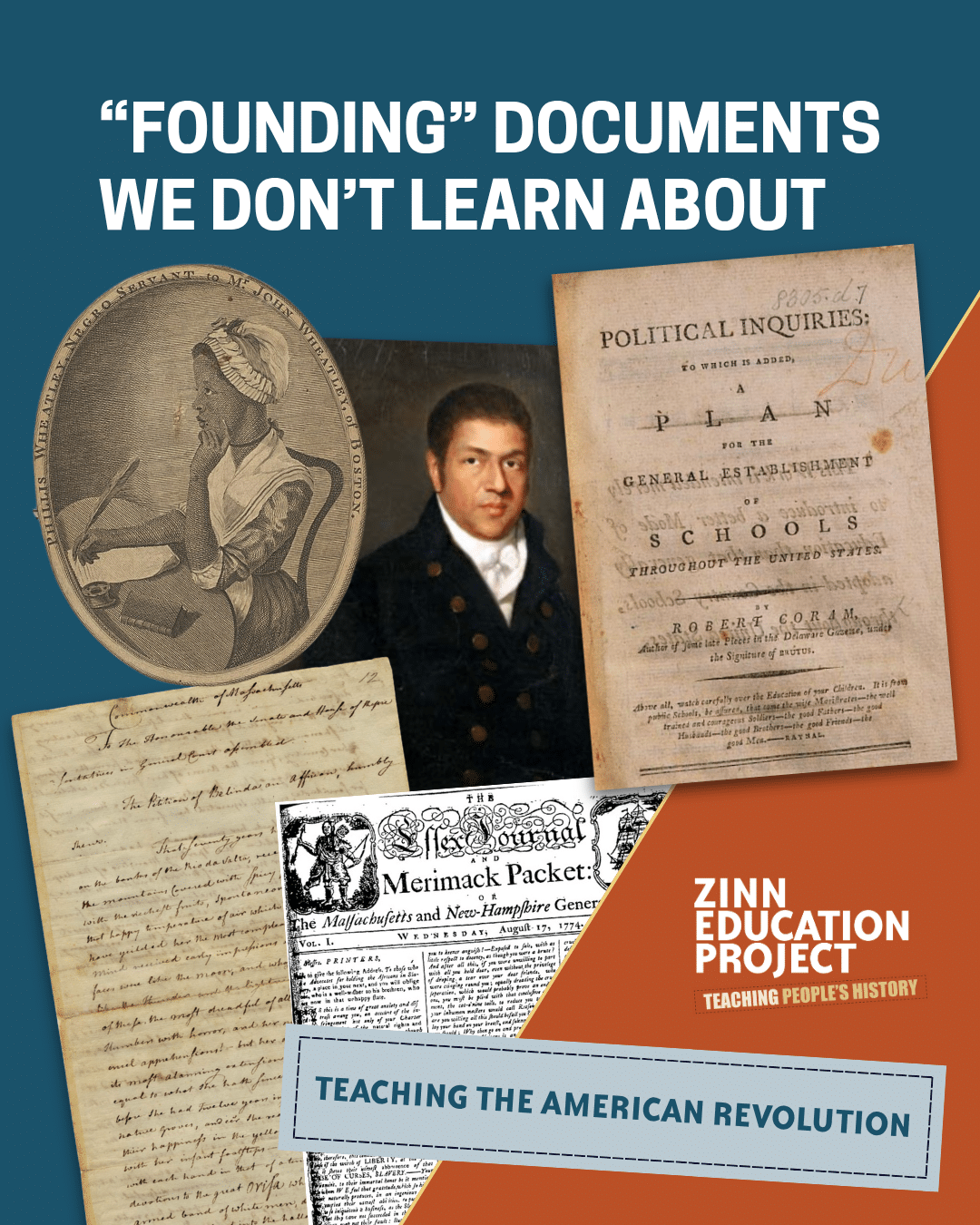
“Founding” Documents We Don’t Learn About by Mimi Eisen
“We the People”: Whose Rights Does the Constitution Protect? by Jesse Hagopian
A New U.S. Bill of Rights by Larry Miller
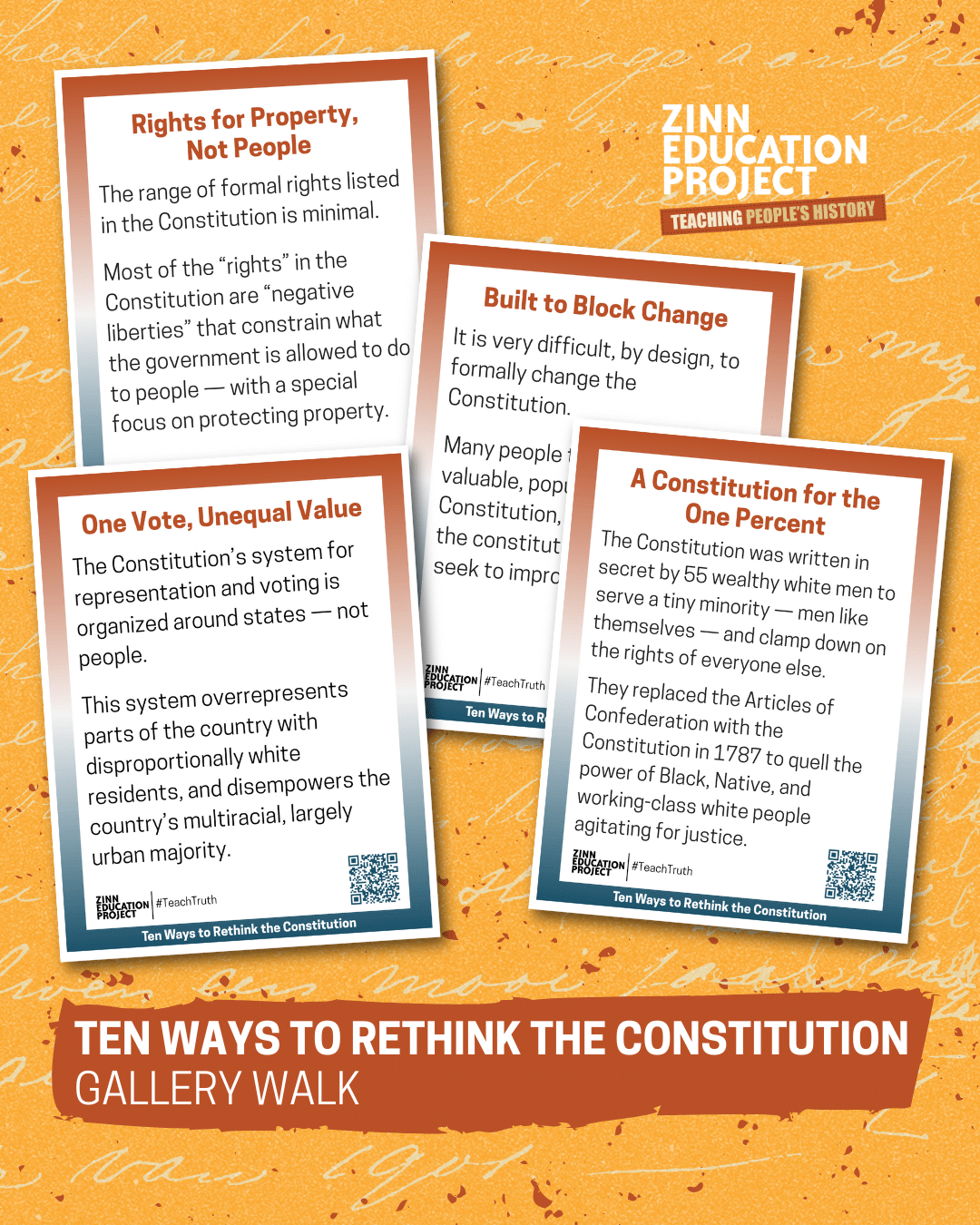
Ten Ways to Rethink the Constitution gallery walk by the Zinn Education Project
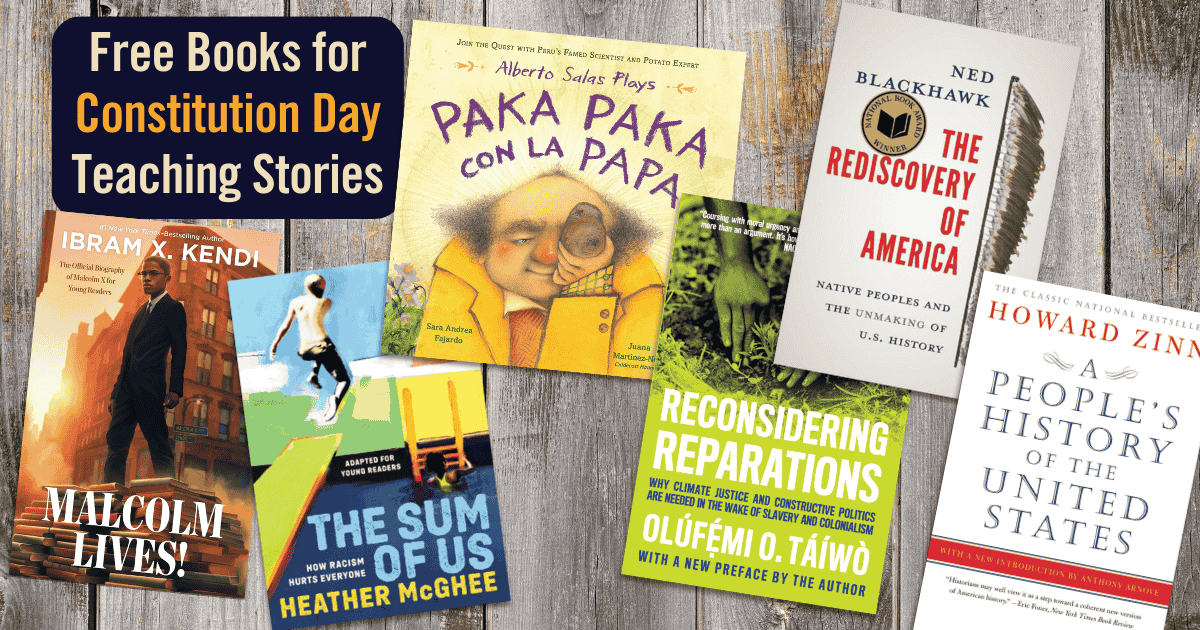
Share your teaching story and we’ll send you a book in appreciation.
Donate so that we can bring these resources to more classrooms.
American Revolution: 250th Anniversary
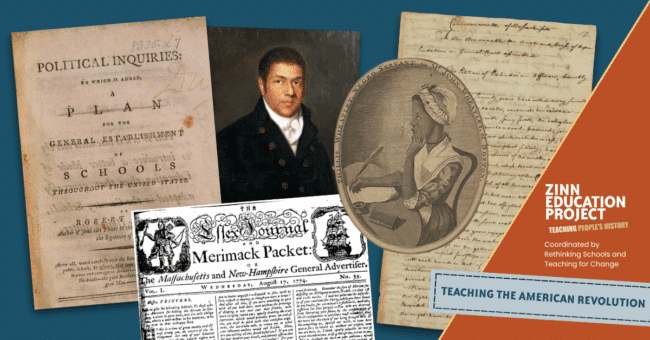
On Constitution Day, the U.S. Department of Education launched the America 250 Civics Coalition as part of this administration’s plans to celebrate “a new era of American greatness.” The coalition of 40 organizations includes Hillsdale College, Moms for Liberty, PragerU, and Turning Point USA.
Given the many crises with immigration detention, extreme weather, education censorship, loss of healthcare, genocidal wars, authoritarian rule, and more — it is imperative that we give students tools for an honest study of the American Revolution so that they can shape a more just future.
We offer considerations for framing the American Revolution, followed by resources for teaching outside the textbook. We welcome your feedback on these resources and suggestions for additions.
Donate so that we can bring these resources to more classrooms.
Twitter
Google plus
LinkedIn