

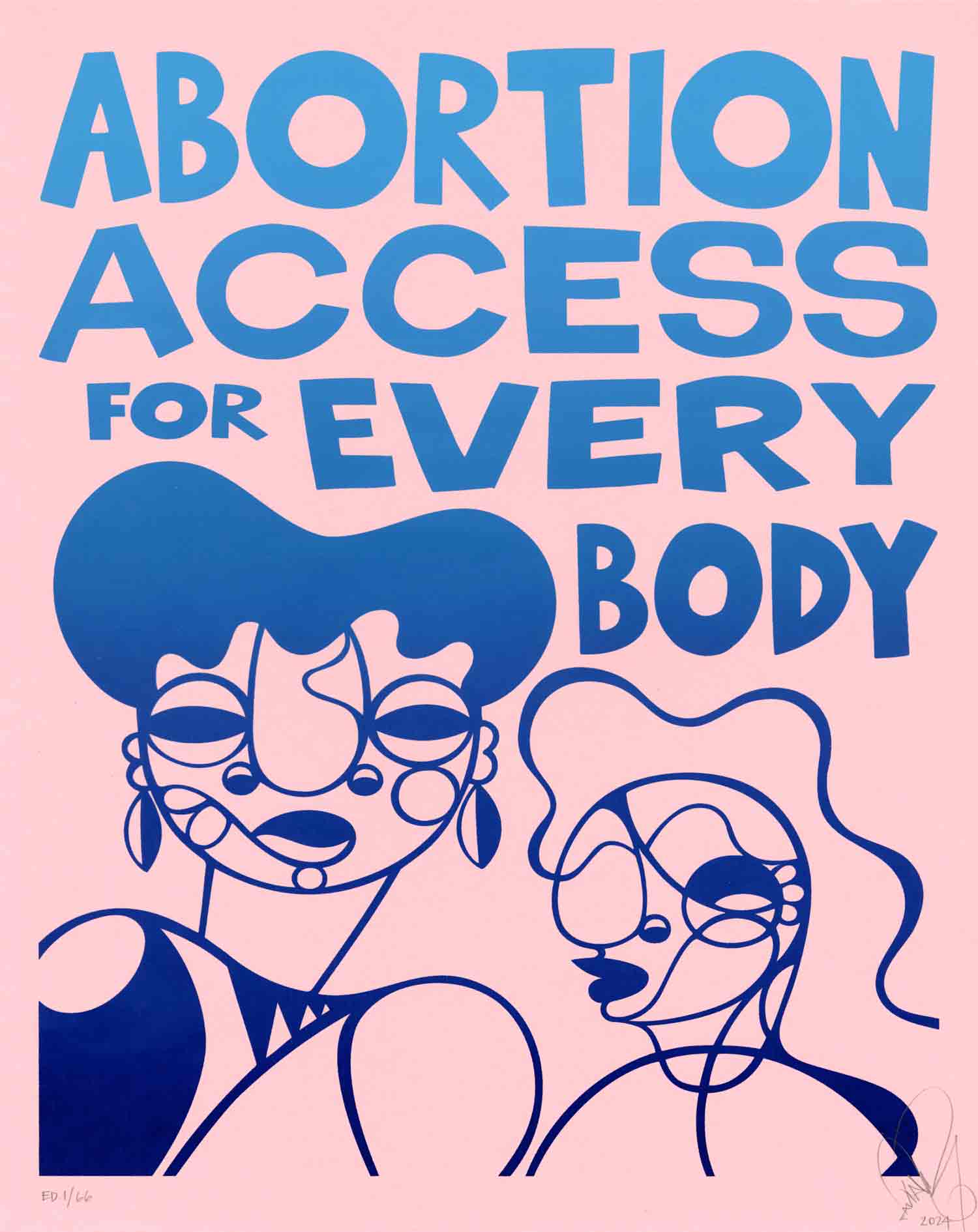
Those of us who were members of Jane were remarkable only because we chose to act with women’s needs as our guide. In doing so we transformed illegal abortion from a dangerous, sordid experience into one that was life-affirming and powerful. — Laura Kaplan, as quoted on the Justseeds artwork below
On May 4, 1972, seven women — students, activists, feminists, and organizers of an underground abortion and counseling clinic — were arrested on the South Side of Chicago and each charged with 11 counts of abortion and conspiracy to commit abortion. Each charge carried a possible 10 year prison sentence. The women were part of the Abortion Counseling Service of Women’s Liberation, better known as the Jane Collective, formed in 1965 by University of Chicago student (and civil rights activist, feminist, and anti-war organizer) Heather Booth to provide safe and clandestine abortions and counseling to women in need.

Mugshots of four Janes who were arrested in 1972. Source: HBO / Smithsonian Magazine
Known as the Jane Seven, the women were released on bail after one night in jail. The defendants chose to orchestrate a collective defense and hired attorney Jo-Anne Wolfson, who had successfully defended Black Panther Party members years before. Wolfson wisely stalled, filing unnecessary motions, knowing that the Supreme Court would soon decide in the case of Roe v. Wade whether or not to legalize abortions.
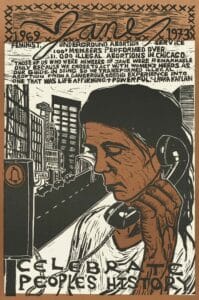
“Jane — Underground Abortion Service” by Meredith Stern. Source: Justseeds Artists’ Cooperative
That decision came on January 22, 1973, when the Supreme Court legalized abortions in the United States. The charges against the Jane Seven were eventually dropped, and because of the now safe and legal access to abortion care, the Jane Collective brought its services to an end.
According to Kayla Rubenstein, more than 100 Jane Collective members “organized and performed over 11,000 abortions for those in Chicago between 1965 and 1973.” Rubenstein continues,
Part of counseling entailed providing each woman with a copy of The Birth Control Handbook and Our Bodies, Ourselves, which was then a revolutionary feminist pamphlet and has since evolved into a full-length [book] by the Boston Women’s Health Book Collective.
Booth had this to say of her experiences as a founding member of the Jane Collective:
I learned some very key lessons, the most important of which is that if you organize, you can change the world. But you need to organize, and with love at the center. The other thing is sometimes you need to stand up to illegitimate authority.
On June 24, 2022, the U.S. Supreme Court overturned Roe v. Wade in Dobbs v. Jackson Women’s Health Organization, ending the federal constitutional right to abortion. Since then, abortion bans and restrictions have proliferated, threatening women’s health and bodily autonomy, while also inspiring new forms of collective care and resistance.
Additional Resources
 The Story of Jane: The Legendary Underground Feminist Abortion Service by Laura Kaplan
Jane: The Legendary Story of the Underground Abortion Service, 1968–1973 by Judith Arcana
The Janes: The Story of UChicago’s Clandestine Abortion Ring by Kayla Rubenstein in The Chicago Maroon
I Was Arrested For Helping Women Obtain Illegal Abortions by Sheila Smith at HuffPost
The Underground Abortion Network That Inspired ‘Call Jane’ by Michelle Mehrtens in Smithsonian Magazine
Watch the HBO documentary The Janes and the 2026 movie Call Jane to learn more about these pro-choice organizers. Trailers for both are below.

Twitter
Google plus
LinkedIn