
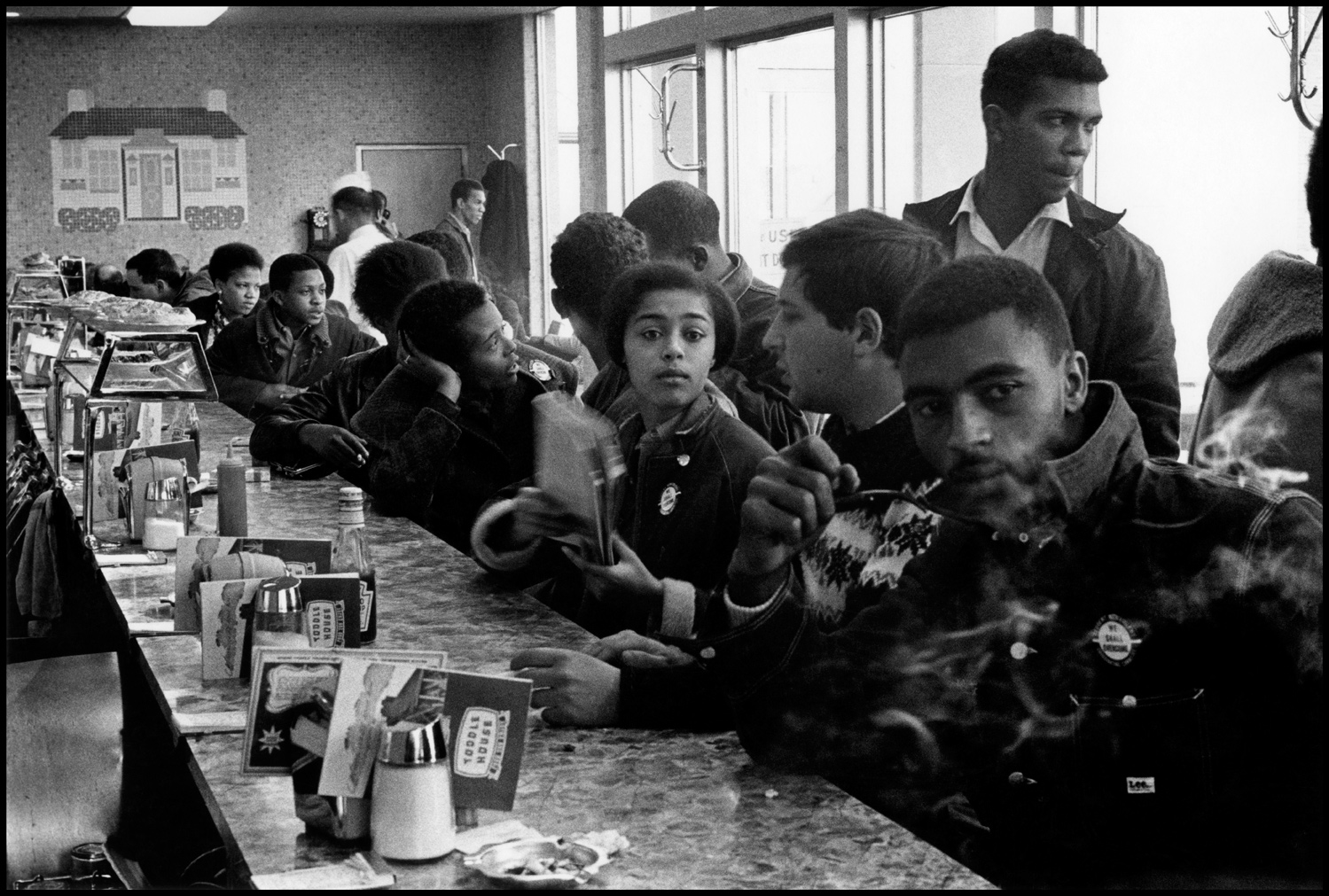
As people look for strategies to challenge fascism today, we can learn a lot from the work of the youth-led Student Nonviolent Coordinating Committee (SNCC) in the 1960s.
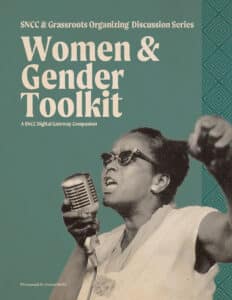
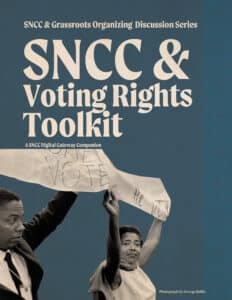
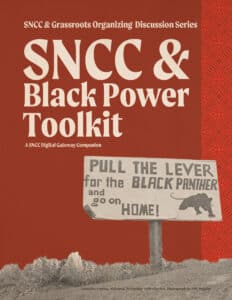
The SNCC Legacy Project has produced six toolkits that are free to download. Each one has primary documents, narrative history, photos, and discussion questions.
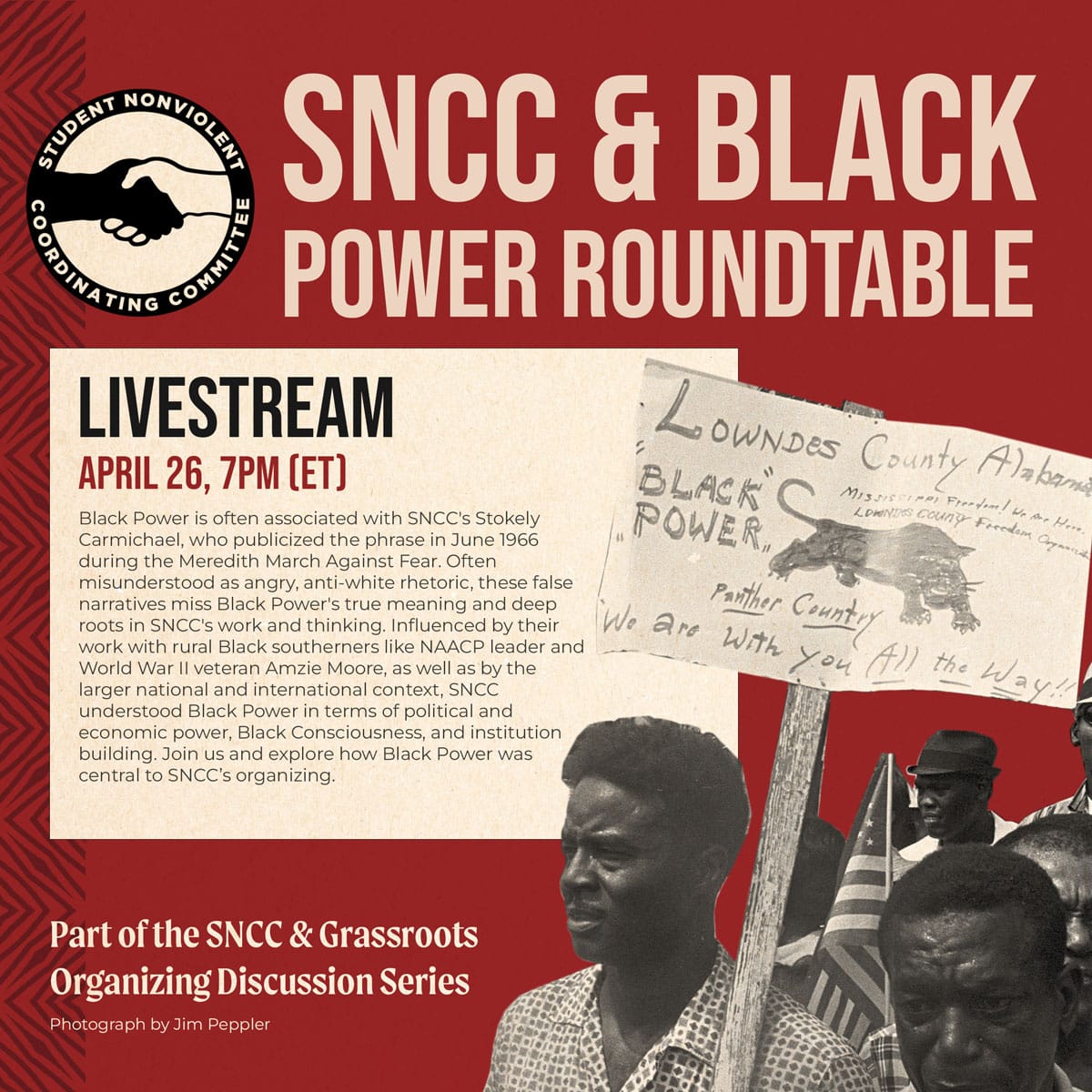
Topics include voting rights, women & gender, freedom teaching, art & culture, Black power, and the organizing tradition.
Learn More and Download Toolkits
 |
 |
 |
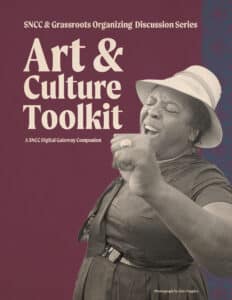 |
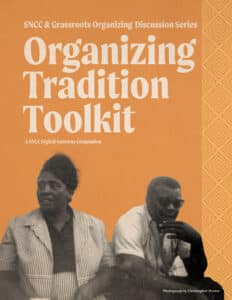 |
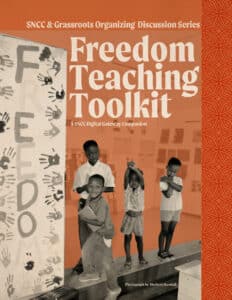 |
Learn More and Download Toolkits
Classroom Stories
Coming into their junior year of high school, many of my U.S. history students know little about the Civil Rights Movement. They’ve typically heard of Rosa Parks and Martin Luther King Jr., of course, but they couldn’t tell you more than their names.
Almost none of them have ever heard of the Student Nonviolent Coordinating Committee, at least until I introduce them to the SNCC Digital Gateway and the accompanying toolkits. These powerful teaching tools enlarge my students’ conception of the Civil Rights Movement. They introduce a new, dynamic cast of characters, who worked outside of the limelight in the fight for racial equality and justice. They illuminate the grassroots organizing tradition that propelled the movement forward long before and after the activism of the 1950s and 1960s.
My students become enamored with SNCC — its workers, its methodology, and its philosophy and ideals. They feel empowered learning that young people — not much older than themselves — profoundly impacted history. My students also become much more interested, not just in the history of the Civil Rights Movement, but in history in general, knowing that there is always more than meets the eye.
These resources have become a staple in my curriculum and have reshaped how I teach the Civil Rights Movement.
My students found the SNCC Legacy Project Toolkits easy to use. The graphics are beautiful, and the stories are easy to read and engaging.
The SNCC Legacy Project resources provide teachers and students with nuanced, robust, and engaging information on the Civil Rights Movement and the people who participated in the ongoing struggle for freedom and equality in the United States. These materials go beyond the standard, leader-focused narrative that we hear about civil rights, making it abundantly clear that women, young people, and individuals from all different backgrounds were essential to the movement and integral to its accomplishments.
The SNCC Legacy Project gives teachers and students exactly what they need and what too few resources provide — the means to understand and identify with historical actors and gain a greater sense of their own power and agency.
Feedback from Students
Using the toolkits alongside the SNCC Digital Gateway was a unique learning experience that allowed me to engage with the material in a more interactive way. — Marlea Petroziello, WRTG105
I noticed that the toolkits and SNCC digital gateway were much different than any other forms of readings in the sense that, not only were there readings but there were also fun activities to help kind of put yourself in their shoes for a second. Like with the power of singing activity, where the toolkit gave the readers certain scenarios and songs and let the readers match what song they would sing for each certain situation. — Bianca Balinda, WRTG105
I loved how interactive and organized the SNCC Digital Gateway was. This would have been a great tool for me in high school and learning more about the Civil Rights Movement. Its interactive qualities make it fun and interesting to learn about and it helped me stay engaged more as a reader. — Ashley Sanchez, WRTG105
Compared to more traditional reading assignments, using the toolkits and the SNCC website made learning feel more active. I wasn’t just taking in information, I was piecing things together, comparing sources, and thinking about the broader meaning behind the events. Overall, the toolkits and the SNCC Digital Gateway made learning more engaging and personal. They helped me become a better critical thinker, a more informed citizen, and a more reflective student. I’ll carry these skills with me into future classes, and also into how I understand and respond to the world around me. — Kyleigh Jones, Hist266: Civil Rights Movement
Using the toolkits and the SNCC digital gateway was a more interactive and engaging way to learn, which I found enjoyable. My favorite aspect about the SNCC Digital Gateway is that each page links additional primary sources to anything that a specific person is involved with. It was a fantastic little rabbit hole, so to speak, and I genuinely love diving into the rabbit hole of learning. — Nyki Karns-McManus, Hist266: Civil Rights Movement
One thing I learned from the toolkits and their timelines was how many different campaigns SNCC was involved in at once. The sheer scope of the organization didn’t really hit me until looking at the different timelines of the organization’s engagement. I really enjoyed being able to use the toolkits, it was a cool way to look at sources outside of our traditional readings. The visuals and historical documents also helped make the lessons more engaging. That’s one of the reasons why I am keeping my set of toolkits. I’m hoping that I can use them in my classroom after I graduate. I think they’ll be helpful and engaging for visual learners. — Emma Repice, Hist266: Civil Rights Movement
I liked having a physical toolkit that paired with the SNCC Digital Gateway because the toolkit would show you where to find additional information. — Kate Lindsay, Hist266: Civil Rights Movement
The SNCC Digital Gateway was definitely one of my favorite sources that we used throughout the semester and all of the assignments that went along with it were great. — Lukas Baetzhold, Hist266: Civil Rights Movement
Both the toolkits and the SNCC website are easy to navigate and are visually appealing. I also like how they are simple enough to read so that anyone can learn about SNCC, their members, and their work. — Mimi Swinton, Hist266: Civil Rights Movement
In contrast to passive reading, which often occurs, the toolkits enabled me to interact immediately with primary sources, such as photographs, letters, and oral histories. It was emotional to listen to first-person accounts and look at the stories from different perspectives, something which brought history alive in a way that was never possible in a textbook or classroom lecture. The site and toolkits were useful because they provided a great amount of information in an easily accessed format. — Dennis Cargill, Hist266: Civil Rights Movement
Twitter
Google plus
LinkedIn