

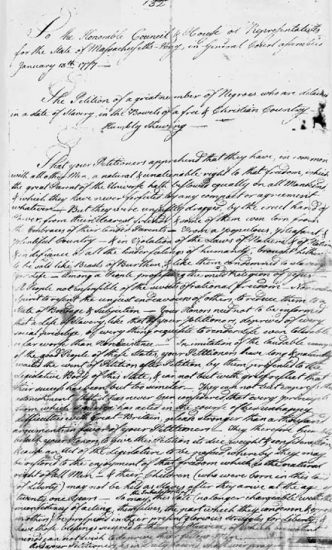
Petition, January 13, 1777. Source: Massachusetts Historical Society.
On Jan. 13, 1777, Prince Hall and seven other Black men presented a petition for freedom to the Massachusetts Council and the House of Representatives. Hall and at least three other petition signers were free; they made this request on behalf of all enslaved people in the state.
It began,
To the Honorable Counsel & House of [Representa-] tives for the State of Massachusette Bay in General Court assembled, Jan 13 1777 —
The petition of A Great Number of Blackes detained in a State of Slavery in the Bowels of a free & christian Country Humbly shuwith that your Petitioners Apprehend that Thay have in Common with all other men a Natural and Unaliable Right to that freedom which the Grat [Great] – Parent of the Unavese [Universe] hath Bestowed equalley on all menkind [mankind] and which they have Never forfuted [forfeited] by Any Compact or Agreement whatever — but thay [they] wher [were] Unjustly Dragged by the hand of cruel Power from their Derest frinds [friends] and sum of them Even torn from the Embraces of their tender Parents — from A popolous [populous] Plasant [Pleasant] And plentiful cuntry [country] And in Violation of Laws of Nature and off Nations And in defiance of all the tender feelings of humanity Brough [Brought] hear [here] Either to Be sold Like Beast of Burthen & Like them Condemnd to Slavery for Life – Continue reading.
A few months earlier, the Declaration of Independence had become the founding document of the United States — so these signers used its language to make their case for Black freedom. They stressed that African Americans had “a natural and inalienable right” to freedom, and that enslavement existed “in violation of laws of nature and of nations and in defiance of all the tender feelings of humanity.”
Near the end of the petition was a call for gradual emancipation, which the legislature rejected. In 1783, however, after a series of cases in which enslaved people sued for freedom, the Massachusetts Supreme Judicial Court ruled that slavery was incompatible with the “natural rights” outlined in the state’s new constitution and must be abolished. Hall went on to found the African Lodge, a Freemasonry (fraternity) for Black men in Boston to socialize and organize for education and racial equality.
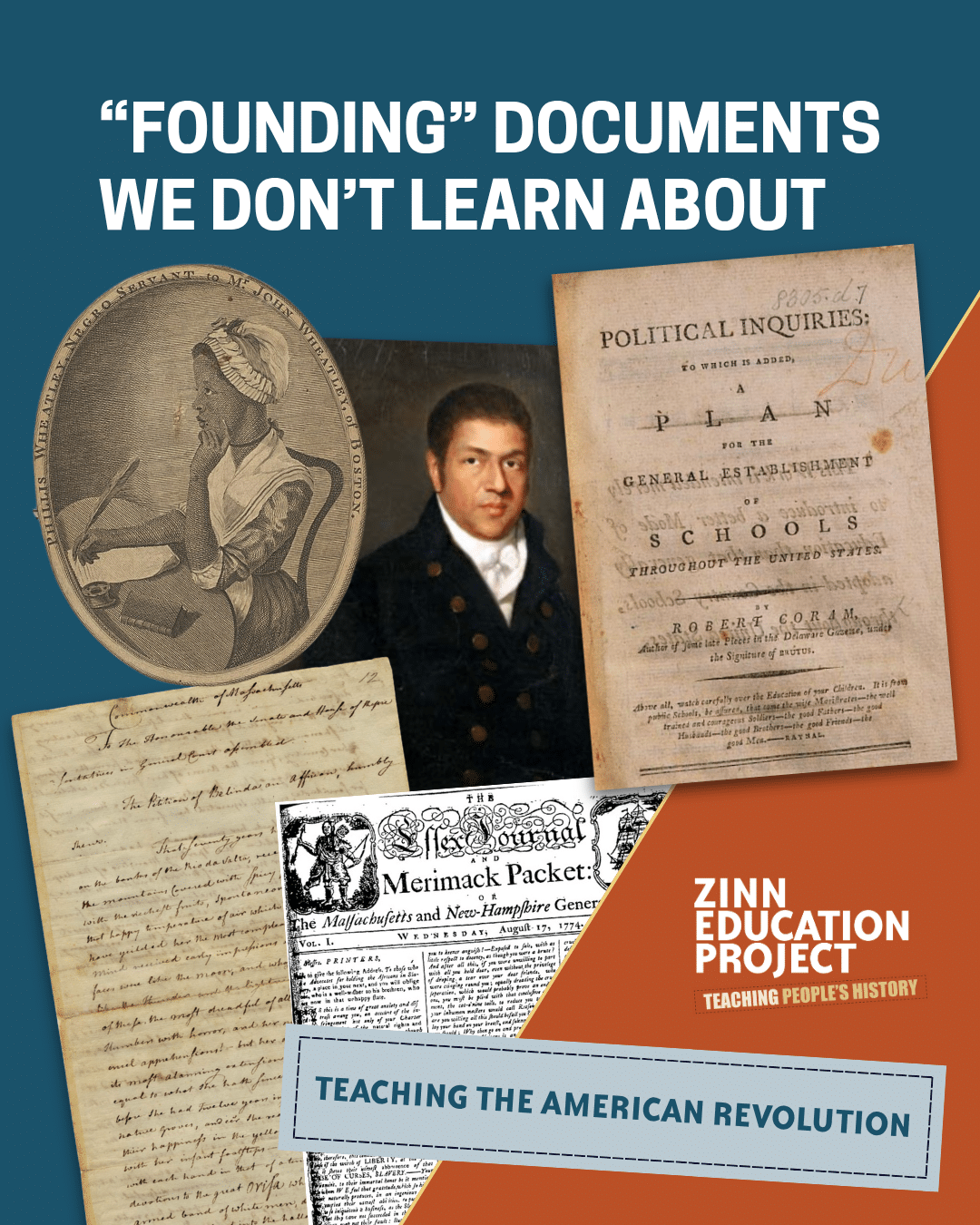
Read more in the lesson “Founding” Documents We Don’t Learn About.



Twitter
Google plus
LinkedIn