
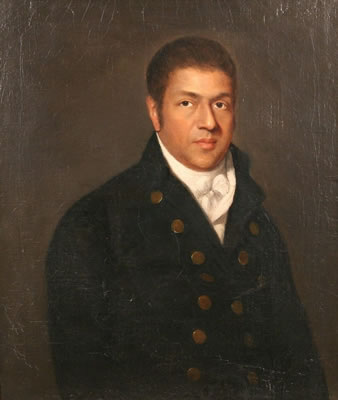
Paul Cuffee portrait by Chester Harding. Source: Public domain
On Feb. 10, 1780, Paul Cuffe, his brother John, and five other Black men petitioned the Massachusetts government to either give African and Native Americans the right to vote or quit taxing them.
The Cuffes had been born free in New England to a woman of the Wampanoag Tribe in Massachusetts and a man of the Asante Empire in West Africa. Their father was kidnapped into the Atlantic slave trade in his youth and brought to Rhode Island, where he eventually gained freedom.
Paul became a whaling captain and a merchant who, in the Revolutionary War, slid past a British blockade in a sailboat to deliver supplies to people off the Massachusetts coast.
As the war dragged on, Paul went into farming with John and wrote this petition after a collector demanded they pay their district taxes. The Cuffes refused, as they had “no vote or influence in the election of those that tax us.” In other words, no taxation without representation.
The legislature rejected their petition, but soon after carved voting rights for men of means, regardless of race, into the state constitution. A decade later, Paul would again lead a fight for racial justice by founding one of the first integrated schools in the United States on his own land.
Here is an excerpt from the transcript of the petition submitted to the Massachusetts legislature:
To the Honorable Council and House of Representatives, in General Court assembled, for the State of the Massachusetts Bay, in New England:
The petition of several poor negroes and mulattoes, who are inhabitants of the town of Dartmouth, humbly showeth, —
That we being chiefly of the African extract, and by reason of long bondage and hard slavery, we have been deprived of enjoying the profits of our labor or the advantage of inheriting estates from our parents, as our neighbors the white people do, having some of us not long enjoyed our own freedom; yet of late, contrary to the invariable custom and practice of the country, we have been, and now are, taxed both in our polls and that small pittance of estate which, through much hard labor and industry, we have got together to sustain ourselves and families withall. . . .
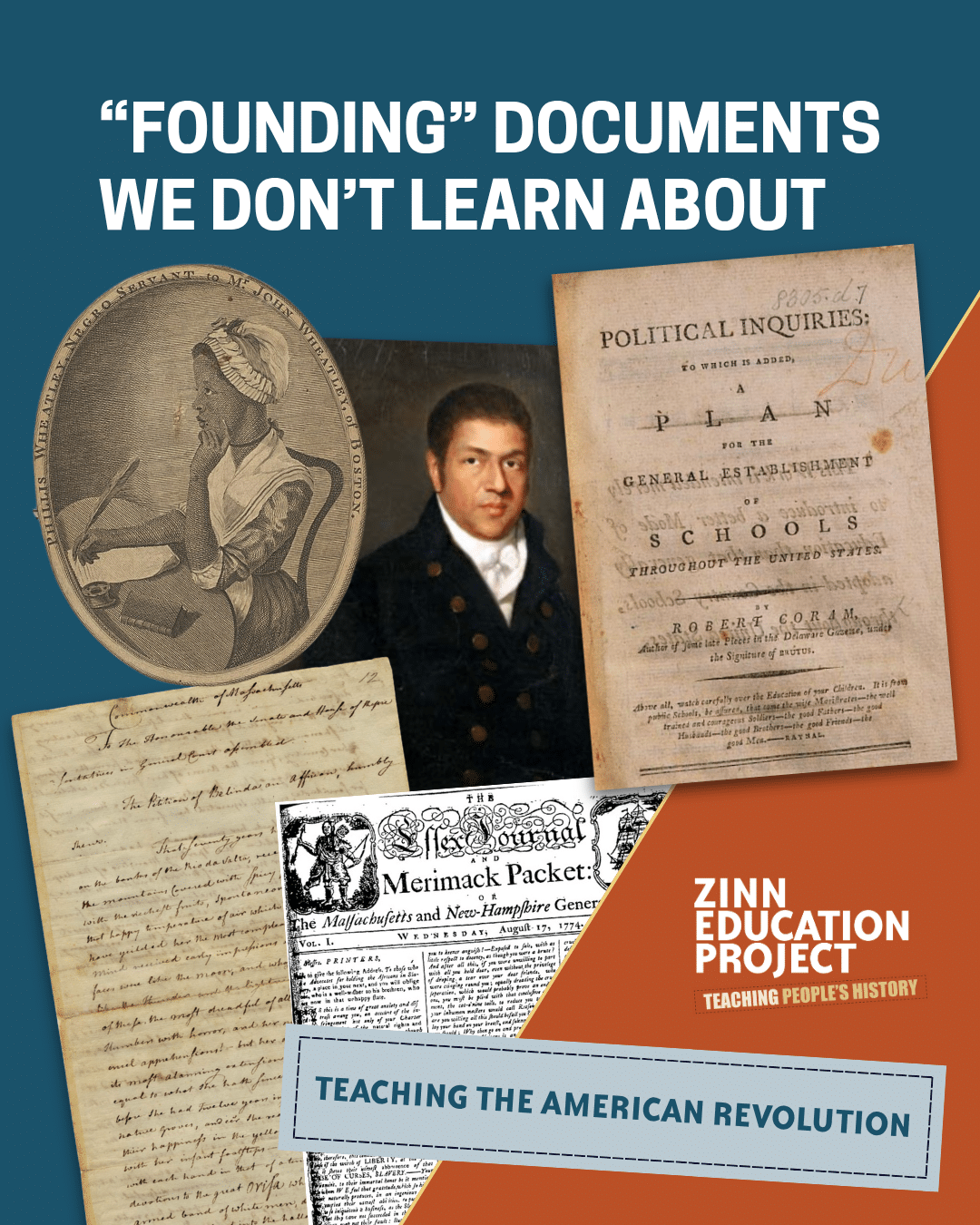
Read more in the lesson “Founding” Documents We Don’t Learn About.


Twitter
Google plus
LinkedIn