

On August 21, 1860, Eliza Winston won her freedom from her Mississippi enslaver in a Hennepin County Court, in Minneapolis. After being ruled Free, “effective immediately” by Judge Charles Vanderburgh, Eliza Winston faced white mob violence and was forced to escape to abolitionist safe houses. The event showed that although slavery was illegal in Minnesota, many white Minnesotans supported the practice when it economically benefited them. — R. L. Cartwright, Minnesota Historical Society
Eliza Winston traveled from Mississippi to Minnesota, while being held captive by her enslaver Richard Christmas and his family. Winston was forced to care for both his feeble wife, Mary, and their young daughter. Although chattel slavery was legal in the South, it was illegal in Minnesota as it was written in the state’s constitution in 1857.
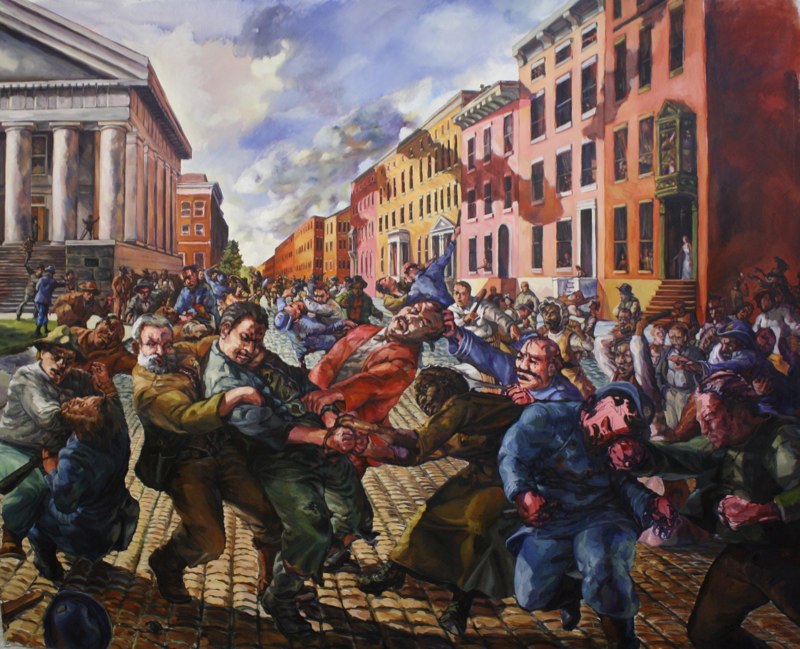
Local abolitionists, with the sheriff, rescued Winston from a boarding house and brought her to the 4th district court in Minneapolis where Judge Vanderburgh heard both sides of the case. He ruled Winston to be free “effective immediately.” The courthouse was filled with both abolitionists and a proslavery crowd. Abolitionists helped Eliza to escape a violent white mob who wanted to re-enslave her. They brought her to a safe house.
Cartwright concludes,
The Winston case revealed several contradictions in Minnesota’s racial politics. On the one hand, the state constitution forbade slavery and cities such as Minneapolis and St. Anthony were part of the Midwest’s abolition movement. On the other hand, many white Minnesota businessmen benefited from the economics of slavery and southern tourism, and would go to great lengths to protect that.
As local business owners had feared, the Winston case stopped Southern tourism in Minnesota. Eliza Winston, with her courage to seek out her freedom, halted de facto slavery in Minnesota. Winston, who once was enslaved by President Andrew Jackson, defeated part of his legacy in Minnesota as well — that being the expansion of chattel slavery.
The quotes by Cartwright have been lightly edited.
Resources
 It Took Courage: Eliza Winston’s Quest for Freedom by Christopher P. Lehman
The 1860 Eliza Winston Court Case Illustrates Minnesota’s Complicated Racial Politics by R. L. Cartwright (MinnPost)
Below, watch a video of Minnesota Historical Society senior public historian Dr. Chantel Rodriguez in a conversation with Dr. Christopher Lehman about the case of Eliza Winston.





Twitter
Google plus
LinkedIn