
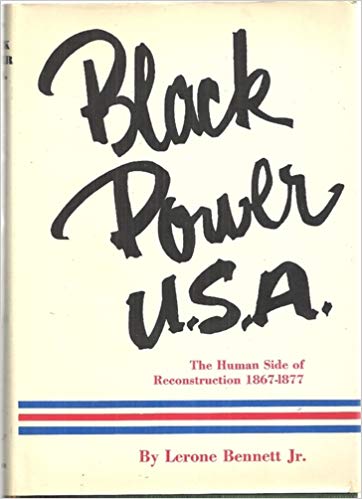
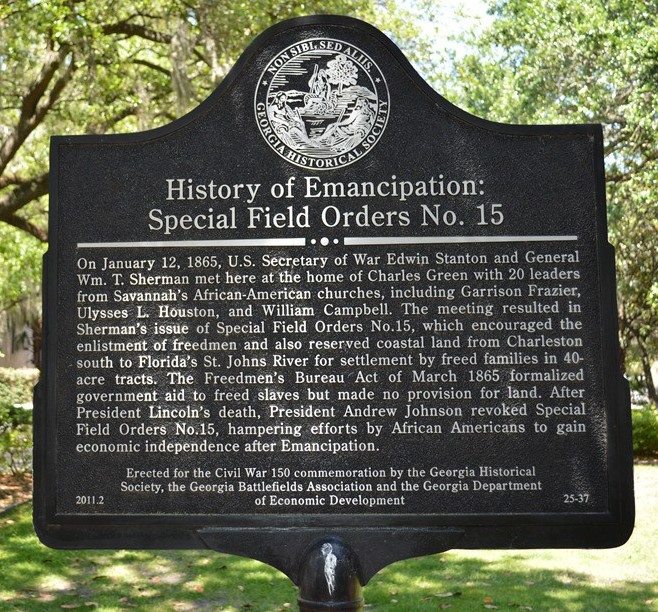
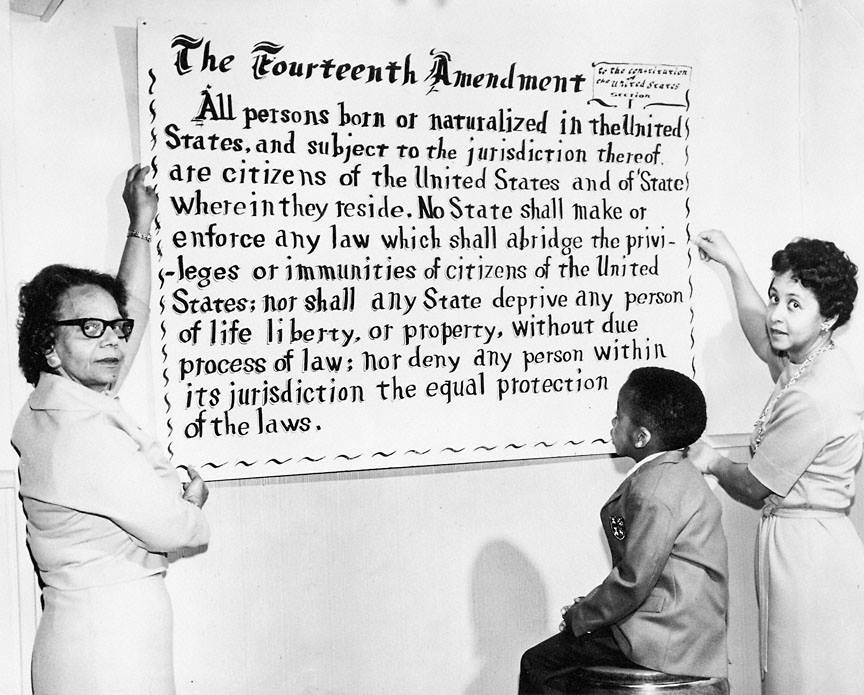
“Reconstruction in all its various forms was a supreme lesson for America, the right reading of which might still mark a turning point in our history,” wrote Lerone Bennett Jr. in his classic 1962 book, Black Power USA. The Civil War erupted into this revolutionary era of emancipation, when Black Americans drove a movement to topple the United States’ structures of white supremacy and build something better. This movement laid the cornerstone of multiracial democracy, rooting freedom in the promise of sweeping political representation, public schooling, legal rights and protections across all areas of life, and an array of other achievements — or aspirations, or blueprints — that we owe to the project of Reconstruction. But, by design, many of us know very little about the magnificent possibilities and legacies of this project. An overwhelming backlash led by white supremacist coalitions, North and South, quelled the Reconstruction revolution and steeped its historical narrative in whitewashings that have served only the status quo for generations since.
This is all key for students to grasp. It’s not just that Reconstruction was a turning point, but that our modern understanding of Reconstruction — what we are doing in class right here and now, our discussion and collective understanding — holds the power of being a turning point in our nation’s history.
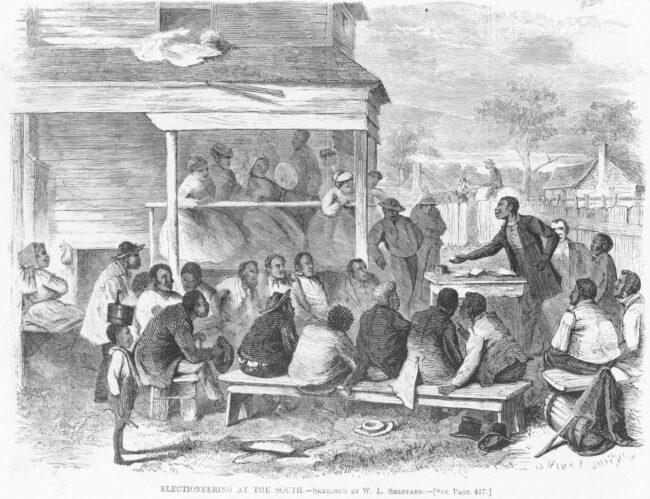
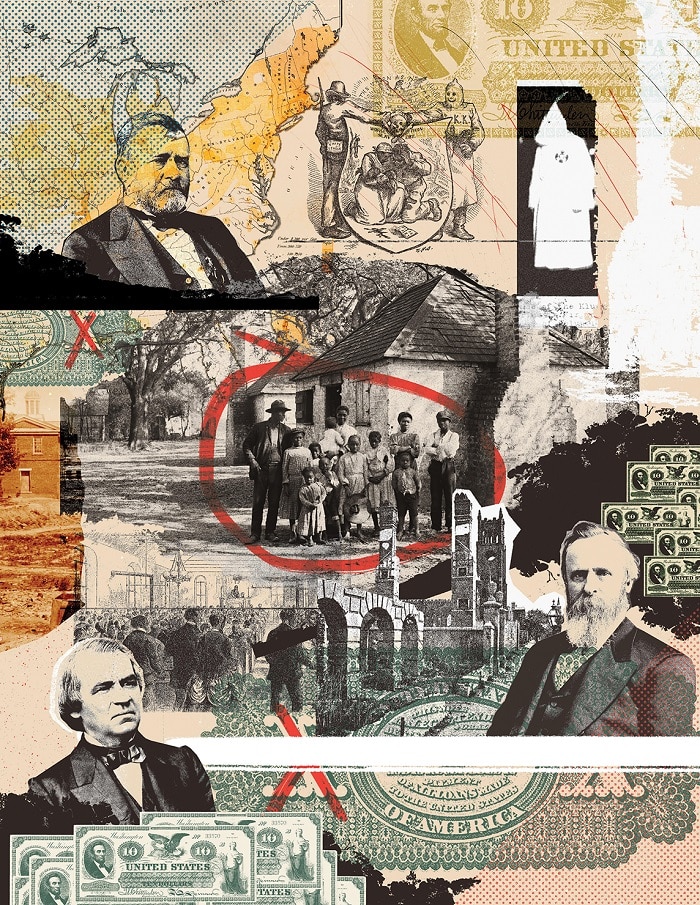
Cartoon published in Harper’s Weekly on July 25, 1868. Source: Encyclopedia Virginia
U.S. mythology pushes the falsehood of slow but steady racial progress: from enslavement to Jim Crow to equality. This myth is the pillar that proponents of a “post-racial society” use to oppose antiracist policy. In reality, progress toward true freedom and equality in the United States has occurred in great and infrequent bursts, which have always been followed by violent backlash. Emancipation and Reconstruction were followed by what many historians term “the nadir of race relations.” Our students learn about the victories of the Civil Rights Movement in districts that are resegregating. The “slow and steady progress” mythology lies — and it produces apathy. It tells students: “Don’t worry, things will get better, eventually, without your doing — as they always have.”
When history class becomes a place where students are fed the “inevitability of slow and steady progress,” students are robbed of the knowledge of their own power to be agents of change. This approach obscures the reality of how profoundly our society needs young people to engage. As history teachers, we need to wage war on civic apathy. We can do this by exposing students to the reality of “great and infrequent bursts of progress,” when everyday people reshaped the country for the better. These histories encourage both urgency and patience, empowering students to become civically engaged. Racial justice and democracy can take dramatic steps forward, but only when an informed generation is committed to action.
There is no better place for our students to encounter the power of collective community action to bring about true liberation than Reconstruction. This history is a major tool to fight apathy and empower our students, yet it rarely gets its due in the classroom. U.S. history survey courses tend to slate Reconstruction for the end of a semester. If teacher pacing falls behind, as it inevitably does, the days allotted for Reconstruction are often cut. When we do have a few days to teach Reconstruction, the curricular guidance from standards and textbooks encourage us to focus almost entirely on the actions of Washington elites or vague state institutions, overshadowing the crucial role of Black communities in their own liberation and the lasting legacies of the Reconstruction revolution. I created this three-day lesson to confront that problem.
Students begin their inquiry into Reconstruction by critically analyzing their understanding of U.S. ideals and reflecting on the possibility of radical social change. Day 1 focuses on an examination of the debates in Reconstruction historiography and a review and comparison of the original goals for Reconstruction as described by Black leaders. By the end of Day 1 and for all of Day 2, students become historians themselves and engage in a deep dive into primary sources. Over the course of three class periods, they work with a partner to examine 30 essential documents.
For each document, students use a score sheet to help them track Reconstruction’s progress, as well as the violent methods used to attack Black communities and roll back their advances for freedom and multiracial democracy. With each source, they briefly record whether the source indicates Reconstruction’s progress and who was responsible for the progress or lack thereof. Students are also prompted to consider how historical evidence corroborates or undermines the secondary source narratives they’ve read. The activity concludes with a lively pop-up debate in which students critically analyze standards for teaching Reconstruction. As a class, we take inspiration from the Zinn Education Project and reflect on what our country might look like today if we had experienced a true and lasting Reconstruction after the Civil War.
Continue reading and access lesson from the “Download to Read in Full” button.
Matt Vriesman is a high school social studies teacher in Grand Rapids, Michigan. He frequently writes and publishes curriculum for teachers on his website, Empowering Histories (formerly Antiracist APUSH), and was the 2023 Gilder Lehrman National History Teacher of the Year.
Teacher Testimonial
I did a modified version of the lesson Who Gets to Tell the Story of Reconstruction, and Why Does It Matter? and the class was buzzing!
The power of this lesson was that young people were able to see that despite increased violence and domestic terror, Black people were responsible for their own liberation and did what they needed to do to obtain social and political progress!
Once of the primary documents about organized community self-defense on Election Day led to a great dialogue. Some students felt it didn’t show progress because Black people had to go armed to go vote while others believed this showed Black people protecting each other and using their Constitutional right (right to bear arms) to get their 15th amendment rights!
The primary sources in the lesson and the graphic organizer are excellent.
All that to say, Teach Reconstruction and shout out to the Zinn Education Project!


Twitter
Google plus
LinkedIn