


Assata Shakur: Source: Public domain
It is our duty to fight for our freedom.
It is our duty to win.
We must love each other and support each other.
We have nothing to lose but our chains.
— Assata Shakur, Assata: An Autobiography
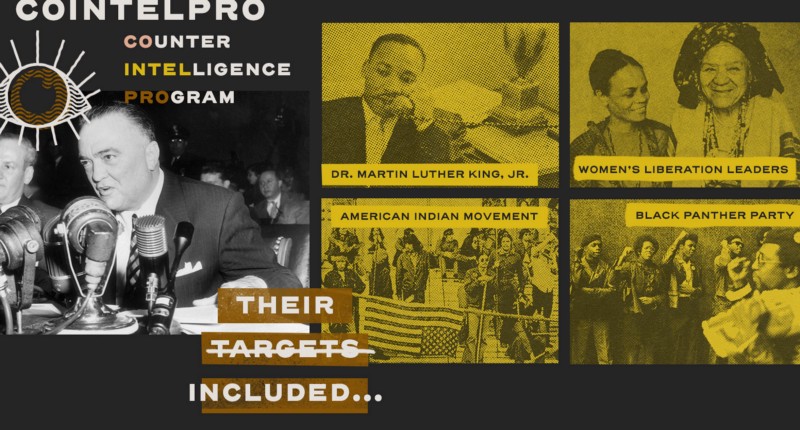
Joanne Chesimard joined the Black Panther Party in the late 1960s and helped to coordinate the free breakfast programs and free medical clinics as part of the Harlem chapter of the Party. Following the split in the Black Panther Party — orchestrated in part by government repression in the form of COINTELPRO — she joined the Black Liberation Army (BLA) and, in 1971, took the name Assata Olugbala Shakur.
From 1971 through May 1973, Shakur became the target of a multi-state police hunt and was named in ten indictments against the BLA across the East Coast. On the evening of May 2, 1973, while traveling along the New Jersey Turnpike, Assata, Zayd Malik Shakur, and Sundiata Acoli were pulled over by a New Jersey State Trooper. Following an armed altercation, Zayd Shakur and Trooper Werner Foerster were killed, Assata was shot and captured, and Acoli escaped for two days before also being captured.
Following numerous trials (in which charges were dismissed or she was acquitted in all ten previous indictments), Assata was ultimately sentenced to life in prison for the deaths of Werner Foerster and Zayd Shakur. During her trial, Assata became pregnant and later gave birth while incarcerated to her daughter, Kakuya.
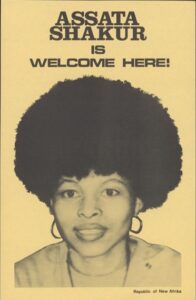
Assata Shakur is Welcome Here! poster distributed by the Republic of New Afrika following Shakur’s successful escape. Source: Northwestern University Libraries Digital Collection
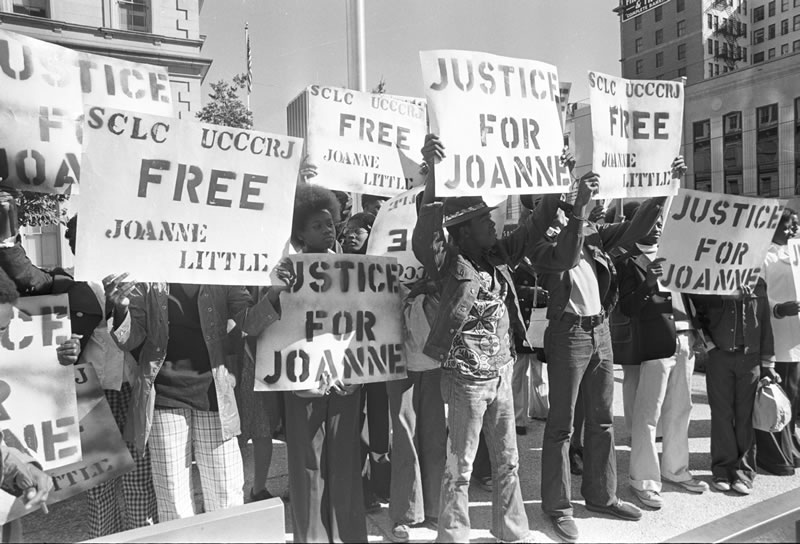
On November 2, 1979, Black Liberation Army members along with white allies performed a daring prison escape, liberating Assata from Clinton Correctional Facility for Women in New Jersey. With the help of dedicated comrades, Shakur was able to elude the nationwide hunt for her recapture. People around the country displayed “Assata Shakur is Welcome Here!” signs to show their solidarity with her.
In 1984, Shakur was given political asylum in Cuba, where she remained — imprisoned still, in a sense, given the $2 million reward for her recapture by the FBI — until she passed away on September 25, 2025.
Silvia Baraldini, Marilyn Buck, Mutulu Shakur, and Sekou Odinga were charged with Assata’s escape and all served decades in prison. Shakur’s co-defendant Sundiata Acoli, who was a computer analyst for NASA prior to joining the Black Panther Party, spent 49 years in prison before being released in 2022 at the age of 85. Kakuya Shakur’s father, BLA veteran Kamau Sadiki, remains in prison today.
Assata Shakur’s liberation continues to be an inspiration for people and movements around the world. Her lifetime of resistance is commemorated in organized resistance, in music, and in artwork. Below are two paintings created by fellow political prisoners that were inspired by her liberation.
 Painting of Assata Shakur done by political prisoner Tom Manning. Source: Art Against Imprisonment |
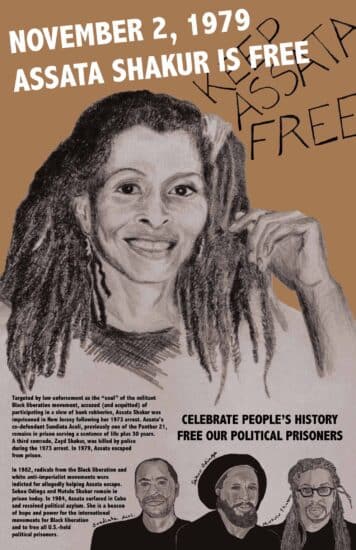 Assata Shakur is Free by Laura Whitehorn and Molly Fair, 2010. Source: Justseeds Artists’ Collective |
Additional Resources
 Assata: An Autobiography by Assata Shakur
Assata Taught Me: State Violence, Racial Capitalism, and the Movement for Black Lives by Donna Murch
Inadmissible Evidence: The Story of the African-American Trial Lawyer Who Defended the Black Liberation Army by Evelyn A. Williams
Assata Shakur Was a Black Revolutionary Who Fought for Freedom Even in Exile by Marian Jones (Teen Vogue)
Watch the 1997 documentary Eyes Of The Rainbow (The Assata Shakur Story), written and directed by Cuban filmmaker Gloria Rolando, and hear Shakur read her 1998 letter to the Pope in the Democracy Now! clip below.
 This post was written by the Certain Days: Freedom for Political Prisoners Calendar collective, which is an educational and fundraising project founded in 2001 to raise awareness and funds for political prisoners held in North America. The collective was formed by Black Liberation Army political prisoners Herman Bell and Robert Seth Hayes and white anti-imperialist political prisoner David Gilbert — all of whom have since gained their freedom after decades of incarceration — and outside supporters.




Twitter
Google plus
LinkedIn