
The Revolutionary War saddled the United States with debts to the French government, U.S. investors, and other sources that had supplied war materials. Most state governments found ways to pay debts without further burdening everyday people. For example, some states printed paper money to put toward debts or accepted items like produce instead of monetary payment.
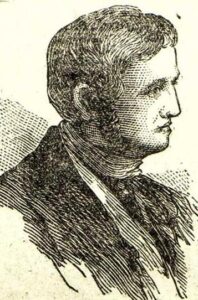
A sketch of Daniel Shays in 1878’s Our First Century by Richard Miller Devens. Source: Public domain
In Massachusetts, however, a group of bankers, merchants, and politicians demanded everyday people pay war debts in full. Rather than tax businesses to raise money, the state legislature pushed the burden onto the working class. Small farmers — who were never paid their earnings for serving in the army — now faced heavy taxes and threats of land seizure by the government.
For many, these new impositions echoed the British tax policies and economic inequalities they had fought against just a few years earlier. Hadn’t they won the war? Didn’t they reserve the right to “regulate” a government that rewarded the wealthy at their expense?
In 1786, people flooded the legislature with petitions for policy reforms and, when ignored, took up nonviolent protesting around courthouses. The governor, James Bowdoin, cast these actions as wrongful rebellions, imposed strict laws to quell resistance to his policies, and called up an army to take down the protesters.
On Jan. 25, 1787, Daniel Shays and Daniel Gray — both of the “regulation” movement — wrote to an army general in an ongoing effort to avoid violence. That same day, the army fired cannons on the protesters, killing or wounding two dozen; the rest fled.
In the spring, voters rejected Bowdoin at the ballot box and won reforms. Still, these nonviolent protests would be falsely framed as the dangerous “Shays’ Rebellion” by Founders who advocated for more power to the government, and less to the people it supposedly served.
Read more in the lesson “Founding” Documents We Don’t Learn About.



Twitter
Google plus
LinkedIn