

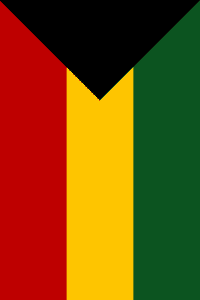
 The red, green, and black Pan-African flag is the symbol of a movement for Black freedom and unity throughout the world.
As noted on South African History Online, “Pan-Africanist ideas first began to circulate in the mid-19th century in the United States, led by Africans from the Western Hemisphere. The most important early Pan-Africanists were Martin Delany and Alexander Crummel, both African Americans, and Edward Blyden, a West Indian. Among the more-important Pan-Africanist thinkers of the first decades of the 20th century was Jamaican-born Black Nationalist Marcus Garvey, followed by W. E. B. Du Bois.” There was also a call for Pan African unity during the Civil Rights Movement, with activists participating in the 6th Pan African Congress in 1974.
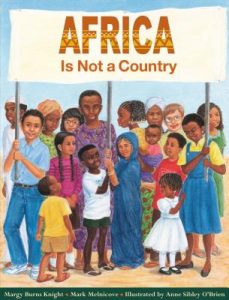 Learning about the Pan-African movement is a good opportunity to challenge many stereotypes about Africa, as described in “I Didn’t Know There Were Cities in Africa! Challenging children’s — and adults’ — misperceptions about the African continent” by Brenda Randolph in Teaching Tolerance and “Beyond Wildlife: Teaching about Africa and Stereotypes.”







I recall being the only Black boy in my 3rd grade class in Central Pennsylvania. Students in my class did an art project where we took a side profile silhouette of our headshot, using a projectile screen and light. Once it was done, the teacher had us frame our headshots. Once they were framed, we then hung them up on the wall. The teachers and students pointed out how mine looked different from everyone else’s. At that point, I became insecure about my distinct appearance. As I grew older, and went to a historically Black university, did research, and educated myself. I realized that systemic racism due to a system of white supremacy was what I had to overcome. I now have the knowledge and power to speak and stand up for other brothers and sisters facing the oppressed system. I will continue to do so because it’s my purpose. Black power.