

Settle your quarrels, come together, understand the reality of our situation, understand that fascism is already here, that people are dying who could be saved, that generations more will die or live poor butchered half-lives if you fail to act. Do what must be done, discover your humanity and your love in revolution. Pass on the torch. Join us, give up your life for the people. — George Jackson, Blood In My Eye
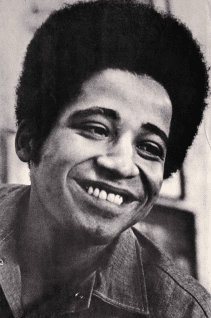
George Jackson. Source: Public domain
In 1960, 18-year-old George Jackson entered the California prison system with an indeterminate sentence of one year to life after being convicted of a gas station robbery in which he walked away with $71. While imprisoned, Jackson became politicized by his fellow prisoners, joining the Black Panther Party and cofounding the Black Guerilla Family in the late 1960s and also authoring two books, all while incarcerated in a number of California’s maximum security prisons.
During his eleven years of incarceration, Jackson gained international recognition and support for his commitment to revolutionary struggle. In January 1970, Jackson and fellow prisoners Fleeta Drumgo and John Clutchette became known as the Soledad Brothers after being accused of killing a prison guard at Soledad State Prison. The Soledad Brothers Defense Committee included Angela Davis and Jackson’s younger brother, Jonathan.
On August 7, 1970, 17-year-old Jonathan Jackson entered the Marin County Courthouse with guns registered to Angela Davis in a failed attempt to free the Soledad Brothers. Jonathan and several others were killed and Angela Davis, arrested after several months underground, was later acquitted of all charges following a well-publicized trial.
On August 21, 1971, George Jackson was gunned down by prison guards at San Quentin State Prison in an apparent escape attempt.
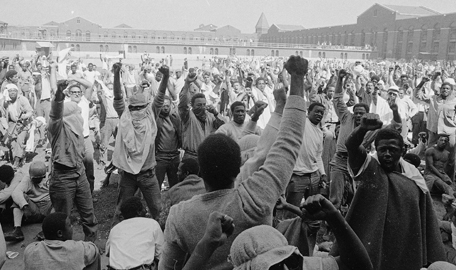
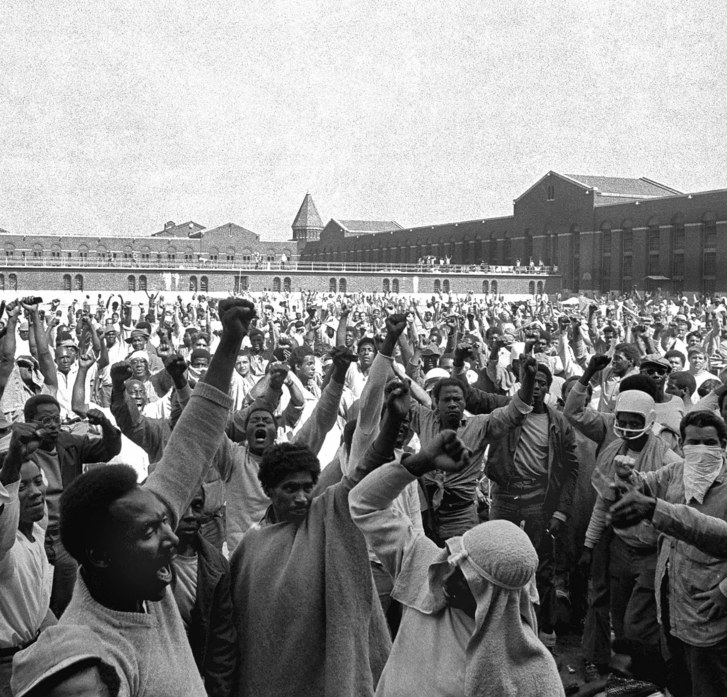
His death was a galvanizing moment for organizers inside and outside of prisons, from the Attica Uprising that began just weeks after Jackson’s murder to the commemoration of Black August to honor his resistance, along with that of other Black freedom fighters and political prisoners throughout history.
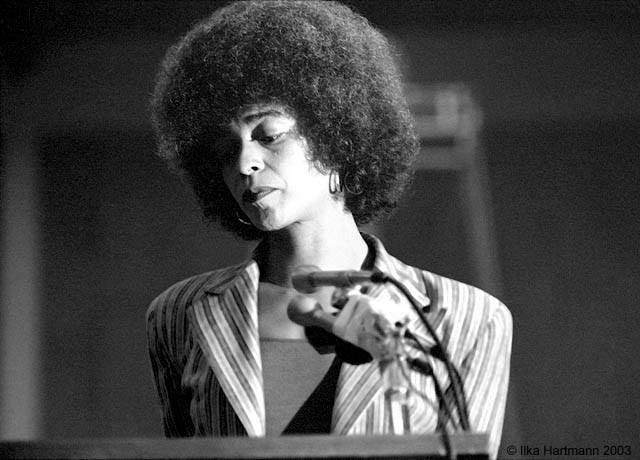
Just days after George Jackson’s murder, Angela Davis wrote in an essay for LA Free Press,
Though deprived so long of the freedom of movement enjoyed by his oppressors, even as he died George was far more free than they. As he lived, he died resisting. . . . His impact on the community outside was and continues to be boundless. George’s example of courage in the face of the spectre of summary execution, his insights honed in the torment of seven years of solitary confinement, and his perseverance in the face of overwhelming odds will continue to be a source of inspiration for all sisters and brothers inside prison walls and outside.
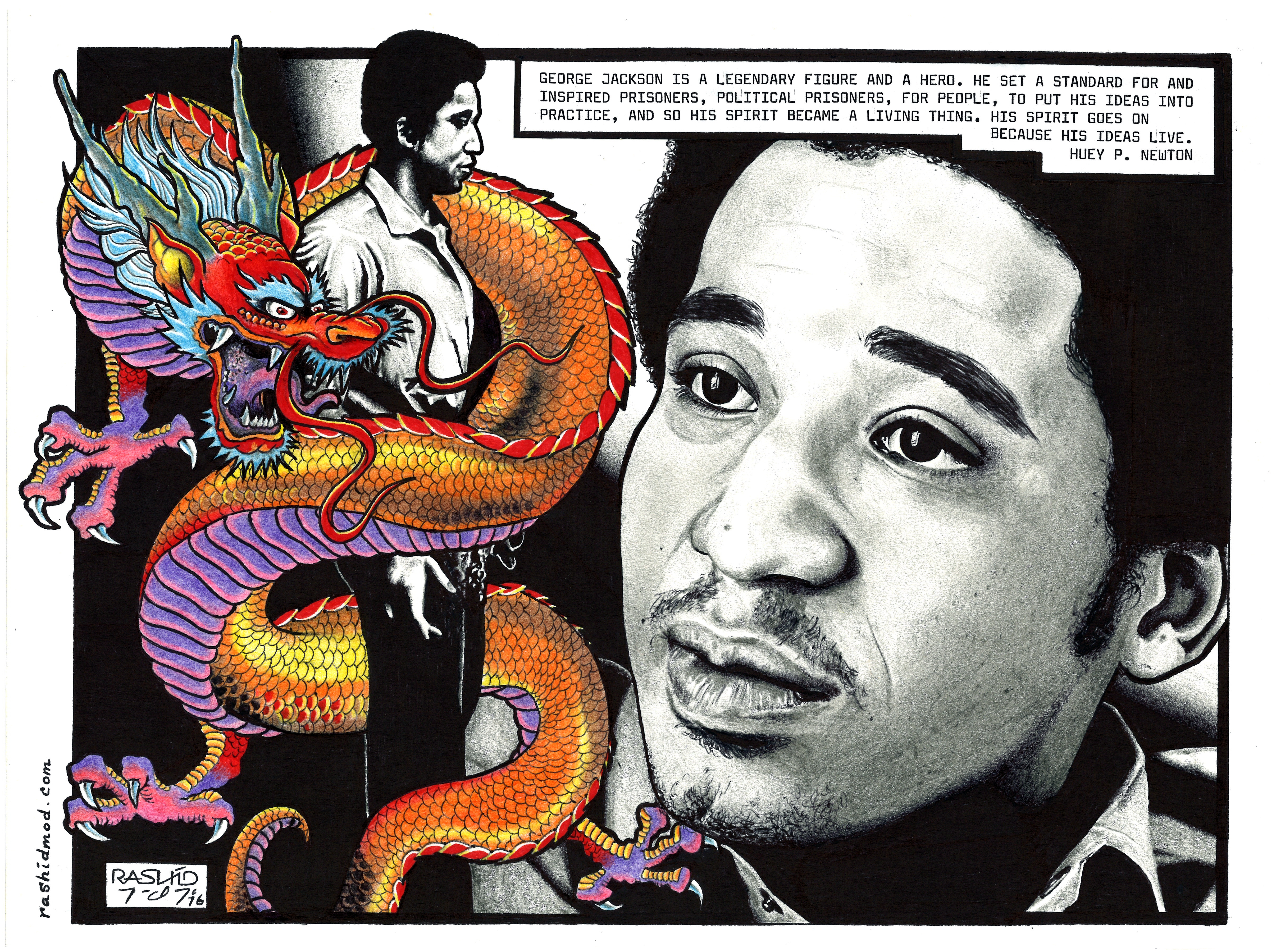
George Jackson drawing done by politicized prisoner Kevin “Rashid” Johnson. Source: Rashidmod
Additional Resources
 Soledad Brother: The Prison Letters of George Jackson and Blood In My Eye by George L. Jackson
Notes of a Radical Son: The Hidden Legacy of a Black American Family by Jonathan Jackson Jr.
99 Books: 50 Year Anniversary Tribute to George Jackson, including a list of the 99 books George Jackson had in his cell at the time of his death, by Freedom Archives
George Jackson: Dragon Philosopher and Revolutionary Abolitionist by Joy James in Black Perspectives
The Legacy of George Jackson by Elaine Brown for Black Lives Matter
Check out the 2003 Ken Swartz documentary Day of the Gun and watch the short Incarcerated Nation Network Media documentary below, which includes interviews with Angela Davis.
 This post was written by the Certain Days: Freedom for Political Prisoners Calendar collective, which is an educational and fundraising project founded in 2001 to raise awareness and funds for political prisoners held in North America. The collective was formed by Black Liberation Army political prisoners Herman Bell and Robert Seth Hayes and white anti-imperialist political prisoner David Gilbert — all of whom have since gained their freedom after decades of incarceration — and outside supporters.

Twitter
Google plus
LinkedIn