
By Jeanne Theoharis

Source: Smithsonian Magazine / Lars Bjørkevoll/Flickr CC BY-NC-ND 2.0
On February 3, 1966, Andre Adams, a baby two days shy of his first birthday, was chewed to death by a rat on 1811 West Adams Street in Chicago. The infant was also severely malnourished, weighing only five pounds, eight ounces when he died. To try to blame the mother for neglect, the city claimed that Adams had died of malnourishment and had to concede, as did the coroner, that he had been bitten by rats. Adams’ body had holes where the rats had chewed and one of his fingers had been disconnected.
Westside parents rose up in anger. Retired bus driver Clifford Burke and the Mile Square Federation held a rally that drew more than a thousand people, where [Martin Luther] King addressed the crowd. These inhumane conditions — starvation, rats, buildings without heat — were “why we’re here fighting in the slums of Chicago,” said King. He called Adams’ death “as much of a civil rights tragedy as the murder of [Viola] Liuzzo” after the Selma march.
The Mile Square Federation threatened to deliver live rats to the mayor and other public officials. Burke had been visiting Adams’ mother and was horrified as they sat there to see a rat come right up through the floor. Black parents had highlighted the rats and the health problems they had brought for years but were continually ignored by the city.
 King trumpeted. “We don’t have wall-to-wall carpeting . . . but wall-to-wall rats and roaches.” King was sickened by the “slow, stifling death of a kind of concentration camp life” of Chicago’s slums and the ways most Chicagoans, most Americans, just looked away. These horrors haunted King and spurred the CFM’s organizing. As historian Keeanga-Yamahtta Taylor documents, when children in one Chicago neighborhood were given a vocabulary test and asked to identify familiar objects, 60 percent misidentified a rat as a teddy bear.
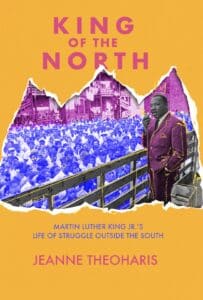
Find this story and many more in King of the North: Martin Luther King Jr.’s Life of Struggle Outside the South by Jeanne Theoharis.
Jeanne Theoharis is a distinguished professor at Brooklyn College. She is the author or co-author of numerous books and articles on the Civil Rights and Black Power movements and the politics of race and education. Her books include the award-winning titles The Rebellious Life of Mrs. Rosa Parks and A More Beautiful and Terrible History: The Uses and Misuses of Civil Rights History. Her most recent title is King of the North: Martin Luther King Jr.’s Life of Struggle Outside the South. Theoharis co-founded the Teach the Black Freedom Struggle class series with the Zinn Education Project and invited our staff to collaborate on a teaching guide for The Rebellious Life of Mrs. Rosa Parks book and film.




Twitter
Google plus
LinkedIn