

By Jeanne Theoharis
On May 25, 1966, the violent face of Chicago’s racism reared its ugly head. A 17-year-old Black teenager named Jerome Huey set out for a job interview in Cicero, Illinois, a suburb of Chicago that directly abuts Lawndale, the King’s Chicago neighborhood. Huey dreamed of becoming an engineer. He was attending Wright Junior College, but he needed extra money to help his parents with their struggling grocery store. On his way back from his interview, four white teenagers saw him and said, “Look there’s a nigger, let’s get him.” They attacked him in the driveway of a gas station, wrestling him to the ground and then beating him with the baseball bat. They smashed his head so hard that his eyes came out of his skull; his skull was caved in.
Unconscious, he was taken to MacNeal Hospital in nearby Berwyn. He died in the hospital four days later. He had been lynched in plain sight.
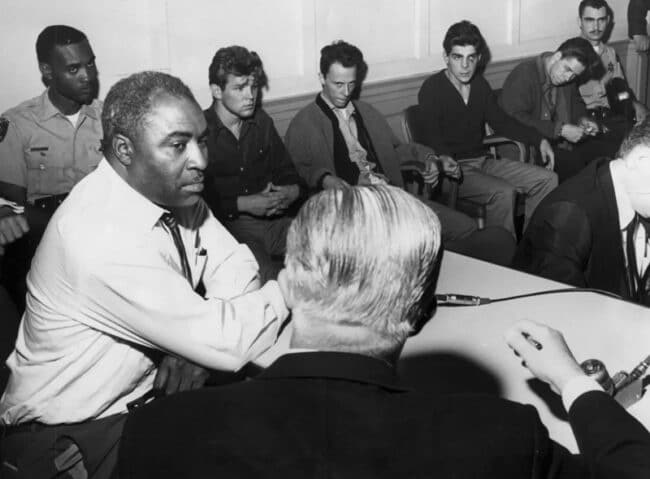
Isaac Huey, near left, father of fatal beating victim Jerome Huey, testified at the inquest on June 2, 1966. Sitting between police officers in the background are the suspects (from left): Arthur Larson, Martin Kracht, Dominic Mazzone, and Frank Hough. Source: Chicago Tribune
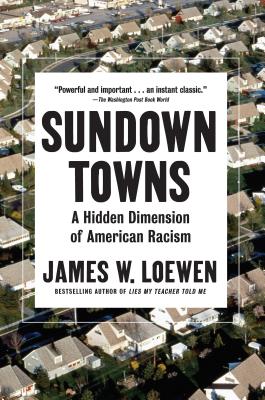
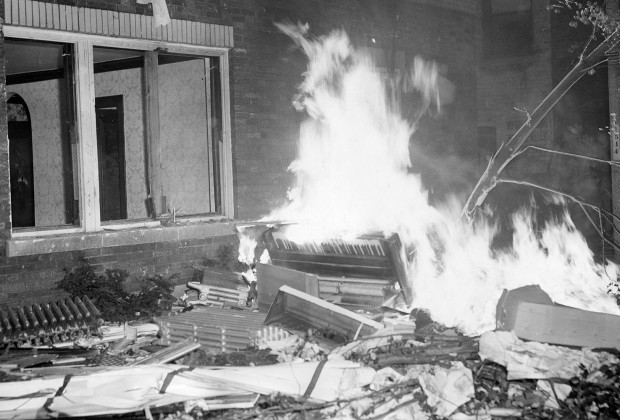
Cicero was well-known to Black Chicagoans as a sundown town, a place where Black people worked but couldn’t live. As one Vice Lord explained, “We could clean their houses and sweep their streets but when it got dark we had to leave.” When a Black family, the Clarks, had tried to move into Cicero in 1951, the police had prevented the Clarks from moving in. Even after the Clarks got a court order allowing them to move in, thousands of local white people from Cicero and neighboring westside communities rioted for three days and burned all their belongings. No white people faced any punishment for this violence — instead, Harvey Clark himself was indicted for inciting a riot, as were his real estate agent, landlady, and lawyer. Another Black Chicagoan put it starkly, “You didn’t walk through Cicero alone. You didn’t let your car break down in Cicero.”
Huey’s murder was chilling. It underscored for many Black Chicagoans the lengths white people would go to “protect their neighborhoods” and underscored the urgency of what the Chicago Freedom Movement (CFM) was doing. One of the driving reasons CFM began holding open-housing marches that summer into Chicago’s sundown neighborhoods (where Black people worked but couldn’t live) like Marquette Park, Gage Park, and Cicero, was to break the fear and the city’s complicity in this segregation and racist violence. Cicero had 70,000 residents — and not a single Black resident.
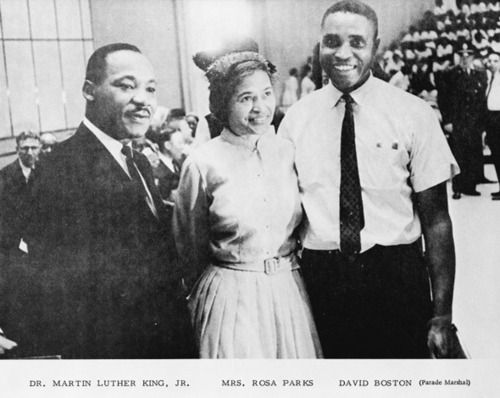
 On September 4, some organizers held a march on Cicero. The march stopped at the site where Jerome Huey had been lynched three months earlier. Huey’s parents, Isaac and Ruth, were present. His mother wept as a theology student read a prayer in her son’s memory, while hundreds of whites surrounded them, taunting them and bearing swastikas. [Martin Luther] King spoke to a student group that night, stressing the severity of the problem. “Some astronauts walked in outer space and you can’t walk the streets of Cicero.”
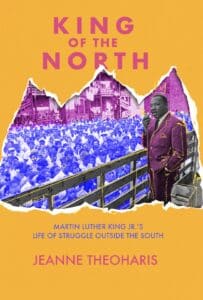
Find this story and many more in King of the North: Martin Luther King Jr.’s Life of Struggle Outside the South by Jeanne Theoharis.
Jeanne Theoharis is a distinguished professor at Brooklyn College. She is the author or co-author of numerous books and articles on the Civil Rights and Black Power movements and the politics of race and education. Her books include the award-winning titles The Rebellious Life of Mrs. Rosa Parks and A More Beautiful and Terrible History: The Uses and Misuses of Civil Rights History. Her most recent title is King of the North: Martin Luther King Jr.’s Life of Struggle Outside the South. Theoharis co-founded the Teach the Black Freedom Struggle class series with the Zinn Education Project and invited our staff to collaborate on a teaching guide for The Rebellious Life of Mrs. Rosa Parks book and film.



Twitter
Google plus
LinkedIn