
Christopher Columbus introduced slavery and colonialism to the Americas, launched a genocide of Indigenous peoples, and waged war on nature. No wonder Donald Trump has made restoring Columbus’ reputation a priority. In this term, he has issued a proclamation to “reclaim” Columbus’ legacy, declared Columbus a “true American hero,” and installed a statue of him on the White House grounds.
At the same time, the movement to expose Columbus’ true legacy continues to grow. Since the late 1980s, teachers have developed and shared curriculum that helps students learn the truth about the arrival of Europeans in the Americas and to understand the peoples who were here first.
The Zinn Education Project has collected and features some of this curriculum below. We hope that teachers of conscience commemorate Indigenous Peoples’ Day by teaching critically about the so-called Discovery of America and about Indigenous struggles past and present.
The People vs. Columbus, et al.
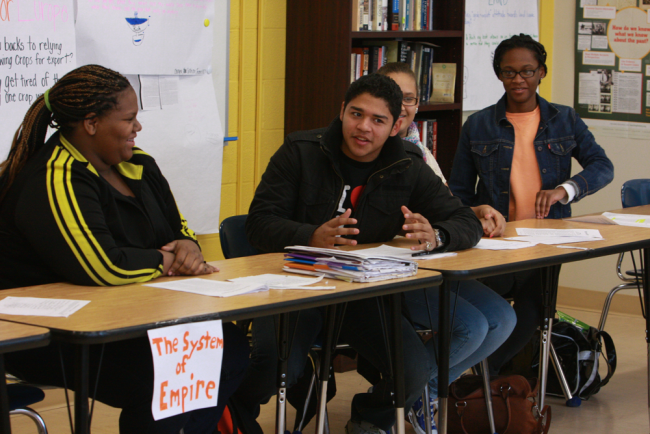
The People vs. Columbus trial has been my most successful and popular lesson.
Not only do students learn the extent of the atrocities committed by Spanish colonizers, they also engage in higher order thinking on the factors that cause historical atrocities to occur.
I LOVE how “the system of empire” is one of the options for students to blame or defend. This has generated some of the most challenging discussions I’ve seen in my class. — Lena Amick, social studies teacher, Baltimore
We’d love to hear from you when you use the lesson. In appreciation for your feedback, we’ll send you a people’s history book.
Lesson on Native Americans and the Gold Rush
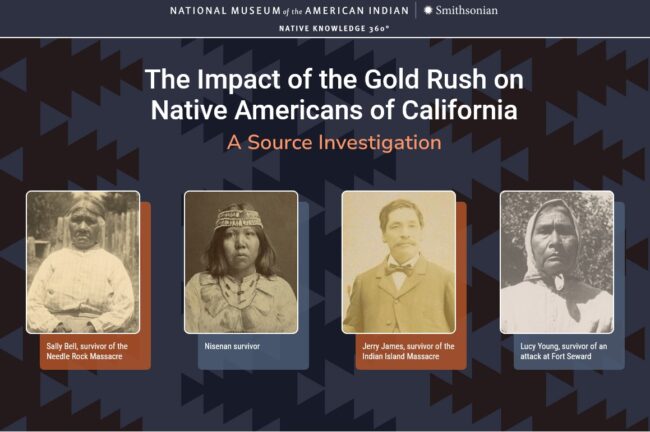
“The Impact of the Gold Rush on Native Americans of California” provides primary sources, maps, images, and background history to offer teachers and students insight into a little–known but important aspect of one of the most iconic events in U.S. history — the California gold rush. The lesson is part of the Smithsonian’s National Museum of the American Indian Native Knowledge 360° initiative.
Indigenous Resistance
Climate Crisis Timeline
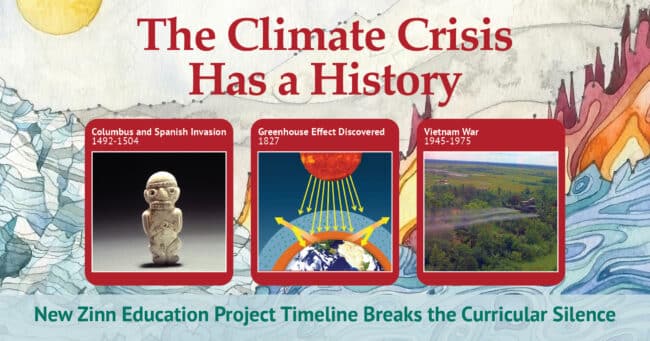
As young people study the climate crisis, they can draw ideas and inspiration from stories of Native American resistance on our Climate Crisis Timeline.
Recommended Reading
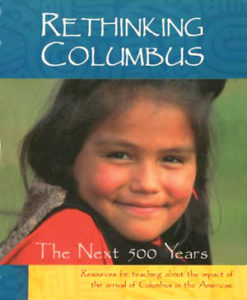 Rethinking Columbus: The Next 500 Years
More than 80 essays, poems, interviews, historical vignettes, and lessons reevaluate the myth of Columbus and issues of Indigenous rights.
Howard Zinn said that Rethinking Columbus “made educational history by introducing a startling new view of Columbus.”
This Rethinking Schools publication was edited by Bill Bigelow and Bob Peterson.
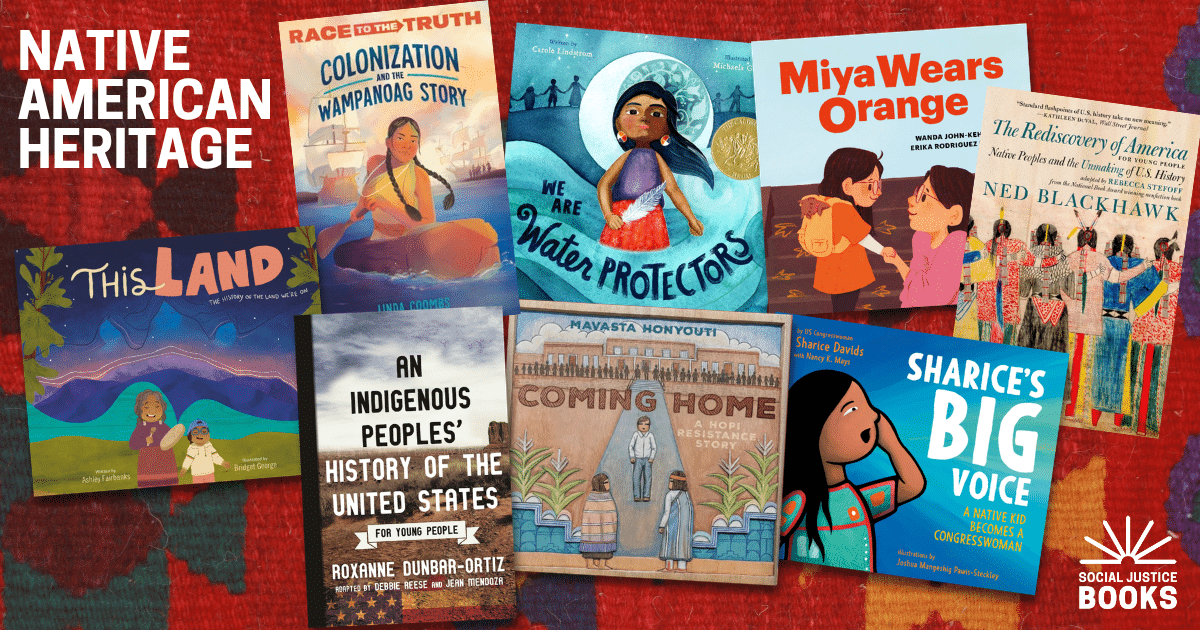
Teaching for Change’s Social Justice Books offers a list of dozens of recommended titles for pre-K–12 and for educators on Native Americans.
Columbus in America
Documentary: Free Online
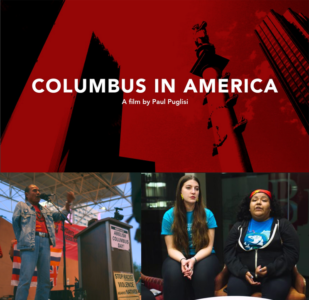 Columbus in America is the best and most comprehensive film on the history of Columbus — and the uses and abuses of the so-called discovery of America.
Ultimately, the film is hopeful, as it focuses on how the victims of Columbus and those who came after have themselves targeted “Columbus in America” to assert their humanity, their history, and their rights. The film is free online. Read more.
Twitter
Google plus
LinkedIn