
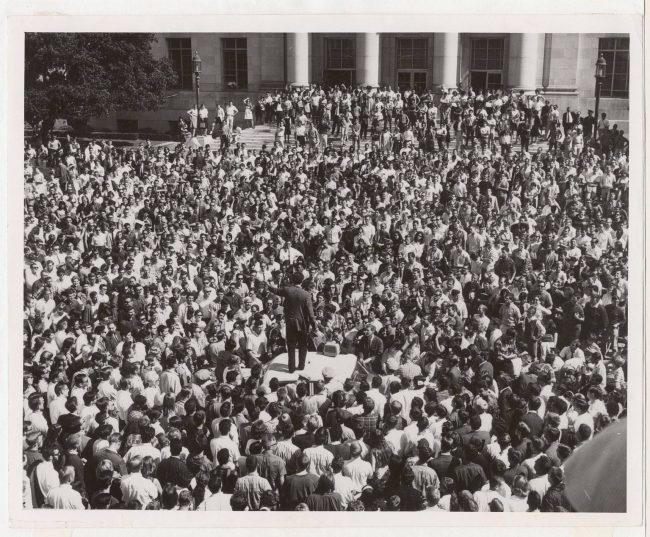
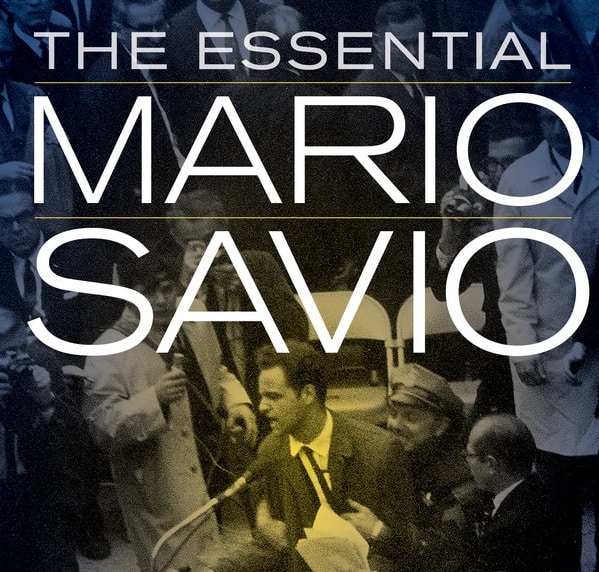
Students in Sproul Plaza surrounding police car. Mario Savio speaking from roof of car. Click image for source and more photos.
On Oct. 1, 1964, the Free Speech Movement was launched at UC–Berkeley when mathematics grad student Jack Weinberg was arrested for setting up a CORE (Congress of Racial Equality) information table in front of Sproul Hall, the administration building.
Hundreds of students surrounded the police car holding Weinberg for 32 hours, making speeches from atop the car, and ultimately negotiating Weinberg’s release.
The chancellor had been under pressure from the Board of Regents to ban expression of views considered Communist.
The students, inspired by the Southern Freedom Movement, questioned the restrictions.
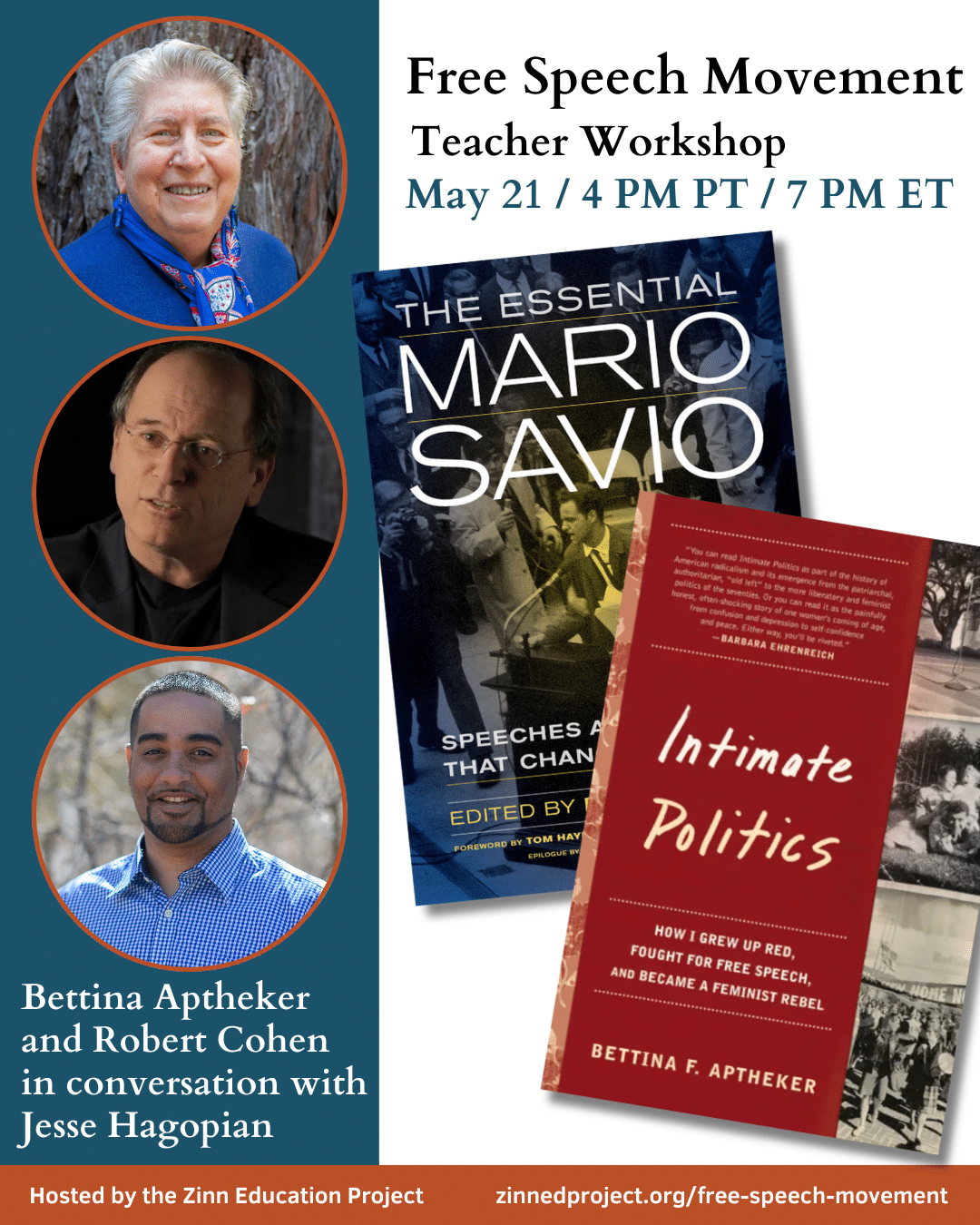
In a workshop on the Free Speech Movement hosted by the Zinn Education Project, Jesse Hagopian noted,
The Free Speech Movement is often remembered as a liberal fight for campus rights, but you all have really spoken so well to the fact that its origins were far more radical. Robert, you write in Freedom’s Orator, “For Savio, free speech was not an abstraction. It was a weapon with which to fight racism, poverty, and war.”
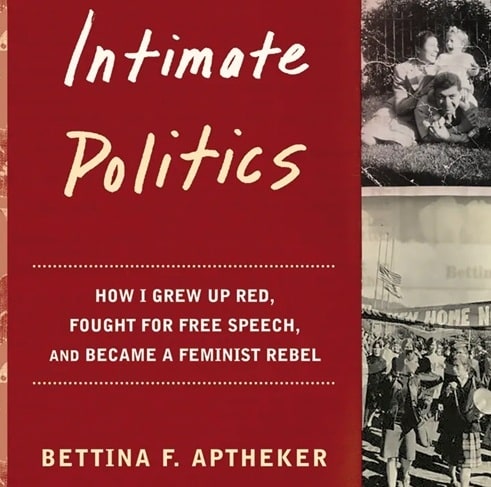
In the workshop, presenters Bettina Aptheker, author of Intimate Politics: How I Grew Up Red, Fought for Free Speech, and Became a Feminist Rebel and Robert Cohen, editor of The Essential Mario Savio: Speeches and Writings that Changed America, described the radical roots of the Free Speech Movement and their legacy today. The full recording and transcript are available, along with related resources.

Twitter
Google plus
LinkedIn