

By Jesse Hagopian
In mid to late October 1526, enslaved Africans carried out the first recorded rebellion against slavery in what would become the United States, rising up at the short-lived Spanish colony of San Miguel de Gualdape, located in what is now Georgia or South Carolina.
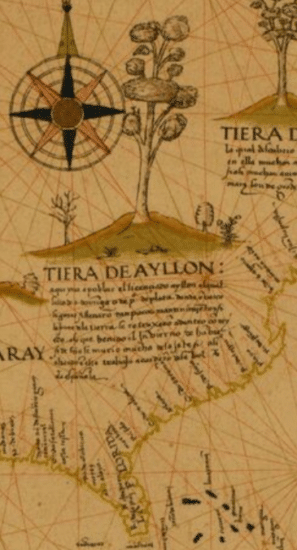
Detail of Ribero map showing land on the southeast coast of North America granted to Lucas Vázquez de Ayllón in 1523 by Spanish king, Charles V. Map by Diego Ribero, Seville 1529. Source: Public domain
In June of 1526, Spanish magistrate Lucas Vázquez de Ayllón set out to establish a colony he envisioned as a “New Andalucía” for Spain. The settlement he founded — San Miguel de Gualdape — was likely located near the Pee Dee River in what is now South Carolina. Among the 600–700 people aboard his ships were approximately 100 enslaved Africans — the first African people documented to be brought to this land — taken either directly from West Africa or through the brutal slave markets of the Caribbean.
After enduring intense heat, disease, starvation, and escalating tension with local Indigenous peoples, the Spanish colonists formally founded San Miguel de Gualdape on September 29 (Julian calendar) / October 8 (Solar/Gregorian calendar). But the colony quickly spiraled into crisis.
By mid to late October, enslaved Africans rebelled — burning colonists’ homes and escaping into the wilderness. Many found refuge among nearby Native nations, believed by historians to be the Guale people, forming one of the earliest known examples of African and Indigenous solidarity in resistance to European colonization.
Just days later, on October 18, Ayllón died of an unknown illness. By November, the surviving Spanish settlers — fewer than 150 — fled back to Hispaniola, abandoning the colony entirely. The escaped Africans were never recaptured.
This rebellion took place 250 years before the Declaration of Independence and nearly 300 years before Nat Turner’s revolt. It reminds us that the first cries for freedom on this land did not come from men in powdered wigs, but from Africans and Native peoples fighting back against colonialism from the very beginning.
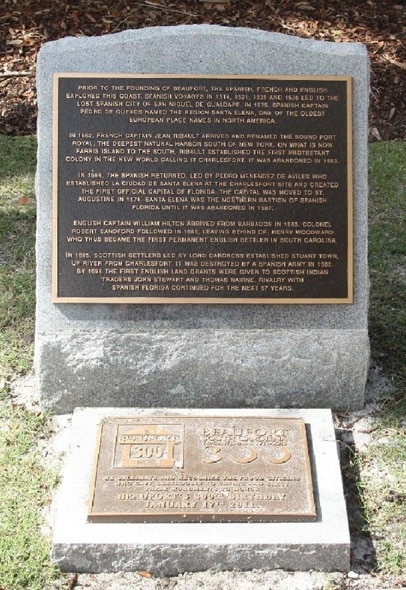
The Beaufort, South Carolina Tricentennial 1711-2011 marker begins with a description of San Miguel de Gualdape. Source: The Historical Marker Database
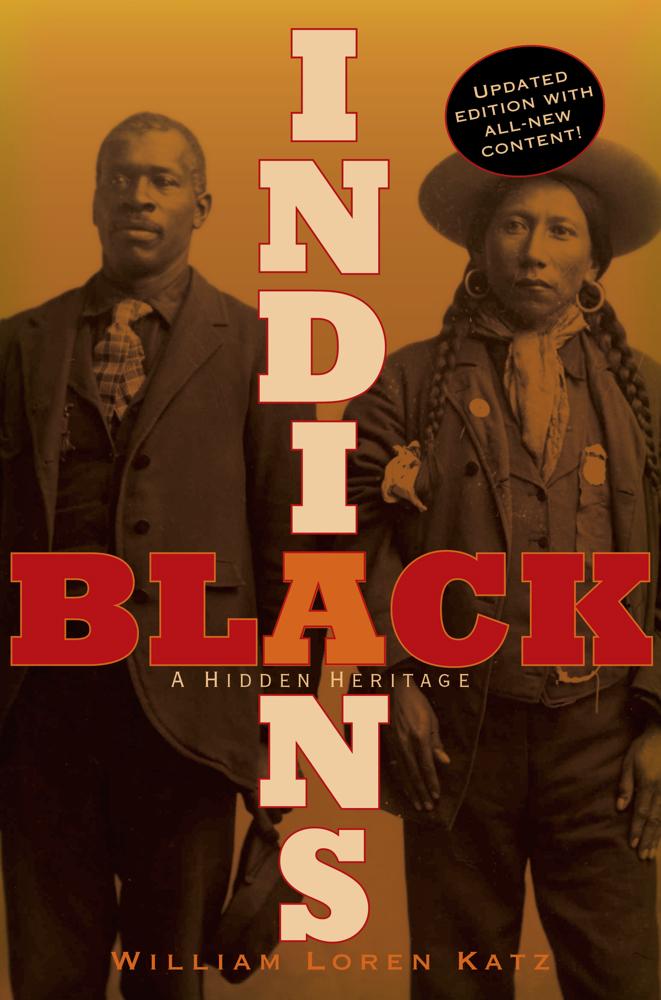
Historian William Loren Katz wrote in Black Indians: A Hidden Heritage:
The story of this new community shows that our vaunted democracy did not march into the wilderness with buckled shoes and British accents. Rather it was dancing around fireplaces in South Carolina wrapped in dried animal skins and singing African and native songs before the British arrived. This dark democracy lived in family groups before London companies sent out settlers with muskets, bibles, and concepts of private property. The Black Indians of the Pee Dee River became the first colony on this continent to practice the belief that all people — newcomer and native — are created equal and are entitled to life, liberty, and the pursuit of happiness. Theirs is a story worth teaching our children.
Additional Resources
Black Indians: A Hidden Heritage by William Loren Katz (Simon and Schuster)
A New Andalucia and a Way to the Orient: The American Southeast During the Sixteenth Century by Paul E. Hoffman (LSU Press)
“San Miguel de Gualdape Slave Rebellion (1526)” by Euell A. Dixon (BlackPast)
“Before 1619, There was 1526: The Mystery of the First Enslaved Africans in What Became the United States” by Gillian Brockell (The Washington Post)
“The First Slave Rebellion in Mainland North America: The Ones That Got Away” by William Spivey (Medium)





Twitter
Google plus
LinkedIn