

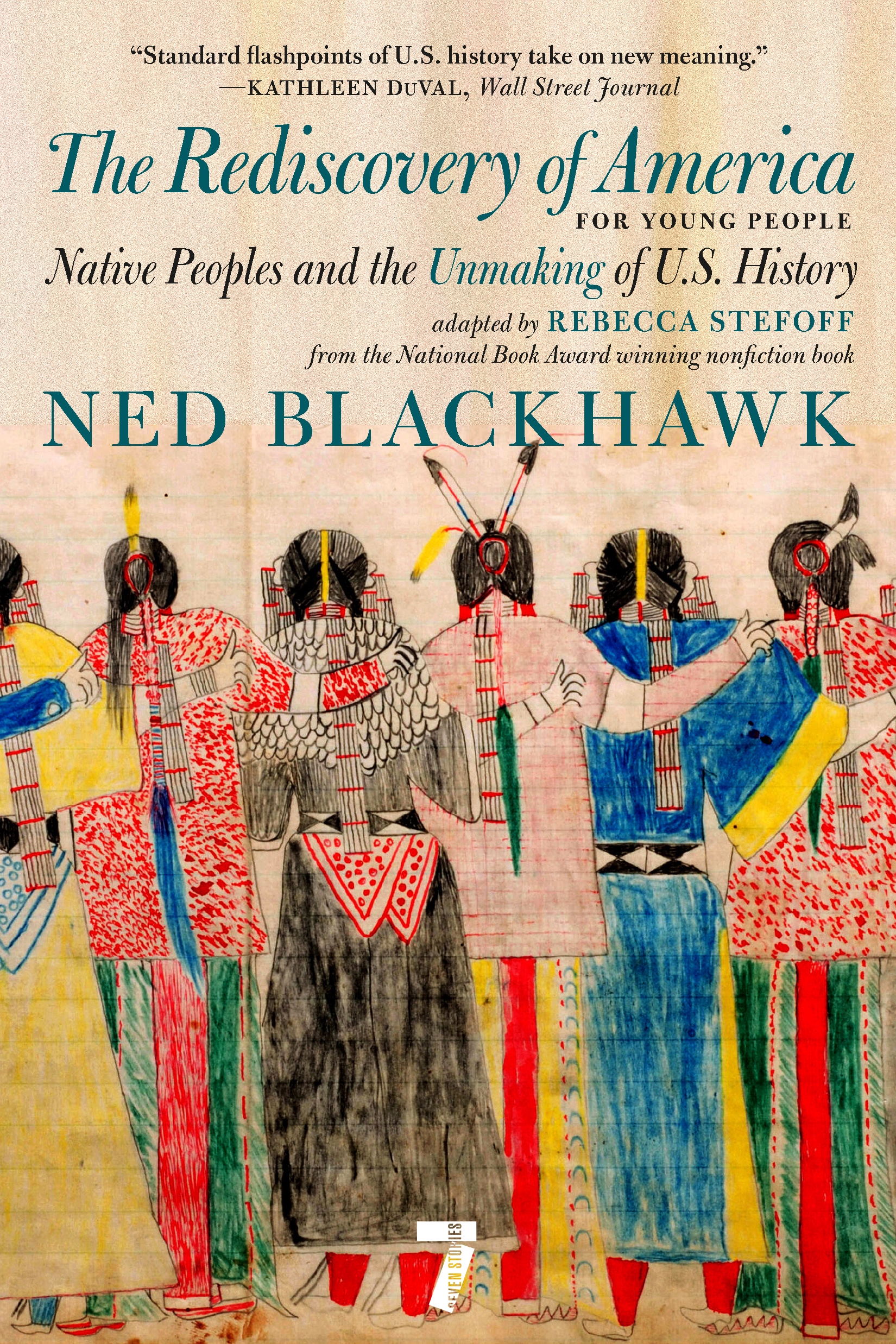
Raise your hand if you didn’t learn Indigenous history in school — or if you only learned a racist, white-centric, colonizer version of it. Infuriatingly, the prevalence of harmful myths about Native history is still far, far too common. In this comprehensive history of Native America, Ned Blackhawk adds his voice to the growing chorus of Indigenous scholars and historians who are fighting back against this erasure. — Laura Sackton, Book Riot
The most enduring feature of U.S. history is the presence of Native Americans, yet most histories focus on Europeans and their descendants. This long practice of ignoring Indigenous history is changing, however, as a new generation of scholars insists that any full U.S. history address the struggle, survival, and resurgence of American Indian nations. Indigenous history is essential to understanding the evolution of the modern United States.
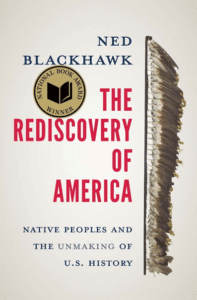 Ned Blackhawk interweaves five centuries of Native and non-Native histories, from Spanish colonial exploration to the rise of Native American self-determination in the late twentieth century. In this transformative synthesis he shows that:
- European colonization in the 1600s was never a predetermined success;
- Native nations helped shape England’s crisis of empire;
- the first shots of the American Revolution were prompted by Indian affairs in the interior;
- California Indians targeted by federally funded militias were among the first casualties of the Civil War;
- the Union victory forever recalibrated Native communities across the West;
- twentieth-century reservation activists refashioned U.S. law and policy.
Blackhawk’s retelling acknowledges the enduring power, agency, and survival of Indigenous peoples, yielding a truer account and revealing anew the varied meanings of the United States. [Adapted from publishers’ description.]
ISBN: 9780300276671 | Yale University Press
Related Resources
Instructor’s Guide and Discussion Questions (PDF) Chapter summaries, discussion questions, and primary documents.
Classroom Stories
I am teaching a class titled Minority Writers, and chose for our first book Night of the Living Rez by Morgan Talty. I chose this book because it is regionally close to us in New Hampshire, being set on the Penobscot Reservation on Indian Island. We read and discussed the high rate of drug and alcohol abuse that is especially prevelent on reservations. We researched why suicide, drug abuse and addiction, and lack of continuous adequate support continue to be a plague that is contributing to and inherent in the destruction of tribes across the country.
We read passages from Ned Blackhawk’s The Rediscovery of America: Native Peoples and the Unmaking of U.S. History in order to compare the use of alcohol as a means of controlling possible uprisings and revolts. We learned how substances were used as a ploy to steal valuable resources from tribal lands and disrupt and dismantle an entire culture’s way of life. We wondered how this is one of the tools of of genocide, and compared calls for abstinence as Native leaders watched their people succumb to the ravages of alcoholism to how today’s drug clinics try to reach the masses with as much success.
I prepared for the slate of U.S. history we teach in 8th grade by reading Ned Blackhawk’s The Rediscovery of America: Native Peoples and the Unmaking of U.S. History. We cover a span of time including the war for U.S. independence, the Antebellum era and the U.S. Civil War, Reconstruction and Jim Crow, and the second U.S. Industrial Revolution.
Blackhawk’s comprehensive and rich history of the contributions of Native people over the course of U.S. history, as well as their marginalization throughout an escalating and shifting genocide effort, informed the historical background and lessons I created for our class. These lessons included:
- The Detroit River as a crossing roads and incubator of Native resistance.
- Cultural practices and forms of governance across Turtle Island, pre and post European invasion, and their influences on burgeoning American ideologies and the manifestation of democracy.
- Historical efforts to assert and retain homeland boundaries and rights.
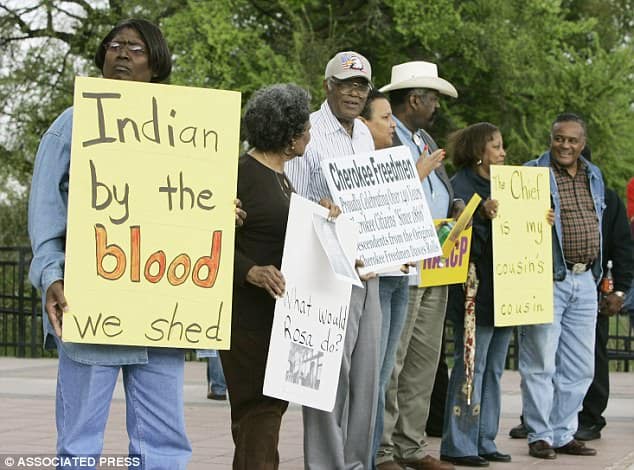
- Cherokee experiences before and during the U.S. Civil War, including key court cases, the Trail of Tears, the Treaty Party and Chief John Ross.







Twitter
Google plus
LinkedIn