

Robert Coram was raised in a loyalist merchant family in South Carolina, but fought for the United States in the Revolutionary War. He then became a teacher and a librarian in Delaware. In early 1791, Coram authored a long pamphlet; it advocated for a well-funded public education system to help close the wealth gap in the United States. On March 5, 1791, he sent copies to President George Washington and Secretary of State Thomas Jefferson, but neither replied.
In his pamphlet, Coram argued:
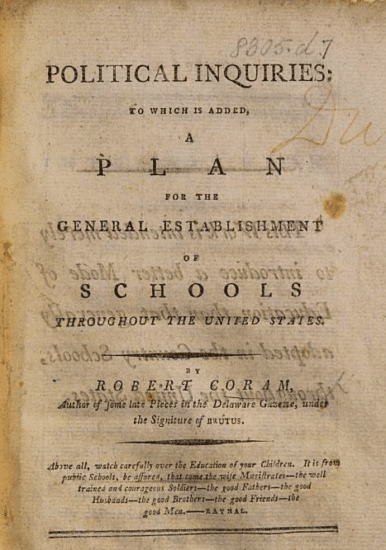
The title page of Robert Coram’s pamphlet, “Political Inquiries: To which is Added a Plan for the General Establishment of Schools Throughout the United States.” Source: Google Books
An equal representation is absolutely necessary to the preservation of liberty. But there can never be an equal representation, until there is an equal mode of education for all citizens. . . . Let public schools then be established in every county of the United States, at least as many as are necessary for the present population; and let those schools be supported by a general tax. . . .
Let it not be said, when we shall be no more, that the descendants of an Eastern nation, landed in this Western world, attacked the defenceless natives. . . only to establish narrow and inequitable policies, such as the governments of our forefathers were. But let us, since so much evil has been done, endeavour that some good may come of it. Let us begin by perfecting the system of education, as the proper foundation whereon to erect a temple of liberty, and to establish a wise, equitable and durable policy; that our country may become indeed an asylum to the distressed of every clime — the abode of liberty, peace, virtue, and happiness. . .
Jefferson had his own education plans: He wanted to involve Black and Native people not as students, but as “subjects of natural history.” And he wanted to reserve higher schooling for the wealthy and a small, elite selection of poor boys, so that “twenty of the best geniuses will be raked from the rubbish annually.”
Coram would go on to organize protests against Washington’s administration, insisting it had steered the country further away from democracy. He died young and his work faded from public view, but Coram’s vision of education and economic justice would echo through new generations of teachers and activists.
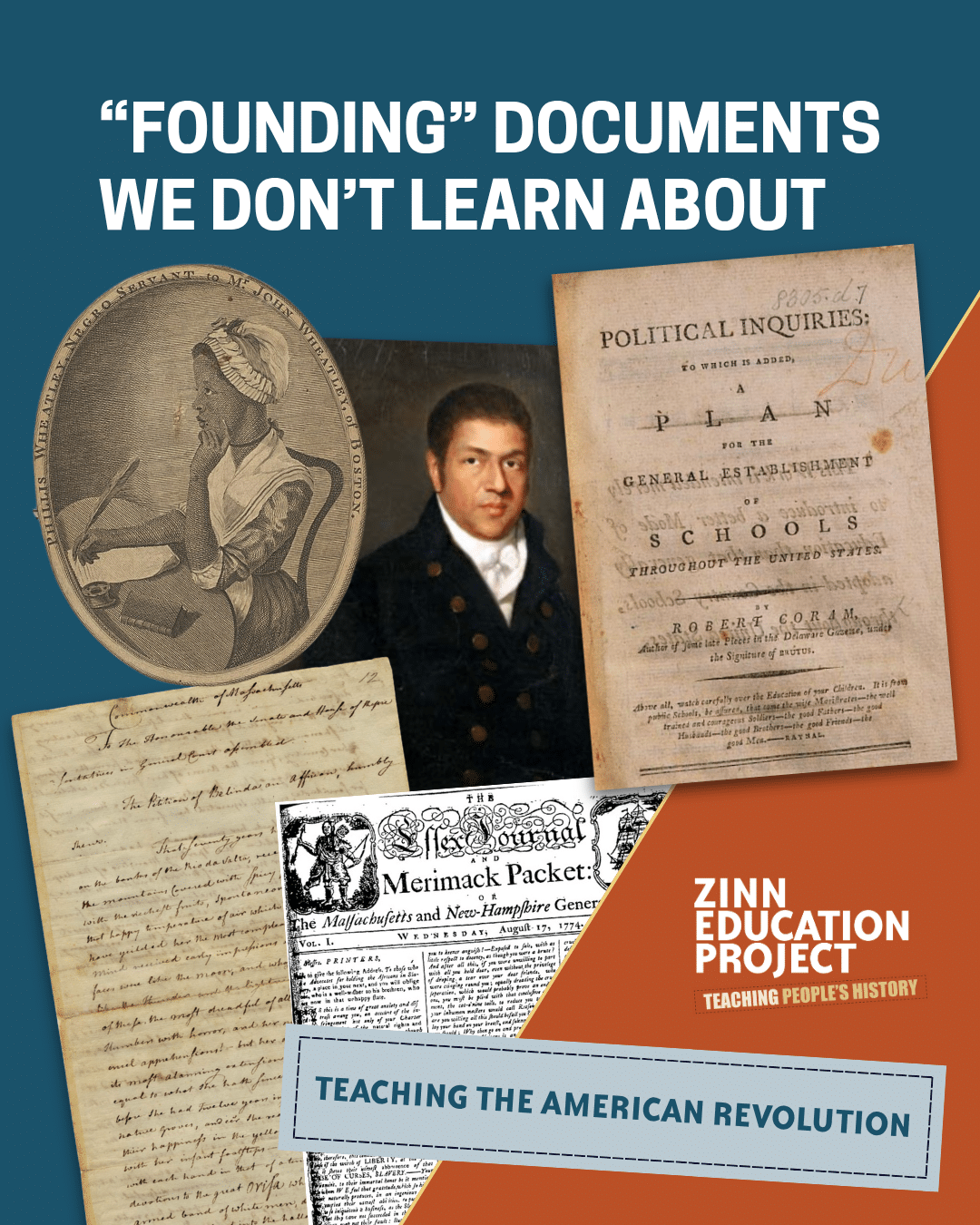
Read more in the lesson “Founding” Documents We Don’t Learn About.



Twitter
Google plus
LinkedIn