

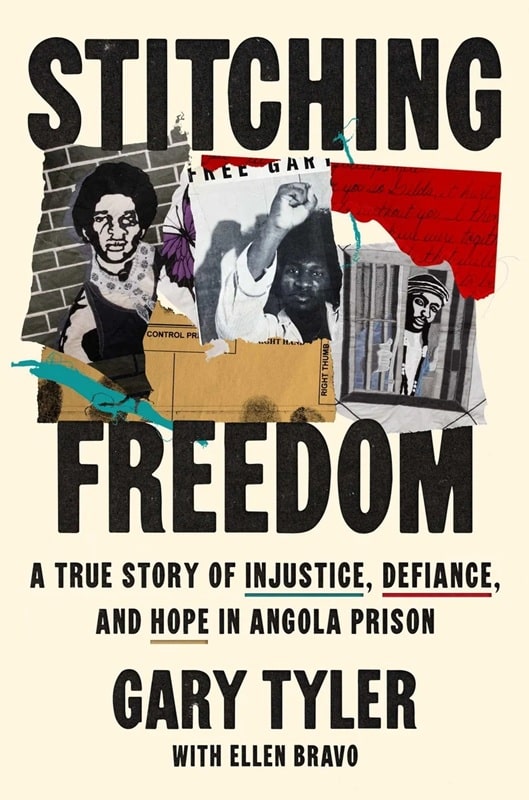
On November 9, author Gary Tyler joined Rethinking Schools editor Jesse Hagopian to talk about his recent book Stitching Freedom: A True Story of Injustice, Defiance, and Hope in Angola Prison. In the tradition of books by Albert Woodfox and Angela Davis, this memoir of a wrongful conviction and time spent on death row in Angola prison shows how incarcerated people care for each other and fight for justice.
(Watch our previous Teach the Black Freedom Struggle online classes and register for upcoming classes here.)
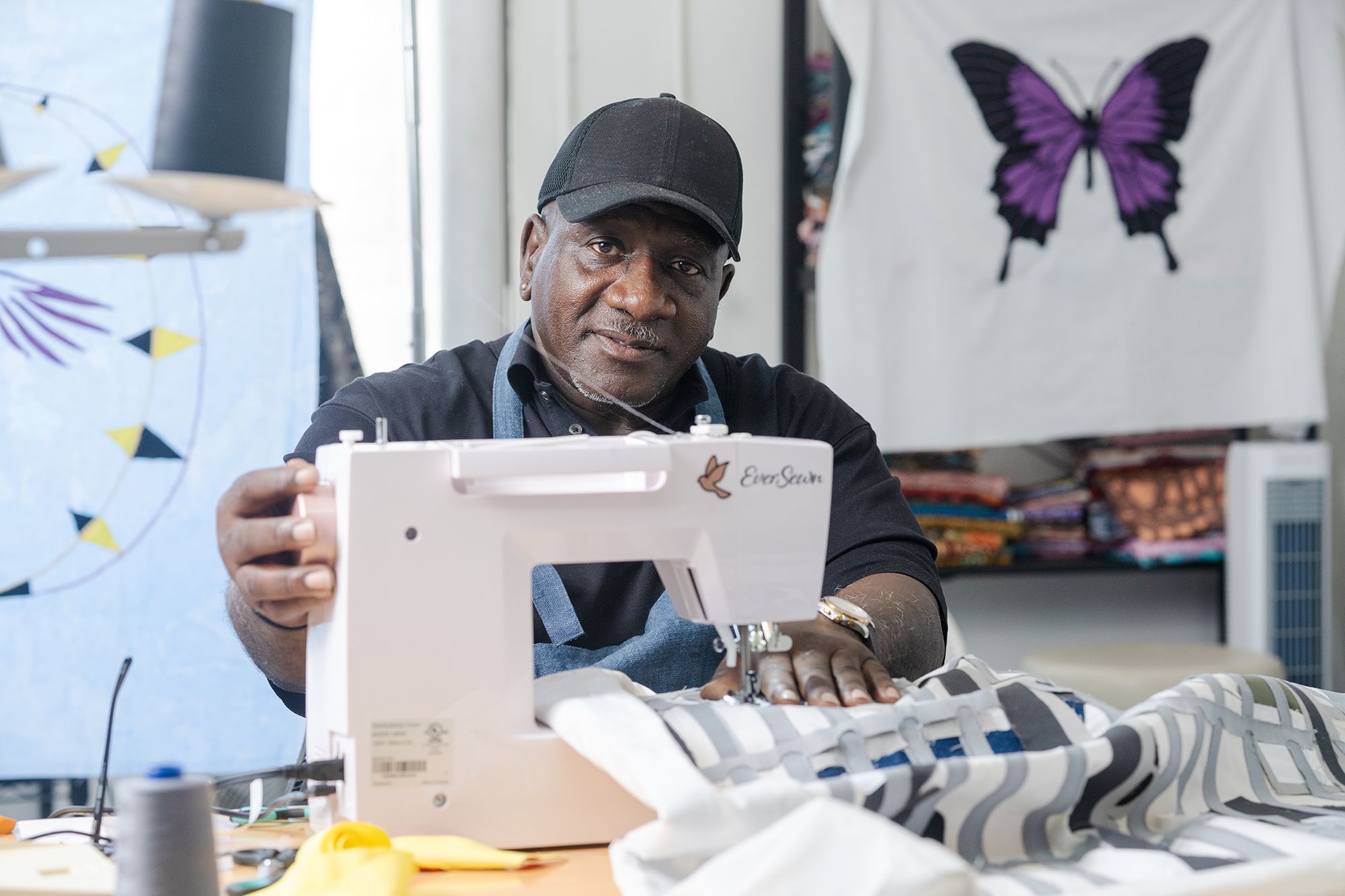
Gary Tyler creating one of many quilts he taught himself to make while incarcerated at Angola prison. Source: Library Street Collective
In the excerpt below, Tyler describes how learning the art of quilting helped him reflect on his life experiences, express his emotions, and care for those incarcerated with him, comparing the experience to a caterpillar transforming into a butterfly.
Participants shared what they learned and additional reflections on the session:
Gary Tyler has survived and thrived despite the odds, and has transformed into a free man in several ways. I learned that if he can do it, we can do it. I can do it. And, in fact, it is my duty to do it.
Community is critical for survival.
The most important thing I learned was Gary Tyler’s story and how he used art as a way to express himself, create hope, and bring people together despite experiencing an incredible injustice. His story showed me that even when people try to take away your opportunities, you can still find ways to make a positive impact.
Event Recording
Transcript
Click below for the full transcript with resources mentioned in the discussion.
Transcript
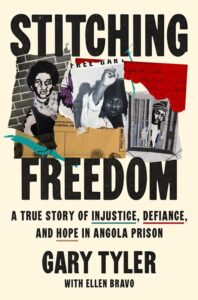 Jesse Hagopian (he/him): Today’s class is hosted by the Zinn Education Project, which is coordinated by Rethinking Schools and Teaching for Change. I am just thrilled to welcome artist and spokesperson for justice, Gary Tyler. During his years in prison, Tyler’s case galvanized a movement. And many people I’ve worked with in the struggle have told me how much Gary Tyler’s case meant to them, and how important a part of struggles for racial and social justice his case was. It really galvanized a movement that grew to have national and international support. It was one of the precursors to today’s abolition and Black Lives Matter movements. Tonight’s book, Stitching Freedom: A True Story of Injustice, Defiance, and Hope in Angola Prison, is his first book. Gary, welcome, and thank you so much for joining us here for the Teach the Black Freedom Struggle class. What’s up, Gary, how are you doing?
Gary Tyler: I’m good. How is everyone?
Hagopian: I think everyone’s excited to be here this evening. This is going to be a really important conversation to help shape the pedagogy of many thousands of kids across the country. So thank you.
I thought we’d just dive right into it and talk about your wrongful conviction. Then we’ll zoom out a little bit. But in chapter 2 of your book, you write, “Young and naive as I was, I still believed they would release me.” That quote kind of broke my heart when I read it.
And you describe believing that if the authorities simply examined the evidence, of course they would realize you were innocent. But instead, you were convicted by an all-white jury and sentenced to death. So, can you start by just walking us through how you were wrongfully convicted, including the role of police misconduct and coerced testimony? At what point did you begin to understand that the system was rigged? And what does your experience really reveal about the differences between the promises this country makes and the realities of racism?
Tyler: Well, speaking of my naivete, at that time I was about a 16-year-old, and I was raised during a time when, during the weekdays we had this show called Perry Mason, who was a lawyer that, every time he represented a client, he was able to prove his clients’ innocence. And I felt that every lawyer was Perry Mason.
When this incident happened to me, of course, it was a surprise. Despite the turmoil that we constantly experienced by going to a newly integrated school, I never thought that it would get to the point where it would escalate to someone losing their life.
It started in October, on a Friday, and there was a football game. There was this social worker by the name of Nancy Lemoy, and she worked at the school to try to bridge the racial divide between Black and white [people]. We had gotten to know each other because I was one of those that mainly spoke to some of the issues that I felt were wrong. And she decided to bring the group of us to the football game. So it was me, two of my cousins, along with one of my friends, and she brought her children. So we went to the football game, and we were into the game, and then there was a skirmish that happened, a fight, not that far from me. When that happened, she turned and immediately gathered all of us together, as though she was responsible for each and every one of us. She gathered us and we left, not knowing that that incident was going to manifest into a confrontation that Monday morning.
When I got to school, I wasn’t off the bus for more than several minutes, and next thing you know, I hear my name, “Gary Tyler and John Lee report to the principal’s office.” So I’m thinking, what are they calling me for? I knew that I wasn’t much favored by the principal, because earlier we had had a meeting and it wasn’t nice. I was one of the vocal ones that spoke about the inequities and unfairness of how he went about dealing with Black students opposed to white students. So, when he called me over the intercom, I went, and John Lee was just leaving the principal’s office. [The principal] told the guy that if he didn’t leave the school grounds, he was going to call the police. So he called me and told me to come to his office.
I walked in his office, and he just outright said that he was suspending me for 3 days because he got reports from the teachers that I was causing problems in the classroom and wasn’t attending class. My response was, wait a minute, how can I cause problems in the classroom if I’m not there? And when I told him that, he knew I caught him in a lie. That’s all it was, a lie. So he told me he was suspending me for 3 days. I said okay, just like that. He said, yes. I said, so you’re going to give me a pass where I can show my parents that I was suspended? That’s when he told the secretary, give him a pass showing that I was suspended. So I left.
Fast forward, a friend of the family asked me to go with him to pick up some clothing, because he had just got a job that day from one of the brand elevators that’s stationed out there in St. Rose, along the riverbanks of the Mississippi River. So, I went with him to New Salt Peep, we hitchhiked, got clothing, and we were stopped by an unmarked police car. The guy jumped out, frisked us thoroughly, and told us to get in his vehicle. That’s when he turned to me and said, “Gary Tyler, what are you doing out of school?” I told him I was suspended and gave him the pass. He snatched it out of my hand, brought us to the school, and asked the principal if we were the suspects that they called about. The principal looked and he said, “No, Gary Tyler was suspended that morning,” and that’s when he told us to get out of his vehicle on the school grounds.
And during that time, that’s when the buses were coming. We decided, since I had a brother there, along with two of my cousins, we decided to gather them and all leave together on the buses. When we made our way toward where everybody was at, that’s when the police corralled everybody and started putting us on buses that we weren’t assigned to, some buses that wouldn’t even go on to our community. The bus that he put me on, that bus went to my community, but it didn’t go on the streets where kids would normally be picked up. So, we got on the bus, but you could see that each and every bus that was loaded with Black kids came under attack. And not once at all did the police try to prevent the attacks on the buses.
We automatically expect we’re going to come under attack, too. And sure enough, as we went to move off the school grounds, that’s when the bus came under attack, and all of a sudden there was a pop sound. And that’s when pandemonium spread among the kids on the bus. Everybody started screaming, saying that they’re shooting at us and stuff like that. And the bus driver Joe, he stopped, got off the bus, and that’s when the police ran to surround the bus. They told him to get back on the bus, and that’s when a couple police officers got on the bus and told us, “Don’t move.” Then they started taking us off [the bus] one by one. When it got to me, they patted me down and everything and made me take things out of my pocket. They had parked the bus next to a vacant lot and they had us guarded on the lot.
So, after they patted me down, I jumped the ditch across from where everybody else was at, and as I turned around, that’s when I saw that they were arresting my cousin. When I inquired about why, he told me that they were arresting him because he had a chain with a .22 bullet around his neck. And that’s when I said, “You didn’t say anything about the one that I had around my neck.” That’s when he adjusted for me to come back across the ditch. As I went to do it, that’s when the police officers drew their guns on me. And that’s when, back and forth, we began arguing and everything.
Next thing you know, an officer came and asked me what my problem was. He said, “Son, what is your problem?” Now, my response was that I have a father, and I see him every day. He didn’t like my response, and he said, “Son, I’m arresting you for disturbing the peace and interfering in a police officer’s job.” And he put me in his vehicle and about an hour or so later, that’s when they transported me to the police station and started taking everybody off the bus. Then when he got to me, they pulled me out of the car. He brought me in, I sat in the room, and that’s what the guy, Smith, was with me. The guy who brought us to the school, he came in there and saw us. That’s when he asked why we didn’t leave the school grounds, why we were on the school grounds.
As a teenager, let me say this, sometimes we don’t have filters. We tend to speak our mind not knowing that speaking up can be quite dangerous, especially back then in the South, in Louisiana. Because you have some people that have problems with people speaking up for themselves, especially when you’re supposed to humble yourself. But my response basically was predicated upon my early experience from the time that I spent in LA, where I learned more about who I was as an individual. During the time I was growing up, Black people considered themselves Negroes, colored, and when I went to LA, it was a whole different scene where everybody was my African brother, brothers and sisters, wearing dashikis. And I was right there, living in Watts. So that kind of changed my whole perspective. I didn’t know that this existed because I came from a place where that wasn’t anywhere around.
So, when I left LA and came back, then it was like I was a changed person. Police officers in LA were considered pigs and fuzz, so that’s how I referred to them when I came back to Louisiana. I thought that I was a man, even though I was a teenage kid at that time, and that they were no better than me. They even reported in the papers that I was a smart mouth. So when I responded to [the officer] that we were headed home when he picked us up, he didn’t like that response. That’s when he began aggressively hitting me and started beating me. And other officers joined in. They moved the other guy out, so I don’t know what they were doing with him, but they moved him out and they concentrated on me. One officer came in and said that our mothers can hear what’s going on in the room, because the room was right there by the lobby. He came to say that our mothers could hear what was happening to us. That was inside the police substation.
Hagopian: How’d they come to charge you?
Tyler: Well, they beat me, they questioned me, they tried to give me a signed statement against other people. I refused. They were beating me so badly, I felt that they were afraid that if they released me then that would be a big lawsuit against them. Besides, I became the prime suspect because of my mouth, by speaking up against them, speaking up and things like that. I’ll never forget, during that time when they were beating me, that they played good cops and bad cops on me by trying to get me to sign the statement against other students that were on the bus. And I refused. Everytime I refused, they beat me more and more and more. And, at night, I didn’t go home, although they let my mother and father see me. My mother was petrified the way they beat me because she realized that my life was in danger, that these men didn’t see me as a human being. They treated me like an animal.
Hagopian: That’s just so disturbing, and something that so many Black people for generations have had to endure. Especially thinking of you as a young person, it just breaks my heart how brutal this system is.
Tyler: Yeah, and that’s why I can identify with people who speak of police brutality, because I’ve experienced it firsthand.
Hagopian: You were organizing as a young person even before this incident, even before this you had begun joining in causes and organizing, right?

Jonathan Jackson and Angela Davis protesting in defense of the imprisoned Soledad Brothers. Source: Working Class History
Tyler: Yes, when I was in Los Angeles it was the heyday of the Black nationalist movement. I was recruited along with other young kids in the community to be part of a petition drive for Angela Davis. We used to go door-to-door getting people to sign the petitions while I was there. Also, for the San Quentin Six, because that August of 1970, that’s when the incident happened with Jonathan Jackson at the courthouse.
What really opened my eyes and made me realize that I was somebody, that I should be a proud Black individual, is when I saw members of the Black Panther Party. They were quite actively involved in the community and that gave me pride, because I never saw Black people act like that because I come from the South. So it gave me pride. And hearing them referring to each other as brothers and sisters. At first, I was wondering if they were blood brothers and blood sisters, just like when I learned about them referring to police as pigs. So, when I left LA and came back to the South, and when the police car drove by, I said, “Well, look at that pig there.” And I caught my friends and cousins by surprise. They were actually looking for a pig! They didn’t know that just saying the word pig was a reference to police officers. That’s when I knew that my experience being out in LA was not only cumbersome as time went on, but also became a problem for me. Because when I was at school, and when I used to hear students talk about how unfair the teachers were, how unfair the white principal was, that’s when we got together and I spoke out against it. And, of course, when we had that meeting the principal denied it, and I knew right then that there was a target on my back.
Hagopian: Well, you learned how to stand up for yourself, no doubt.
Gary Tyler imprisoned at Angola.
Tyler: I tell people all the time that I was walking in the light, but I was learning. My brains were processing and I didn’t understand the significance of the knowledge that I had at that time until later on. Sometimes it takes days for you to realize that, wait a minute, this is reality, and this is something that people before you have been talking about, what they have been protesting and demonstrating against for so many years. As a kid, you’re still learning. I was a kid with knowledge, but I really didn’t know the application of that knowledge.
Hagopian: You had to grow up way too fast, man.
In the prologue to your book, you described going into jail, and I know that, as a young person, that must have just been impossibly difficult. It really was shocking when you described witnessing a man being set on fire within your first 72 hours on death row.
Tyler: Yes.
Hagopian: You were only 17 here. You wrote, “I realized I couldn’t think like a child in there.” That line really stuck out to me. So can you describe what life was like inside Angola, how you came to understand the connections between slavery and the modern prison system, and what does that history teach us about the roots of mass incarceration in America?
Tyler: First, we used to hear a lot about Angola because Angola back then used to be called a Ponderosa. But I didn’t know that Angola was once a slave plantation.
Hagopian: That’s right.
Tyler: I heard it was a prison, and the story about how bloody Angola was, that it was terrible. So, of course, as a young kid I definitely didn’t want to go to Angola. When this incident happened to me, and they tried me and found me guilty of first-degree murder and gave me the death penalty, I not only had to deal with that, but now I had to deal with everything that I’d heard about this place, not knowing anybody. As a young kid I was afraid because what if something happened to me? What if I get killed? What if I get raped? Anything can happen. So yes, I mean, I was definitely terribly appalled about going to Angola.
But when I went to that prison, when they drove up to the gate, all the things that I heard about this place seemed like it was lining up. As soon as they processed me and I’m walking down this tier, I could see these little shiny objects pointing out of the cells. And these are guys, what they did, they got little broken mirrors and they put them in the toothbrushes so they could see who’s coming down the tier. And that was strange to me. I realized that that was their way of basically being aware, making sure who’s coming on the tier, so they can prepare themselves. Because sometimes the guards will come down there and harass the prisoners. They’ll come down and throw certain things at the prisoners themselves. That I later found out. Nonetheless, I didn’t know any of these guys, so as I walked down this tier, I could see these guys looking at me. And I’m wondering, are these guys death row prisoners? But of course, I was the first death row prisoner on that tier. But these guys, one by one, came out and introduced themselves to me. They knew a great deal about my case, and they’re the ones that helped me gather my footing.
Hagopian: Tell me about those guys, about people like Albert Woodfox.

Herman Wallace, Robert King, and Albert Woodfox, imprisoned at Angola.
Tyler: Well, Albert Woodfox was located on another tier. It was brothers like Colonel Nyati Bolt, and a brother called Bockaloc [Ronald Lewis], as well as Damu and Sabu, two brothers from Chicago. They’re the ones that started helping me. But when Albert Woodfox, Herman Wallace, and [Robert Hilary] King, when they all heard that I was finally in prison, that’s when they started sending me kites [discreet, unauthorized messages].
Hagopian: And they were part of the Black Panther Party inside Angola, right?
Tyler: Yes, they were Black Panther Party members inside the prison. They’re the ones that help organize the guys to help with whatever I needed, whatever they feel was best to educate me. They all worked in sync with each other to make sure [I had what I needed]. I’m talking about the power of organization. These guys were able to come together and put their differences aside. We’re talking about guys that were old enough not only to be my fathers, but my grandfathers. We’re talking about older guys in prison. And many of them, when they saw me, they saw a child. They saw this child that could be their family member, that could be their son, their grandson. And those guys rallied around me.
Hagopian: Tell me about what political education they gave you, what the experience of working with the Angola Three was like, and what happened to them, too.
 Tyler: Well, one thing that made me realize the power of the book was Malcolm X Speaks and Soledad Brother: The Prison Letters of George Jackson. That’s what they gave me. And they even gave me a book on Plato and Socrates, the philosophers.
Hagopian: To encourage the pursuit of knowledge.
Tyler: Yes. And it made me realize that I didn’t have time to waste. That it was imperative that I educate myself, politically and philosophically. And they became our mentors. They became my educators. They took the time to help me to prepare myself to deal with what was ahead. They’re the ones that did it.
Hagopian: Right on. That’s beautiful. I’m so glad that they supported you in that way. That you found community. And that you found these organizers and activists inside as a young person.
Tyler: I’m going to show you how effective they were. I was set up one time. A prison guard put a shank in my cell, and they locked me up. They gave me 20 days in isolation. And you know what those guys did? Those guys, one by one, checked themselves into the dungeon to make sure that nothing happened to me.
Hagopian: Oh, wow. That’s amazing solidarity.
[breakout rooms]
Hagopian: Alright, I hope everyone had a great time in your breakout rooms. We’re going to hop back into the conversation with Gary Tyler. Gary, how was your breakout room? Did it go well?
Tyler: Oh, yes, it was great.
Hagopian: Nice. I saw a lot of love in the chat for a lot of groups. I’m glad teachers were engaging with what you were talking about. I just have a couple more questions. We don’t have a lot of time, so I’m going to try to get to three more questions before.
Tyler: And I’ll try to keep it short.
Hagopian: Right on. Let me start with this movement that grew up because of your wrongful conviction, which I think really sparked an extraordinary movement for your freedom. Thousands of people marched — Black students, white students, civil rights activists, labor organizers, people from different political traditions. And your mom and your family were central. I loved learning about that in your book. So, what made it possible to build such a broad, multiracial movement during this time of intense racial division, what organizing strategies were most effective in the fight for your freedom, and what lessons can we learn in today’s movement in the fights for racial and social justice?
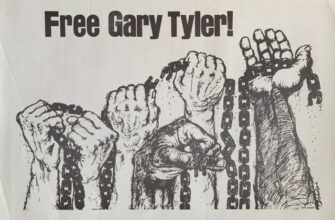 Tyler: Well, I would like to say this: Community is very important. Community is very important. True, I had a family that loved me. And they knew that I was wronged, and they were doing everything in their powers to support me. When I went to prison, despite what I’d heard about the men of Angola, I found out that there are good people, damn good people, in prison. Understand that because an individual is in prison doesn’t necessarily mean that they’ve lost their humanity.
Hagopian: No doubt.
Tyler: And those brothers in prison were the ones that rallied around me and told me about the importance of me having support — political, organizational support. Other told me about the importance of writing letters, appealing to the people, to the public. They wanted to help me and told me what I needed to do. And what I mentioned earlier about them giving me those books — that was the, you know what I’m saying? That was the way of letting me know that this is a way of educating yourself, and this is a way of you understanding and being able to reach out to people. And when I wrote that letter, they’re the ones that made it possible by giving me the paper, giving me the stamps, and the carbon paper. I don’t know if people remember carbon paper, but I wrote so many copies, and I sent those letters out to organizations and newspapers. And that in itself, within two weeks I started getting an abundance of responses from people. That’s when the church and youths in the schools started organizing, and they started pushing, propagating the injustice of what happened to me. And that’s how it all happened. I mean, it’s about what took place, and that this kid, the youngest kid on death row in the United States, is subject to losing his life behind something he didn’t do. People rallied behind that, and that’s what they did.
Hagopian: Right on.
Tyler: One thing that we must understand is that the system is fraught with flaws. We should never forget George Stinney, the youngest kid executed in the United States, a young Black child who was falsely accused of killing two children. And 70-some years later, they exonerated him. All because of what? Racism. And not because of those who try to pursue the truth and justice in the case. And that’s what people did. They fought because they knew that what happened to me was unjust.
Hagopian: No doubt. Thank you for sharing that. It’s inspiring and incredible to have you here in dialogue, teaching the next generation of organizers and educators, and knowing that that movement was so important to your life and to the ongoing Black Freedom Struggle.
Near the beginning of the book, you write that despite everything you endured, you said, “I was able to survive and thrive and avoid bitterness and to learn to forgive.” That was such a powerful part of the book for me. One of the most remarkable parts of your story is how you found ways to care for others. Like you said, you might be in jail, but you’re human beings. You worked with terminally ill prisoners through hospice care, and created quilts that helped raise money to support them. So, I was hoping you could talk more about caring for others, creating art, and how you preserved your humanity during more than four decades of imprisonment? So what does quilting mean to you, and how does it connect to the title of your book, Stitching Freedom?

Gary Tyler standing in front of two of the quilts he has created. Source: Detroit Free Press
Tyler: Quilting, to me, is like writing poetry, being a philosopher, being a painter. Those are artists that express themselves, that get people’s attention. Historically, artists have always been in the forefront of expression, of society itself, and that’s what happened when it came down to quilting. It started off as a way of supporting terminally ill men in prison. But the power of art gave me the ability to be able to reflect on my past and present life, and show people that despite everything I’ve been through, I did not allow it to destroy me as a human being. That I was able to be this butterfly who started off as this caterpillar that many people look at as being so gross and contested, that people don’t want to have anything to do with. And when they see in the morning this beautiful creature that’s flying, it was that caterpillar that many of them looked at as bad. But that caterpillar experienced and was able to survive an arduous and terrible life to where it manifested to something beautiful. And that’s how I want people to look at me, as a butterfly that can make a difference in the lives of other people.


Hagopian: Man, that’s beautiful. Thank you so much for giving us that example. It’s just incredible to think about how your artwork helped you through those four decades, when they tried to break you and tried to throw you away. Your spirit was just too strong for that. And it’s absolutely just exhilarating to know that that’s possible. Even though you spent all that time in jail for something you didn’t do, you found ways to resist racial injustice, too, and maintain hope and build community. I think your life is really a testament to both the extraordinary cruelty of systemic racism and an economic system designed to warehouse people who they deem expendable. But it’s also an extraordinary example of the power of people organizing together to challenge that system.
So, at a time today when we are dealing with some extremely Right-wing attacks, and the rise of folks that want to invade our communities with ICE and deport people, and terrorize communities, when you look at our movements today for racial and social justice, where do you see the greatest possibilities for building a more just world?
 Tyler: I would say that Earth’s greatest treasure lies in human personality. I would like to paraphrase Martin Luther King, when he said the ultimate measure of a person is not where they stand at a time of convenience and comfort, but where they stand at a time of controversy and challenge. Everybody has it within them, if you believe in the sanctity of humankind. Believe me, when you see a road and you don’t speak up, acquiesce to it, that means that you support it. But if you oppose it, you have to be just as evocative to an individual that wishes they had the ability to be able to speak. If you’re not able to speak just like the brother doing sign language, he’s able to express it in that way. But if you believe in equality and justice, you’ve got to stand up, because if you don’t, who’s going to do it?
And I would like to gather hands and shake hands with the men and women and young people today, because what they did a few days ago [the elections], they changed the trajectory of America and I’d like to let them know that we are not going back to the past. You can forget about that. Make America Great Again? Hell no. America was not great for many people of color. But no, we’re going forward, not backwards.
Hagopian: Thank you. Gary, you’re a beautiful butterfly. I am just elated to have shared this time with you. I feel just so grateful that you were able to join our community and touch the educators the way that you were able to do this evening. Gary, I hope to see you in the struggle sometime soon.
Tyler: Let’s make that possible.
While this transcript was edited, there may be minor errors or typos — if you notice something you believe to be incorrect, please contact us at [email protected].
Audio
Listen to the recording of the session on these additional platforms.


Resources
Here are many of the lessons, books, and other resources recommended by the presenters and participants:
Lessons
|
|
How We Remember: The Struggle Over Slavery in Public Spaces by Bill Bigelow, Jesse Hagopian, Cierra Kaler-Jones, Ana Rosado, and Ursula Wolfe-Rocca Echoes of Enslavement — Not Only in the South, But Everywhere by Ursula Wolfe-Rocca “Riots,” Racism, and the Police: Students Explore a Century of Police Conduct and Racial Violence by Ursula Wolfe-Rocca ‘What We Want, What We Believe’: Teaching with the Black Panthers’ 10-Point Program by Wayne Au |
Books
|
|
In addition to Stitching Freedom: A True Story of Injustice, Defiance, and Hope in Angola Prison with Ellen Bravo, from Atria/One Signal Publishers, the following books were referenced.
Just Mercy: A True Story of the Fight for Justice (Adapted for Young Adults) by Bryan Stevenson (Random House Children’s Books) How the Word Is Passed (Adapted for Young Readers) by Clint Smith and adapted by Sonja Cherry-Paul (Little, Brown Books for Young Readers) Malcolm X Speaks by Malcolm X (Pathfinder) Soledad Brother: The Prison Letters of George Jackson by George Jackson (Lawrence Hill Books) Rattling the Cages: Oral Histories of North American Political Prisoners edited by Josh Davidson, with Eric King (AK Press) And check out the Social Justice Books Incarceration book list for more.
|

Articles
 |
Gary Tyler Spent 42 Years in Prison for a Crime He Didn’t Commit. Racism Put Him There. by Lora Strum (ACLU) Sentenced to Death at 17, at 68, Quilt Artist Receives Solo Museum Exhibition by Sea Stachura (NPR’s All Things Considered) Teaching Social Activism in Prison: The Leap Manifesto and Incarcerated Youth by Rachel Boccio (Rethinking Schools, Winter 2018) |
Videos and Music
|
|
How Wrongful Incarceration Led to Gary Tyler’s First Solo Exhibition of Quilts (Grand Rapids Art Museum) The Case of Gary Tyler: Despite Witness Recantations and No Physical Evidence, Louisiana Prisoner Remains Jailed After 32 Years (Democracy Now!) Additionally, there were three songs written about Gary Tyler and his fight for freedom. They include “Angola, Louisiana” by Gil Scott-Heron, “Tyler” by UB40, and “Waiting for the Bus” by Chumbawamba. |

The Angola Three
|
|
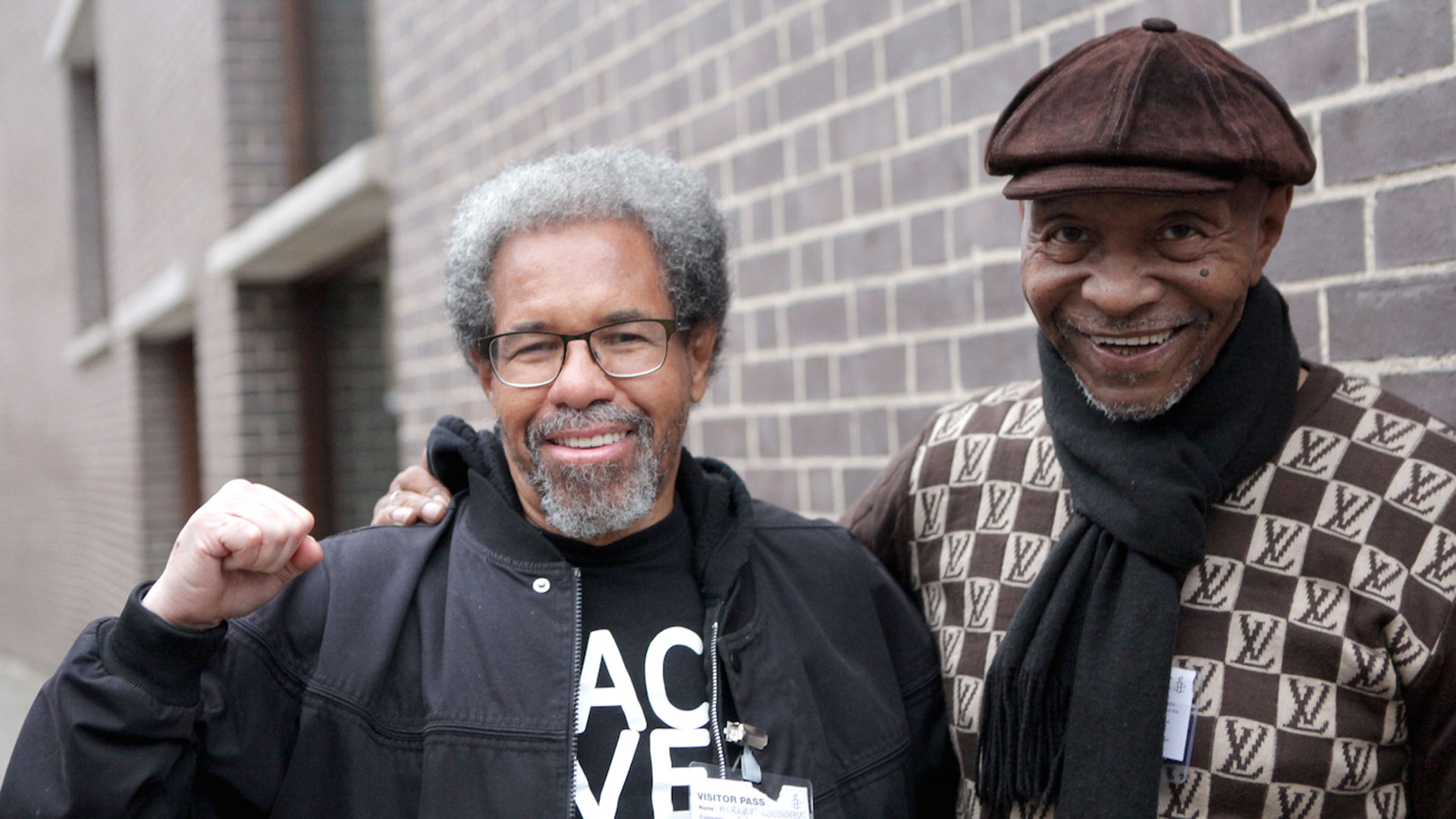
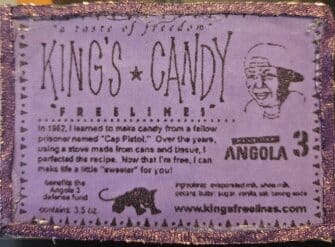
Albert Woodfox, Herman Wallace, and Robert King — collectively known as the Angola Three — were members of the Black Panther Party who spent decades in solitary confinement at Angola prison, framed for a murder they did not commit. The three organized relentlessly and successfully for their freedom, and continue to inspire incarcerated individuals around the world. Read Albert Woodfox’s award-winning book Solitary: A Biography, as well as Robert King’s moving book From the Bottom of the Heap: The Autobiography of Black Panther Robert Hillary King. We also recommend Panthers in the Hole, the illustrated story of the Angola Three, and the 2008 documentary The Angola 3: Black Panthers and the Last Slave Plantation, available to view in full here. And order some of Robert King’s Freelines, a praline candy recipe he perfected in his cell at Angola during his 29 years of imprisonment. |
This Day In History
The dates below come from our This Day in People’s History collection, which contains hundreds of entries all searchable by date, state, theme, and keywords.
|
|
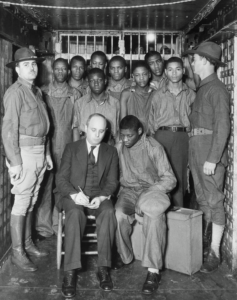
Dec. 6, 1865: 13th Amendment Ratified March 25, 1931: Scottsboro Nine Oct. 15, 1966: The Black Panther Party Founded Aug. 21, 1971: George Jackson Murdered in San Quentin Prison Oct. 7, 1974: 17-year-old Gary Tyler Becomes Youngest on U.S. Death Row Nov. 7, 1985: Court Ruling in Wrongful Case Against Rubin “Hurricane” Carter April 19, 1989: “Central Park Five” Arrested Oct. 27, 1994: U.S. Prison Population Exceeds One Million May 15, 2010: Kalief Browder Arrested, Held for Three Years with No Trial Nov. 22, 2019: Harlem Park Three Released from Prison |

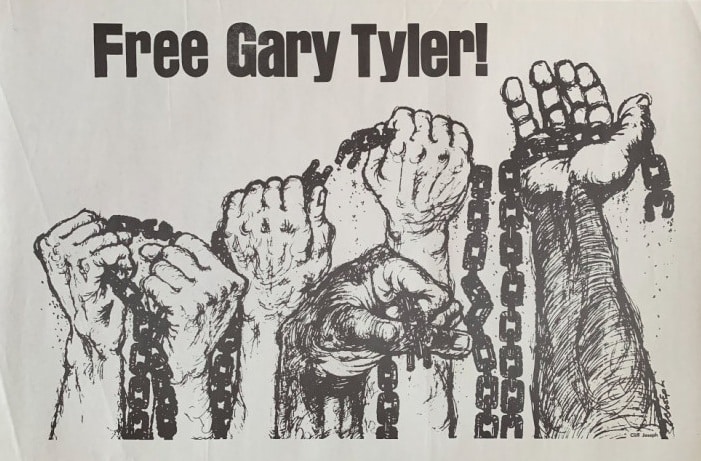
 Order a 2027 Certain Days: Freedom for Political Prisoners calendar, an educational and fundraising project founded in 2001 to raise awareness and funds for political prisoners held in North America.
Now in its 26th year of publication, the Certain Days calendar is required reading for radicals, leftists, and all who support political prisoners and advocate the end of mass incarceration. All proceeds support prisoners and grassroots organizations working to abolish the carceral system.
Participant Reflections
With more than 170 attendees, a poll of participants’ primary roles in education showed 48 percent K–12 teachers, 14 percent teacher educators, 9 percent K–12 students, and more.
Here are more comments that participants shared in their end-of-session evaluation:
What was the most important thing (story, idea) you learned today?
Hope, resilience, and love. What a remarkable and devastating story.
I left today’s session feeling more aware, inspired, and reminded that everyone deserves to be treated with dignity and fairness.
I learned how important it is to have a strong base of people who have your back and will fight for you.
Turn lemons into lemonade. I am truly inspired by Gary’s resilience and how he still has such a pleasant disposition after all he’s been through.
The most important idea I learned was how police brutality is tied to slavery and the dehumanization of Black people.
Joy and unity through art, community and reading in the face of systemic oppression.
What will you do with what you learned?
I am still a student in high school, but I will be more conscious of the racial divide in my school, and how teachers, security and other people in power are treating people of color differently then white people.
I will teach my students the importance of kindness, fairness, forgiveness, and perseverance.
I want to read Mr. Tyler’s book and continue fighting against systemic racism. I teach kindergarten so this is not on our radar, but it’s an extremely important part of our history.
This will fit in well with my teaching of World War II, Japanese American incarceration camps in the United States, and the Jim Crow laws.
I will consider these teachings and how I can bring it into graduate courses. I think, as a literacy specialist, I will discuss the importance of literacy as a human right.
I will use Gary’s book as a companion text to Bryan Stevenson’s Just Mercy.
I will continue to influence my students in making wise choices and standing up by getting in good trouble.
I will take it with me in my study of the legal system and the systemic inequality within it. I will remember it when I further learn about legal frameworks and treatment of African Americans within them.
How was the format for the class?
Runs like a Swiss Watch.
The format was great: simplistic and cohesive, very inclusive and interactive.
Everything worked — I just wish we had more time!
I loved how inclusive and encouraging the format was to include people’s views, and it was especially great to see so many students in attendance.
Presenters
Gary Tyler is an artist and a spokesperson for justice. Tyler’s case galvanized a movement that grew to have national and international support, one of the precursors to today’s abolition and Black Lives Matter movements. He was recently named a 2026 Galaxy Gives Leader Fellow and awarded the 2024 Frieze LA Impact Prize, which recognizes artists who use their talents and abilities to address social justice issues. Stitching Freedom is his first book.
Jesse Hagopian is an editor for Rethinking Schools, co-editor of Teaching for Black Lives, editor of More Than a Score: The New Uprising Against High-Stakes Testing, author of Teach Truth: The Struggle for Antiracist Education, and the Teaching for Black Lives campaign director for the Zinn Education Project. He previously taught Ethnic Studies and was the co-adviser to the Black Student Union at Garfield High School in Seattle.




Twitter
Google plus
LinkedIn