
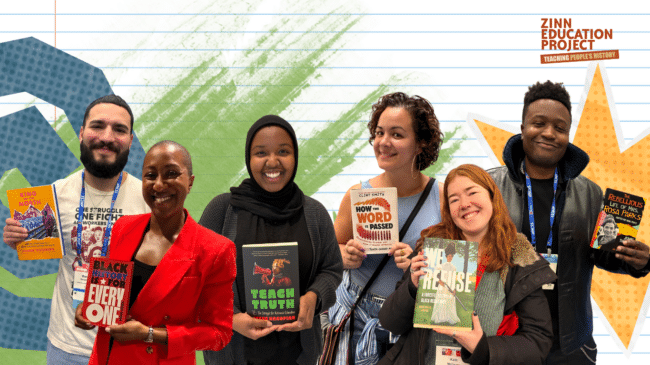
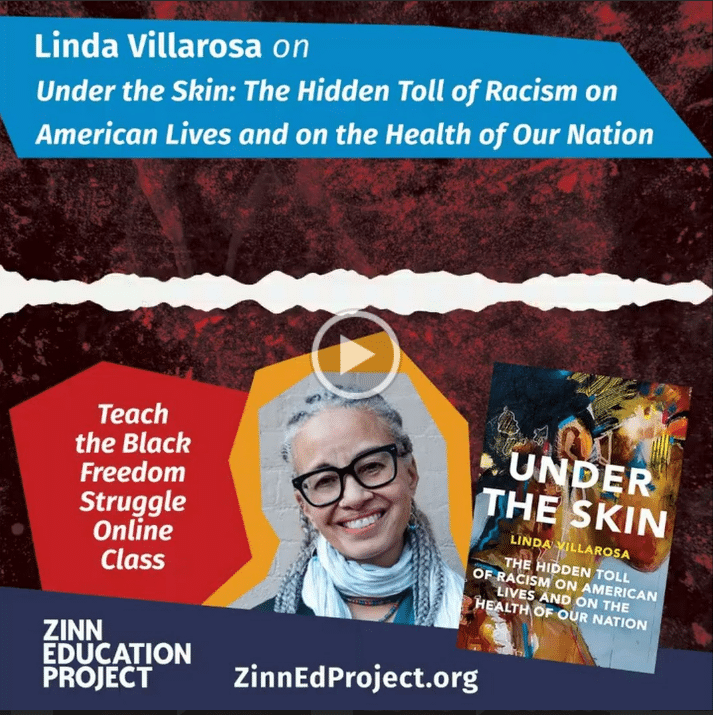
It’s not every day that educators can learn directly from leading historians, writers, and activists, and then immediately process that learning in small groups with peers equally committed to truth and justice. That’s exactly what makes the Zinn Education Project’s Teach the Black Freedom Struggle online class series so rare and vital.
In an era of book bans, gag orders, and political attacks on justice-centered curricula, spaces for honest, interactive professional learning are shrinking. Teachers and school staff face constant pressure, misinformation, and curricular erasure. The need for meaningful, relevant professional development has never been greater, as nearly half of educators report that their required PD is irrelevant to their work. This series offers a response: a live, collaborative learning experience unlike typical workshops or webinars.
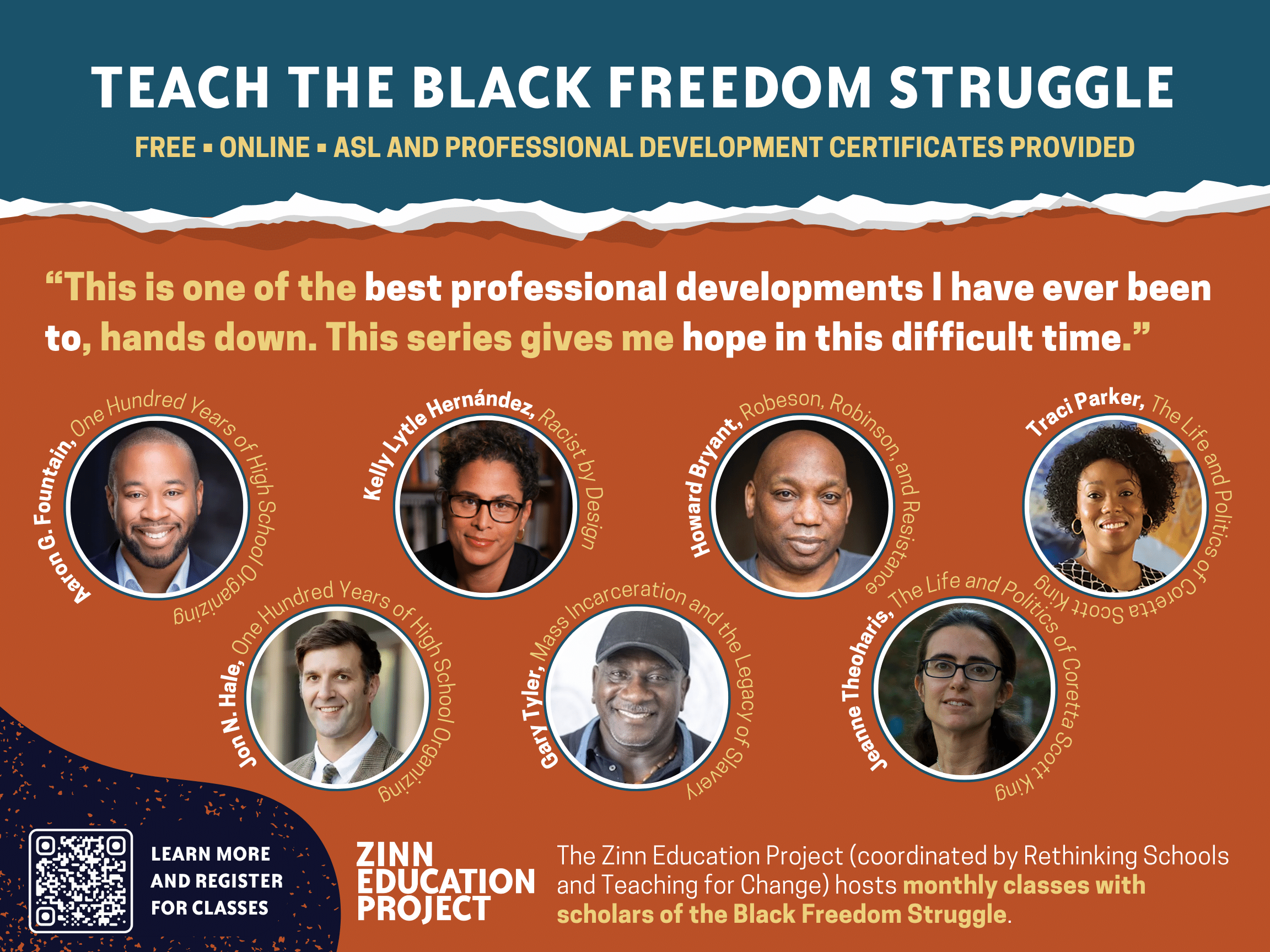
Launched in March 2020 when teachers were isolated with remote learning, the series now brings together educators and historians from across the country. It reminds participants that history is layered, contested, and constantly rewritten, emphasizing the collective nature of social transformation. Now in its sixth year, the series offers monthly 75-minute sessions that combine rich, historical conversation with interactive engagement.
These classes are not only about learning people’s history — they also provide opportunities to connect with peers, find guidance for teaching under authoritarianism, and gain inspiration to continue justice-centered work. As one participant reflected, “So much of our history lies in our hands, and we have to tell our story and carry it forward.”
Anchored in emergent people’s history, the series has featured Clint Smith on slavery’s lasting impact on inequality in the United States, Eve Ewing on how the U.S. school system maintains racial hierarchies, Jarvis Givens on Black History Month as an evolving liberatory project, and Jeanne Theoharis on Northern racism and the ongoing misuse of King’s legacy. Martha Jones highlighted the role of Black women in the long struggle for voting rights. As one participant reflected on the session:
The stories of our female ancestors are powerful and need to be told and taught! Using Vanguard, I can share with my students the background of the struggle for Black women to vote and tie it into what is happening currently all across the country. This history is bigger than us.
The sessions consistently model inquiry-based, dialogic learning, where knowledge grows through discussion and reflection rather than top-down instruction. “As always, I appreciate the chance to actively process my thinking with other educators,” one participant emphasized. Another shared, “Loving the breakout groups more and more each time.”
Participants describe the series as both rigorous and sustaining. One attendee said the experience “reinvigorates me to keep learning as much as possible to teach kids Black history, despite the major gaps in my knowledge.” Another added: “This will definitely help my future teaching by being more open and honest with students. Not sugar-coating what has happened actually informs them more.”
For many, the series fills gaps left by incomplete or inaccurate history education. One participant shared: “I am thinking about the parallels to what is happening today and how I can learn from the lessons of the past to resist today.” These statements reflect the dual nature of the series. It equips educators with knowledge while fostering connection, solidarity, and hope.
Both deep and accessible, these sessions are designed for teachers and school staff. Parents, students, and other learners also attend. Resources from past sessions are available on the ZEP website and the audio recordings are available as podcasts. Thanks to donations by authors and publishers, attendees often receive free copies of books, allowing them to continue the learning beyond the sessions.
If educators are to teach U.S. history accurately, they need access to the current scholarship. These sessions provide exactly that: cutting-edge research in people’s history that uncovers forgotten or previously unrecognized stories of real people — stories that traditional narratives have left out or intentionally erased.
One attendee wrote: “These spaces are not only about learning — they are about organizing, connecting, and freedom dreaming.”
In addition to teachers attending on their own, teacher education cohorts and high school classes can attend as a group. ASL interpretation and professional development certificates are provided for all the sessions.
For educators and learners seeking more than a typical professional development session, the Teach the Black Freedom Struggle online series is an extraordinary opportunity. It combines direct access to leading voices, structured reflection in small groups, and the ongoing energy of a national community committed to truth, equity, and historical justice.
See the full schedule and register to join this growing community of educators, students, and learners committed to teaching truth, learning together, and building a more just world.
Twitter
Google plus
LinkedIn