
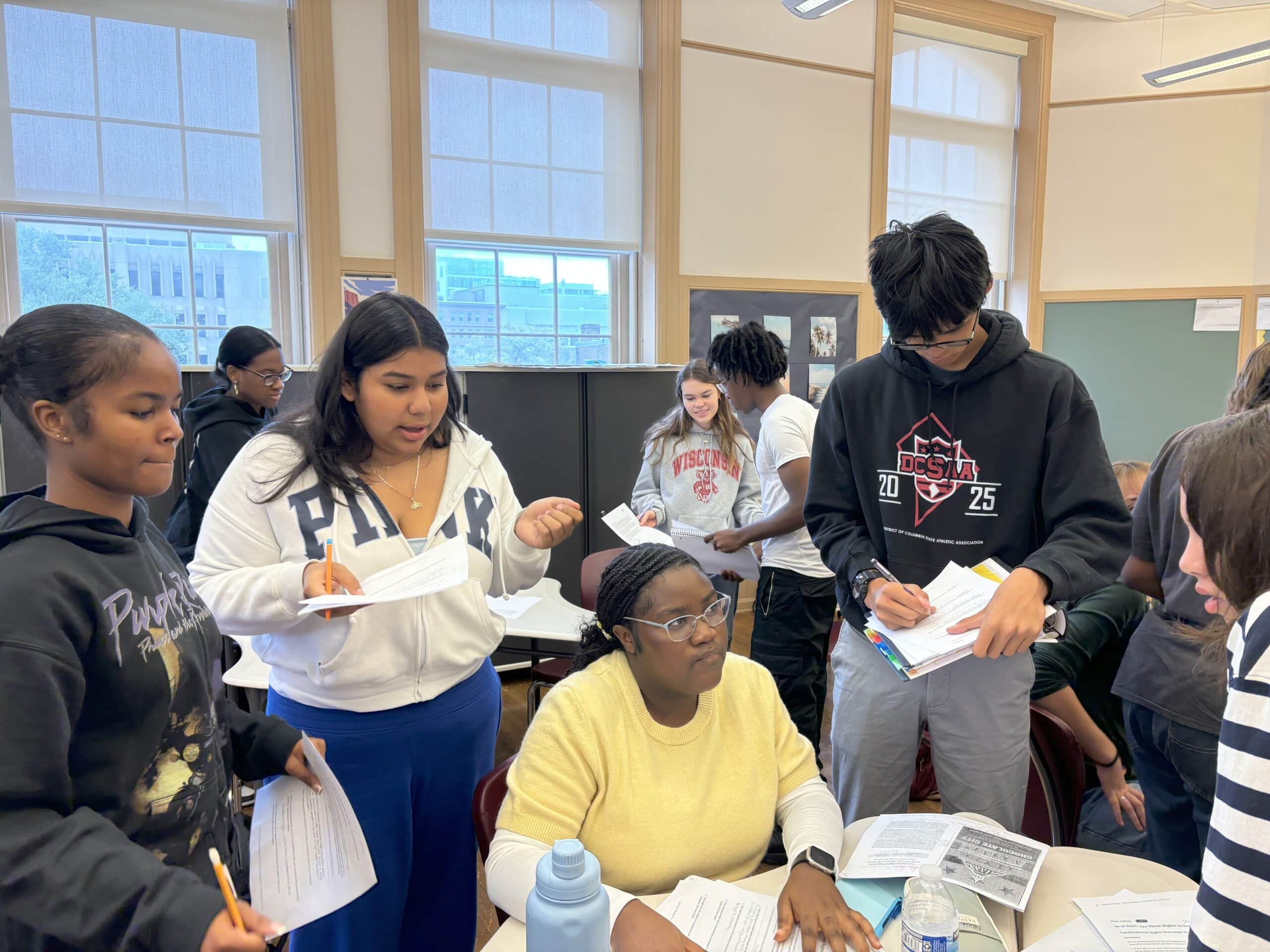
Students in a D.C. public high school engaged in the lesson, “We the People”: Whose Rights Does the Constitution Protect?
Despite the right’s aggressive censorship campaign, nearly 9,000 teachers signed up to access people’s history lessons in 2025. This brings our full registration at the Zinn Education Project to close to 177,000 teachers, with representation from every state.
An American Historical Association study of teaching U.S. history in secondary schools found that more than a quarter of the teachers surveyed use Zinn Education Project resources. That percentage is comparable to other organizations with budgets in the tens of millions of dollars, while ours is less than a million. Our wide reach is thanks to word of mouth, individual donors, and the dedication of countless educators who teach people’s history to their students.
Through our lessons, young people learn to read the news with a critical eye, to assess current events through history, and to recognize red-baiting and fear-mongering tactics.
In 2025, we:
- Developed and offered new lessons on the Constitution and the Founding Documents in preparation for the “America 250” commemorations in 2026.
- Spoke out on the importance of teaching about Palestine, in contrast to the silence from most major education organizations and challenged the repression from many school districts.
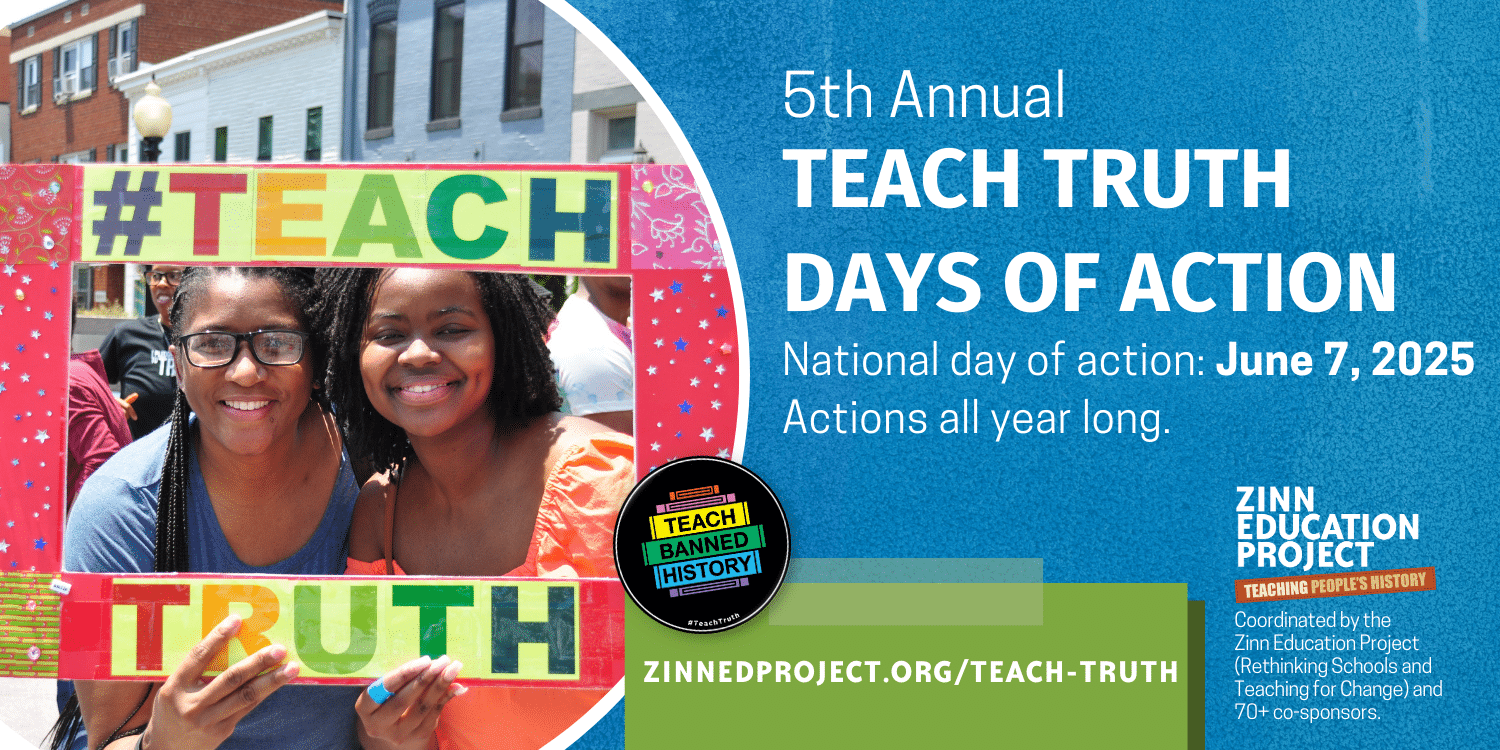
- Organized our 5th annual national day of action to protest the attacks on teaching truthfully — with dozens of groups, including the National Education Association, the American Library Association, Red Wine & Blue, and more.
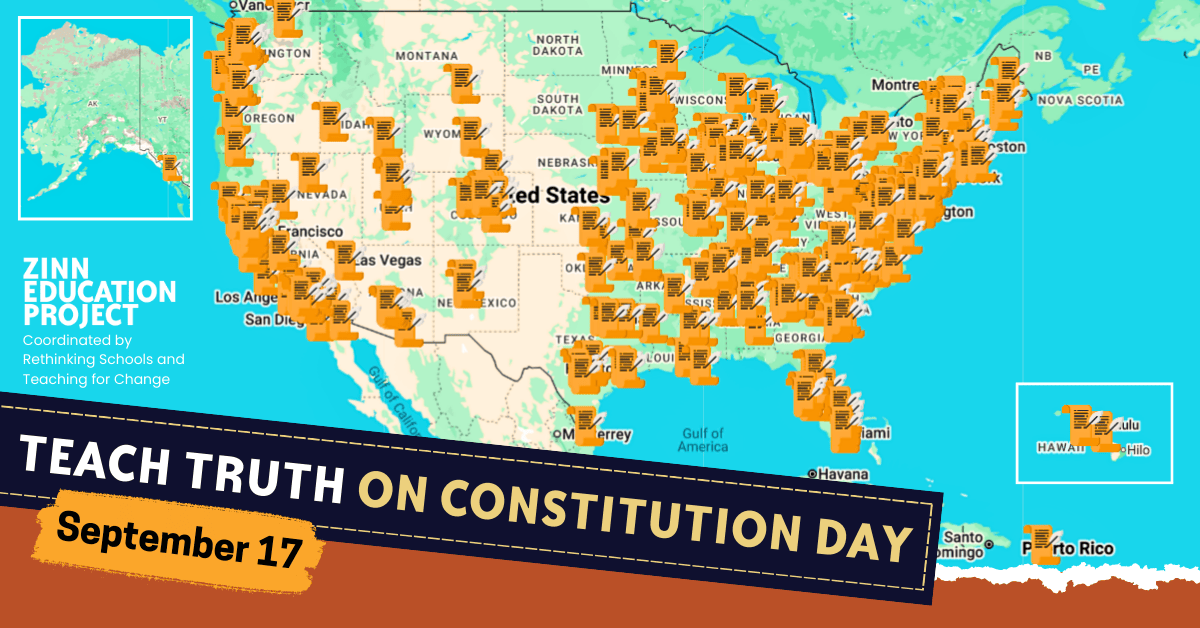
- Hosted Teach Truth on Constitution Day with teachers in almost every state and territory.
- Offered monthly Teach the Black Freedom Struggle online classes with leading scholars, including Eve L. Ewing, Mia Bay, Clint Smith, Jeanne Theoharis, Jarvis Givens, Imani Perry, Mary Phillips, Justene Hill Edwards, Joshua Clark Davis, and Jesse Hagopian.
- Hosted 58 new Teaching for Black Lives study groups, bringing our total to more than 448 groups in 44 states and three Canadian provinces.
- Met with the second fellowship cohort of people’s history teacher leaders, named for education activists C. J. Prentiss and Michael Charney.
- Distributed more than 2,700 free books on people’s history to schools across the country, including states where authorities outlaw teaching history truthfully.
- Offered teacher workshops on deportations, Native Americans and the American Revolution, Martin Luther King in the North, climate justice, and labor history.
- And more . . .
The right wants to force educators to teach only conservative “patriotic” narratives.
In this perilous time, please
donate to defend teachers’ ability to teach people’s history.

Twitter
Google plus
LinkedIn