

David Conrad-Pérez is a riveting storyteller who manages to completely recast what we thought we knew of this tragedy. . . . An essential, unsettling history. — Greg Grandin, Pulitzer Prize–winning historian, and author of The End of the Myth
Other historians have written about the Triangle fire, immigrant women’s labor unrest, New York’s ‘newspaper wars,’ and the rise of Gilded Age fortunes. But no one that I know of has woven those threads together the way Conrad-Pérez has. In a moment of resurgent racism and xenophobic cruelty, ‘institutional neutrality’ policies and devastating social welfare cuts, Fire in the Heart of the City resonates powerfully. — Annelise Orleck, author of Common Sense and a Little Fire
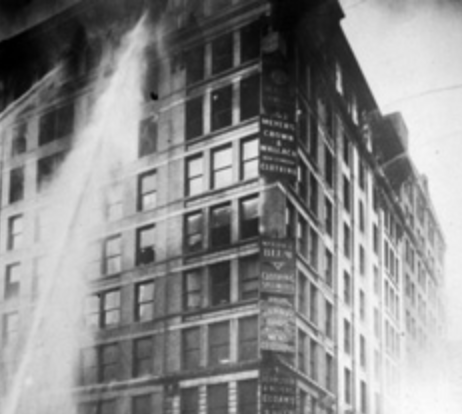
In U.S. history, few tragedies have been as consequential — and as enduringly misunderstood — as the Triangle Shirtwaist Factory fire of 1911. Long remembered as a turning point in the struggle for labor protections, Fire in the Heart of the City: The Triangle Shirtwaist Tragedy and the Origins of Modern Charity shows how the fire also helped transform another cornerstone of modern life in the United States: the rise of modern charity.
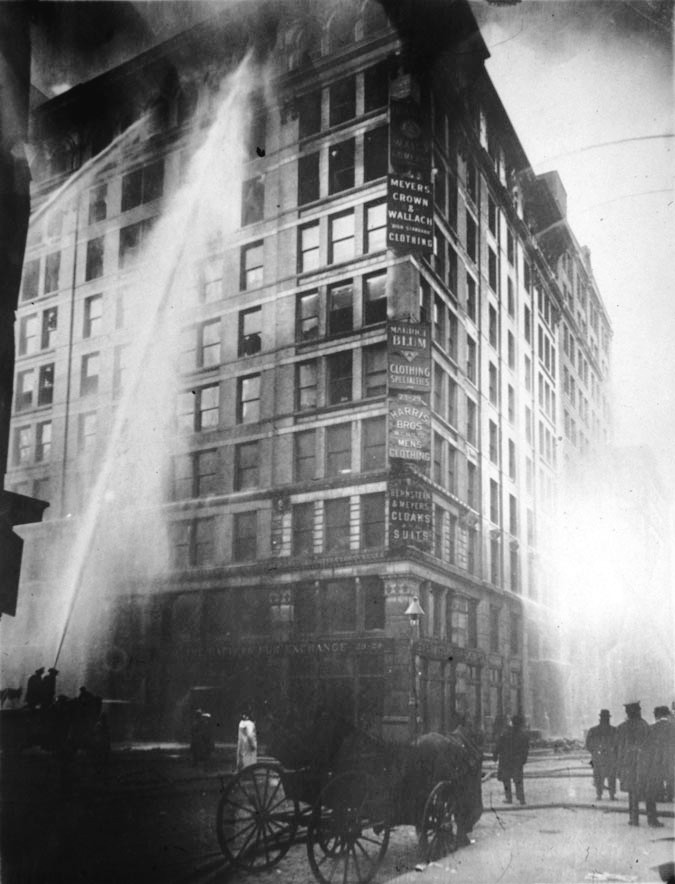
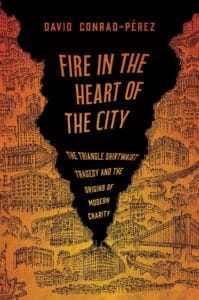 Set in early twentieth-century New York, the book tells the story of what happened when a catastrophic fire in Greenwich Village threw Adolph Ochs, the ambitious new publisher of the New York Times, and Rose Schneiderman, a defiant young labor organizer, into a momentous struggle over who should organize the city’s response: a rising charity sector led by wealthy financiers and civic elites, or the reform-minded unions and activists of Lower Manhattan.
Drawing on newly released archival documents, interviews with the descendants of Times publisher Adolph Ochs and New York labor organizers, previously confidential reports, and long-overlooked private diaries and correspondence, historian and former journalist David Conrad-Pérez offers a striking new account of the disaster and its aftermath. He shows how a handful of charities on the brink of irrelevance were suddenly recast as New York’s best answer to the social and economic conditions the fire laid bare — a watershed moment in the rise of modern charity and elite authority over social welfare in the United States.
In the months after the fire, the Times and its philanthropic allies joined forces to popularize the idea that social crises should be managed not by immigrant reformers, labor advocates, or neighborhood coalitions, but by a select class of elite and supposedly “scientific” charitable institutions. In doing so, they elevated a new language of expertise around poverty and public welfare that would leave a lasting mark on American civic life.
A deeply researched and absorbing work of narrative history, Fire in the Heart of the City offers a major reinterpretation of one of the most important urban disasters in U.S. history, revealing how a single catastrophe helped reshape not only the politics of labor, but also the moral and institutional foundations of modern charity in the United States. [Adapted from publishers’ description.]
ISBN: 9781479837700 | Washington Mews Books/NYU Press




Twitter
Google plus
LinkedIn