
A statement from the Zinn Education Project.
Studying the Constitution is essential — especially now, as constitutional rights are increasingly under attack.
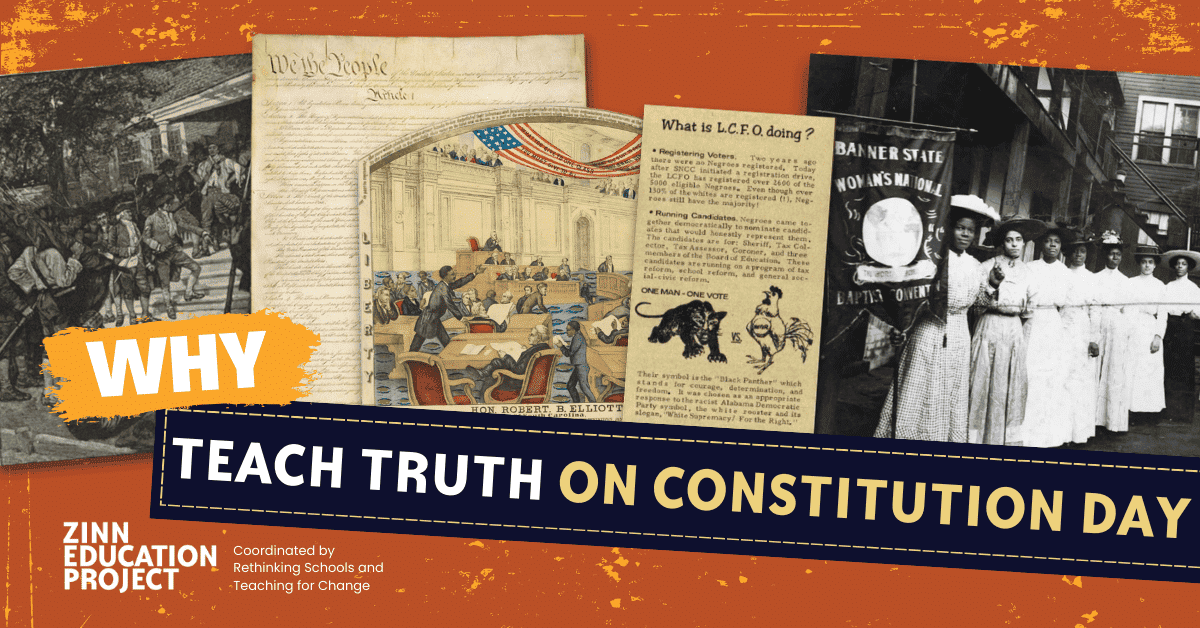
Each September, schools across the country celebrate Constitution Day — students create posters praising the document, watch patriotic videos, or recite the Preamble — rather than engage in critical inquiry. These rituals present the Constitution as a sacred text, not a document created and amended through struggle. From liberal to conservative circles, Constitution Day is too often framed as a celebration of “American exceptionalism” rather than as an invitation to think critically about the rights the Constitution guarantees — and the ones it doesn’t.
Students rarely learn who the Constitution was written for — and who was excluded. They are taught to revere the document as the cornerstone of democracy, not to question its origins or its limits. Across the political spectrum, the Constitution is often presented as a perfect founding document rather than an anti-democratic rule book written to advance the interests of white, landowning men.
Right-wing propaganda groups like PragerU and the Bill of Rights Institute reinforce this uncritical narrative. In PragerU’s video The Constitution: A Moral Challenge, the narrator declares that “the simple truth is the Constitution is among the most moral documents ever conceived,” and that it “speaks the truth about human rights and human dignity.” The video suggests that critiquing the Constitution is “foolish” and scolds viewers for questioning the Founders, asking, “Do we really think we are better and wiser than Washington, Franklin, Jefferson, Adams, Hamilton, Madison, and the other Founders?” The result is not education — it’s indoctrination.
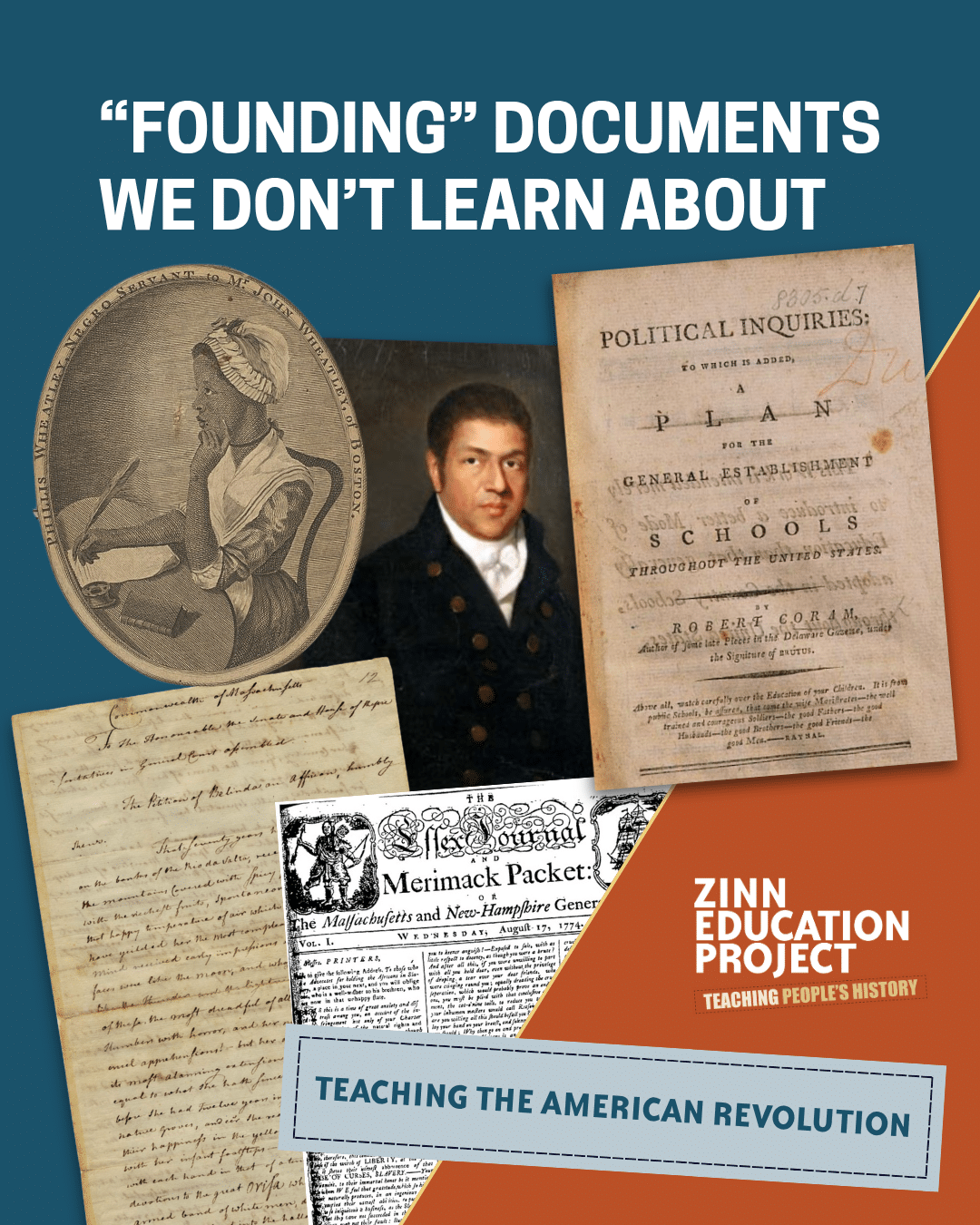
But the actual history of the Constitution tells a very different story.
The original U.S. Constitution was written in 1787 by a small group of wealthy white men, deeply invested in maintaining their power and property. No working-class men, women, Black people (enslaved or free), or Native people were invited to the convention, which the Framers held in secret. Most of the delegates who signed the Constitution enslaved human beings. And the Framers produced a constitution that licensed them to raise a standing army to seize Native land and crush rebellions, strengthen slavery domestically and abroad, and consolidate power by designing a government that impedes democracy.
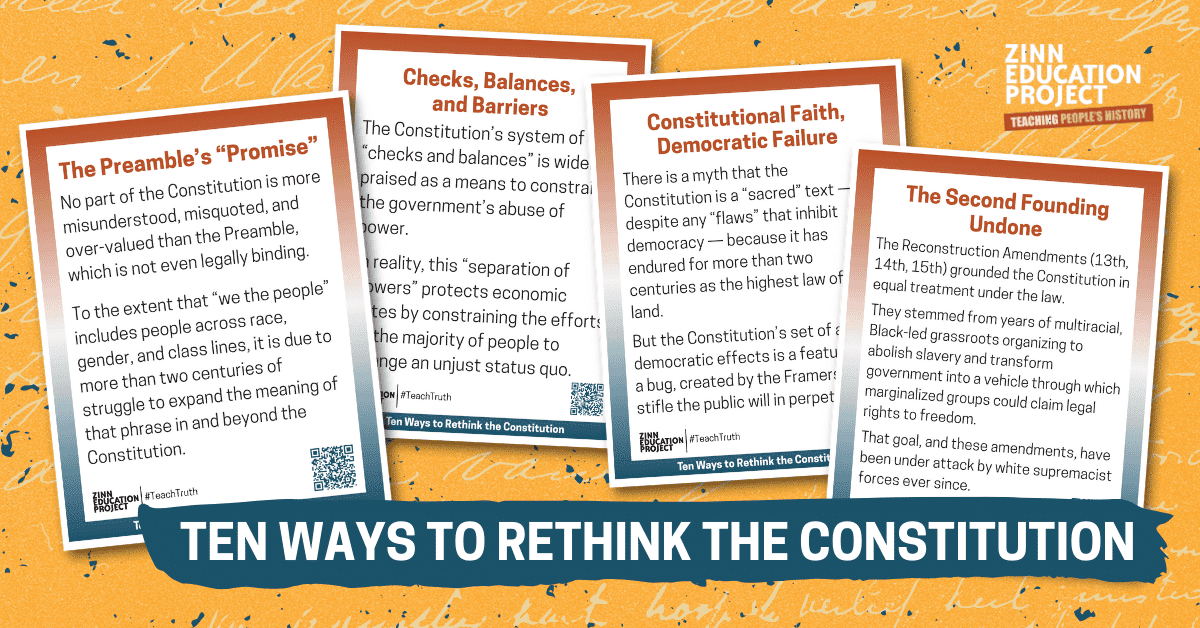
To the extent that the Preamble’s lofty “we the people” includes anyone beyond white, propertied men, it is due to more than two centuries of struggle across race, gender, and class lines to expand the meaning of that phrase. Any expansion in rights and freedoms since 1787 — from the abolition of slavery, to the Reconstruction Amendments, to women’s suffrage — has been hard-fought and won from the bottom up, not benevolently granted from the top down.
And yet, each year Constitution Day is projected as a unifying civic ritual — one steeped in praise of “what the Framers intended.”
Today, powerful figures wield the Constitution — and undermine it — in ways that intensify profound harms across the country. It is essential that students know their rights: not just to pass a test, but to protect themselves.
They need to understand:
-
- their right to remain silent (5th Amendment),
- their right to birthright citizenship, due process, and equal protection under the law (14th Amendment),
- their right to speak out, organize, and protest injustice (1st Amendment), and
- their protection against unreasonable searches and seizures (4th Amendment) — a right that is especially urgent as state surveillance expands and police increasingly target marginalized communities.
But knowing rights isn’t enough. Students should also be encouraged to ask hard questions:
-
- Why doesn’t our Constitution guarantee housing, healthcare, education, or a living wage — rights enshrined in other countries’ constitutions?
- Why did it take a Civil War to end slavery?
- Why are so many of our legal rights still denied, especially to Black, Brown, immigrant, queer, working class, and poor communities?
- What are the declarations of human rights from around the world that students should learn?
Throughout U.S. history, people have fought to claim the rights the Constitution promises, and to demand the rights it omits. Constitution Day should not be a celebration of myth, but an invitation to think critically.
Students deserve a curriculum that explores the Constitution honestly — one that compares its narrow vision to broader frameworks of justice like the United Nations’ Universal Declaration of Human Rights, or the Black Panther Party’s 10-Point Program, which demanded education, housing, employment, and an end to police brutality.
Let’s give students the tools we all need to meet this moment. Let’s teach truth.

Twitter
Google plus
LinkedIn