

On April 17, 1878, in Cincinnati, Ohio, formerly enslaved Henrietta Wood sued her former enslaver in federal court and was awarded $2,500 in restitution. Wood initially sued the defendant, a white sheriff and enslaver named Zebulon Ward, for $20,000, but jurors determined that $2,500 was sufficient for the traumas of enslavement endured by the plaintiff.
As W. Caleb McDaniel writes for Smithsonian Magazine,
Though a fraction of what Wood had asked for, the amount would be worth nearly $65,000 today. It remains the largest known sum ever granted by a U.S. court in restitution for slavery.
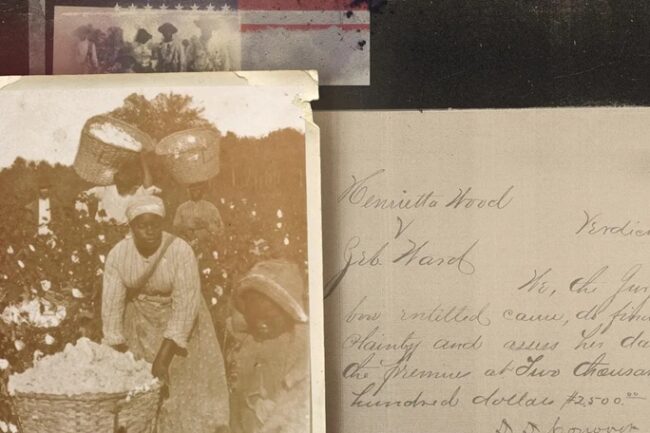
No image of Henrietta Wood survives today, but her story is recorded in court filings, including the verdict slip above. Illustration by Cliff Alejandro, with source materialfrom W. Caleb McDaniel. Source: Smithsonian Magazine
McDaniel continues,
[. . .] Wood v. Ward did not set a sweeping legal precedent. Because the award was small, procedural rules prevented Ward from appealing to higher courts where the verdict might have been more widely noticed. Even the judge who presided over Wood’s case, Phillip Swing, viewed it narrowly. “Fortunately for this country the institution of slavery has passed away,” he had instructed the jurors, “and we should not bring our particular ideas of the legality or morality of an institution of that character into Court or the jury-box.” He had cautioned the jurors against an excessive award, claiming — falsely — that many former slaveholders already regretted slavery. . . .
But Wood’s award, however insufficient, was not ineffectual. After her suit, she moved with her son to Chicago. With help from his mother’s court-ordered compensation, Arthur bought a house, started a family, and paid for his own schooling. In 1889, he was one of the first African-American graduates of what became Northwestern University’s School of Law. When he died in 1951, after a long career as a lawyer, he left behind a large clan of descendants who were able to launch professional careers of their own, even as redlining and other racially discriminatory practices put a chokehold on the South Side neighborhoods where they lived. For them, the money Henrietta Wood demanded for her enslavement made a long-lasting difference.
Additional Resources
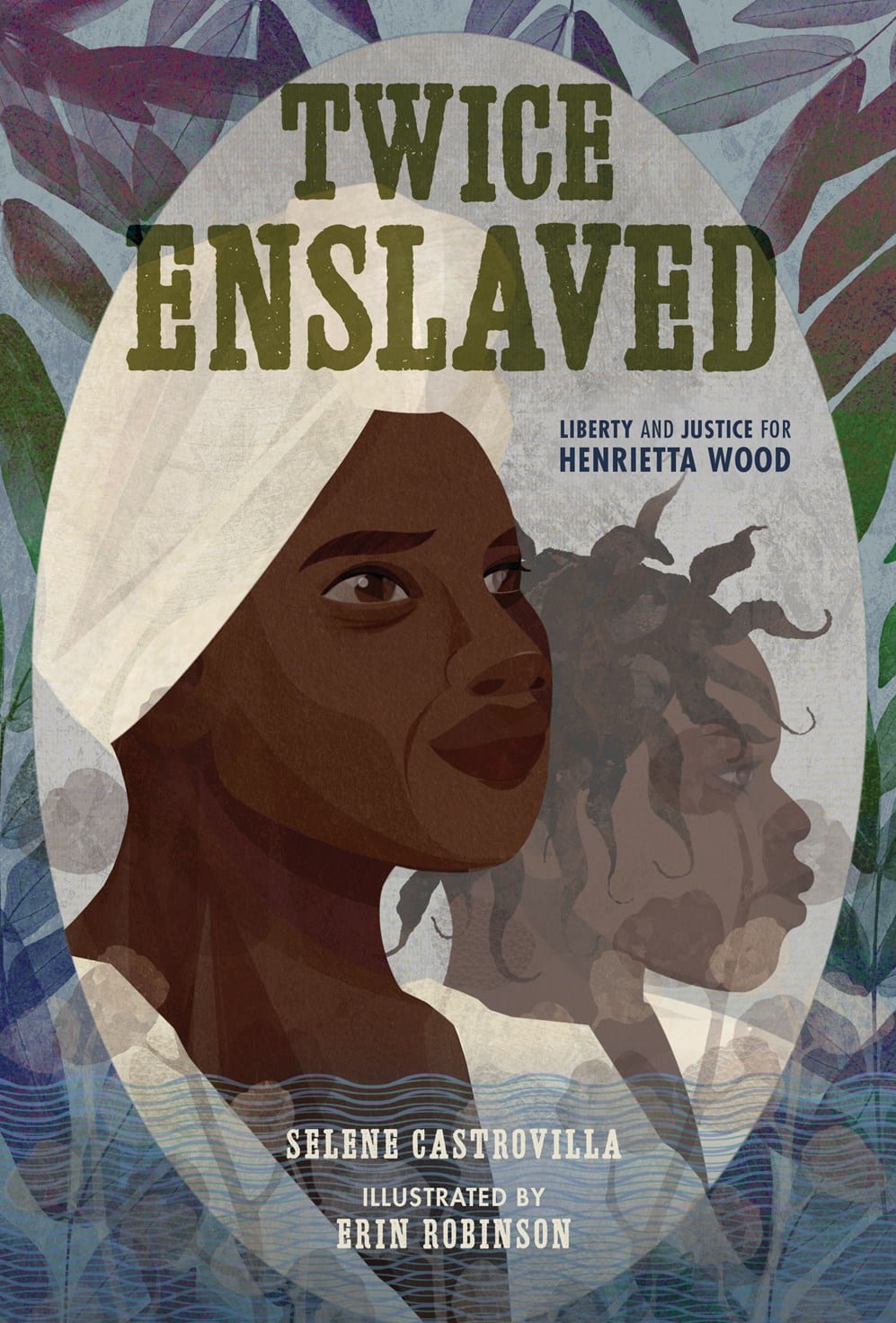
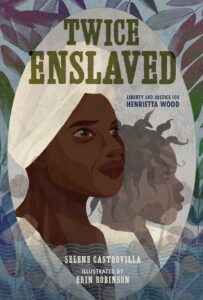 Twice Enslaved: Liberty and Justice for Henrietta Wood by Selene Castrovilla, illustrated by Erin K. Robinson (Calkins Creek)
Sweet Taste of Liberty: A True Story of Slavery and Restitution in America by W. Caleb McDaniel (Oxford University Press)
Henrietta Wood: The Enslaved Woman Who Sued for (and Won) Reparations by Jacqueline Hudson at the National Underground Railroad Freedom Center
Watch the short documentary, The Incredible True Story of Henrietta Wood — Justice After Slavery, as well as the brief video below created by the Boone County Public Library.





Twitter
Google plus
LinkedIn