
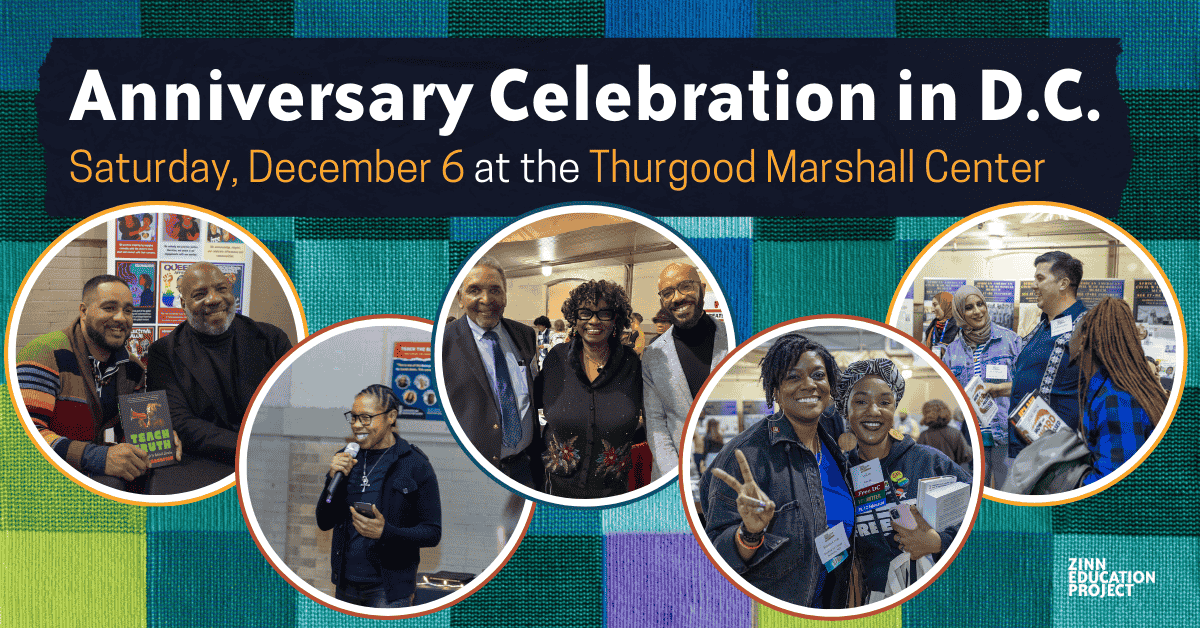
The Zinn Education Project (coordinated by Rethinking Schools and Teaching for Change) hosted a dinner reception to celebrate its 17th year during the National Council for the Social Studies conference in Washington, D.C. The event was held at the Thurgood Marshall Center, the National Historic Landmark site of the Twelfth Street YMCA. This was a change from the original location at the African American Civil War Museum due to construction delays.
One of the attendees, an English teacher, reflected,
There was an incredible feeling in the room. It was both sanctuary — a safe, affirming place for folks who are being targeted more than ever — and inspiration — an electrifying infusion of energy to continue pursuing the work we are doing. I felt honored and humbled to gather with so many people who are doing the daily work that Clint Smith described as “chipping away at a wall that may be six inches or six thousand miles, working for a freedom that they may never see.”
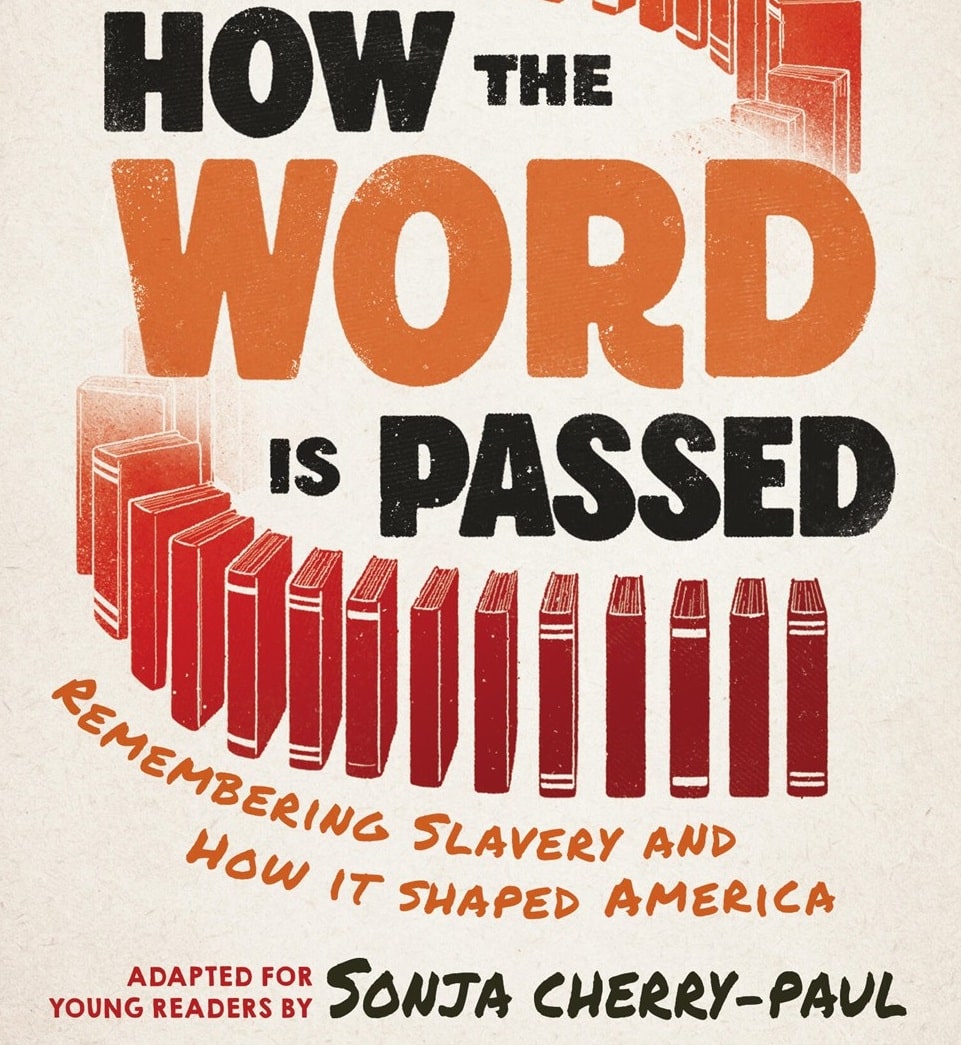
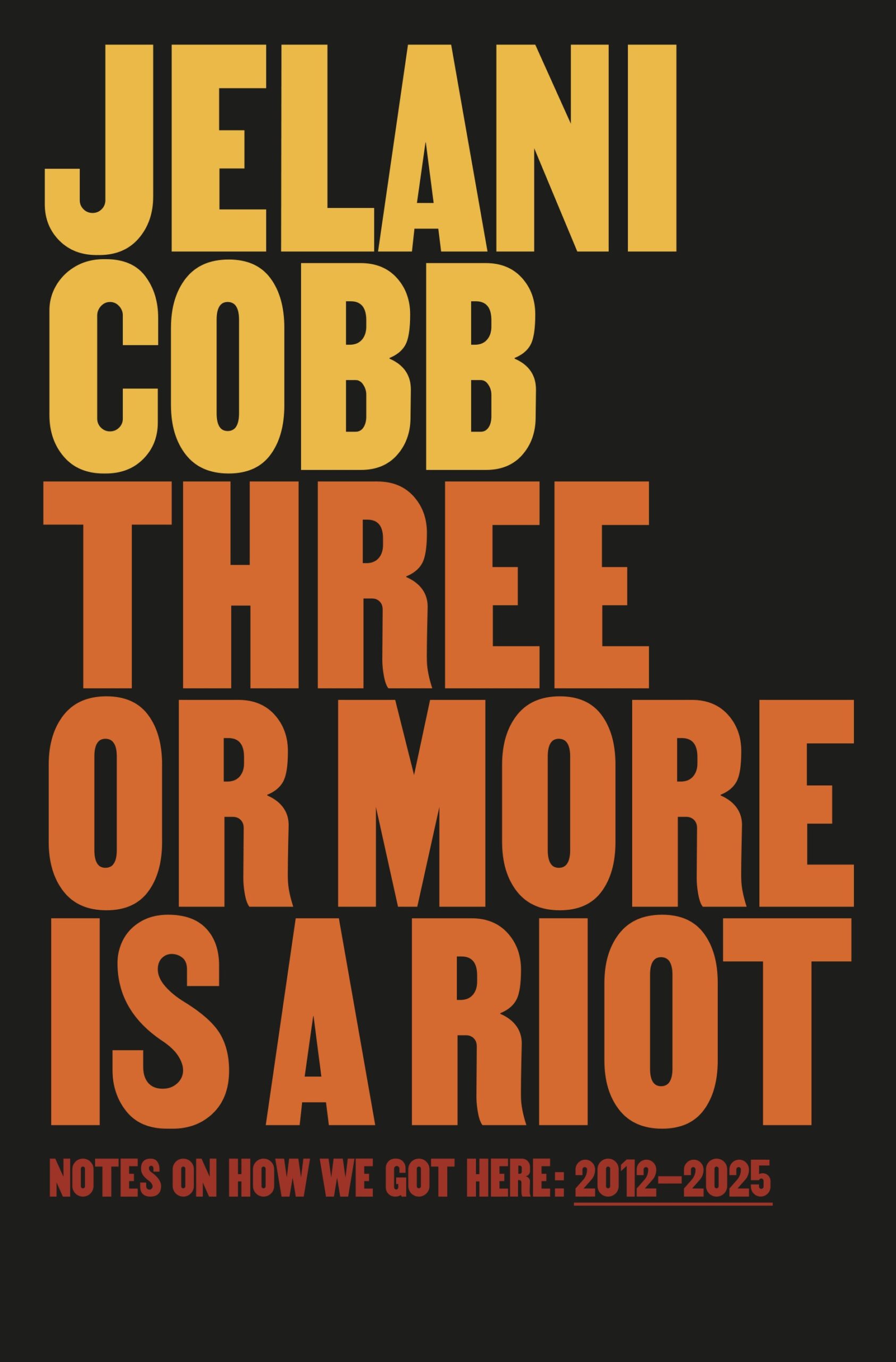
A highlight of the evening was the chance to hear from Jelani Cobb, author of Three or More Is a Riot: Notes on How We Got Here, and Clint Smith, author of How the Word Is Passed — followed by book signing. The Nation sportswriter Dave Zirin was the M.C. (Look for Dave’s upcoming biography of Howard Zinn.) Before the featured speakers, Dr. Dawn Chitty of the African American Civil War Museum encouraged everyone to visit the museum when it opens in 2026, and educator Jessica A. Rucker described the programs offered by the Zinn Education Project.
Jelani Cobb
Dave Zirin introduces Jelani Cobb
It’s my great pleasure to introduce somebody who truly is a hero of mine, the way he has navigated a set of circumstances that I think would try the best of us. And of course, this is someone who is the dean at Columbia. Born in Queens, raised in New York, Jelani Cobb started journalism here in D.C. with the City Paper. He had a legendary staff of writers while attending Howard University. His new book is called Three or More Is a Riot. I give to you, Jelani Cobb.
Jelani Cobb
All right, mic check. First, I want to say thank you for this invitation. It has particular weight for me, and I’ll come back to why that is. Second, I’m always happy to be back in D.C. This is a foundational place in my education. I graduated from Howard University. That’s right. But I would say I graduated from Howard University, but I was educated in D.C. And what I mean by that is that some of what I learned was on campus, some of what I learned was in the classrooms, but a great deal of what I learned was in the activist community here — was in the museums and the people who were doing work in the communities, from the community scholars, people who had their PhDs in community knowledge, and the people who would sit down and share their knowledge, their information, with me.
I learned from my friends, two of whom are here, Kenny Carroll and Brian Gilmore, who told me a whole bunch of stuff that I needed to know as I was coming up and coming along. I’m very happy to have this kind of grounding.
Now, coming back to Professor Zinn. Like many of us, or most of us, or all of us, I was impacted, and I was not the same after I read A People’s History. So I wanted to talk a little bit about the stages of my understanding of that book and the stages of my understanding of the brilliant scholar and the brilliant mind that produced it. My first encounter with this book was as an undergrad at Howard. I read the book and like most the common reaction was, why didn’t I know all of this? And it wasn’t simply the facts. It was the radical concept of centering everyday people in history, which has remained my enduring perspective.
So looking at this and saying, what has been contributed to our current standing as a society by labor? What has been contributed by activists for women’s rights? What has been contributed by abolitionists and activists for racial equality? And what he implied in that book, what the implication of that book was, was that we, unlike some people who have given us this view of our history that democracy landed on this land, to the extent that we can call it democracy, it landed on this place like Manna and said, “No, there is a barometer.” What Zinn taught us is that there is a barometer and the exact degree of democracy that we experience in the society is equivalent to the exact degree of success that these people had when they fought for it in the streets. That it wasn’t granted, it was won.
And so I go on, I get my degree from Howard. It’s a little bit longer of a story, but eventually I get my degree from Howard and I go on to graduate school. I began engaging with these historians and I saw that there had been this revolution in historiography. That it had begun generations before. And that people like [W. E. B.] Du Bois and [Carter G.] Woodson and Philip Foner and these older historians have begun saying that the contested ground for equality is not in the present, it’s in the past.
Because people use the past and misuse the past in order to justify the policies of the present. When W.E.B. Du Bois wrote Black Reconstruction in 1935, he wasn’t talking about Reconstruction. He wasn’t talking about 1875. He was talking about 1935 and the justification for segregation. And so I come to understand where Howard Zinn fits into this. I have a more mature understanding that he has taken these revolutionary developments in historiography, and the work people did at great risk to their careers, great risk to their personal safety, and he gave a form to it in a way in which the public could understand how history was being democratized. And he did this so well that the book becomes an example of it itself.
We go on a little bit further. I got my first job at Spelman College and I’m there, and of course I know that Professor Zinn has this incredible legacy at Spelman College. Did not know how that ended. And I came to understand the titanic wrong of having a historian in Atlanta in the midst of segregation fired for telling his students that segregation was wrong. As if we didn’t already know. It was also extremely useful for me to understand what it was like dealing with academic administrators. That’s a whole other conversation. But the way that he found out when he was taking his family on vacation for the summer and he happens to just go by his office and check his mail before he leaves and sees a termination notice. And you begin to understand that there are consequences for truthtelling in your career.
So I rise to become the chair of the History Department at Spelman College. And when I was elected chair, the first thing that comes to mind is that this is a position that Howard Zinn held and that’s the responsibility that comes with this work. So in many ways, Professor Zinn has been a guiding light for me over the course of my career and remains one for me to this day. And moreover, his work is in that rare category of scholarship in which its value only becomes more clear over time. I thought that A People’s History — I’m talking about A People’s History because we also engage with a bunch of his other work, and his more popular work You Can’t Be Neutral On a Moving Train and so on. But also his deep engagement with the scholarly field, as well. But I’m talking about A People’s History because I thought it was relevant in 1989 when I read it. Come on. It’s 2025. I’m like, well, was he a prophet?
I’ll conclude by saying this. The practice of using history as an attempt to elucidate the anti-democratic, fascistic behavior of the present in the present, that’s at the core of what I do. I try to understand how we can better understand the present through a lens of the past. I learned a lot of that from Professor Zinn and that is the best tribute that I can give to him, that I continue to reference his work and continue to assign his work so that future generations can have that realization that I had as a young person. And maybe some of them will go on and study the scholars whose work Professor Zinn was analyzing and interpreting so that people could have access to it. Then maybe some of them can go on and understand and study what Professor Zinn was doing. And maybe some of us can go on and be inspirational to the next generation of us. And maybe some of us actually wind up achieving that elusive goal of actual American democracy. Thank you.
Clint Smith
Dave Zirin introduces Clint Smith
Now we get to hear from Clint Smith. Originally from New Orleans, Clint Smith taught high school English in Prince George’s County, [Maryland] and continues to teach young people who are incarcerated. He’s a poet, and he brings that poetry to his books about history and memory, including the remarkable — and I’ve got to tell you, it’s on my shelf. It’s not just on my shelf, but I could find it in my book room blindfolded because it’s in a special place. I know where it is so I can lend it to people. That’s how much I love this book. His name is Clint Smith. The book is How the Word Is Passed. We’re very lucky to have him here tonight.
Clint Smith
How’s everybody doing? Good, good. It’s so meaningful for me to be here right now, and it’s especially meaningful for me to be at a Zinn Education Project event following Jelani because in many ways, at different stages of my life, both Howard Zinn and Jelani Cobb have been incredible teachers of mine. I was in my early 20s when I first encountered A People’s History and I remember it was a very specific moment in my life. This was in D.C., a little while ago, when rent looked different. I lived in a row house with like seven friends and a bunch of mice, but rent was $500. So we were like, “It’s cool, mice, right? Like you pay the rent, too.” But it was interesting because it was also a moment in which Melissa Harris-Perry’s show on MSNBC was a Saturday ritual for us and we would wake up sometimes in various states of sobriety, and we would go downstairs and we would sit on the futon and we would watch Jelani and Imani Perry and so many other remarkable Black scholars who would go on that show. It became a public academic square in a way that I miss so much today. I think we don’t appreciate the extent to which that show played an enormous role in introducing us to so many scholars whose work has become instrumental today.
So, I want to thank Jelani for, even before I knew him personally, being someone who taught me so much and showed me what it looked like to be a scholar in the public, and to do it thoughtfully and responsibly. I’m so grateful, too, that that was happening at the same time that I was engaging with Howard Zinn’s work and I saw what the possibilities for history could be. In many ways my own writing comes out of that tradition. My own writing is an attempt to illuminate for myself and for my readers, which as Jelani said, the sort of moments where it’s like, “How come I didn’t know this? How could I not have known this?”
For me, in 2017 I watched several Confederate statues come down in my hometown — shout out to New Orleans — statues of P. G. T. Beauregard, Jefferson Davis, Robert E. Lee, and as I was watching those statues come down I was thinking about what it meant that I grew up in a majority Black city in which there were more homages to enslavers than there were to enslaved people and thinking, well, what are the implications of this? What does it mean that to get to school I had to go down Robert E. Lee Boulevard? To get to the grocery store, I had to go down Jefferson Davis Parkway. That my middle school was named after a leader of the Confederacy? That my parents still live on a street today named after someone who owned hundreds of enslaved people?
Because the thing is, we know that symbols and names and iconography aren’t just symbols — they’re reflective of the stories that people tell. And those stories shape the narratives that communities carry. And those narratives shape public policy. And public policy is what shapes the material conditions of people’s lives. That’s not to say that if you just take down a 60-foot tall statue of Robert E. Lee, you suddenly erase the racial wealth gap. Or if you change the name of Jefferson Davis Elementary School, you suddenly create more egalitarian academic outcomes. But what it does do, I think, is help us recognize the ecosystem of ideas and stories and narratives that help ground our understanding of American history and help ground our understanding of the ways that certain communities have been disproportionately and intentionally harmed throughout American history.
I’m looking around and I’m trying to get a sense of what places in New Orleans are telling the story honestly, what are the places in New Orleans that are telling the story dishonestly, and what are the places that are maybe doing something in between. Ultimately, I realized that this story is far bigger than New Orleans, and far bigger than Louisiana. It’s far bigger, in fact, than just here in the United States. So part of what I did for this project is that I traveled around the country visiting historical sites — monuments, memorials, museums, cities, towns, cemeteries, plantations, prisons — to get a sense of how different places told the story of this past. And one of the places I went to was Monticello Plantation, which will be familiar to many of you as the home of Thomas Jefferson, the third president of the United States, the intellectual founding father of this country.
I went to Monticello because in many ways I think that Jefferson embodies the cognitive dissonance of the American project, which is to say that America is a place that has provided unparalleled, unimaginable opportunities for millions of people across generations in ways that their own ancestors could have never imagined. It is also done at the direct expense of millions and millions of other people who have been intergenerationally subjugated and oppressed. And both of those things are the story of America. It’s not one over here or one over there. You don’t get to pick this one and not pick that one. You have to hold both of those realities alongside one another.
I think that Jefferson embodies the moral inconsistency of America in the way that he is someone who wrote one of the most important documents in the history of the Western world and is also someone who enslaved over 600 people over the course of his lifetime, including four of his own children that he had by Sally Hemings. He is someone who wrote in the Declaration of Independence that all men are created equal. And then he wrote in Notes on the State of Virginia that Black people were inferior to whites in both endowments of body and mind. He said the slave was incapable of love to the same extent their white counterparts were. He said that the slave was incapable of possessing or sustaining complex emotion. He wrote about Phillis Wheatley, the first Black woman to publish a book of poetry in the history of the United States. He said that her work was, quote, “below the dignity of criticism,” that it wasn’t even worth engaging with because he didn’t think that Black people had the necessary intellectual or emotional capacity with which to create art.
I think about that and I think about how that’s a version of Jefferson growing up that I was never taught. A version that I didn’t encounter until I read Howard Zinn, who told me the truth, who said that we have to hold all of these different parts of Jefferson alongside one another. You can’t ignore Jefferson as an enslaver just to talk about Jefferson as a statesman. You can’t ignore the Jefferson who separated families in order to talk about the Jefferson who was a political philosopher. You have to talk about all those things alongside one another.
I had the young readers’ edition of my book come out a few months ago and I’ve been traveling the country over the course of the last few months, going to high schools and going to middle schools, which has been a remarkable and also very humbling experience. Nothing will humble you at how good a speaker you think you are than going into an auditorium full of 500 6th graders. So I had to figure out some new stuff. But it’s fascinating because I would go there and I would spend time with these young people and we’d be having these conversations about many of the places that I visited in my book. We’d be having these conversations about Jefferson. It’s interesting because we’re in this political moment in which we are told that we should not speak honestly about the sort of unsavory parts of our past, so to speak.
We have a president who says that we talk too much about slavery in our Smithsonian museums. We have a president who has executive orders. We have more than twenty state legislatures throughout the country who have banned Critical Race Theory. They don’t even mean Critical Race Theory; they don’t even know what Critical Race Theory is. What they mean to say is don’t talk about the things that make us uncomfortable. Don’t talk about those things that don’t align with the version of America that we want to talk about because that’s not patriotic. That’s what they say. They say it’s not patriotic.
It’s interesting to me because when I think about myself, I think about the fact that I’m someone who has done things in my life that I’m proud of. And I’m someone who’s done things in my life that I’m not proud of. I’ve made mistakes because I’m human. But what I try to teach my children and how I try to be in community with people I love is to be accountable for the mistakes that I made. It’s not to run away from them. It’s not to pretend as if they don’t exist. What you do, and what I try to teach my kids, is you try to learn from those mistakes, you acknowledge those mistakes, and you use them as a way to become a better version of yourself. So it’s strange that we would hold our country to a different standard than we hold ourselves to, than we hold our children to, than we hold our loved ones to, and suggest that we shouldn’t talk about the things that this country has done wrong because it somehow would allow us to fall into this trap of believing that America was something other than what it is, which is a richly complicated, contradictory place. And you have to hold those contradictions alongside one another, and you can’t run from them.
When I’m with these young people, it’s so intuitive for them. They’re like, “You just talk about both, right?” They don’t understand why adults have made it so complicated. They’re like, “America has done good things and America has done bad things. You should talk about all of it.” So I think it was a reminder for me that so often it’s grown-ups getting in the way. So often it’s grown-ups getting in the way and preventing young people from learning in ways that make sense and feel intuitive for them.
The way that I end How the Word Is Passed, I go to Monticello, I go to Angola prison, I go to one of the largest Confederate cemeteries in the country in Petersburg, Virginia, I go to New York, I go to Galveston. I go all over. I went to eight different places, but I could have written about a thousand because the scars of slavery are etched into the landscape all around us. But I end the book by going to the National Museum of African American History and Culture with my grandparents. My grandmother was born in 1939, in Jim Crow Florida. My grandfather was born in 1930, in Jim Crow Mississippi. I’m pushing my grandfather in his wheelchair, his cane is laid across his lap. My grandmother’s walking a few paces ahead of us. And I have this moment where I watch them walking through the exhibits in this museum and realizing that so much of the history that’s documented in this museum are things that they experienced firsthand. When I asked my grandmother about it later, she had this refrain. She’s like, “I lived it. I lived it. I lived it.”
I think about how the woman who opened the National Museum of African American History and Culture in 2016, who rang the bell to signal the opening of this museum alongside the Obama family, was a woman named Ruth Bonner. Ruth Bonner was the daughter of a man who was born into slavery. Not the granddaughter, not the great-granddaughter. The woman who opened the National Museum of African American History and Culture in 2016 was the daughter of a man who was born into slavery. My grandfather’s grandfather was enslaved. So when my two little kids sit on my grandfather’s lap, I imagine my grandfather sitting on his grandfather’s lap and I’m reminded that this history we tell ourselves was a long time ago just wasn’t that long ago at all. We talk about slavery like it’s something that happened in the Jurassic period. Like it was the dinosaurs, the Flintstones, and slavery all at the same time.
I went to England a few years ago and we were doing a tour of Oxford University. We were walking around and this tour guide was showing us around this university and he was like, “This great poet wrote this poem in this building, and this great scientist did this experiment in this building, and this great philosopher wrote this treatise in this building.” He came to one building and he looked at the building and he looked at us and he was like, “This building was built around 1020.” And I’m like AM or PM, like I couldn’t even conceive of the idea that he was talking about a building that had been built a millennium ago that people were walking in and out of right now. But I bring that up because it’s a reminder that the U.S.’s history is so young. It was so recent relative to the rest of the world. We’re like the annoying pre-teen of the world, increasingly so. But it’s such an important reminder for me because I began the project thinking about how the scars of slavery are etched into the landscape all around us and thinking about our collective physical proximity to this history. But I ended by coming to recognize our collective temporal proximity to this history. How again there are people alive today who knew, who loved, who were raised by people born into child slavery.
I’ll end just by saying this, just because being in this room, I see so many of you whose work I’ve admired, both near and far, and it really makes me think about, and I’m sure Jelani’s asked about this all the time, I know so many Black writers are asked about hope and about do they feel hopeful moving forward. And I think rooms like this give me hope. What we know is that hope is work. What we know is that hope is not something passive. We know that hope is something that you have to act upon. And I think Du Bois talked about this, and many other Black scholars have, too. But I think about how the first enslaved people came to the British colonies that would become the United States in let’s say 1619. The Emancipation Proclamation was in 1863, the Civil War ended in 1865, and the abolition of slavery happened shortly thereafter. But what’s true is that from the moment enslaved people arrived on these shores, they were fighting for freedom. They were fighting for emancipation. They were fighting for liberation. What’s also true is that the vast majority of people who fought for freedom never got a chance to experience it for themselves. But they fought for it anyway because they knew that someday someone would. And I think about how my life is only possible, how my children’s lives are only possible, because generations of people who fought for something they knew they might never see, but who fought for it anyway because they knew that someday someone would. And I think what sort of responsibility does that bestow upon me to fight and try to build the sort of world that I might not get to see, that my children might not get to see themselves, but to try to fight for it anyway because that’s what other people did for me.
It’s almost like we’re all chipping away at this wall, and you don’t know if the wall is six inches thick or 6,000 miles thick. But what you know is that the more you chip away at it, the less the people who come after you will have to chip away at. And I think that that’s what gives me a sense of purpose. That’s what gives me a reminder that this work is not even necessarily meant for my lifetime. That I’m not necessarily meant to see or guaranteed to see the fruits of my labor. But that we’re all collectively engaged in this intergenerational project of trying to build a better world and it is only if we chip away and chip away and chip away that the future generations will eventually get to the other side of that wall. So, thank you all for chipping away.
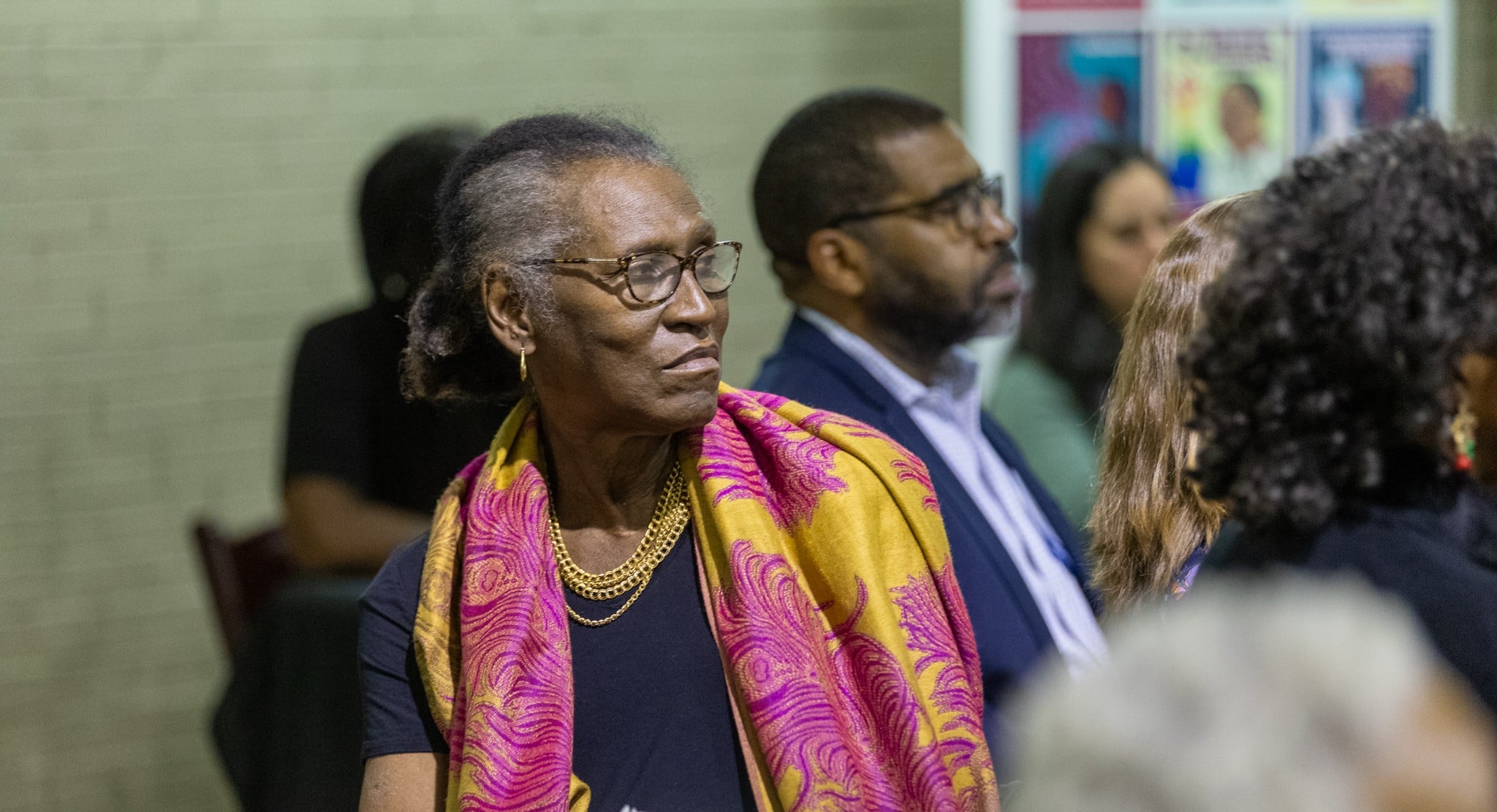
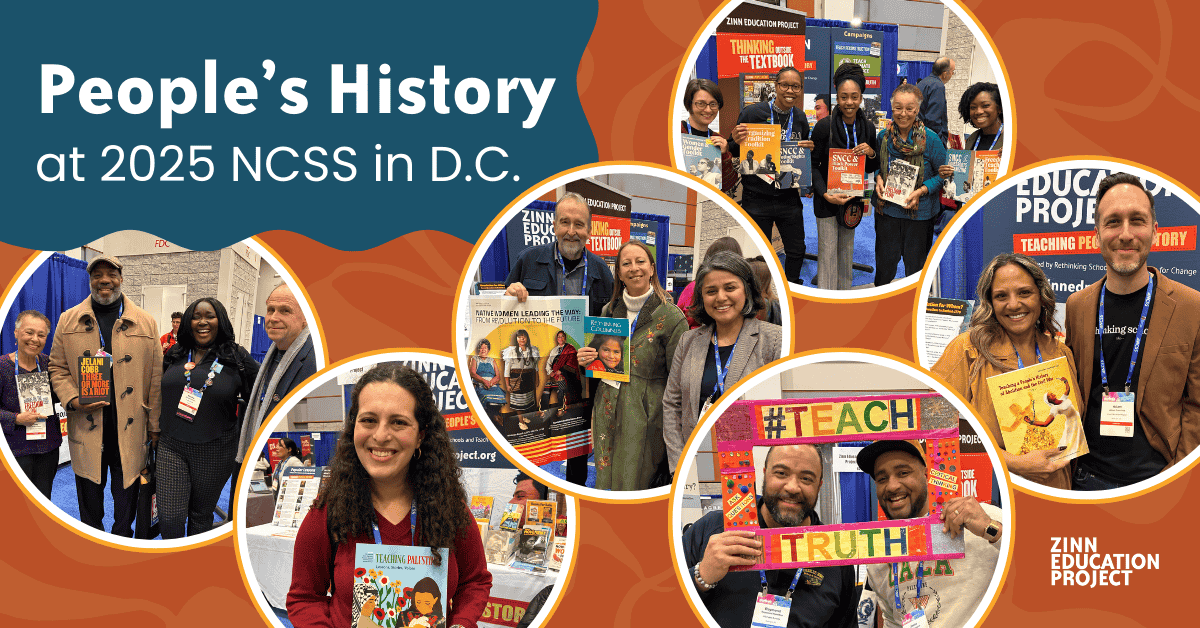
Around the edge of the room were displays from the African American Civil War Museum and information tables from Shout Mouse Press, Free DC, and People’s History in the Digital Age. Dinner was served buffet style so that people could mingle throughout the evening. As with our receptions during conferences in Nashville, New York, and Boston — the evening was abuzz with joyful reunions, radical ideas, impromptu curriculum planning, and enjoying good company away from the convention center.

Attendees included people’s historians, authors, librarians, Rethinking Schools editors, Teaching for Change board and staff, Howard Zinn’s family and former students, teachers and teacher educators who use Zinn Education Project lessons, SNCC veterans, poets, filmmakers, artists, and more.
 |
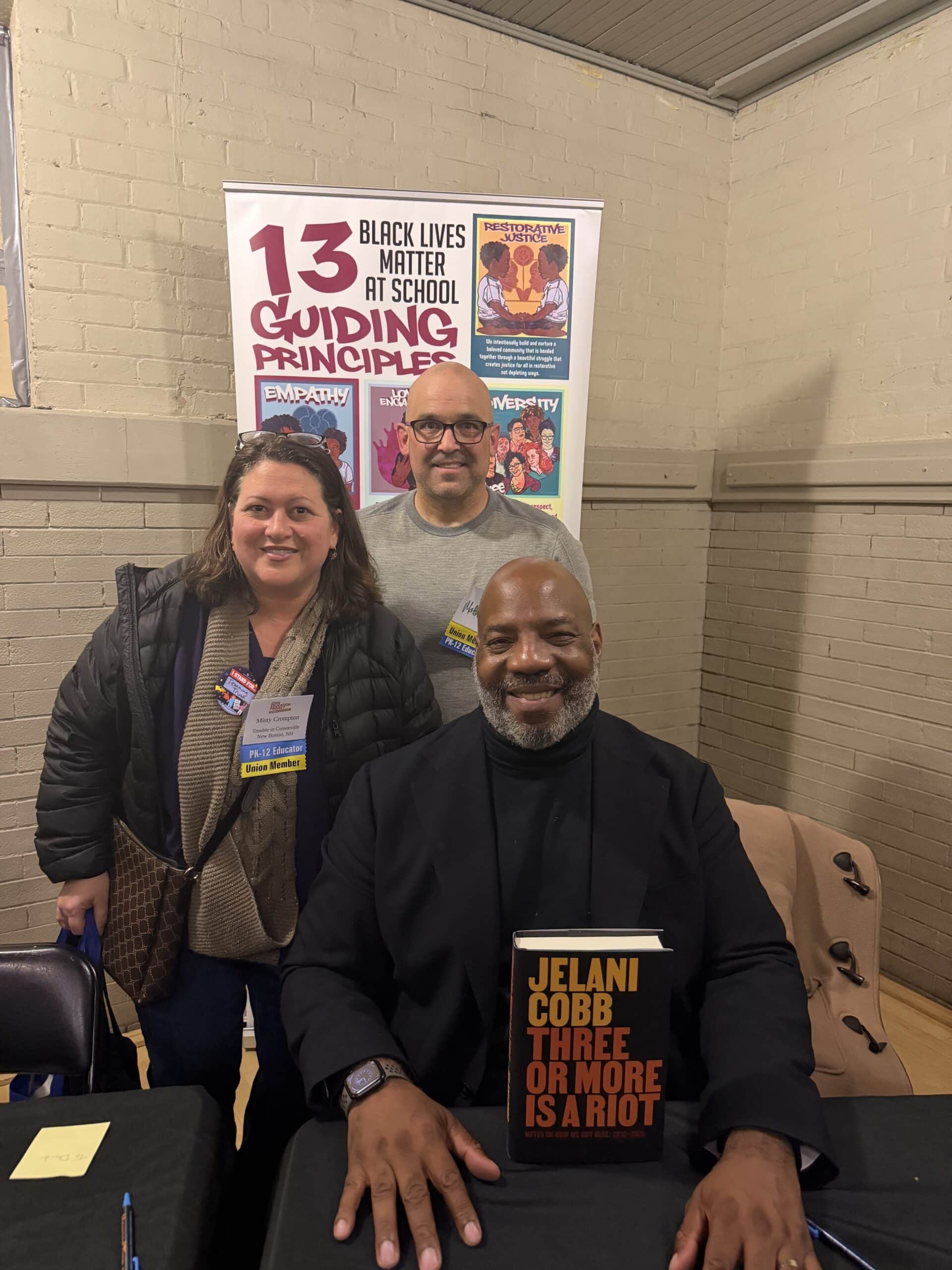 |
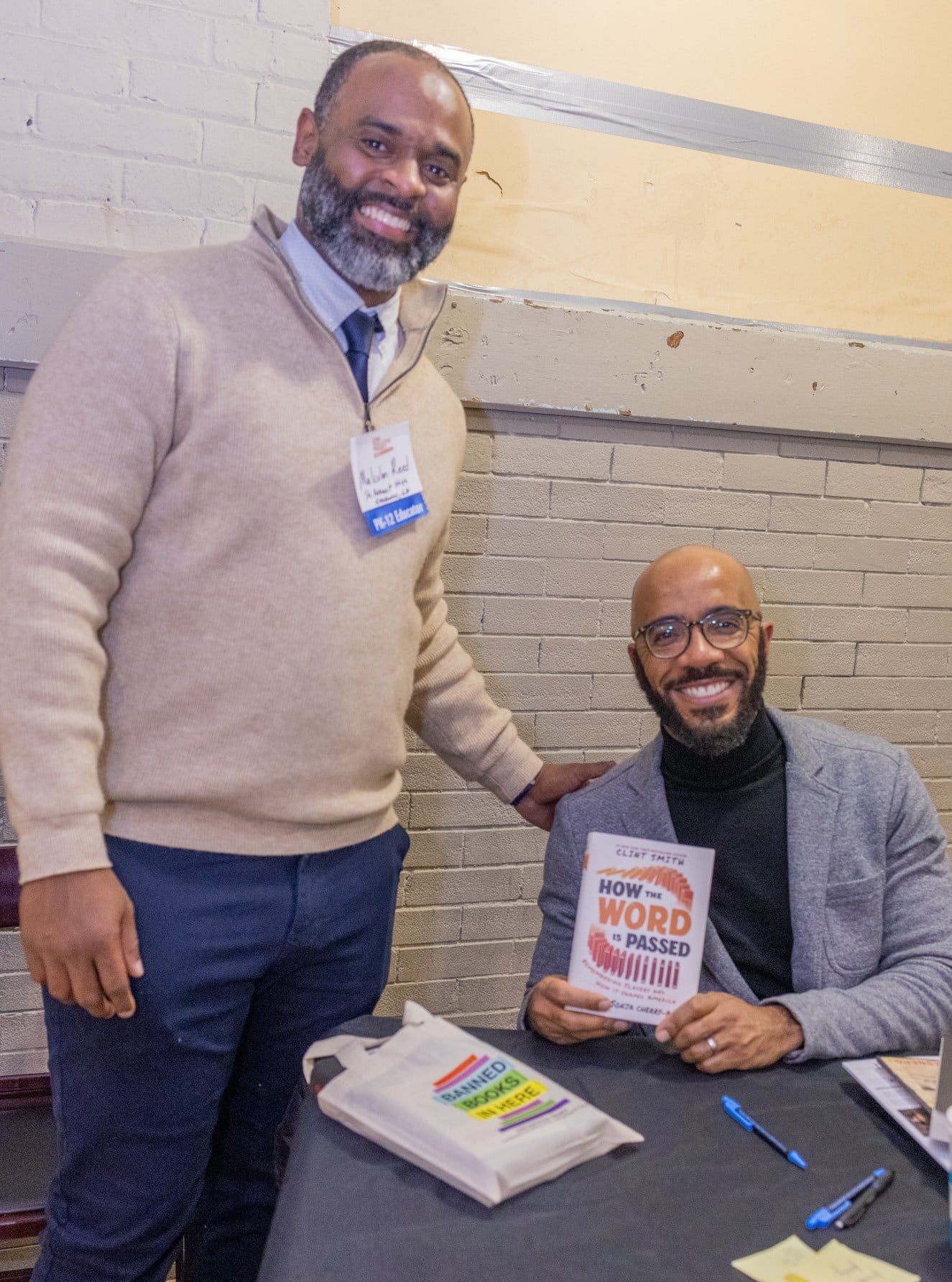
Among the educators getting their books signed were Malcolm Reed, a U.S. history teacher in Baton Rouge (in photo with Clint Smith), and Misty Crompton and Matthew Hawn who are featured in the Trouble in Censorville website and book (in photo with Jelani Cobb). Crompton and Hawn also spoke with longtime free speech advocate Mary Beth Tinker of the Tinker v. Des Moines Supreme Court case.

Marquett Milton from the African American Civil War Museum offered tours of the Thurgood Marshall Center throughout the evening. Volunteers and attendees were offered gifts from Lush Cosmetics as they left, along with Banned Books inside mini-tote bags.
Photo album
View the full photo album here. Photos and videos by Hampton Conway of Firebug Productions, unless noted otherwise.

The work of ZEP and Teaching for Change is invaluable. We always look forward to any chance we can to partner with them to tell the truth about our shared history. Let’s continue to expand opportunities for all educators to bring more informed understandings to our students across the United States. We hope everyone here will check out our standards-aligned, free and rigorous classroom-ready resources from Native Knowledge 360!