

By Jesse Hagopian
When South Carolina educator Alana J. Ward learned her African American Literature course was being cut, she thought it was a mistake. For years she had filled the class by personally walking students down to the guidance office to make sure they registered. She kept a log of sign-ups. She’d done everything right.
But in the spring of 2022, before the master schedule was even finalized, she was told her class “didn’t make” — school-district shorthand for not enrolling enough students to justify offering the course. Later a counselor quietly asked her, “How could they know that in April when schedules aren’t done until June?” That’s when the truth hit her: this wasn’t about enrollment. It was about erasure.
It was part of the new wave of censorship sweeping schools across the country. “The real intent,” Ward told me, “is to keep power from a group of people who, if they knew their true greatness, might be able to harness that knowledge and change the world for the better.”
Ward’s class — a literature course tracing African American voices from the 18th century to the present — became “controversial” because the nation is still afraid of what Black truth reveals about its own reflection. Around the country, educators have been interrogated, disciplined, and silenced for teaching history that might make someone “uncomfortable.” Libraries are being stripped bare of books that reflect the young readers who open them. Whole courses have disappeared. As Ward told me, “It harkens back to the times when people of color were forbidden to read and write.”
Ward could have given up. Instead, she organized.
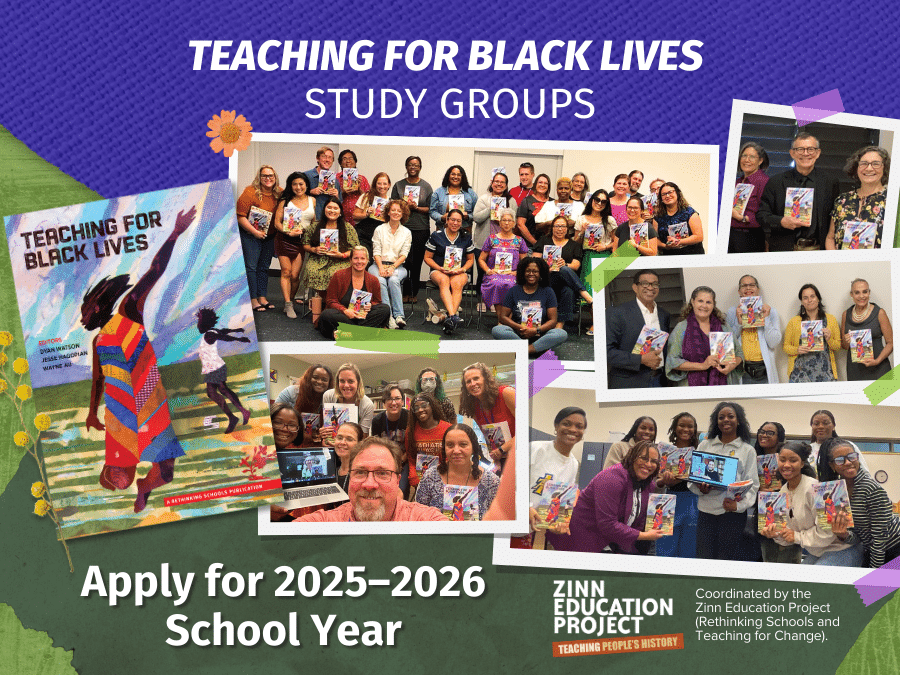
Drawing on her background as a classroom teacher and now as a UniServ director with The South Carolina Education Association, she launched a Teaching for Black Lives study group — joining a national network of educators organized by the Zinn Education Project who are committed to antiracist teaching. Ward explained,
When I saw the opportunity to do the Teaching for Black Lives study group, it was really an answer to a prayer — a desire of mine to do this again, to make sure that those lessons that I was able to teach as a singular educator in a singular classroom were able to be replicated in a place where it’s so sorely needed.
She first invited six colleagues. Then, when she opened it up statewide, thirty-eight educators signed up immediately. More keep asking to join.
They have been meeting after hours, reading Teaching for Black Lives, discussing how to center Black history in the curriculum, and strategizing ways to defend truth in their classrooms. Ward said,
Even when it was criminal to read and write, we found a way. And so this is no different.
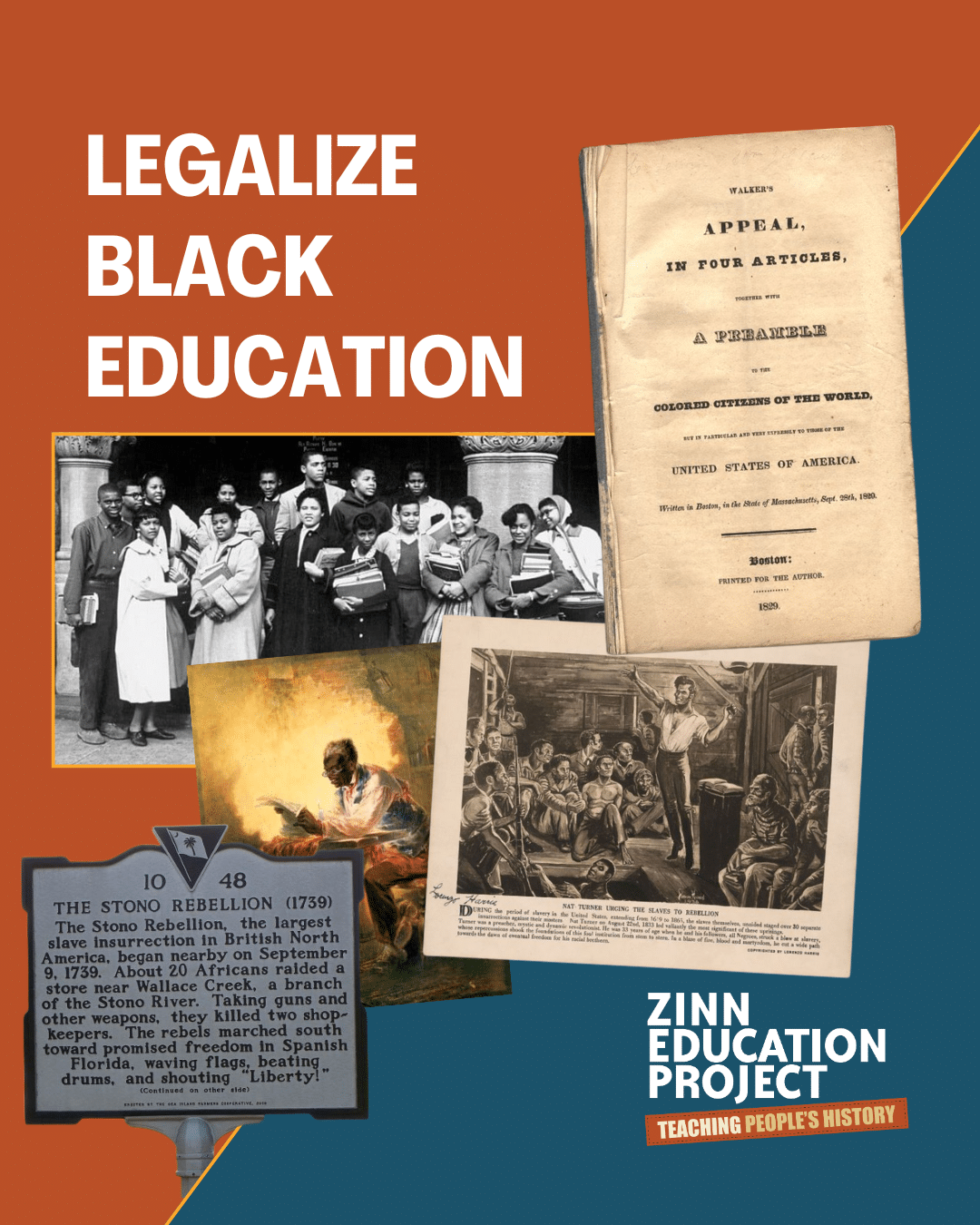
South Carolina, Ward reminded me, now leads the nation in book bans. That fact is chilling when you remember that South Carolina was also the first colony to make it illegal for Black people to learn to read or write. The connection is not coincidence — it’s continuity: from outlawing reading to banning books and outlawing reading honest accounts of history and identity.
But here’s the part the censors don’t want remembered: those anti-literacy laws had to be passed again and again because Black people refused to obey them. Enslaved people risked whippings, mutilation, and death to teach each other in pit schools and hush harbors, knowing that education was inseparable from liberation. They understood what oppressors feared most — that literacy was a weapon in the struggle for freedom.
That same defiant lineage runs through Alana Ward’s work today. From the secret classrooms of the enslaved to the Teaching for Black Lives study groups of the present, those who believe in multiracial democracy, social and economic justice, have never yielded to the forces of white supremacy.
Ward’s story reminds us that we are not powerless in the face of censorship. When they cancel Black history, we can organize to make history of our own. When they ban books, we can write a new chapter. And when they try to make lying to children the law of the land, we can — as Ward put it — “even more doggedly push the agenda of teaching truth. We just want to keep magnifying our voices, and keep saying no to things that are unfair.”
Twitter
Google plus
LinkedIn