
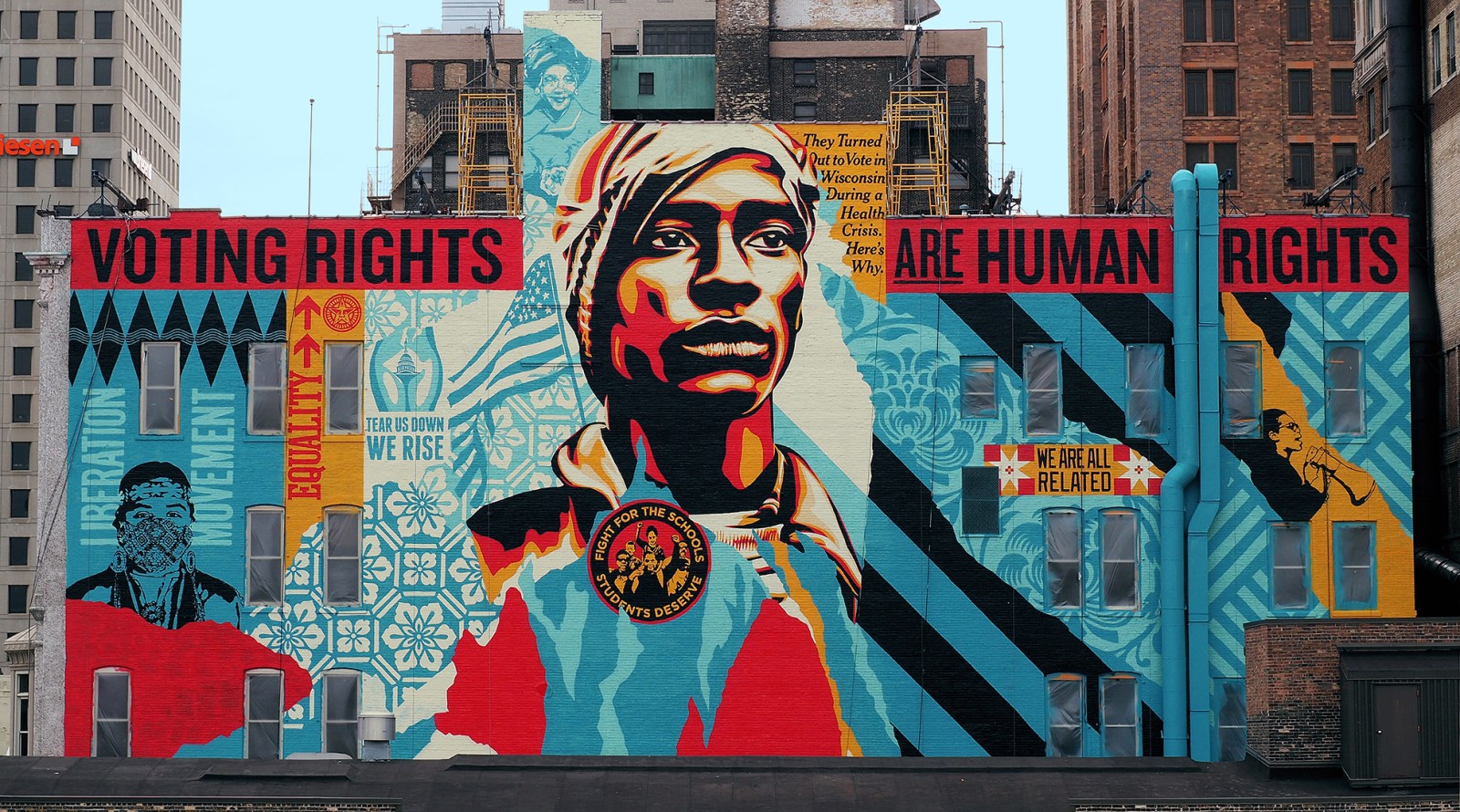
Mural by Shepard Fairey in Milwaukee, created in collaboration with Tyanna Buie, Niki Johnson, Tom Jones, Claudio Martinez, and Dyani Whitehawk. Photo credit: Jonathan Furlong and Niki Johnson Studio.
In a time when powerful figures claim to defend the Constitution while undermining it, students must know their rights — not just to pass a test, but to protect themselves. They need to understand their right to remain silent (5th Amendment); their right to birthright citizenship, due process and equal protection of the law for all people (14th Amendment); and their right to speak out and protest injustice (1st Amendment); and their protection from unreasonable searches and seizures (4th Amendment), which is especially critical today as surveillance technologies expand and law enforcement agencies disproportionately target marginalized communities.
But knowing rights isn’t enough. Students should also be encouraged to ask hard questions: Why doesn’t our Constitution guarantee housing, healthcare, education, or a living wage — rights enshrined in other countries’ constitutions? Why did the original document legalize slavery? Why did it take a Civil War to amend that — and why does the 13th Amendment still allow slavery as punishment for a crime? Why are the rights we do have so often denied, especially to Black, Brown, poor, queer, and immigrant communities?
 Throughout U.S. history, people have fought to expand the rights the Constitution promises — and to demand the rights it omits. Constitution Day should not be an unquestioning celebration of myth, but an invitation to think critically. Students deserve to study the Constitution honestly, to compare it with broader visions of justice — like the United Nations’ Universal Declaration of Human Rights or the Black Panther Party’s 10-Point Program, which demanded education, housing, employment, and an end to police violence — and to decide for themselves what rights a just society should guarantee.
This lesson is designed to help students consider not just what the Constitution says, but what it leaves out. Through a series of interactive activities, students:
-
- Reflect on the purpose of a constitution
- Investigate which rights are and are not protected by the U.S. Constitution
- Compare those protections with the rights guaranteed in other countries’ constitutions
- Reflect on what these comparisons reveal about U.S. values
- Imagine how new rights could be added through struggle, law, or organizing
Access the full lesson and handouts at the Download to Read in Full button. Find additional resources to teach outside the textbook about the Constitution.
Classroom Stories

My U.S. history class at School Without Walls (a D.C. Public School) engaged in the lesson “We the People”: Whose Rights Does the Constitution Protect? by Jesse Hagopian. Some of the students’ insights and reflections were:
I was surprised by the sheer number of human necessities that were not rights. Clean drinking water, food, housing, just basic human needs that are not provided but the right to bear arms is. The priorities are a bit interesting.
I think a lot of the rights that are protected are more economically based. They’re more focused on protecting enterprise and business. Many rights for the people weren’t added until much later.
We do not have some rights that are considered human needs like food and clean drinking water.
I learned a lot about how certain amendments came about. I also learned about amendments I didn’t know existed and that some I thought existed didn’t actually exist.
My main takeaways are that the United States still has a lot of work to do as a nation to guarantee its citizens’ well being, and that we need to play an active role in making sure our government upholds our rights.
According to our constitution, U.S. citizens are not explicitly entitled to what should be considered basic rights such as access to food, clean water, and affordable healthcare.
Today, many people are having their rights violated. This lesson helps us young people (as the future of the U.S.) to work towards solving these problems within our communities.
The Constitution is currently being heavily attacked and disassembled. We have to be aware of that.
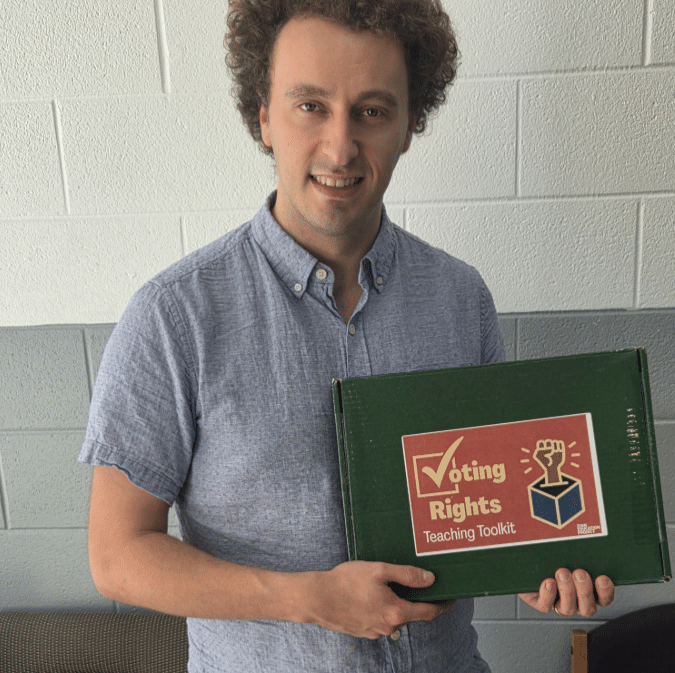
I used Jesse Hagopian’s “We the People”: Whose Rights Does the Constitution Protect? lesson with high school students at my small community school in the Metro Detroit area. This lesson was eye-opening to say the least. My students have only heard history teachers say positive things about the U.S. Constitution. They groan whenever the word ‘Constitution’ is uttered because the incessant glorification of this foundational document is, to be frank, a mind-numbing and boring tradition. Students are instinctively turned off by the uncritical praise that is too often heaped on the Constitution.
Hagopian’s lesson sheds much-needed light on everything that the Constitution does (not) guarantee to the American people. When I provided my students with the list of 25 rights, most of them assumed that a majority of these rights had been written into the Constitutional amendments. Surely basic needs such as clean water, food, and housing must be written into the famous document, right? They were shocked and dismayed to learn just how few of these rights are indeed guaranteed. Furthermore, the lesson did a great job of exposing how the federal government has neglected to protect even the rights that are guaranteed in the amendments.
The mixer discussion format of the lesson made the learning experience active and fun for my students. Each child became an expert on one particular right, and was tasked with educating their peers. This lesson format is far more engaging and memorable than a lecture would have been. Thank you Zinn Education Project for helping my students think critically about a key document that has been too often over-glorified!
After five years of teaching high school social studies, I made the switch to middle school. With this exciting transition came a little chaos and a brand new curriculum. For Constitution Day, I knew I needed something different and accessible for my 7th graders, so I went to the Zinn Education Project for ideas. I adapted the lesson “We the People”: Whose Rights Does the Constitution Protect? and gave students their first “pop quiz” on their rights in the Constitution.
When they finished, most were confident they had aced it because to them, the rights listed seemed like no-brainers. But as the 50% (and lower) scores started rolling in, their confusion quickly turned to curiosity. We used that moment for open dialogue and a See, Think, Wonder about a graph showing which countries guarantee certain rights they assumed were part of U.S. citizenship.
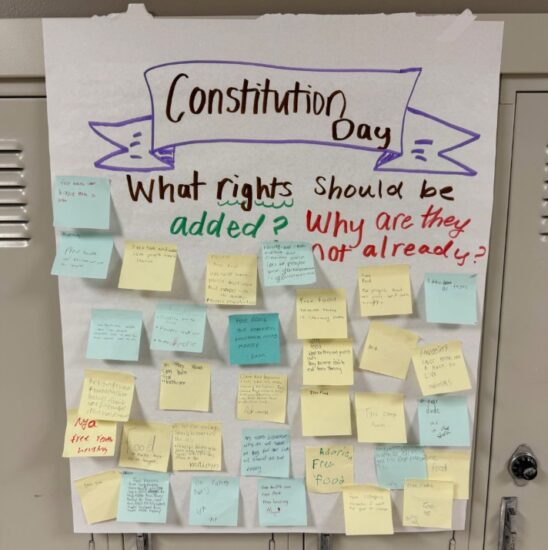
They were shocked and motivated. To close the lesson, students added sticky notes to a hallway poster, naming the right they believe should be added to the Constitution and why. The most common theme was food and housing, with many noting, “Other rights are useless if I am dying of hunger.”
The poster (below) now hangs in our hallway, serving as a reminder of student voice, reflection, and action.

I taught my first ever lesson on Constitution Day, using “We the People”: Whose Rights Does the Constitution Protect?
Students were amazed to learn that clean water, food security, and employment are not rights guaranteed by the U.S. Constitution — and that perhaps they should be!
Each student became a “constitutional scholar” on their specific right, they discussed and answered the questions, and then together we reviewed the answers.
We used “We the People”: Whose Rights Does the Constitution Protect? for an inquiry-based lesson that asks students to examine who was included and excluded from the Constitution’s promises of rights and freedom. Students analyzed primary sources, identified whose voices and experiences were represented or missing, and then engaged in a discussion to the essential question: “Who was truly protected by the Constitution at its founding, and how has that changed over time?”
I would use this lesson again in African American History because it provides a strong foundation for examining the historical gap between the Constitution’s promises of rights and the lived experiences of African Americans. It encourages students to critically analyze whose rights were protected, whose were denied, and how African Americans and their allies challenged those inequalities to expand the meaning of “We the People.”
This year for Constitution Day, I incorporated components of the lesson “We the People”: Whose Rights Does the Constitution Protect?. I used the lesson in my twelfth grade government classes, my eleventh grade U.S. history classes, and even in my twelfth grade economics and dual-enrollment psychology classes. Every student needs to learn their rights to be sure they are protected, so I figured it was important to engage all 125 of them in dialogue. If I don’t, who will?
Having students determine what rights they believed were guaranteed by the Constitution was a wonderful conversation starter. They started responding individually, but then slowly engaged each other in spontaneous chatting. As I shared what statements were their Constitutional rights and those that are not, their disbelief was honestly encouraging. It gave me more hope that this generation is ready to dig in, do the work, and create positive change.
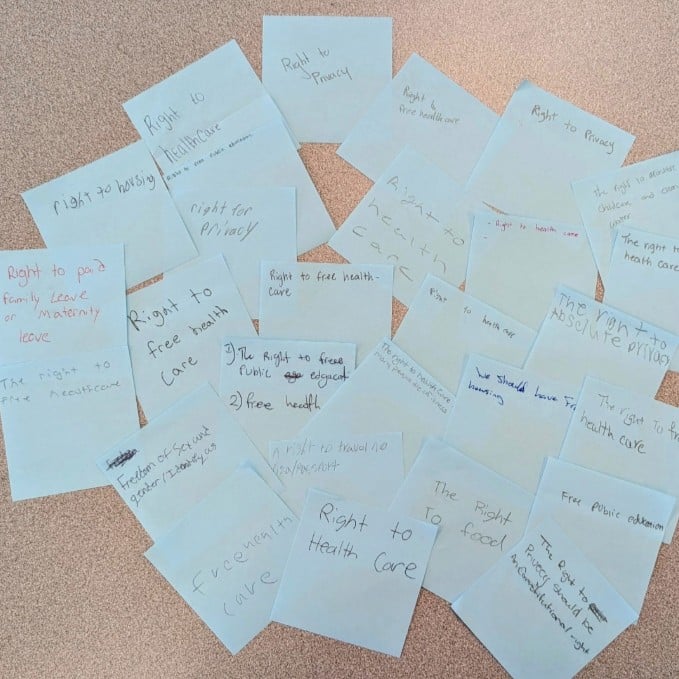
As a result of their small conversations, I adjusted the lesson so that instead of completing a written response to the prompt, “Do you think any of the rights from the list that are not guaranteed by the U.S. Constitution should be?”, I had them write their responses on sticky notes. Once everyone was finished, I collected them and shared them with the class. We looked for trends and discussed who would benefit from the change.
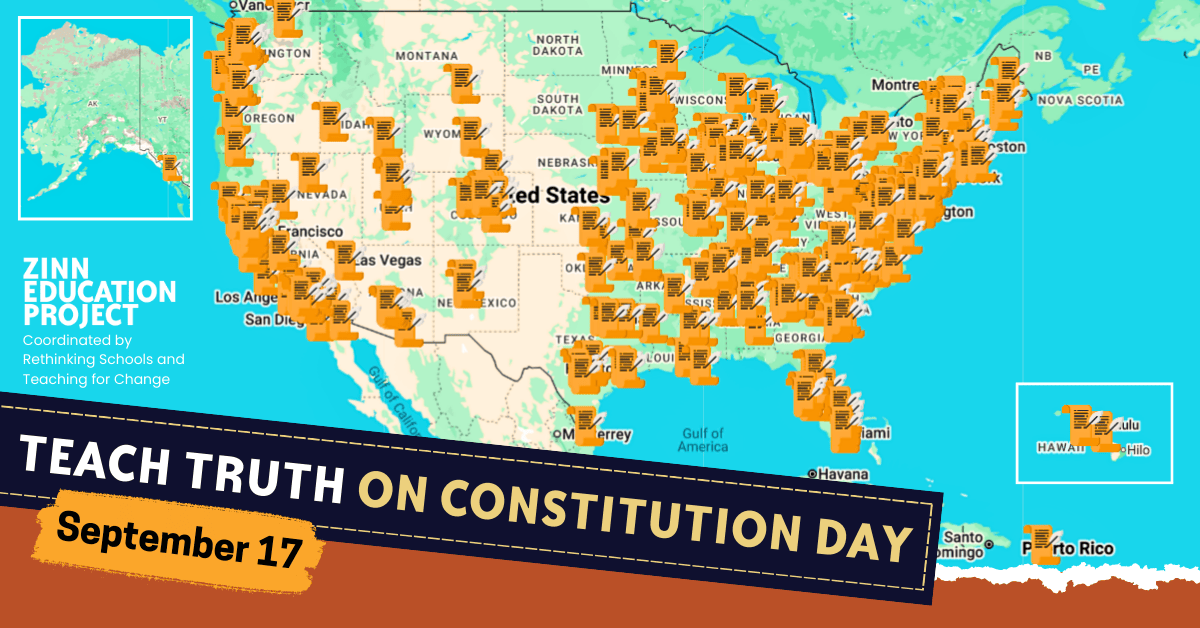
We utilized segments of “We the People”: Whose Rights Does the Constitution Protect? during our mini-lesson on Constitution Day, September 17th.
Students watched a brief Black History Crash Course video by Clint Smith, providing an overview of the Constitution. Then they received the Student Chart where they could select which rights they felt were guaranteed in the Constitution. It was interesting to see how students navigated the chart, asking probing questions about what certain rights meant and other clarifying details before making their selections.
Not surprisingly, most students marked that almost all of the rights listed either should be, or were, already covered in the Constitution. This made the big reveal in our review of the actual answer sheet quite shocking for the group. Students were floored that essentials like clean water, housing, healthcare, and employment, among many others, were not guaranteed in the Constitution. The conversation that followed was both productive and powerful. Students explored many possible solutions to these clear and obvious gaps in our founding documents.
Twitter
Google plus
LinkedIn