
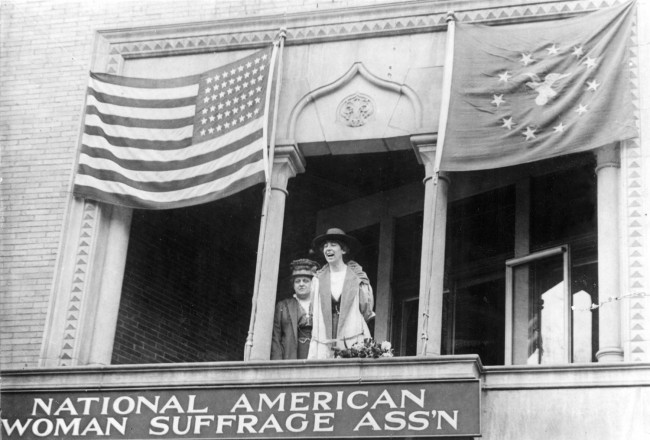
You can no more win a war, than you can win an earthquake.” —Jeannette Rankin
Schools help teach students who “we” are. And as Howard Zinn points out in his essay “Unsung Heroes,” too often the curricular “we” are the great slaveholders, plunderers, imperialists, and captains of industry of yesteryear.
Thus when we teach about the genocide Columbus launched against the Taínos, or Washington’s scorched-earth war on the Iroquois, or even Abraham Lincoln’s promise in his first inaugural address to support a constitutional amendment making slavery permanent in Southern states, some students may experience this new information as a personal loss. In part, as Zinn suggests, this is because they’ve been denied a more honorable past with which to identify — one that acknowledges racism and exploitation, but also highlights courageous initiatives for social equality and justice.
The roles included are:
| Susan B. Anthony Black Panther Party for Self Defense Member Elaine Brown John Brown Carlos Bulosan Elizabeth Cady Stanton César Chávez Frederick Douglass William Lloyd Garrison Marcus Garvey Emma Goldman Sarah and Angelina Grimké Elizabeth Gurley Flynn Fannie Lou Hamer Dolores Huerta Fred Korematsu |
Queen Lili’uokalani Harvey Milk Rosa Parks Melba Pattillo Beals Leonard Peltier Jeannette Rankin Bernice Reagon Johnson Jackie Robinson Mickey Schwerner, James Cheney, and Andrew Goodman Bessie Smith Soldier of the 54th Massachusetts Regiment Henry David Thoreau Sojourner Truth Harriet Tubman Nat Turner Malcolm X |
From the opening of the “Unsung Heroes” essay by Howard Zinn
A high school student recently confronted me: “I read in your book A People’s History of the United States about the massacres of Indians, the long history of racism, the persistence of poverty in the richest country in the world, the senseless wars. How can I keep from being thoroughly alienated and depressed?”
It’s a question I’ve heard many times before. Another question often put to me by students is: Don’t we need our national idols? You are taking down all our national heroes — the Founding Fathers, Andrew Jackson, Abraham Lincoln, Theodore Roosevelt, Woodrow Wilson, John F. Kennedy. Granted, it is good to have historical figures we can admire and emulate. But why hold up as models the 55 rich white men who drafted the Constitution as a way of establishing a government that would protect the interests of their class — slaveholders, merchants, bondholders, land speculators?
Why not recall the humanitarianism of William Penn, an early colonist who made peace with the Delaware Indians instead of warring on them, as other colonial leaders were doing?”
▸ Continue reading this essay by Howard Zinn in the downloadable PDF.
Classroom Story
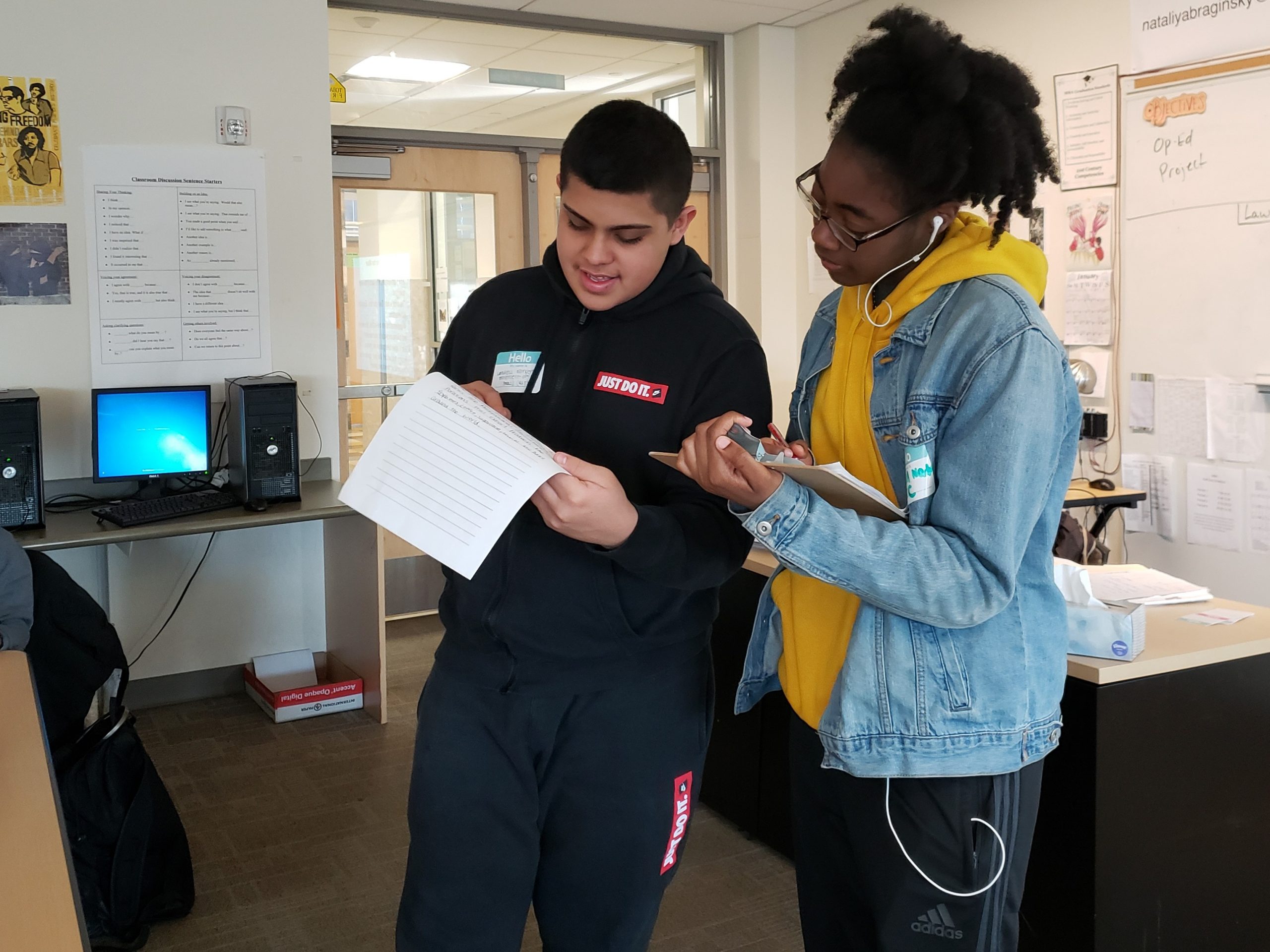
“Unsung Heroes” is a lesson I’ve used every year. It is always a hit with my students, who are engaged and ask important questions during this unit. When students embody those heroic figures I hope they emulate, it is also important identity work which is critical during the middle school years that my students find themselves in.
Students always say that they never knew there were so many people who had to struggle for equality in the U.S. It is edifying for me when students say, “She looks like me!” regarding one of the heroes, or otherwise find ways to relate their own lives to the lives of figures who helped in the struggle for equality.
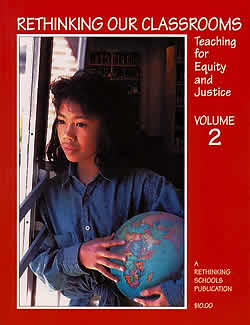

This lesson was published by Rethinking Schools in Rethinking Our Classrooms, Volume 2: Teaching For Equity and Justice. For more lessons like “Unsung Heroes: Encouraging Students to Appreciate Those Who Fought for Social Justice,” order Rethinking Our Classrooms, Vol. 2 with a collection of from-the-classroom articles, curriculum ideas, lesson plans, poetry, and resources — all grounded in the realities of school life, edited by Bill Bigelow, Brenda Harvey, and Stan Karp.
A similar lesson is available from Teaching for Change called “Resistance 101: A Lesson on Social Justice Activists and Strategies.”


When are you going to add in the story of Catholic institution building, anti-Catholic bias in the 19th and twentieth centuries, and add the names of Catholic women, especially nuns and sisters, who worked to overcome barriers erected by the majority culture during this time? None of this is in textbooks I have read over the course of my college education: from freshman through the doctoral levels.
Teachers, let’s make sure we use this plan and even expand on it when helping students choose a topic for their National History Day 2017 project. This year’s theme is “Taking a Stand in History”…its begging our students to research those who have stood for justice.
Thank you for adding truth to the study of our past… When humans hide the imperfections and demons among us, truth loses and the injustices and imperfections in our past keep their un-warranted power.
Thank you for you enlightening work.